INDEPENDENT AUTOMOTIVE NEWSGLOBAL PERSPECTIVE / AUSTRALIAN EDITION
TDCNTHE DAILY
CAR NEWS.

The road ahead.
Every day.

RSS ↗
Latest/Electric

457 original articles

Electric / TDCN ORIGINAL

Volkswagen and Skoda add battery pre-heating to older ID.4, ID.5 and Enyaq EVs via OTA update

More than 200,000 early-build electric crossovers get the cold-weather charging feature from November 2027, though some cars need a dealer visit first.

Volkswagen and Skoda will begin rolling out an over-the-air software update in the second half of November 2027 that adds battery preconditioning to the oldest ID.4, ID.5 and Enyaq electric crossovers on the road. The update covers vehicles built between 2020 and 2024, roughly 200,000 Enyaq models among them, and arrives years after owners first found their cars could not pre-warm the high-voltage battery before fast charging.

From 2024 onward, all three models were fitted with automatic battery preconditioning at the factory, so later cars do not need the update.

What the update changes

For the Skoda Enyaq, software version 3.9 introduces the battery pre-heating function along with an updated welcome screen that boots up fully without user confirmation. The package also includes security updates and a fix for the Online Connectivity Unit.

Volkswagen ID.4 and ID.5 owners receive the same improvements under software version 3.9.1, which additionally improves the reliability of the electric door handles and AC charging.

How preconditioning works in these cars

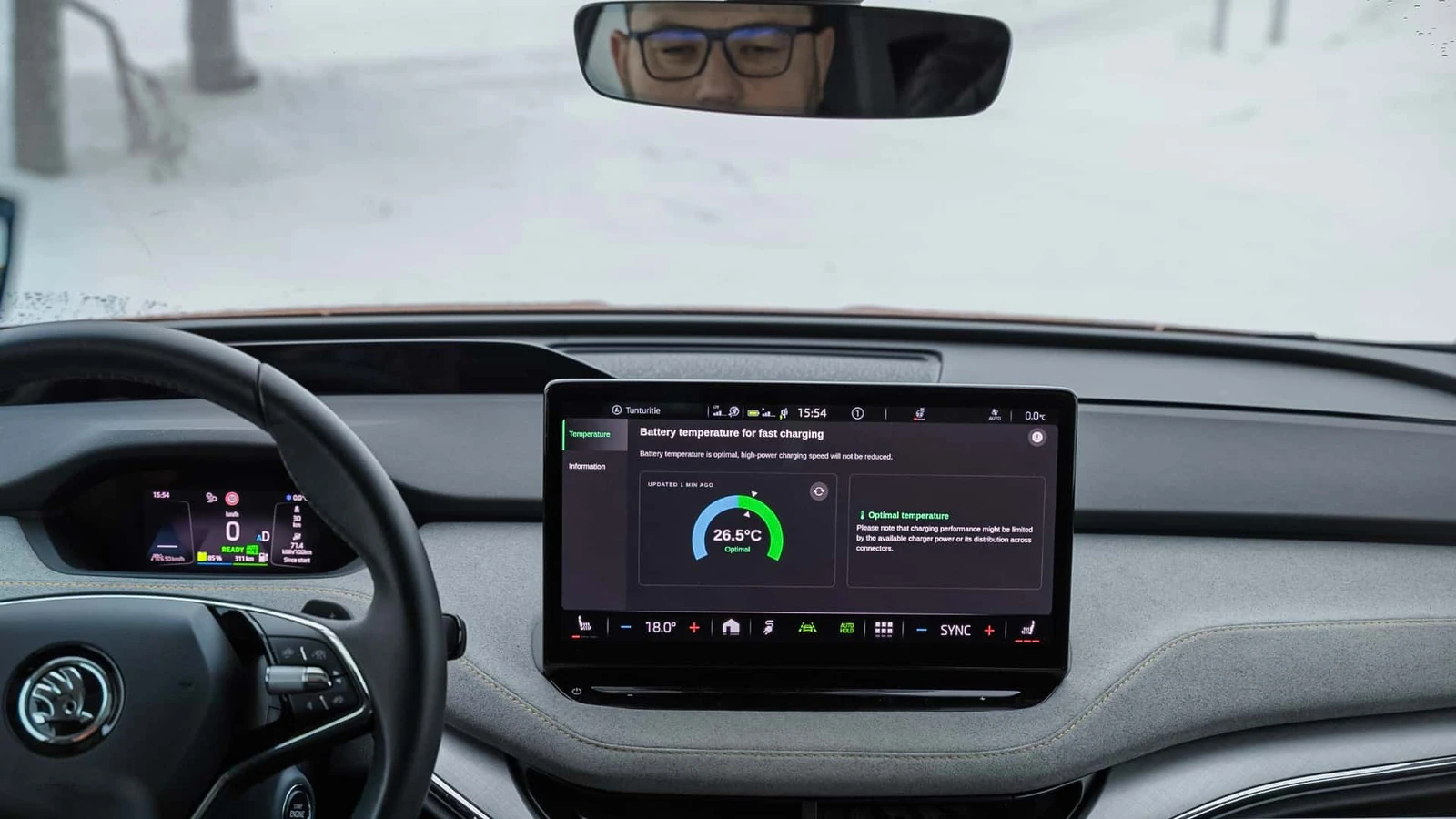
The feature can only be switched on manually, through a new virtual screen in the infotainment system. The heating button is active only when the battery temperature is below 20 degrees Celsius (68 degrees Fahrenheit), according to Jiri Vlcek, Skoda's project manager for online updates. The software also displays the battery's current temperature so drivers can monitor it.

Once activated, the battery heats gradually to its optimum temperature of about 25 degrees Celsius (77 degrees Fahrenheit), a process that can take 30 to 40 minutes. Both automakers recommend factoring that time into the drive to a fast charger. A battery at its optimum temperature can accept higher power from a DC fast charger, shortening the stop.

Skoda engineers tested the function in freezing conditions. Vlcek said the apparent simplicity for the user masks the work behind it: the update intervenes in the vehicle control unit, the battery control unit and the infotainment system, which he said places enormous demands on implementation and on comprehensive testing.

Rollout stages and the dealer-visit catch

The rollout will happen in waves, with the first cars receiving the feature from the second half of November and another wave following two weeks later. Owners running version 3.8 will be prompted to install the latest software automatically over the air. Cars on older software must first install version 3.8, which prepares the vehicle for the pre-heating function, before version 3.9 introduces it. Cars still running version 2.x need a visit to an authorised service centre to obtain the software that enables preconditioning.

The staged approach means owners of the earliest cars, the ones most likely to be on 2.x software, face the longest wait and a workshop appointment. That matters because those are precisely the vehicles whose owners have gone without the feature the longest.

Why owners waited, and what changes

The first ID.4 and Enyaq crossovers left the assembly lines in 2020, but their high-voltage batteries could not be preconditioned for fast charging, which produced longer-than-expected charging times in cold weather. Some owners worked around the gap with do-it-yourself methods: a custom-made microcontroller or a dedicated diagnostics dongle paired with an OBD programming app. The official update replaces those improvisations with a factory-sanctioned function.

The sources do not state how many minutes faster a DC charging stop becomes once the battery is at its optimum temperature, nor do they give a charging power figure for the pre-warmed pack. What is clear is the mechanism: a warmer battery accepts more power from a fast charger, and the car now has a button for it.
Open this article ↗
Industry / TDCN ORIGINAL

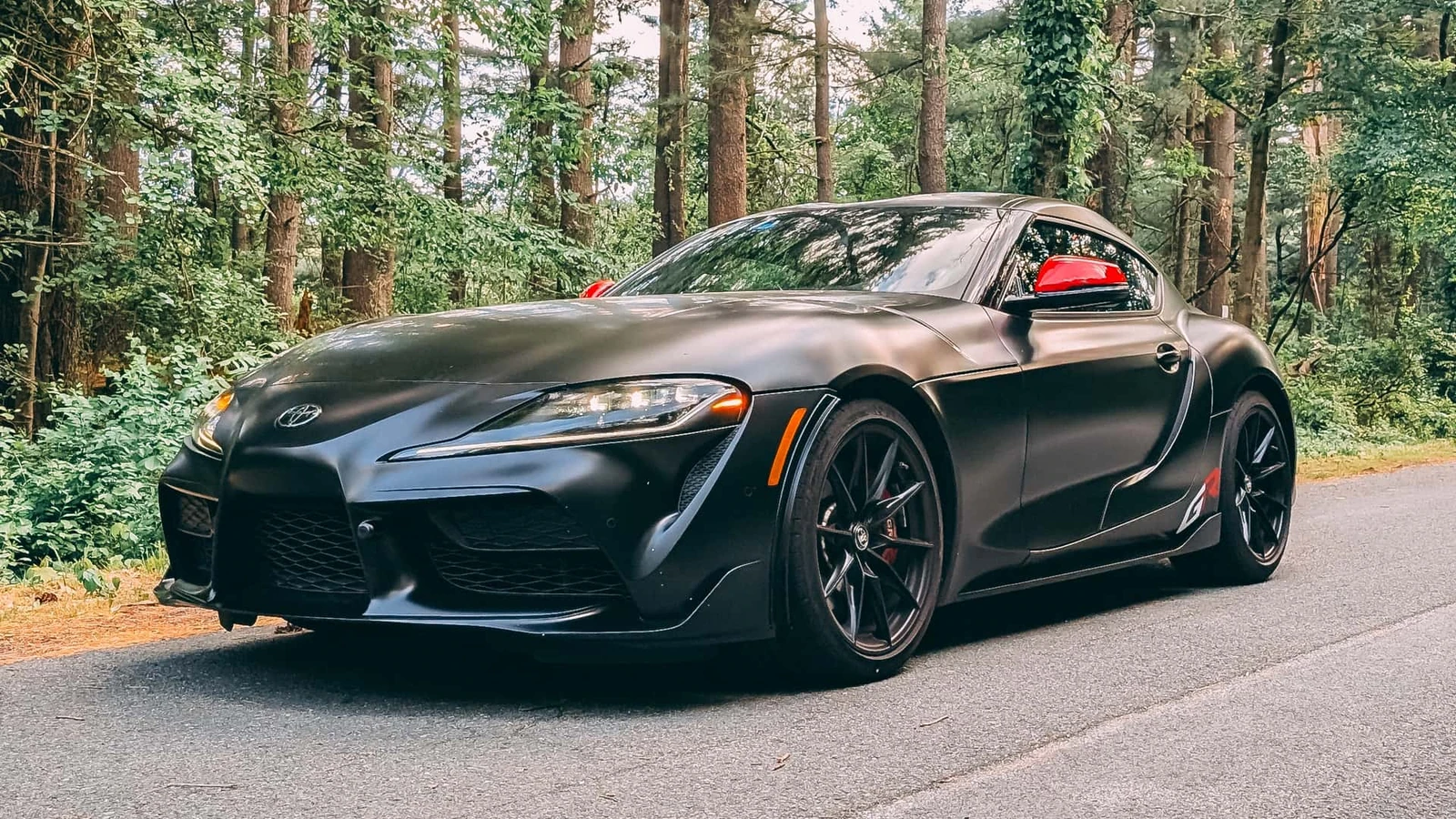
Toyota Supra and BMW Z4 sold out in the US as production ends

Toyota says the Supra nameplate will return but has given no timeline or powertrain details, while BMW has said nothing about a new Z4.

Image: Motor1

New Toyota Supra and BMW Z4 stock is gone across the United States, with no remaining inventory for buyers who left it until the end of the run. Production of the two mechanically related sports cars ended in March at Magna Steyr's plant in Graz, Austria, the contract manufacturer that built both.

The pair shared a platform, engines and much of their engineering, but were positioned very differently: the Supra was a coupe only, while the Z4 was a soft-top roadster. Depending on the market, both rear-wheel-drive two-seaters came with four- or six-cylinder engines and a choice of six-speed manual or eight-speed automatic gearboxes.

Slow sales preceded the shutdown

Neither car was a volume seller. Toyota delivered 2,953 Supras in the US in 2025 and BMW moved 2,113 Z4s over the same period. Both companies had already decided to discontinue the models, and that weak demand suggests the decision was not taken reluctantly.

The upside for buyers is that the two-door, combustion-engined sports car field is thinning fast. Porsche has changed its plans and will not bring back the 718 Boxster and Cayman with petrol engines, which leaves the Nissan Z and the Mazda MX5 among the remaining affordable options, with a new MX5 generation due in the coming years.

Toyota keeps the Supra name alive

Toyota has made clear it remains committed to the Supra nameplate, so the current generation is not the end of the road. The company has not announced a timeline or technical details for a successor, and it has not said when the next Supra will arrive or what will power it.

Its public statements suggest another generation is on the table, and it could depart from the BMW-derived approach: the next Supra may use a Toyota-developed powertrain rather than BMW engineering. A new model would slot naturally into Toyota's expanding GR performance sub-brand, alongside the GR Yaris, GR Corolla and GR86.

Toyota has also been signalling a return for the mid-engined MR2, and it recently confirmed the Celica is coming back in WRC. If those projects reach production in road-legal form, Toyota would have one of the more appealing sports car line-ups on sale.

No replacement Z4 in sight

BMW has said nothing about developing a Z4 replacement and has stayed tight-lipped about another roadster, with no indication a new Z model is in the pipeline. An i4 Convertible is in the works, but its four seats, larger footprint and all-electric powertrain mean it will not be a direct substitute.

For now the 4 Series Convertible is the closest open-top alternative BMW offers, a considerably different proposition that is expected to stay on sale until the end of the decade with M Performance and full M versions using inline-six engines. The 2 Series and M2 are closer in size to the Z4 but come strictly as coupes.

The result is a lopsided picture: Toyota has publicly kept the door open for its sports car, while BMW has left the roadster's future unspoken. For anyone shopping in this segment now, the practical choice is remaining stock elsewhere or waiting on a Supra that has been promised but not yet specified.

Open this article ↗

Keep scrolling to read the next story.

Older articles →