INDEPENDENT AUTOMOTIVE NEWSGLOBAL PERSPECTIVE / AUSTRALIAN EDITION
TDCNTHE DAILY
CAR NEWS.

The road ahead.
Every day.

RSS ↗
Latest/Electric

455 original articles

Electric / TDCN ORIGINAL

Honda names its first global electric SUV Alpha, built and launched in India

The electric SUV debuts in India on December 2, 2026, with Honda yet to confirm power, range, battery size, price or any export market.

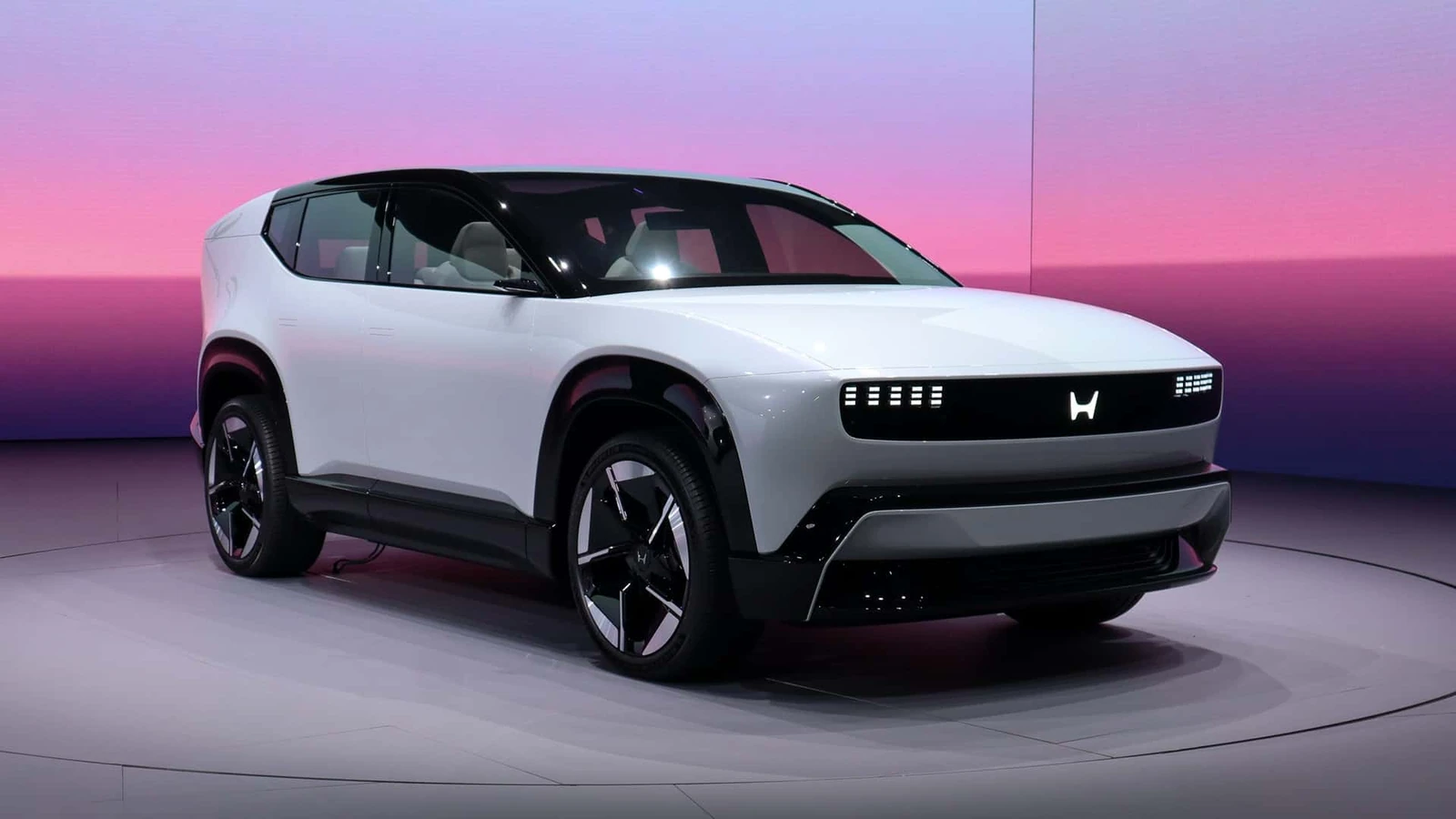
Image: Motor1

Honda's first global electric SUV will be called the Honda Alpha, and it will make its world premiere in India on December 2, 2026. Honda Cars India confirmed the name, the debut date and the production plan this week.

India is not only hosting the reveal. Honda has chosen the country as the Alpha's first launch market and as the global production base for the model going forward. Every Alpha built for any market is set to come from Indian production, though Honda has not yet named which markets those will be.

What Honda has confirmed, and what it has not

The announcement covers the name, the date and where the car will be built. It does not cover the vehicle itself in any technical detail. Honda has not released a battery figure, a range estimate, a price, or a sales timeline outside India.

That leaves the core numbers a buyer would want, including power, torque, battery capacity, charging speed and range, still unannounced. The range figure will also need a test cycle attached before it can be compared with rivals, and Honda has not said which one it will use.

No export markets have been named either, and Honda has said nothing about whether US buyers will ever get this specific model. Until the December 2 premiere, the Alpha is a confirmed name wrapped around an unconfirmed spec sheet.

A new badge for a new EV line

The Alpha will be the first Honda sold in India to wear the automaker's redesigned H mark on a production vehicle there. The new emblem is part of a broader visual refresh tied to Honda's next-generation EV lineup, and it sits alongside an H badge heritage that dates back to the early 1960s.

The name itself comes from the first letter of the Greek alphabet, which Honda says reflects a fresh start for buyers.

The SUV is closely related to the Honda 0 Alpha concept shown at the Japan Mobility Show, and the Alpha is reportedly the production version. A teaser image of the covered vehicle shows a silhouette with a high, square-cut rear that strongly recalls the 0 Alpha's profile. That resemblance is the clearest signal yet of how much of the concept Honda intends to carry into showrooms, though the covered shape is all the company has shown.

Why India gets the build contract

Toshiyuki Yanagisawa, President and Chief Executive of Honda Cars India, framed the model as a turning point for the brand's electric push in the country. "Honda Alpha represents our ambition to bring advanced electric mobility to our customers in India while delivering the quality, reliability and joy of driving that Honda is known for," he said in a statement.

Yanagisawa tied the production decision to Honda's wider electrification strategy. "With India serving as the global production base for this model in future, it is an important step in Honda's electrification journey and reflects our strong commitment to the Indian market," he said.

The choice of India over Japan or the US as the manufacturing home of a global EV shows how much weight the market now carries in Honda's planning. It also overlaps with the company's parallel global hybrid rollout plans.

For drivers and car buyers, the practical effect is that the Alpha's price and availability will be shaped first by Indian production costs and the Indian market, not by a Japanese or American launch schedule. Buyers elsewhere are, for now, waiting on a car that will be built in a market Honda has prioritised for the first time.

What comes next

Honda's December 2, 2026 premiere is the point at which the missing numbers should start to arrive. Until then, the confirmed facts are the name, the emblem, the concept lineage, the India launch and the India production base.

The open questions are the ones that decide whether the Alpha competes: how far it goes, what it costs, how quickly it charges and where else it will be sold. Honda has not answered any of them yet.
Open this article ↗
Australia / TDCN ORIGINAL

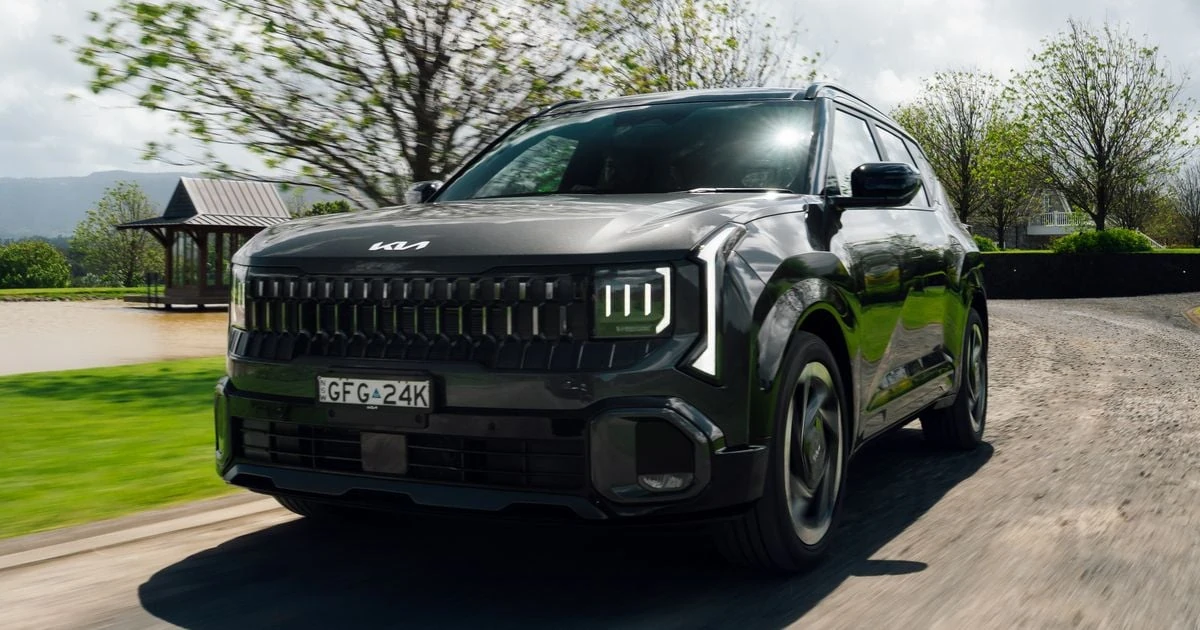
Kia's new Seltos small SUV goes hybrid-only in Australia, priced from $39,990

The second-generation Seltos drops petrol power entirely, with six variants and an electrified all-wheel drive flagship topping out at $55,490 drive-away.

The second-generation Kia Seltos will reach Australian showrooms as a hybrid-only small SUV, priced from $39,990 drive-away for the entry S variant. Kia will offer six variants locally, running through S, S with Safety Pack, Sport, Sport+, GT-Line FWD and GT-Line e-AWD, with only the flagship carrying the Hyundai Motor Group's new electrified all-wheel drive system.

The move marks a clean break from the petrol-only first-generation Seltos, and it comes at a cost: entry pricing has climbed by nearly $7000 compared with the previous model, a rise Kia offsets in part through the hybridised powertrain and higher equipment levels.

Six variants, one hybrid powertrain

Front-wheel drive versions use a 1.6-litre naturally aspirated four-cylinder hybrid powertrain producing a combined 112kW and 265Nm, paired with a 6-speed dual-clutch transmission. The petrol engine alone is rated at 74kW at 5700rpm and 139Nm at 3700rpm, while the electric motor contributes 45kW at 2200-2500rpm and 293Nm at 0-2000rpm.

The GT-Line e-AWD adds a second electric motor on the rear axle, rated at 50kW at 2600-6800rpm and 185Nm at 0-2400rpm, lifting system output to around 126kW. Kia quotes no system torque figure for the e-AWD.

Both drivetrains carry a 1.49kWh lithium-ion battery, and both meet Euro 6 emissions standards. Kia's claimed fuel economy is 5.1L/100km for the S, 5.3L/100km for Sport and Sport+, 5.4L/100km for the GT-Line FWD and 5.8L/100km for the e-AWD, with CO2 emissions of 115-123g/km for front-drive models and 131g/km for the all-wheel drive. The fuel tank holds 38 litres and the engine runs on 91-octane regular unleaded.

Kia has not published a 0-100km/h time for any Seltos variant, so acceleration figures for the range have not been announced.

Pricing across the range

The S with Safety Pack is listed at $42,490 drive-away, the Sport at $43,990, the Sport+ at $46,990 and the GT-Line FWD at $52,990, with the GT-Line e-AWD at $55,490 drive-away. Before on-road costs, those figures read $37,990, $40,150, $41,910, $44,970, $49,870 and $52,870 respectively.

At $39,990 drive-away, the base Seltos undercuts the Nissan Qashqai e-Power, which starts at $45,850 plus on-road costs, and matches the related Hyundai Kona Hybrid's $39,990 drive-away entry point. It sits above a cluster of cheaper Chinese hybrids: the Toyota Corolla Cross Hybrid from $37,440 plus on-roads, the Jaecoo J5 SHS-H from $34,990 drive-away, the GWM Haval Jolion Hybrid from $32,990 drive-away, the Chery C5 Hybrid from $31,990 drive-away and the MG ZS Hybrid+ from $29,990 drive-away.

That spread matters for buyers shopping the small hybrid SUV segment on price alone. The Seltos is no longer the budget pick it was as a petrol model, and Kia is clearly pitching it on drivetrain technology and equipment rather than a low entry sticker.

Size, weight and practicality

The new Seltos measures 4430mm long, 1830mm wide and 1605-1620mm tall on a 2690mm wheelbase. Tare weight is 1632kg for front-drive versions and 1722kg for the e-AWD.

Cargo capacity is quoted at 483 litres with the rear seats up under VDA measurement and 1441 litres with them folded. Braked towing capacity is 910kg for front-wheel drive models and 810kg for the e-AWD, so the extra rear motor and hardware trim 100kg from the tow rating. Buyers planning to tow should note that the flagship is the least capable variant in the range on that measure.

Open this article ↗

Keep scrolling to read the next story.

Older articles →