INDEPENDENT AUTOMOTIVE NEWSGLOBAL PERSPECTIVE / AUSTRALIAN EDITION
TDCNTHE DAILY
CAR NEWS.

The road ahead.
Every day.

RSS ↗
Latest/Electric

455 original articles

Electric / TDCN ORIGINAL

Euro 7 emissions rules arrive on 29 November with brake dust limits for EVs

The EU's first standards to cover brake and tyre particles set a stricter 3mg/km threshold for electric cars plus minimum battery durability targets.

Euro 7 emissions regulations take effect across the EU on 29 November, and for the first time they cover more than exhaust fumes: brake particle emissions and tyre wear fall inside the rules, which means electric cars are affected too.

The standards also introduce battery durability requirements, setting minimum capacity thresholds a car must hold over defined periods and distances.

Stricter particle limit for electric cars

Brake particle rules apply to both electric and combustion-engined cars, but the thresholds differ. EVs must meet 3mg/km (4.8mg/mile) while ICE cars are allowed 7mg/km (11.3mg/mile). The gap reflects regenerative braking, which does more of the slowing work in an EV and so reduces reliance on conventional friction brakes and the dust they produce.

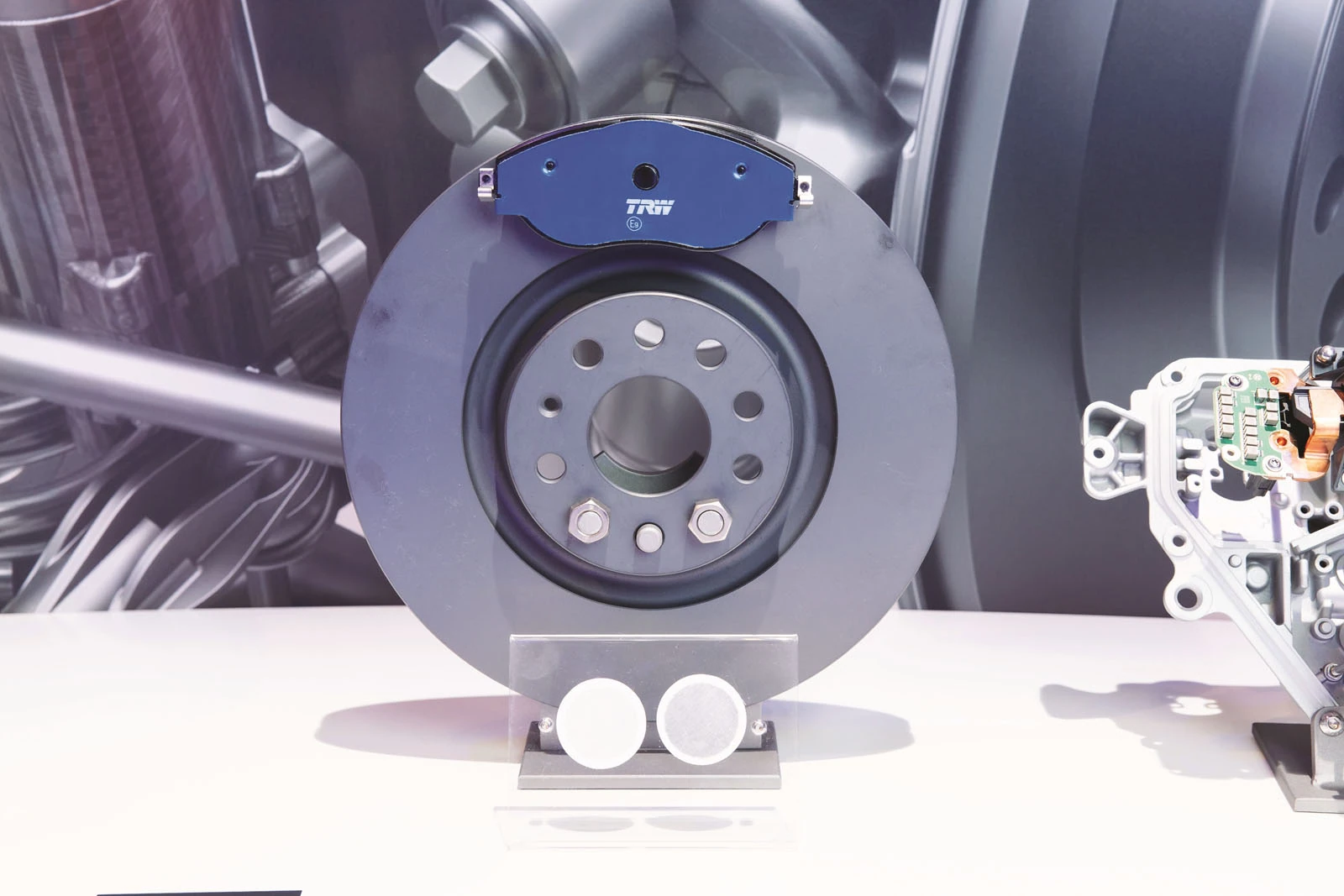
The regulation targets particles of 10 microns or smaller (PM10), generated when brake pads grip steel discs to convert a moving car's kinetic energy into heat. A large share of that dust comes from the steel disc rather than the friction pad, which is why hardening the disc surface is one route to cutting emissions.

Battery durability thresholds

Under the battery durability requirements, a car must retain at least 80% of its original capacity for the first five years or 100,000km (62,000 miles), and 72% between five and eight years or 160,000km (99,422 miles), whichever comes first in each case.

That gives buyers a regulatory floor for how much range a used EV should still deliver, rather than leaving degradation to warranty terms alone.

Aftermarket suppliers move first

Euro 7 currently applies only to new cars and original equipment, but replacement parts suppliers are already working to the same criteria, since Regulation ECE R90 requires aftermarket brake materials to match factory parts and be safe on the road.

ZF Aftermarket, through its TRW braking brand, has developed a next-generation DTEC dust-reducing disc and pad combination aimed at cutting fine particle emissions. ZF expects manufacturers to pick from a range of disc surface treatments rather than a single answer, with the right mix of surface treatment and pad friction compound dictated by a vehicle's inertia and engine type.

Hardening a disc surface can make noise and vibration behaviour harder to control, so the trade-off is not free. The catch for drivers is that cleaner braking may arrive through parts changes rather than anything visible on the showroom floor.

What is not yet settled

The sources cover the EU rules only. No Australian equivalent has been announced in the material provided, so Australian buyers should not assume the same brake particle or battery durability limits apply to cars sold locally.
Open this article ↗
New cars / TDCN ORIGINAL

Jeremy Clarkson's Ferrari F355 GTS returns to auction with a higher £200,000-£250,000 estimate

The 1996 manual GTS, which Clarkson gave away as a reader prize in 2000, failed to sell at RM Sotheby's in July 2025 and now heads to Iconic Auctioneers' NEC sale on 14 November 2026.

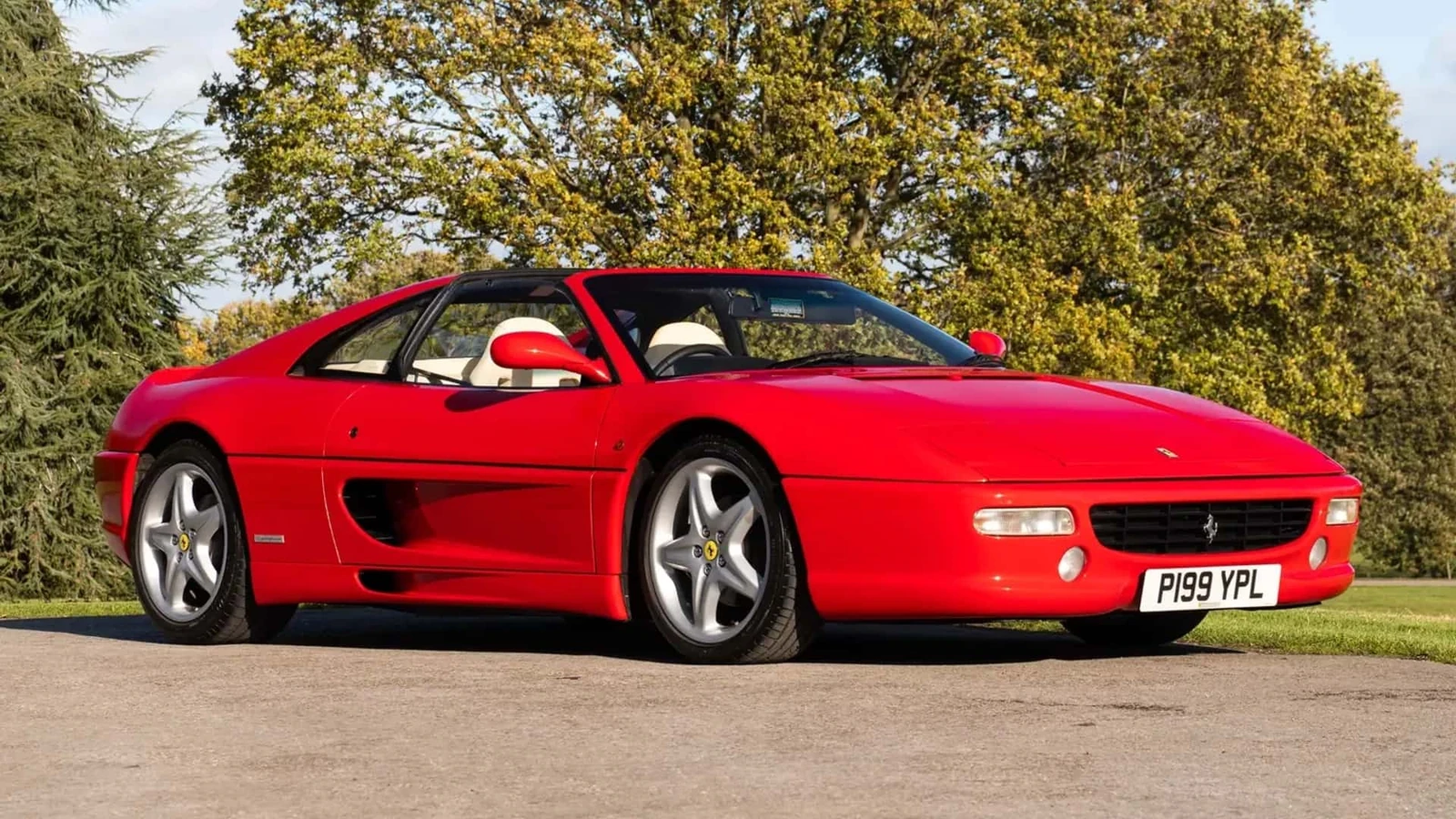
Image: Motor1

Jeremy Clarkson's 1996 Ferrari F355 GTS will be offered again at auction, this time by Iconic Auctioneers at its NEC Classic Motor Show sale in Birmingham on 14 November 2026 with a guide estimate of £200,000 to £250,000 (about $267,000 to $334,000).

The car, chassis ZFFXR42C000106175, was ordered new by Clarkson and delivered to him in August 1996. He drove it roughly 6,000 miles before giving it away as a reader prize in 2000, and it remains the only Ferrari he has owned outright.

A second attempt after a failed 2025 sale

This is not the car's first auction appearance this decade. It previously went under the hammer at RM Sotheby's Cliveden House sale on 8 July 2025 with a lower estimate of £180,000 to £220,000 (about $240,000 to $294,000) and failed to sell.

The sources do not give a specific reason why it failed to sell last time, only noting that markets shift and bidders in the room change. The new offering comes with a higher guide price and a different venue: a Classic Motor Show crowd rather than a country-house sale.

For context on recent F355 GTS values, a 1997 example in the same colour combination sold at an Iconic Auctioneers sale on 23 August 2025 for £120,375 (about $160,700). That figure is a useful reference point given this car's celebrity provenance and recent condition work.

Specification and provenance

The car is finished in Rosso Corsa over Crema leather with Rosso carpets and features rarely specified factory carbon-backed sports seats trimmed in Crema with red inserts. It has around 15,200 miles on the odometer since leaving Maranello.

It is a six-speed manual, not the notoriously troublesome F1 automated gearbox Ferrari offered on the F355. The car retains its numbers-matching V8, the five-valve-per-cylinder Tipo F129B unit producing 380 horsepower at 8,250 rpm, with a 4.7-second run to 62 mph and a top speed past 180 mph.

The sale includes original order correspondence through Maranello Sales of Egham, the warranty card naming Clarkson as first owner, owner's manuals, the tool kit and a car cover, along with newspaper columns documenting his four years with it.

Recent maintenance and auction costs

In May 2025 the current owner spent £9,345 (about $12,500) on cosmetic work, steering rack attention, a cambelt replacement and a full service, on top of interior reconditioning and ceramic coating.

Buyers should note that Iconic Auctioneers charges a 12.5 percent premium plus VAT, 15 percent inclusive.

Open this article ↗

Keep scrolling to read the next story.

Older articles →