INDEPENDENT AUTOMOTIVE NEWSGLOBAL PERSPECTIVE / AUSTRALIAN EDITION
TDCNTHE DAILY
CAR NEWS.

The road ahead.
Every day.

RSS ↗
Latest/New cars

455 original articles

New cars / TDCN ORIGINAL

JLR raids BYD's Dutch offices ahead of Defender copycat court case

Court-appointed bailiffs seized digital records in August; a Dutch court will decide this week whether JLR's claim over the Ti7 SUV can proceed.

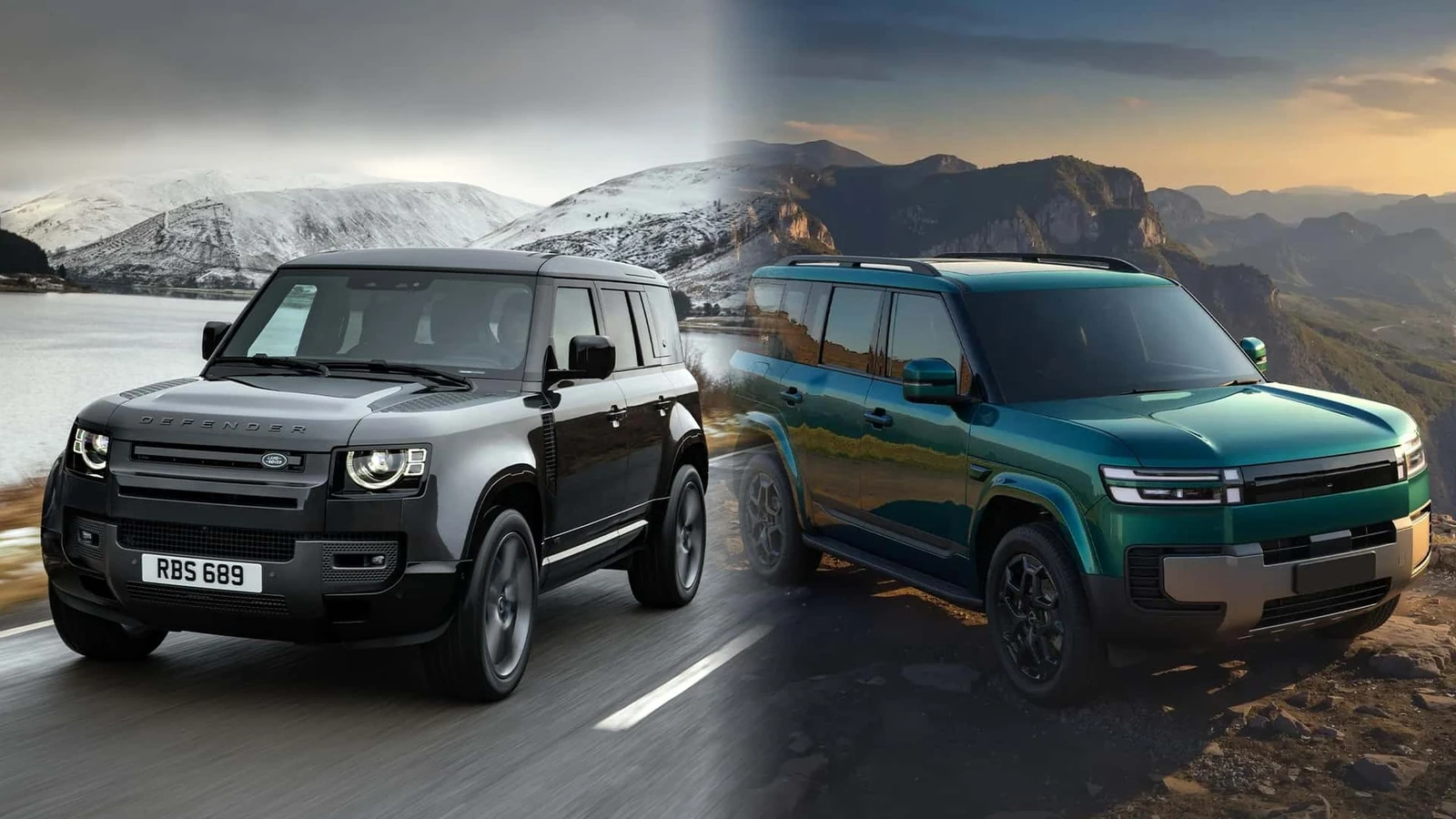
Jaguar Land Rover has raided BYD's offices in the Netherlands as part of a legal challenge over whether the Chinese brand's Ti7 SUV copies the Land Rover Defender, with a court in The Hague due to decide whether the claim can proceed. Court-appointed bailiffs carried out the raid in August, and news of it emerged only days before the hearing.

The Ti7, a large boxy SUV, was revealed in China last year and is now reaching Europe, where it undercuts the Defender substantially. Both BYD and JLR declined to comment when approached by Motor1, an InsideEVs sister site.

What the bailiffs were looking for

The raid targeted two BYD offices in the Netherlands, where bailiffs seized digital records relating to the development of the Ti7. According to The Times, JLR's legal team hoped to secure documentary evidence that BYD reverse-engineered a Defender before any files could be destroyed.

JLR's suspicion is that BYD engineers may have dismantled a Defender during research and development. Benchmarking rivals is routine industry practice, but the dispute is whether any protected technology carried over into the production Ti7.

The timing is pointed: the Dutch court hearing falls just as the Ti7 hits showroom floors in Europe, with deliveries expected to begin as early as January.

The price gap behind the fight

The Ti7 starts at £47,995 in the UK, while a base Defender 110 costs more than £16,000 more. In European terms, the Ti7 is priced from around $64,500 against nearly $92,000 for the comparable seven-seat Defender 110.

European Ti7s use a BYD Super Hybrid powertrain combining a 1.5-litre four-cylinder engine with four electric motors for a combined 402 hp (408 PS). BYD claims 0-62 mph in 4.8 seconds and 74 miles (119 km) of range from a 35.6 kWh battery. The sources do not state which test cycle that range figure is measured on, and it has not been announced.

In China, the Ti7 launched in September 2025 from under $27,000, with a battery-electric version released in April at $29,900.
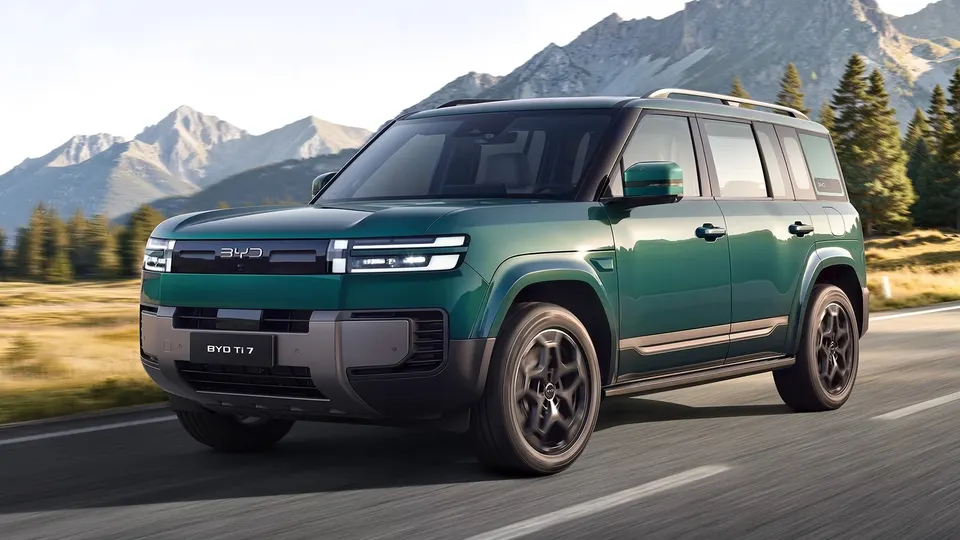
The BYD model at the centre of JLR's copycat claim, seen on the road
The BYD model at the centre of JLR's copycat claim, seen on the road, Image: Carscoops

JLR has been here before

This is not JLR's first design fight. In 2016 it took China's Jiangling Motor Corporation to court over the Landwind X7, a $19,000 SUV that resembled the $54,000 first-generation Evoque. The court found JMC had copied five distinct Evoque design details and ordered an immediate halt to X7 production.

InsideEVs reports that JLR also pursued British firm Ineos and lost, and that a 2019 ruling went its way against Jiangling over the Landwind X7.

The Defender is not the only JLR model with a lookalike in Europe. Chery's Jaecoo 7 has been nicknamed the Temu Range Rover for its low price and resemblance to the Freelander and Evoque, and it became the first Chinese vehicle to top the UK car sales chart. JLR has not launched legal action over it.

Design is not the only thing being copied. Earlier this year, Great Wall Motor chairman Wei Jiangjun publicly apologised after his company published an advert for its Wey V9X that was a blatant copy of a JLR Range Rover Sport campaign, vowing to take full legal and financial responsibility.

The Ti7's styling is close enough that covering the lights and grille leaves an uncomfortable similarity to the reborn Defender, right down to the body-colour panel behind the C-pillar. Whether a Dutch judge agrees is the question the hearing will settle.
Open this article ↗
Industry / TDCN ORIGINAL

Toyota revives Scion with a 25 mph kei pickup built in Indiana

The Kei-01 is a right-hand-drive, four-wheel-drive low-speed vehicle limited to fleet buyers when production starts in 2027.

Image: Carscoops

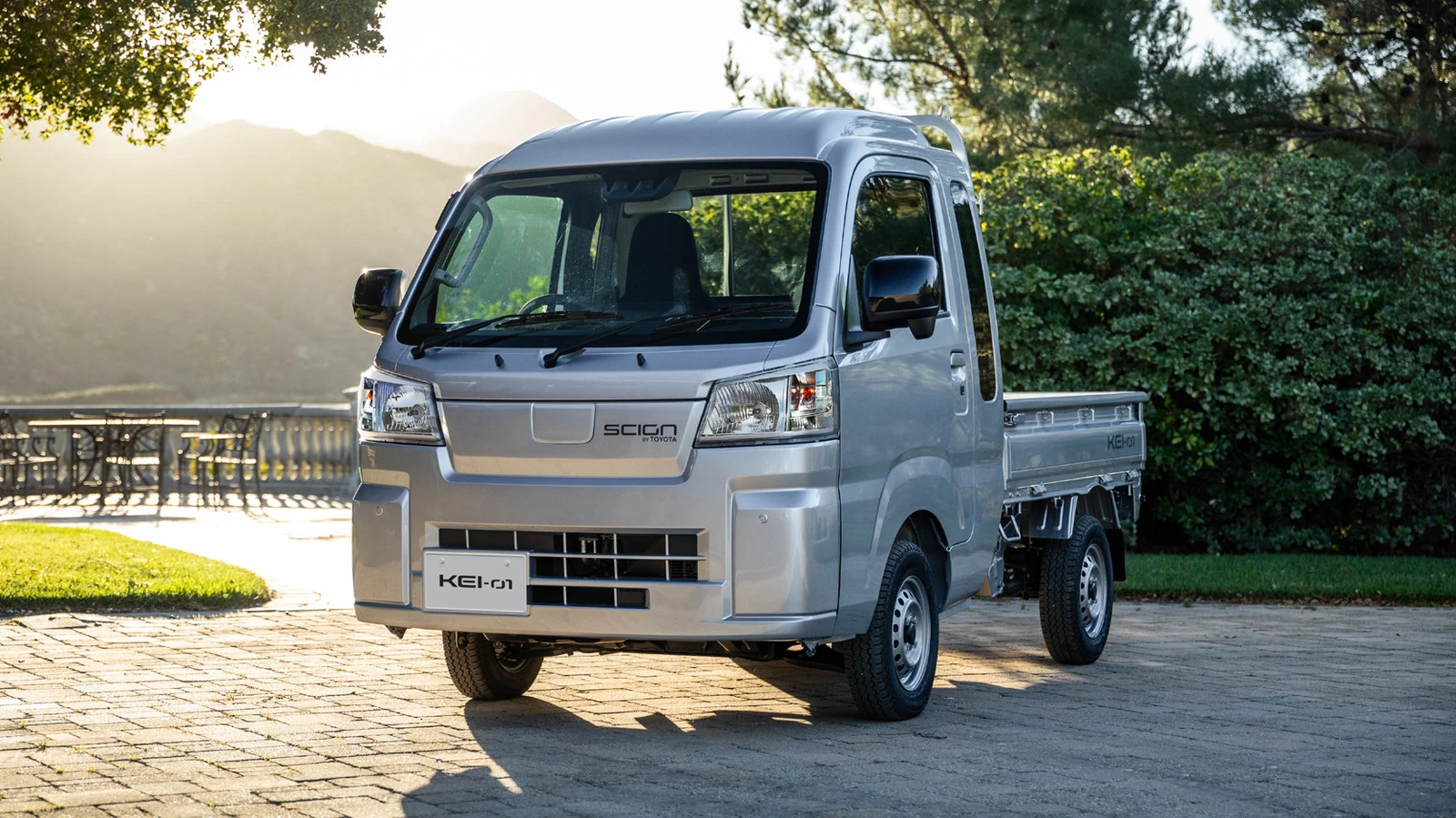
Toyota is bringing back the Scion badge after killing it for the 2017 model year, and its first new product is a tiny four-wheel-drive pickup called the Kei-01, sold under the brand name Scion by Toyota. Production is scheduled for 2027 in Indiana, and the truck will be offered to fleet customers only at launch.

A kei truck built to low-speed vehicle rules

The Kei-01 is built around a 660cc three-cylinder engine driving all four wheels through a CVT, with selectable four-wheel drive and a push-button lock-up that Toyota says helps it cope with mud, snow and uneven terrain. Toyota has not published power or torque figures, and it has not said whether the lock-up engages one axle or both.

The truck is aimed at Federal Motor Vehicle Safety Standard Number 500, the rule covering low-speed vehicles, which shapes almost everything about it. Its top speed is 25 mph, it is barred from highways, and it does not have to meet all the safety requirements that apply to normal cars. Low-speed vehicles are also not legal in every US state, and even where they can be registered for street use, the highway ban stands.

That matters because the Kei-01 is not a substitute for a daily driver, however appealing its dimensions look on paper. It is a short-hop machine for campuses, job sites and city blocks, and buyers should check their own state's registration rules before assuming it can be used at all.

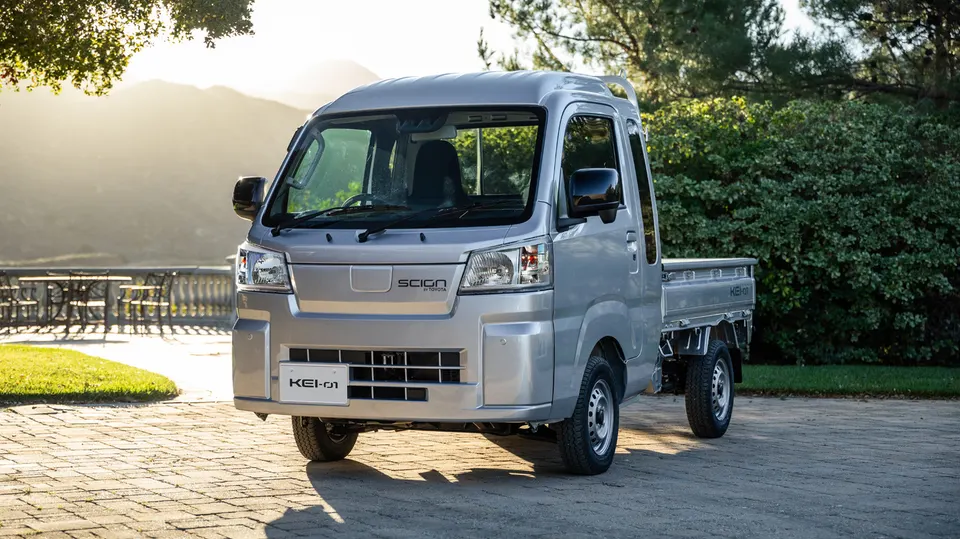
The Scion kei pickup, built to low-speed vehicle rules, sits ready for a 25 mph life in Indiana
The Scion kei pickup, built to low-speed vehicle rules, sits ready for a 25 mph life in Indiana, Image: Carscoops

Size, payload and the folding bed

Toyota quotes a payload capacity of 600 pounds and a three-way cargo bed that converts from a conventional bed to a flat bed using three folding side rails, which should make loading and unloading easier without complex suspension hardware. The truck measures 11 feet long and just under five feet wide. No tow rating has been announced, though Toyota says it is built to handle small trailers.

It is right-hand drive, an unusual layout for a US-market vehicle and one that will take some adjustment for fleet drivers used to left-hand-drive cabs. Heating and air conditioning are included.

Fleet buyers first, low volume on purpose

Toyota says the build is intentionally low volume and will require around 50 new hires in Indiana. Initial sales will focus entirely on fleets, with small businesses after a cheap in-city vehicle at the front of the list, alongside farmers, ranchers, municipalities, corporate campuses and universities.

The fleet-first approach fits the vehicle's limits. A 25 mph cap and a highway ban rule out most private retail use cases, but for organisations moving people and light loads on fixed, low-speed routes, a small electric-adjacent runabout with a cargo bed and four-wheel drive covers ground that a full-size pickup handles wastefully.

Scion's second life goes beyond one truck

Scion was discontinued after the 2017 model year, and the revived branding now covers more than the Kei-01. The SxS Concept, a four-door, four-seat off-road vehicle, debuted at the 2025 SEMA Show and signals Toyota's interest in the side-by-side market. A second show vehicle, the BKE Concept, is described by Toyota as exploring "another dimension of personal mobility," and reads as a rival to the Honda Motocompacto folding e-scooter with larger tyres.

Toyota has not announced pricing for the Kei-01, and no Australian availability has been indicated. The low-speed vehicle rules that govern it are a US framework, which makes a wider launch a separate question from the Indiana build plan.

Open this article ↗

Keep scrolling to read the next story.

Older articles →