INDEPENDENT AUTOMOTIVE NEWSGLOBAL PERSPECTIVE / AUSTRALIAN EDITION
TDCNTHE DAILY
CAR NEWS.

The road ahead.
Every day.

RSS ↗
Latest/New cars

455 original articles

New cars / TDCN ORIGINAL

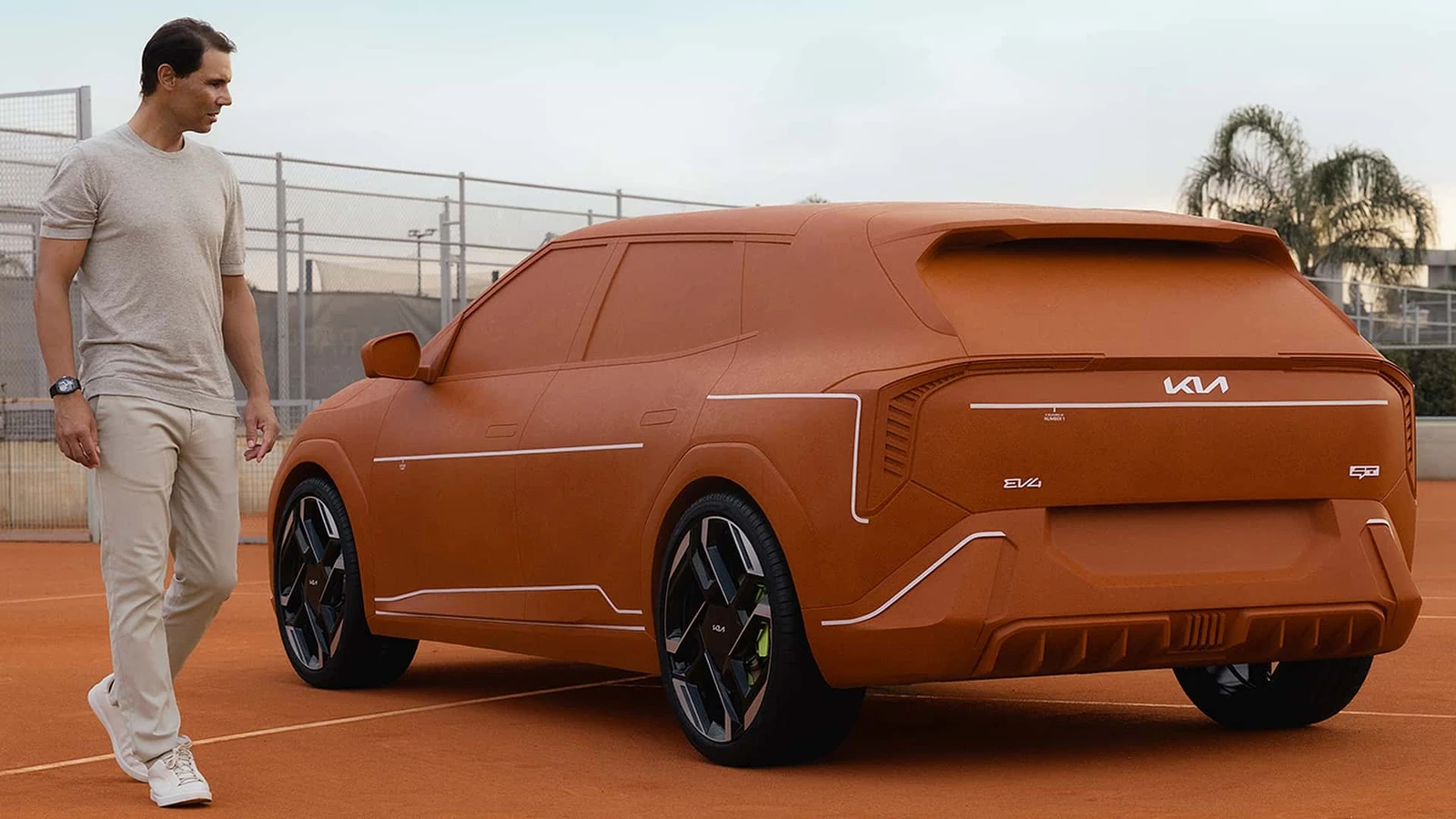
Kia gifts Rafael Nadal a clay-sculpted EV4 GT built from his title-winning courts

The full-size, non-drivable model uses soil from Monte Carlo, Paris, Rome and Madrid, and carries Nadal's 63 clay-court singles titles etched into its body.

Image: Motor1

Kia has presented Rafael Nadal with a full-size clay sculpture of the EV4 GT hatchback, made using soil taken from the clay courts where he won his record 63 singles titles. The one-off piece was handed over at the Rafa Nadal Academy in Mallorca.

What the sculpture is, and what it is not

The model is a non-drivable, full-size replica that keeps the five-door hatchback proportions of the production EV4 GT but replaces metal and paint with clay. White automotive design tape runs across the orange-red surface to stand in for the lines of a tennis court.

Etched into the body are the numbers behind Nadal's clay-court record: 63 singles titles on the surface, a run of 50 consecutive sets won and the five seasons he finished ranked world number one. His signature also appears on the piece.

Kia says those markings belong only to this sculpture and will not appear on the production EV4 GT. Clay modelling is routine in car design, letting engineers judge surfaces and proportions by hand before a car reaches digital tooling or a wind tunnel.

The choice of the EV4 GT is not arbitrary: it sits in Kia's growing performance EV line-up alongside the EV3 GT and EV5 GT. In production form it pairs dual-motor all-wheel drive with 288 horsepower and a claimed 0-62 mph time of 5.6 seconds, figures that are still pending final European homologation.

A partnership that dates back to 2004

Kia Spain first backed Nadal in 2004, before he had won a Grand Slam, and he became the brand's global ambassador the year after his breakthrough French Open title in 2005. He held that role for more than two decades and continued it after retiring from professional tennis following the 2024 Davis Cup Finals.

Soohang Chang, president and CEO of Kia Europe, said Nadal's determination and resilience have inspired tennis players and fans worldwide and that those values have been central to the partnership since 2004. Nadal said receiving a tribute created from the material that has defined so much of his journey was incredibly meaningful after more than twenty years with Kia.

Kia's tennis connections go beyond one ambassador. In 2026 the brand marked 25 years of sponsoring the Australian Open, and it has separately extended its sponsorship of English cricket's Surrey County Cricket Club through 2029.

The sculpture is a marketing gesture rather than a product announcement, so it changes nothing for buyers shopping for an EV4 GT. What it does show is how far Kia is willing to stretch a two-decade ambassador relationship, and how the GT badge is being positioned as a performance line rather than a single model.
Open this article ↗
Safety / TDCN ORIGINAL

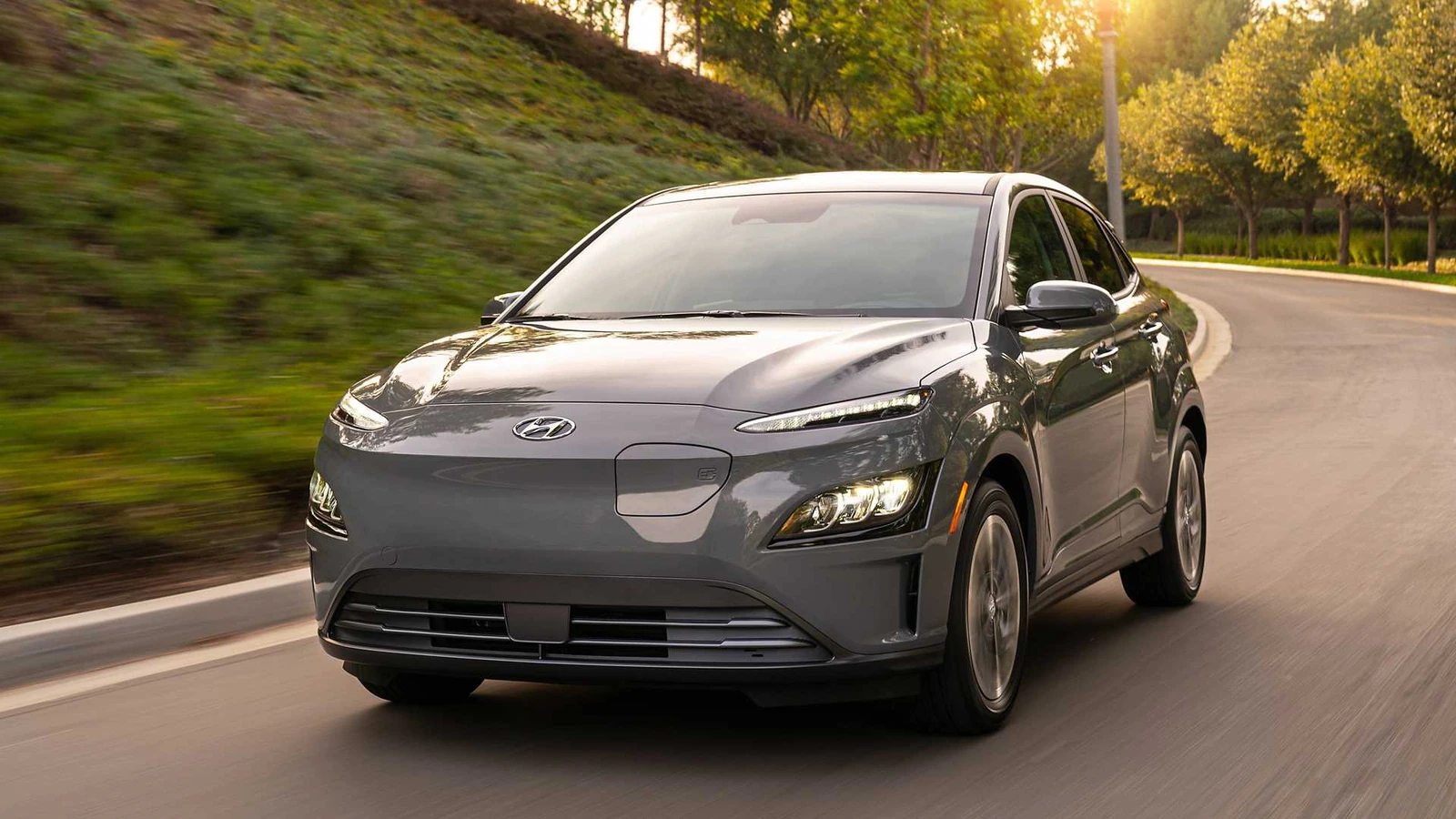
Hyundai recalls nearly 30,000 Kona Electric SUVs over airbag fault

The US recall covers 2019-2023 first-generation Kona Electric models built in South Korea, and a free dealer software update is the fix.

Hyundai is recalling 29,058 first-generation Kona Electric crossovers in the United States because their airbags and seatbelt pretensioners may fail to deploy in a crash. The affected vehicles were built in South Korea between August 28, 2018 and July 26, 2023, covering model years 2019 through 2023.

The recall also takes in nearly 9,000 Hyundai Veloster N petrol hatchbacks sold in the US between 2019 and 2022, which share the same fault. Hyundai says it is not aware of any crashes, fires or injuries linked to the problem in the US.

What is failing in the airbag control unit

The fault lies in the Airbag Control Unit (ACU). According to the recall report published by the National Highway Traffic Safety Administration, data written to the unit's memory can become corrupted under certain driving conditions, which switches on the airbag malfunction light on the instrument cluster and deactivates the airbag system. With the system out of action, the airbags will not fire in a crash, raising the risk of injury to the driver and passengers.

Hyundai says the corruption can occur if the control unit reboots or loses power while it is writing data to its internal memory. Its North American office opened a fresh investigation in 2024 after warranty claims for the airbag warning light rose.

A software fix, not a hardware one

Hyundai worked with ZF, the supplier of the airbag control units, to reproduce the problem on other vehicles but could not. A fault was eventually induced during bench testing, and a solution was found.

The remedy is a free software update carried out at a Hyundai service centre, so owners will need to book a dealer visit rather than fix the car at home. Hyundai says the new software rolls back to the last known valid data if a transfer is interrupted for one of the reasons above.

Hyundai is aware of 331 individual incidents tied to the ACU issue across the Kona Electric and Veloster N. The Kona Electric involved is the previous-generation model, which went out of production in 2023.

Why the recall matters for owners

An airbag warning light is easy to treat as a minor annoyance, but here it signals that the restraint system has switched itself off. That makes the free software update more than routine housekeeping: it restores a safety function that drivers cannot see working until the moment it is needed.

The recall is also a reminder that software, not just parts, can disable safety equipment. Hyundai's fix is a rollback routine rather than a new component, which means the repair is quick once an owner gets an appointment, but it still depends on owners acting on the notice.

Open this article ↗

Keep scrolling to read the next story.

Older articles →