INDEPENDENT AUTOMOTIVE NEWSGLOBAL PERSPECTIVE / AUSTRALIAN EDITION
TDCNTHE DAILY
CAR NEWS.

The road ahead.
Every day.

RSS ↗
Latest/New cars

455 original articles

New cars / TDCN ORIGINAL

JLR raids BYD's Dutch offices over Defender-lookalike Ti7 design claim

Bailiffs acting for Jaguar Land Rover seized records from two BYD sites in the Netherlands ahead of a Hague court challenge over the Ti7's Defender-style bodywork.

Bailiffs acting for Jaguar Land Rover have raided BYD premises in the Netherlands, seizing records as part of a design dispute over the BYD Ti7 and its resemblance to the Land Rover Defender. The court-ordered searches took place in August 2026 at BYD's Schiedam and Hoofddorp sites, ahead of a legal challenge that began this week in The Hague.

The raids were first reported by UK newspaper The Times, and both JLR and BYD have declined to comment on the case, according to overseas reports. The action centres on claims that the Ti7 infringes JLR's intellectual property relating to the Defender, Land Rover's best-selling model worldwide.

What JLR alleges and what happens next

The bailiffs were acting on JLR's behalf when they gathered evidence from the two Dutch offices, a step taken before the substantive case opened in The Hague. Neither company has publicly set out its position, so the scope of the claim rests on the court filings rather than on any statement from either side.

JLR has taken on copycat designs before. In 2016 it sued Chinese automaker Jiangling in a Beijing court over the Landwind X7 and its similarity to the Range Rover Evoque, winning in 2019 when Jiangling was ordered to stop building the SUV and pay 1.5 million yuan in compensation. The Ti7 is the only Defender-esque SUV JLR has so far pursued in court, despite a growing field of them.

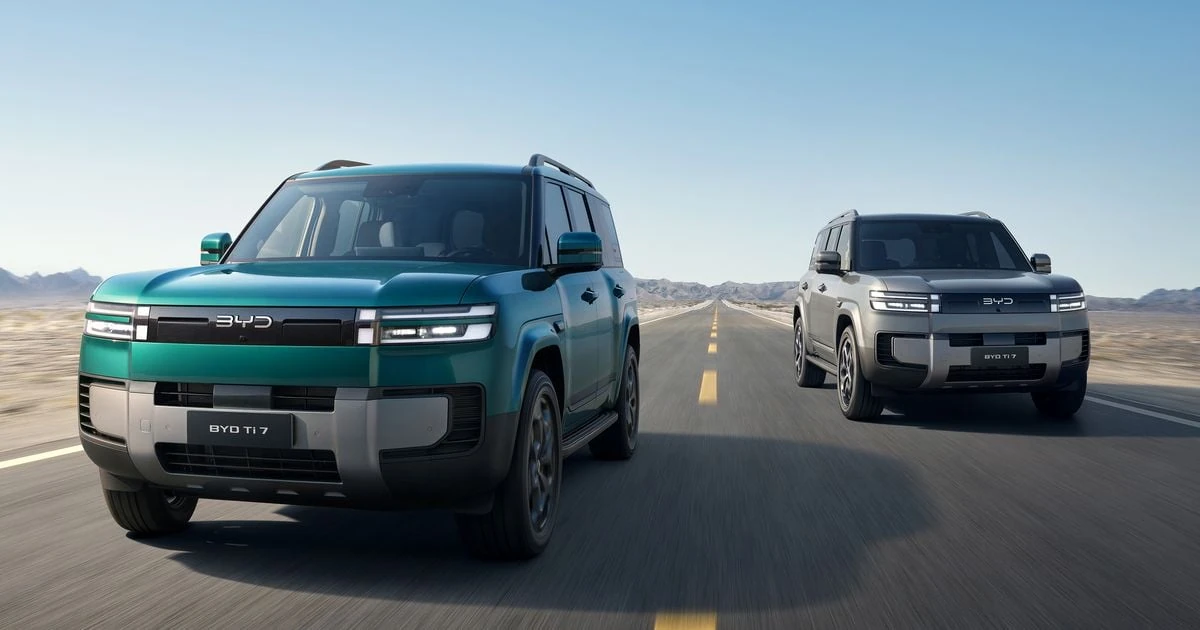
The BYD Ti7's slab-sided profile, seen in studio-style lighting
The BYD Ti7's slab-sided profile, seen in studio-style lighting, Image: CarExpert

The Ti7's Australian opening

The legal fight lands as the Ti7 edges closer to Australian showrooms. The SUV was granted approval by Australian authorities in recent days, clearing a path to a local launch.

Government documents show two powertrains: a 200kW plug-in hybrid with two-wheel drive and a 300kW plug-in hybrid with all-wheel drive. Beyond those outputs, BYD has not announced Australian pricing, variant names or a launch date.

That silence matters for buyers weighing a boxy plug-in hybrid SUV. The Ti7 has cleared the regulatory gate, but without a price or a date it cannot yet be lined up against the Defender-inspired models already here or on the way.
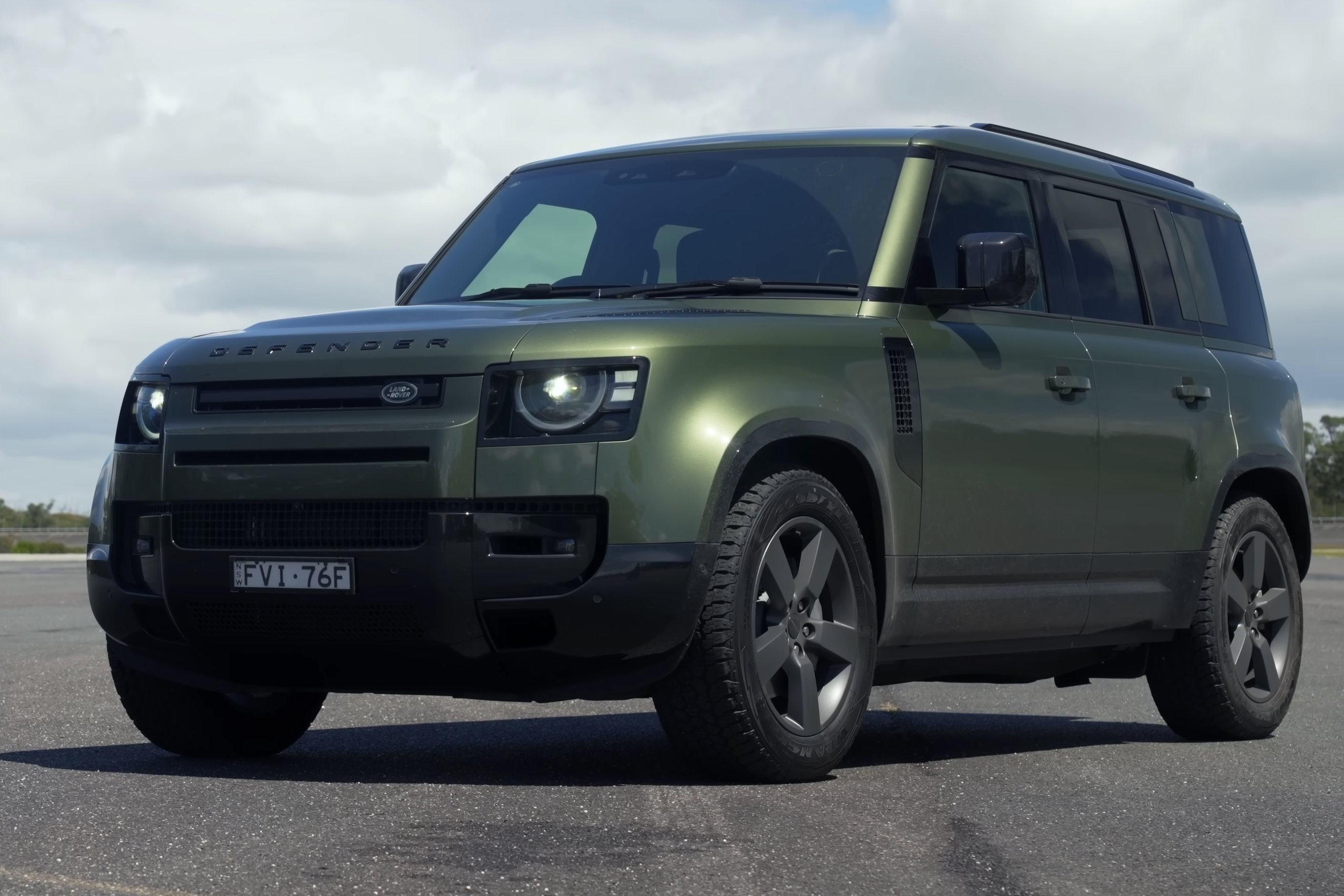
JLR's Defender, the design at the centre of the Dutch office raid
JLR's Defender, the design at the centre of the Dutch office raid, Image: CarExpert

A crowded field of Defender lookalikes

Defender-inspired SUVs are far more common in China than in Australia, but the local ranks already include the Denza B5 and GWM Haval H7, with the Geely Battleship 700, iCaur V25 and Jetour T2 due next year. Rox Motor has confirmed an Australian launch with a pair of SUVs that look much like the Defender. China has many more, among them the BAIC Xingtan 5X and Hongqi G919.

British buyers have already shown an appetite for the formula. The Jaecoo J7, a boxy Chinese SUV in the Land Rover mould, topped the UK sales chart for a second consecutive month and is on track to be the country's best-selling vehicle of 2026, per Autocar.

That commercial backdrop explains why JLR is picking its battles. A design win against BYD would set a marker for a whole generation of boxy Chinese SUVs, while a loss would leave the field open for the rest.
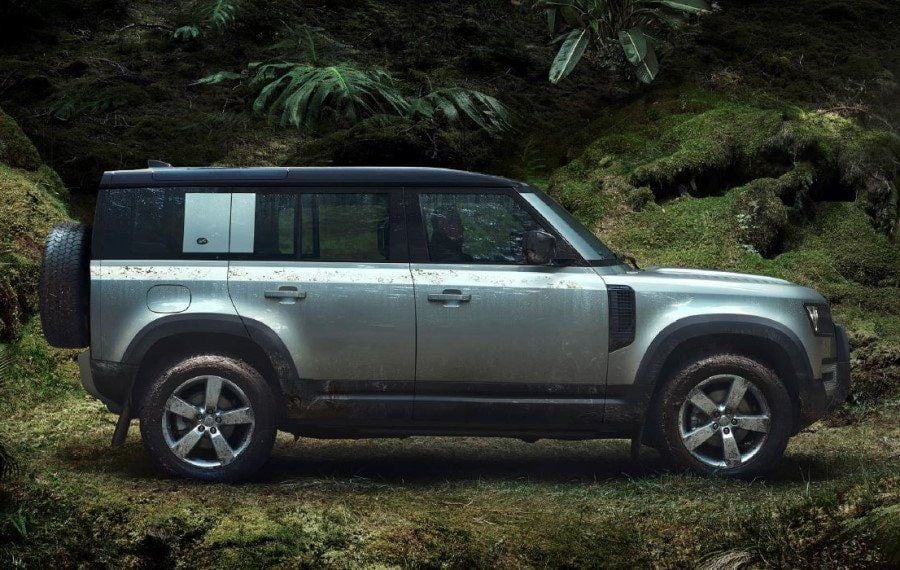
The Defender: the silhouette JLR says the Ti7 copied
The Defender: the silhouette JLR says the Ti7 copied, Image: CarExpert
Open this article ↗
Electric / TDCN ORIGINAL

BYD's Yangwang U9 Xtreme hits 503.17km/h to claim FIA-recognised speed record

The 2,220kW electric hypercar, limited to 30 units, went past 500km/h on a closed road in Abu Dhabi after two earlier attempts fell short.

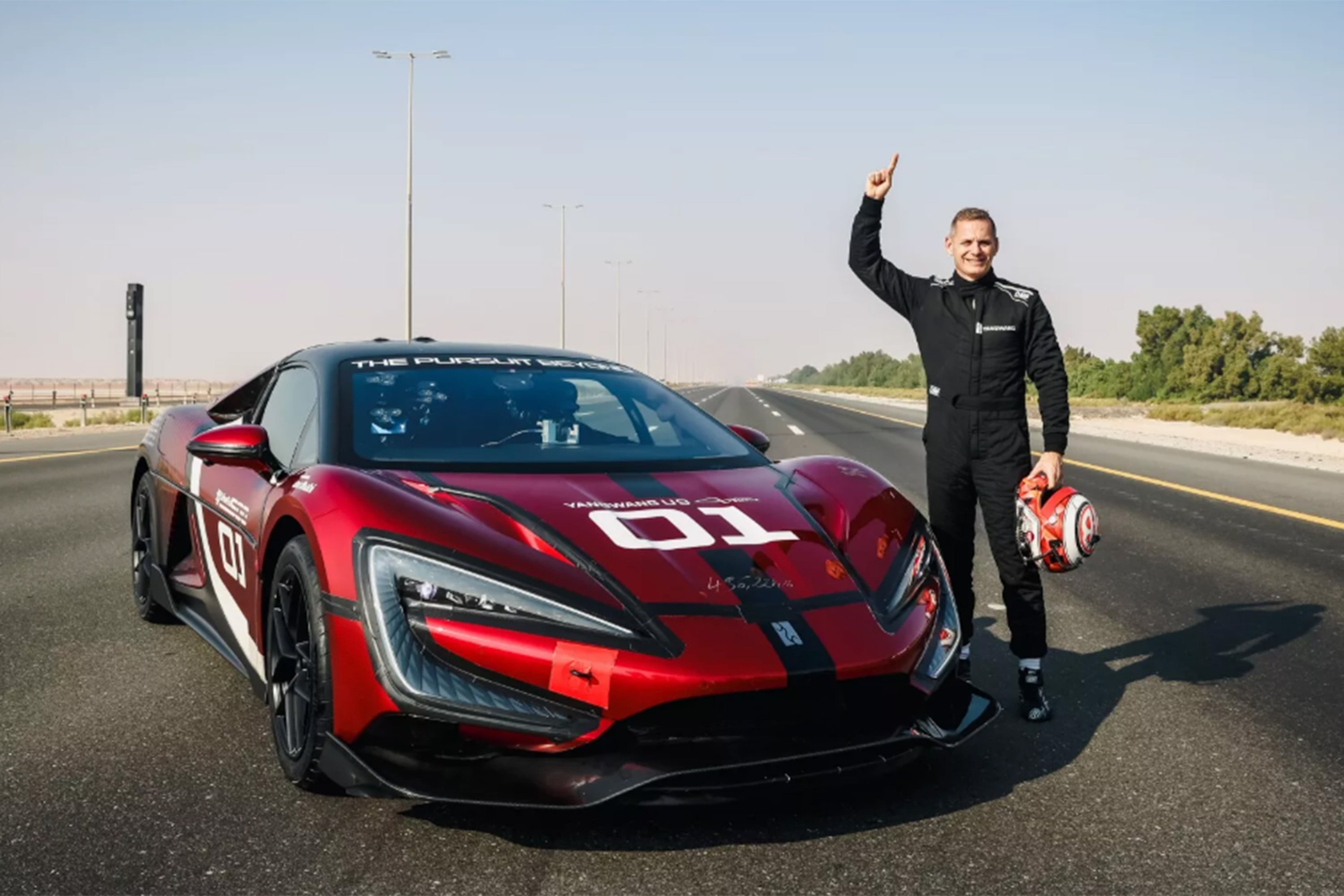
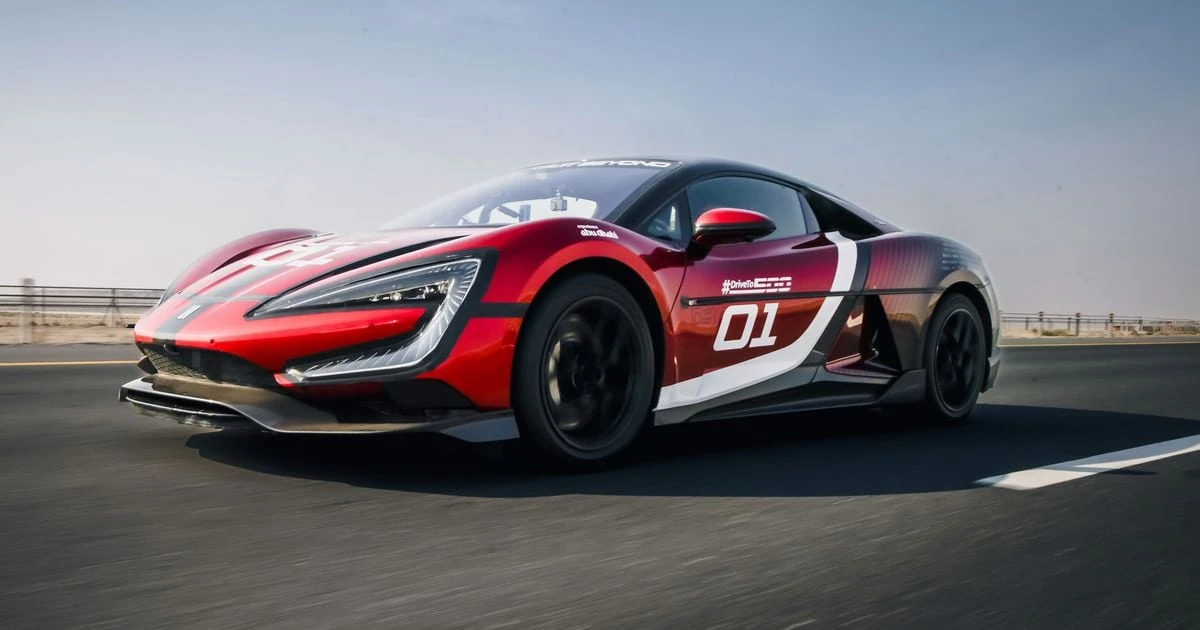
BYD's Yangwang U9 Xtreme has become the first production car to exceed 500km/h, recording a single-direction top speed of 503.17km/h on a closed 10-kilometre section of road in Abu Dhabi's Al Dhafra Region on November 1, 2026. The FIA recognised the run, and it also earned two Guinness World Records: highest speed by a production car and highest speed by an electric production car, both in a single-direction run.

The record was set by German racer Marc Basseng, the same driver who took the U9 Xtreme to its previous best of 496.22km/h in 2025 on a test track in Germany. Two attempts on October 31 topped out at 490km/h before engineers adjusted the car's aerodynamics, suspension settings and tyre pressures ahead of the successful run.

How the record compares

The 503.17km/h figure extends the U9 Xtreme's margin over the Bugatti Chiron Super Sport 300+, which recorded 490.484km/h in 2019. The Bugatti remains the fastest internal combustion road car on a single-direction run, while the SSC Tuatara holds the separate two-way production-car record with a 455.3km/h average set in 2021.

Those distinctions matter because top-speed claims are only comparable when the measurement method matches. A single-direction run and a two-way average are different tests, and the U9 Xtreme's headline number belongs to the former category.

The car behind the number

The U9 Xtreme, previously called the Track Edition, is the flagship version of Yangwang's two-door electric hypercar, built in a run of 30 cars priced above ¥20 million, or about $4.36 million at the conversion cited, against ¥1.8 million ($392,000) for the regular U9.

It uses a 1200V architecture and four electric motors, one per wheel, for a combined 2220kW, more than double the standard U9's 960kW. The regular U9 produces 1680Nm and claims 0-100km/h in 2.36 seconds and a standing 400m time of 9.78 seconds; BYD has not published official acceleration figures for the Xtreme.

The standard U9 launched with a claimed 309.19km/h top speed and later reached 391.94km/h in testing before the Xtreme went faster still. The Xtreme also holds a Nürburgring Nordschleife lap of 6 minutes 59.157 seconds, the fastest recorded by a production electric vehicle.

The driver signals number one after piloting the U9 Xtreme to 503.17km/h
The driver signals number one after piloting the U9 Xtreme to 503.17km/h, Image: CarExpert

What BYD says, and what it means

BYD executive vice-president Stella Li said the team was already reviewing data and planning the next step while celebrating the 496.22km/h run in Germany last year. "503.17km/h is a fantastic achievement, and it moves the benchmark for pure electric power even further ahead of where others might dream," she said.

The record is a marketing asset more than a sales one, given the 30-car build and seven-figure price. Its value lies in what it demonstrates about BYD's high-voltage, four-motor hardware, technology that can filter down to models more buyers can afford.

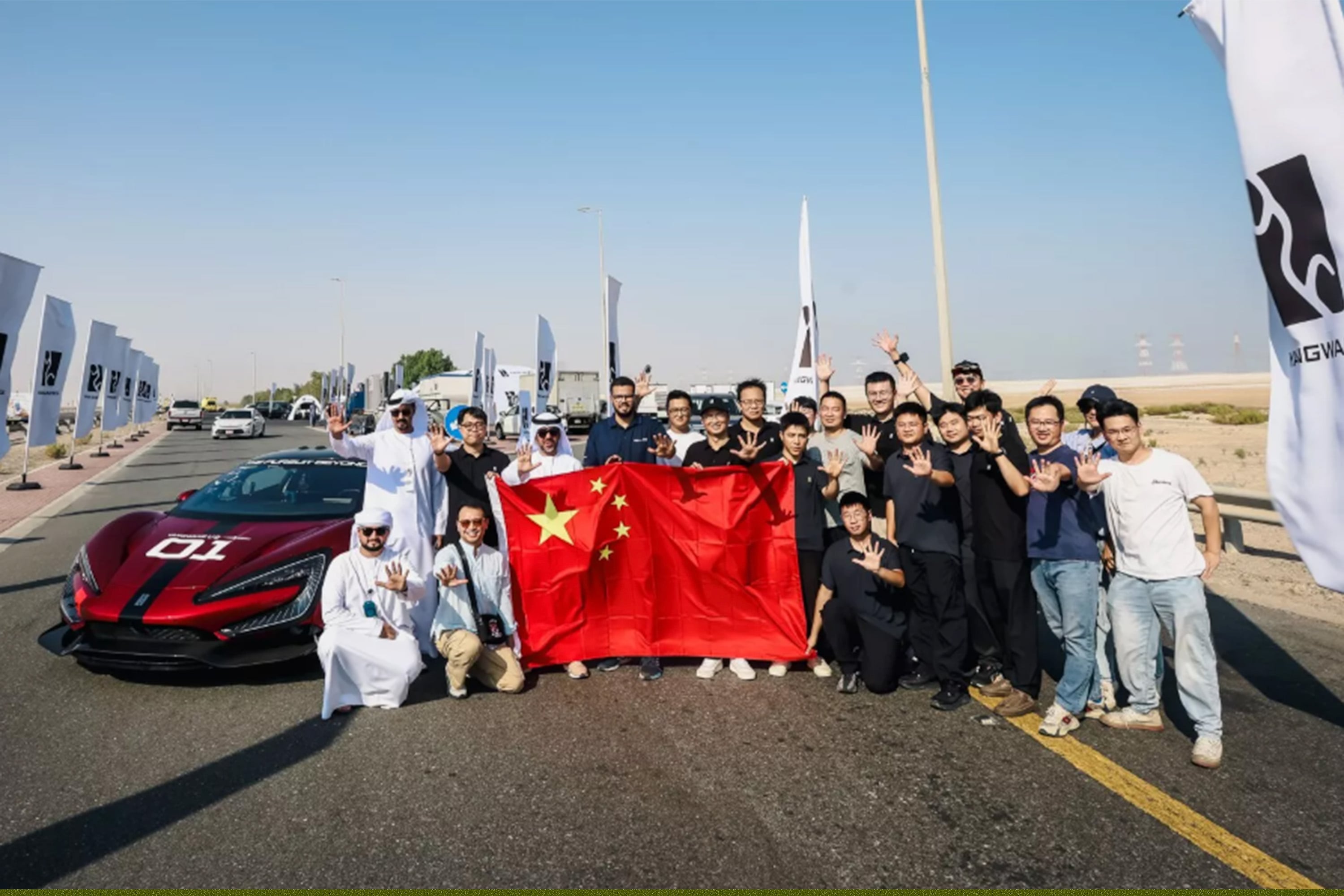
Team and crew celebrate the record run beside the U9 Xtreme, China's flag flying over the achievement
Team and crew celebrate the record run beside the U9 Xtreme, China's flag flying over the achievement, Image: CarExpert

Australian connection

The standard U9 is not sold in Australia, but Nick Politis, a director of Eagers Automotive, ordered a U9 Xtreme in April 2026, with delivery expected in early 2027. That makes the record a local story for at least one Australian buyer, even though the model has no official retail presence in the country.

Open this article ↗

Keep scrolling to read the next story.

Older articles →