INDEPENDENT AUTOMOTIVE NEWSGLOBAL PERSPECTIVE / AUSTRALIAN EDITION
TDCNTHE DAILY
CAR NEWS.

The road ahead.
Every day.

RSS ↗
Latest/New cars

455 original articles

New cars / TDCN ORIGINAL

Ram Rampage compact pickup launches in Europe from €44,000 before tax

The Brazilian-built Rebel and R/T arrive through importer KW Auto with first deliveries due in February 2026, priced above a US-market Ram 1500.

Image: Carscoops

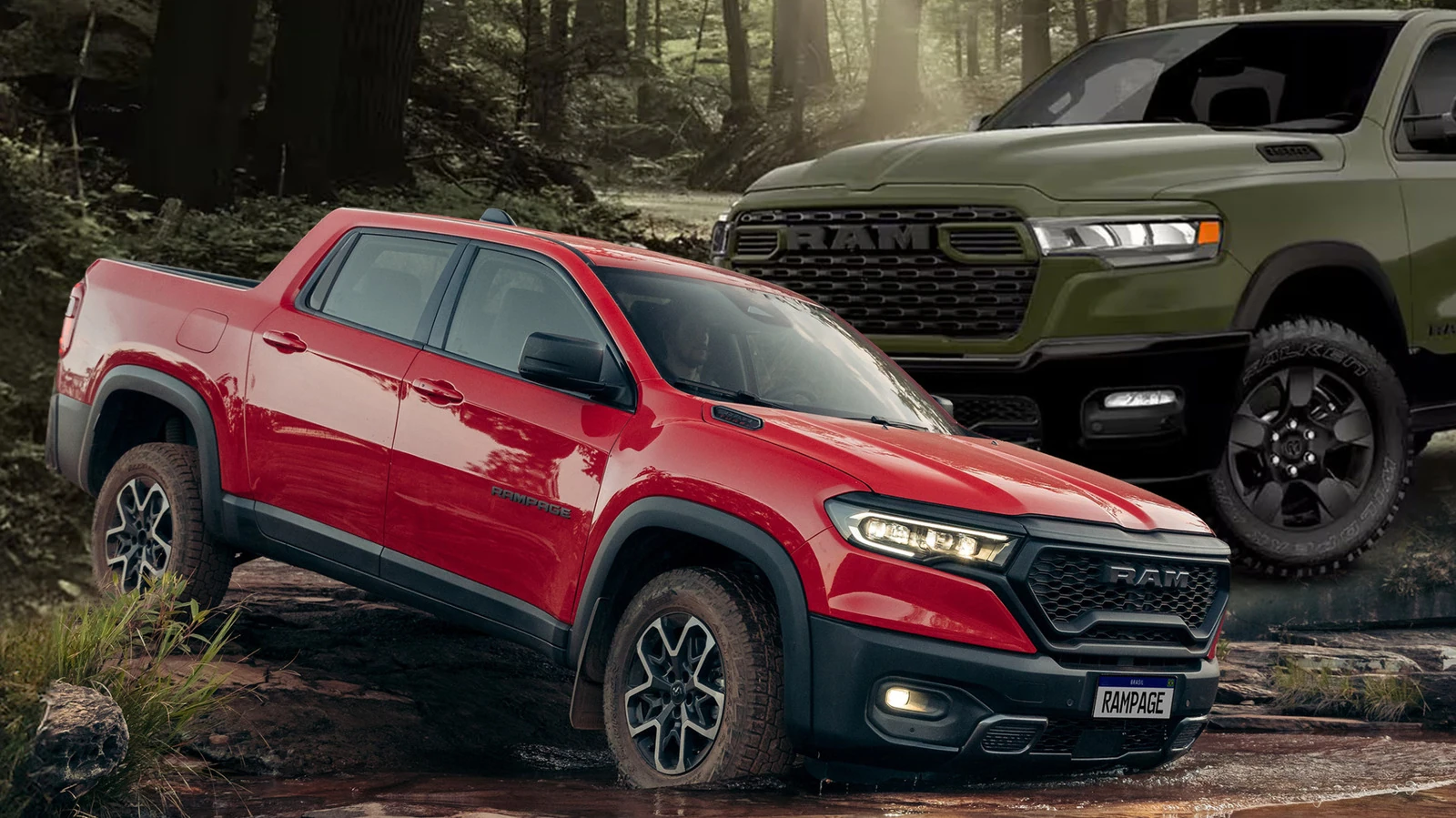
Ram's compact Rampage pickup will reach European buyers from €44,000 before taxes, with first deliveries expected in February 2026 and distribution in major markets handled by importer KW Auto. Two high-specification trims are being offered, the off-road-flavoured Rebel and the road-focused R/T, three years after the model launched in South America.

Two trims, two four-cylinder engines

The Rebel uses a 2.2-litre turbodiesel four-cylinder making 197 hp (147 kW), while the R/T carries a turbocharged 2.0-litre petrol four rated at 268 hp (200 kW). Both send power to all four wheels through a nine-speed automatic gearbox, and neither is electrified.

The Rampage is a unibody compact truck measuring 198 inches (5,028 mm) long, built on the Small Wide platform sourced from the Jeep Compass with a multilink rear suspension. Its bed holds 980 litres (34.6 cubic feet), and payload is quoted between 1,653 and 2,238 lbs (750 to 1,015 kg), the top figure comparable with one-tonne midsize pickups.

Standard equipment is generous: a 12.3-inch infotainment screen, a 10.3-inch digital instrument cluster, leather upholstery, 12-way power front seats, Harman Kardon audio and Level 2 driver assistance. The Rebel adds plastic cladding and 17-inch wheels on all-terrain tyres, while the R/T gets a sportier body kit, lowered suspension, a louder exhaust and 19-inch alloys.
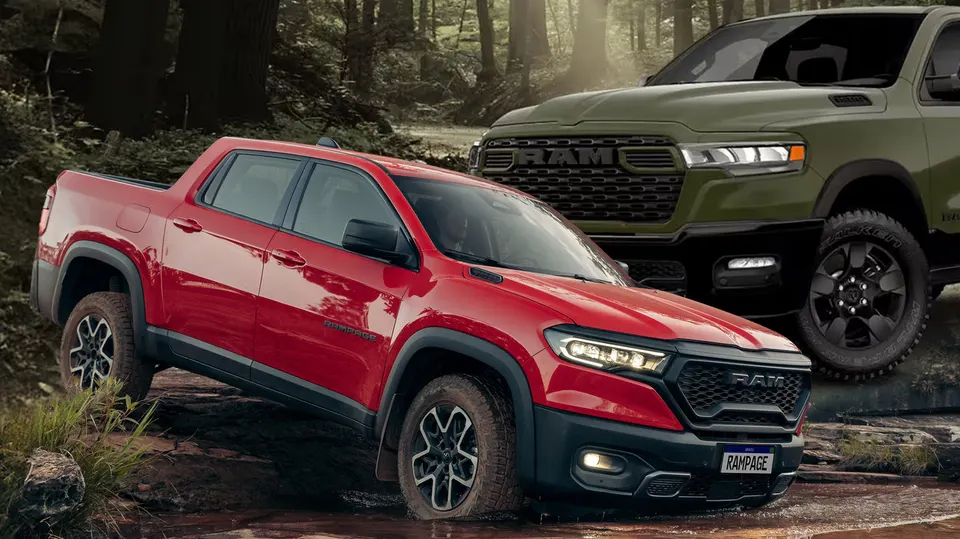
The new Ram Rampage compact pickup, shown here in red, brings Ram's rugged styling to a smaller European-focused package
The new Ram Rampage compact pickup, shown here in red, brings Ram's rugged styling to a smaller European-focused package, Image: Carscoops

A compact truck priced like a full-size one

The European figure sits well above Brazilian pricing, which runs from R$199,990 to R$225,490 (about $36,300 to $41,000) depending on specification. For American buyers, the contrast is sharper still: the full-size Ram 1500 starts at $42,025 in Tradesman form, and the better-equipped Big Horn at $47,280. Europeans are therefore paying more for a compact four-cylinder unibody pickup than Americans pay for a full-size six-cylinder truck.

That gap is partly a matter of specification. Ram is aiming the Rampage at lifestyle buyers, which is why only the flagship trims crossed the Atlantic rather than the cheaper versions sold in South America.

The competitive picture in Europe is unusual. The Rampage will be the only compact unibody pickup on sale there, since its South American rivals, the Ford Maverick and Renault Niagara, are not offered. Buyers wanting an alternative will be looking at traditional midsize ladder-frame trucks: the Ford Ranger starts at €46,590 in Germany and the Toyota Hilux at €46,746 in the same market. Against those, the Ram's €44,000 pre-tax figure undercuts both on list price, though the comparison is not like for like given the size and construction differences.

What is still open

Ram has not published individual pricing for each European market, so the €44,000 figure is the headline starting point before taxes rather than a country-by-country price list. Equipment lines and final on-road costs may vary by market once KW Auto's distribution rolls out ahead of the February 2026 deliveries.

US buyers still cannot order a Rampage. Ram is developing a separate midsize Dakota on a ladder-frame chassis for the American market, which despite the shared name will differ from the South American Dakota that uses Chinese underpinnings.
Open this article ↗
Electric / TDCN ORIGINAL

ZF unveils a 30,000 rpm EV drive unit aimed at everyday electric cars

The integrated motor, power electronics and transmission is claimed to weigh nearly 25% less than ZF's comparable Select unit, with half the magnet mass.

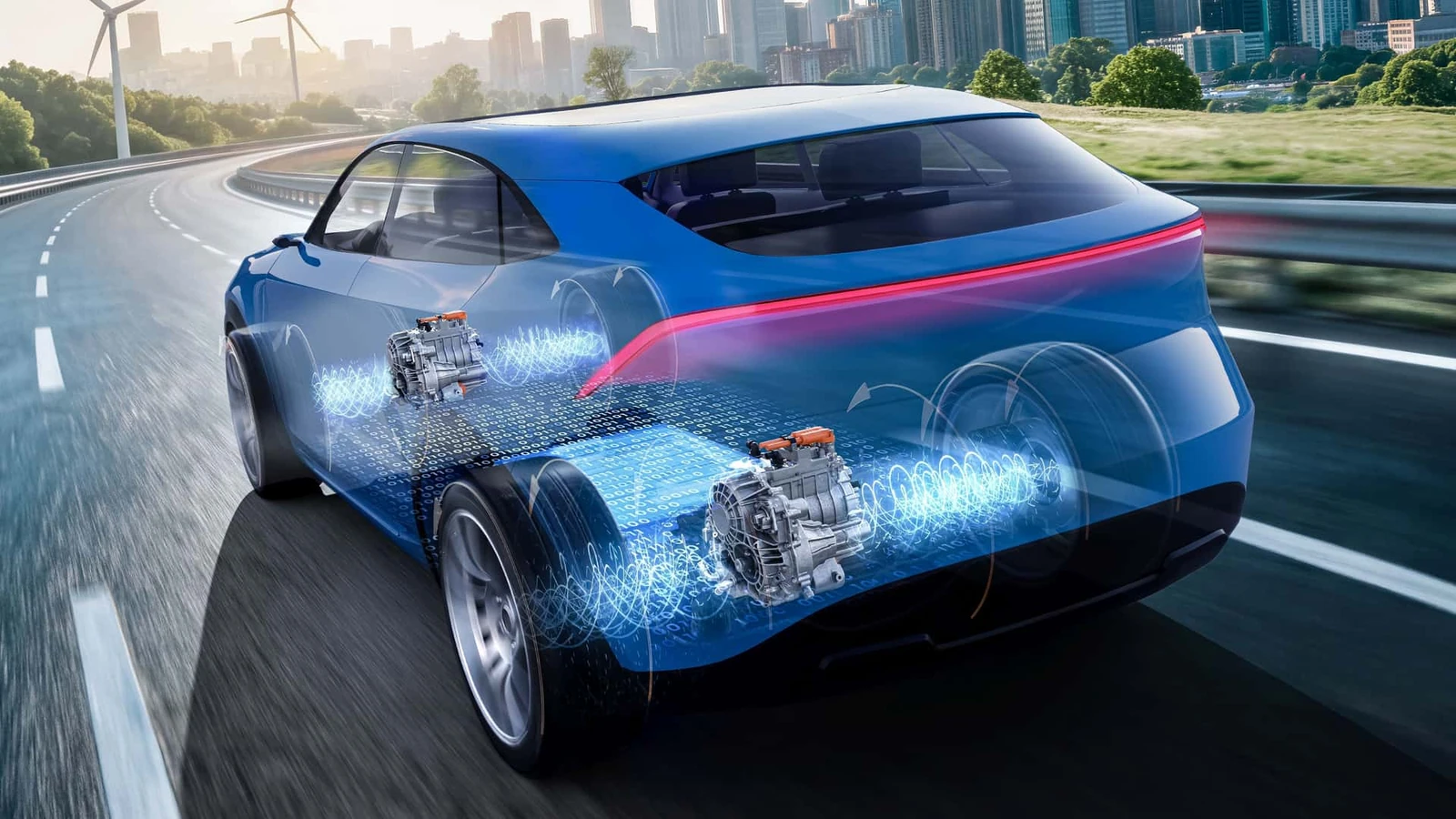
ZF has revealed a new integrated electric drive unit that spins to 30,000 rpm, pitched not at supercars but at the mainstream electric cars ordinary buyers drive. The German supplier says the High Revolution Drive targets production by 2030, though it has not yet named a single vehicle that will use it.

The unit packages motor, power electronics and transmission in a single housing. Against one of ZF's comparable Select drive units, which spins to 18,000 rpm, the company claims nearly 25% less weight and volume, half the magnet mass and efficiency of almost 93%.

How the high-rev approach works

ZF's logic is that spinning the motor faster lets it produce the same power from a smaller, lighter package. A reduction ratio of roughly 18:1 then brings that speed down and multiplies turning force to the wheels.

The version ZF showed produces up to 268 horsepower, with the gearing delivering peak torque of 2,581 pound-feet (3,500 Nm) at the wheels. That torque figure is measured after the gearing has multiplied the motor's output, so it is not a direct read of the motor itself.

The "two-stage transmission" label describes successive gear reductions rather than a two-speed gearbox with two separate driving ratios. ZF says the production High Revolution Drive should deliver 200 to 268 hp and work with both 400- and 800-volt platforms.

Why magnets and mass matter

Cutting magnet content is about more than cost. Fewer magnets reduce dependence on a constrained supply chain, while lower mass helps range, which is why suppliers are pushing in this direction for volume models rather than halo cars.

Reusing ZF's modular Select architecture should simplify installation, shorten development time, control costs and preserve manufacturing flexibility. ZF says talks with automakers are underway.

The comparison with Yasa shows how carefully these claims need to be read. One prototype of Yasa's ultra-compact axial-flux motor produced over 1,000 hp and weighed just 28 pounds, with continuous output estimated at 469 to 536 bhp. That figure covers the motor alone, whereas ZF's weight reduction applies to the whole integrated drive unit, and gearing and power electronics still have to live somewhere and add weight.

Repair kits and the questions left open

ZF has also introduced repair kits intended to let workshops fix individual drive unit components, such as gearbox bearings, instead of replacing entire assemblies. That addresses a different problem from shrinking hardware, but one owners may care about more once a warranty expires.

ZF has not said whether the two developments are connected, or whether the repair kits amount to a repairability promise for this new drive.

The bigger gaps are commercial. No production EV has been named for the unit, and ZF has not said whether the engineering gains announced today will hold unchanged in the version that reaches showrooms.

Whether the weight and cost savings reach buyers has not been announced either. ZF's claims concern the drive unit as supplied to automakers, and the company has not said how much of that saving, if any, would show up in showroom prices or in the range figures buyers see. The savings are a starting point, not a promise at the till.

A quieter kind of EV progress

This is the unglamorous end of EV development, and it matters more than a four-figure horsepower headline for most drivers. A family car does not need to break acceleration records, but a lighter, cheaper drive unit is exactly the sort of hardware improvement that could make everyday electric cars more affordable and more efficient.

The catch is timing. With production targeted for 2030 and no confirmed customer, the High Revolution Drive is a signal of where mainstream EV hardware is heading rather than something a buyer can order now.

Open this article ↗

Keep scrolling to read the next story.

Older articles →