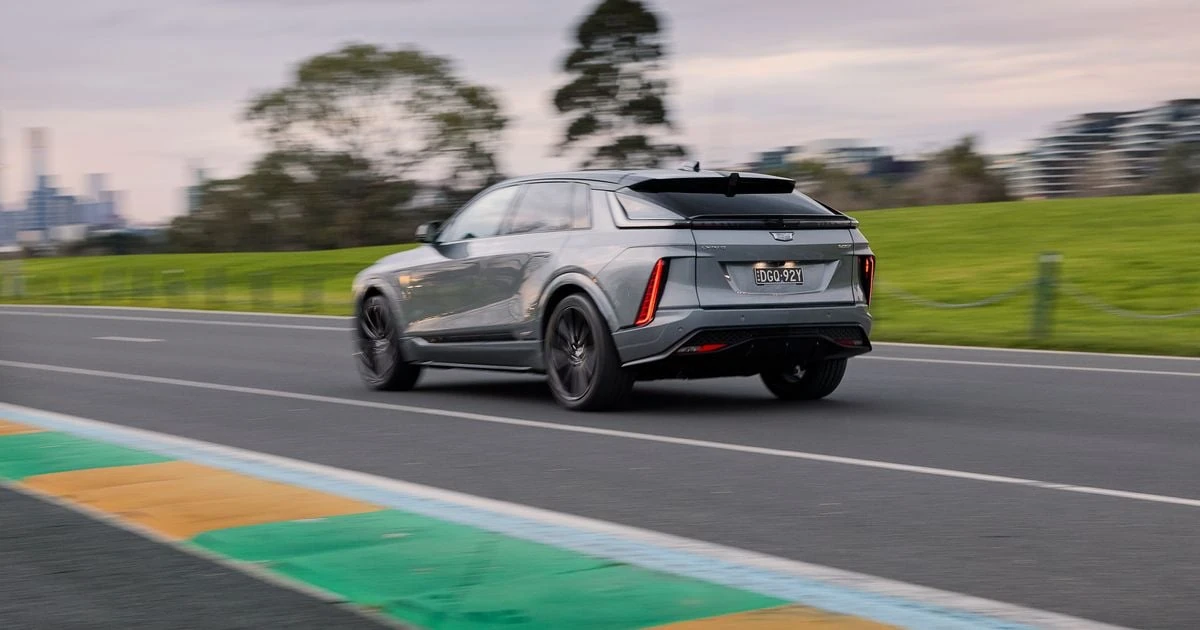
Cadillac has built electric concepts capable of lapping a circuit, but none has yet cleared the company's own durability standards, which is why the brand's EVs are not yet sold as track cars. Tom Schinderle, a Cadillac vehicle performance engineer, said the company's electric performance models are currently tuned for spirited road driving rather than circuit work.
Speaking to CarExpert at a General Motors event in New York, Schinderle said the obstacle is thermal endurance: keeping battery and motor temperatures in check over sustained laps rather than a single fast one.
Why a fast lap is not enough
Schinderle framed the gap as a durability question rather than a power one. Many performance EVs can deliver one blistering lap, but heat builds in the battery and motors and output is often scaled back soon after. Cadillac does not want to badge a car as track-capable until it can keep going.
"Right now, our holdup is we have been gearing our EVs more to the canyon carving, spirited driving, and not full track performance at the moment," Schinderle said. "There's a lot of engineering work on the thermal side to make sure we have a car that can do it lap after lap after lap".
He said GM's internal durability standards are stricter than those of its competitors and that Cadillac holds itself to that higher level. "We've certainly come up with concepts that are track capable, but haven't passed all of our internal benchmarks that are critically important," he said.
That matters because a track badge is a promise about repeated use, not a peak number. Buyers comparing electric performance cars increasingly look at whether power holds up over a session, and Cadillac is effectively saying it will not make that claim until its own tests back it.
Blackwing stays a V8 sedan for now
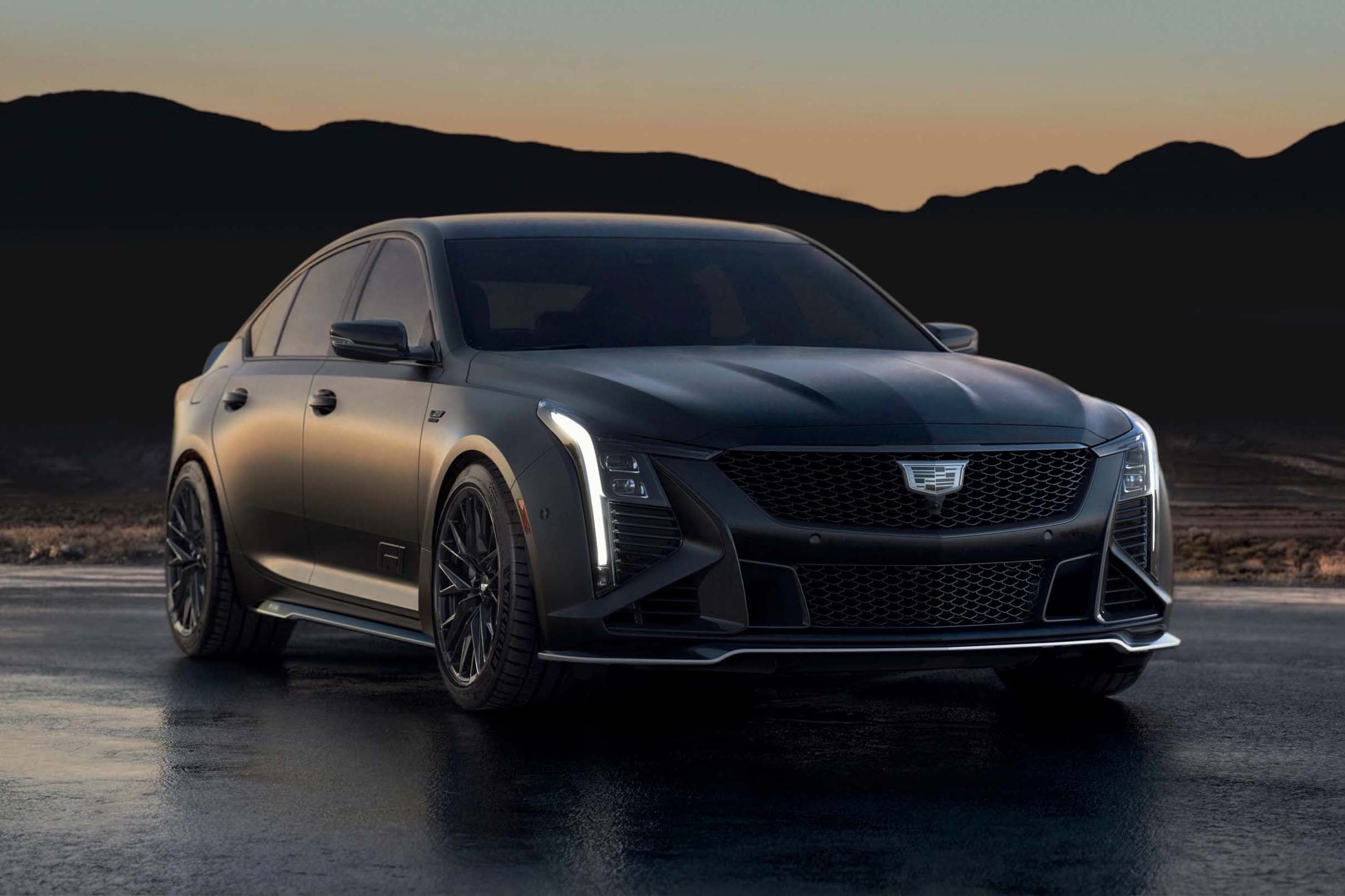
Cadillac splits its performance lineup between V-Series models, including the electric Lyriq-V and Optiq-V and the supercharged V8 Escalade-V, and the more hardcore, track-focused V-Series Blackwing line. Until recently the Blackwing category included the twin-turbo V6 CT4-V Blackwing; now the only Blackwing model is the supercharged V8 CT5-V Blackwing, which Schinderle works on.
No Cadillac EV has been confirmed for a Blackwing badge, and the sources give no date for when one might arrive. Schinderle said the combustion-powered V-Series sedans set the benchmark: "These V-Series ICE sedans, I mean, they can [do] lap after lap after lap, and so we are certainly investigating that on the EVs. We're just not quite ready to commit to that yet".
His comments echo those made last year by Lyriq-V lead development engineer Alex Doss, who pointed to battery weight and cooling as the main hurdles to a Blackwing-badged EV.
Traction tech could follow once the tests are passed
The Blackwing sedans use Performance Traction Management, a multi-stage traction and stability control system that lets drivers progressively dial back intervention on track. Asked whether something similar would come to Cadillac's EVs, which can control torque far more precisely than a combustion engine, Schinderle said it was likely, but only once the durability work is done.
For drivers, the near-term picture is straightforward: Cadillac's electric V-Series cars are positioned for road use, and the track-focused electric models remain a future step rather than a current showroom claim. The smarter move for buyers eyeing an electric Cadillac for track days is to treat the V-Series badge as a road-performance marker until the brand says otherwise.