INDEPENDENT AUTOMOTIVE NEWSGLOBAL PERSPECTIVE / AUSTRALIAN EDITION
TDCNTHE DAILY
CAR NEWS.

The road ahead.
Every day.

RSS ↗
Latest/New cars

455 original articles

New cars / TDCN ORIGINAL

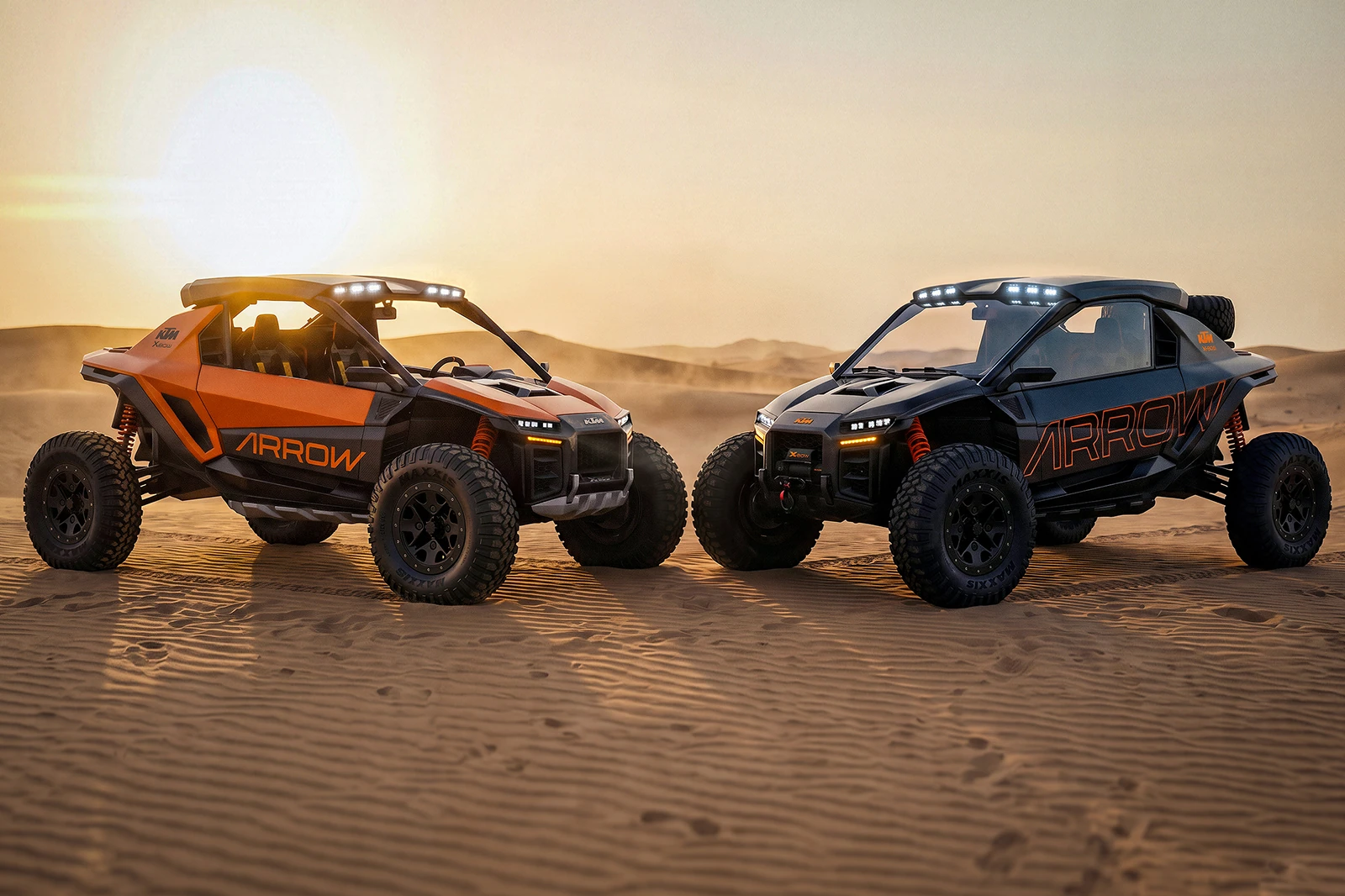
KTM reveals the Arrow, an Audi-engined off-road SSV with up to 325bhp

The Austrian firm's new side-by-side rally-raider opens for US orders next week, with deliveries slated for late 2027.

KTM has revealed the Arrow, a side-by-side off-roader that packs Audi S3 power and is aimed squarely at the Ariel Nomad. The Austrian lightweight specialist says order books will open in the US next week, with prices starting at the equivalent of £44,000 for the standard car and £73,000 for a 500-unit launch edition.

The Arrow is the work of Belgian rally driver Guillaume de Mévius, who led the consortium that bought KTM's road car division from the motorbike maker in August last year and finished second on the 2024 Dakar Rally. It was developed with his G Rally team, recently rebranded as the KTM X-Bow Lab Team, and is effectively a toned-down version of the rally-raider built for Dakar's new SSV category.

Audi power and off-road hardware

The engine is the Volkswagen Group's 'EA888' 2.0-litre turbo petrol four, the same unit used in the S3 and other group hot hatchbacks. It produces 276bhp as standard or 325bhp in the launch edition, driving both axles through a seven-speed dual-clutch automatic and two limited-slip differentials.

KTM has not yet published full specifications, so performance figures such as 0-62mph and top speed have not been announced. The quoted kerb weight is 999kg, which on paper gives the Arrow a clear power-to-weight advantage over the 715kg Ariel Nomad with its Honda-derived 2.0-litre engine and 3.4sec 0-62mph time, though no like-for-like acceleration comparison has been released.

Underneath, the Arrow uses a chromoly-steel chassis with double-wishbone suspension and KW Reiger shocks at each corner offering 600mm of travel, a figure KTM frames around landing after brief periods of flight.

An enclosed cabin in an SSV

Unlike KTM's Dakar competition cars, the Arrow has a closed cabin. KTM describes the refinement as rarely seen in the SSV segment: the seats are premium Sabelt items, there is a full digital display and a central touchscreen with smartphone pairing, and the top-spec model gets air conditioning as standard.

It is still a spartan, motorsport-rooted cockpit. The passenger grab handle, fabric door pulls and fly-off hydraulic handbrake are the details that separate it from a recreational off-roader such as a Jeep Wrangler.

KTM says the Arrow is primarily designed for off-road use, but road registration will be possible in some markets depending on local laws. That flexibility matters because it lets the car compete for buyers who want a Nomad-style toy they can legally drive to the trail rather than trailer it there, although the final call rests with each market's regulators.

What is still unknown

The US is the first market named, and the prices quoted are given as sterling equivalents rather than confirmed local figures. KTM has not announced Australian availability or pricing, so buyers here have no confirmed on-sale date or AUD figure yet.

Full technical specifications, including acceleration and top speed, remain undisclosed. Deliveries are scheduled to begin in late 2027.

Where the Arrow fits

KTM launched with the original X-Bow in 2008 and now operates separately from the motorbike maker of the same name following the ownership change. It revealed a new version of its track-focused GT-XR flagship last month and is using the Arrow to expand into a new segment.

The move puts KTM into a niche where lightweight philosophy meets rally raid hardware. The Nomad has shown there is demand for a road-legal buggy with serious power, and the Arrow's Dakar-derived development and enclosed cabin give KTM a distinct pitch: more comfort and more power than the established rival, at a price that starts well above a conventional off-roader.
Open this article ↗
Performance / TDCN ORIGINAL

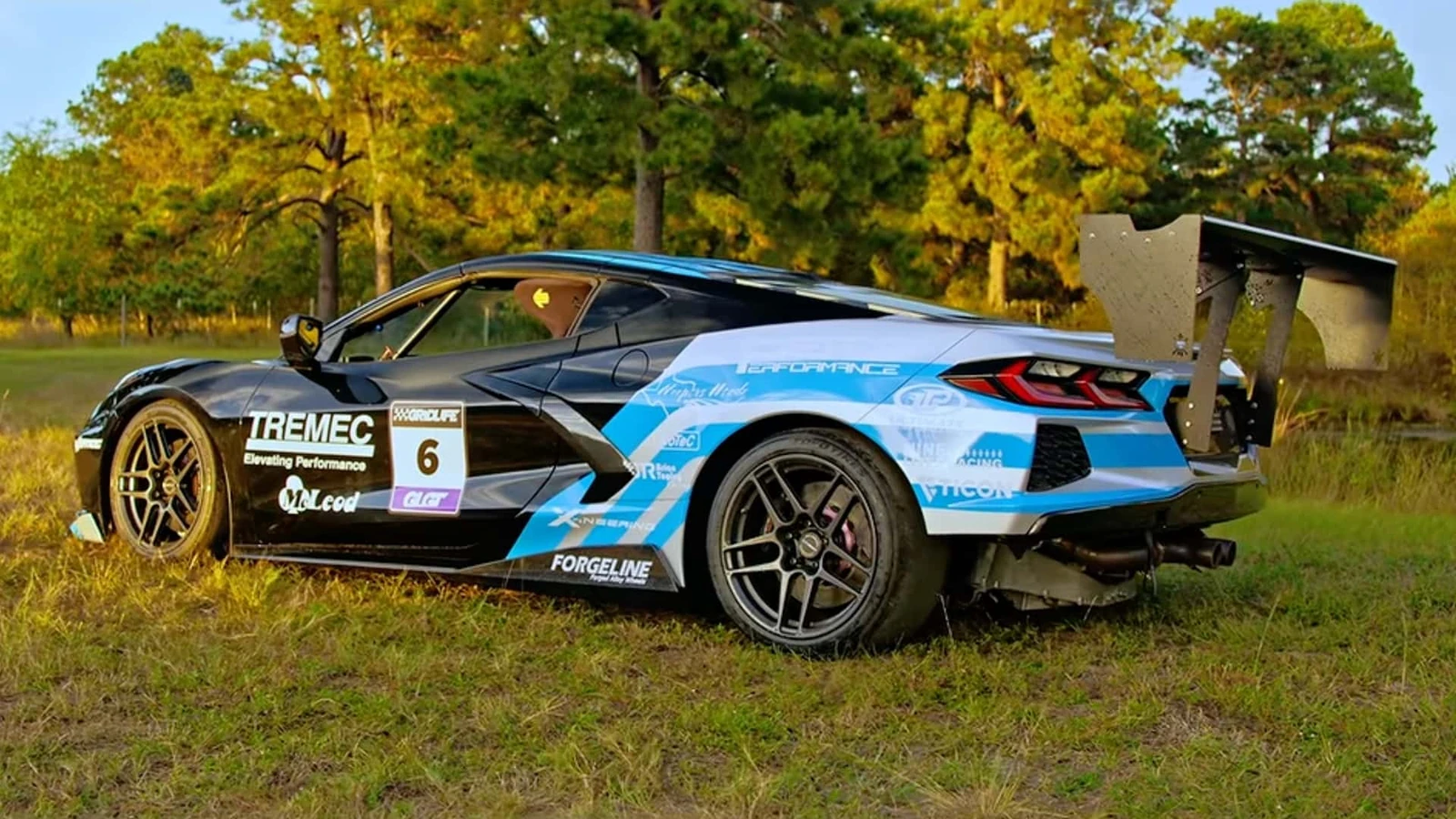
Peitz Performance to sell a manual conversion for the C8 Corvette from $60,000

The aftermarket kit gives the mid-engine Stingray the gearbox Chevrolet declined to build, with Tremec transmission production due in mid-2027.

Image: Motor1

Peitz Performance Tune will offer a manual gearbox conversion for the C8 Chevrolet Corvette Stingray, priced at roughly $60,000 to $70,000 on top of the cost of the car. Company founder Alex Peitz outlined the plan in a new video, saying the conversion is currently compatible only with the base Stingray.

Chevrolet has said repeatedly that it has no plans to add a manual to the mid-engine Corvette, leaving the job to the aftermarket. The C8 was the first Corvette in the model's history to launch without a manual option.

What the conversion involves

Fitting a clutch pedal and shifter to a car designed around a dual-clutch automatic is not a bolt-in job. Peitz says the Tremec-supplied transmission was designed to fit the C8, which simplifies installation, but the car still needed a clutch, a shifter, the associated hardware and software to make the system work.

The Corvette's existing MoTeC control unit helped the team work around the car's locked-down electronic controls. Inside, the upgrade reshapes the centre tunnel to take the shifter. Each converted car gets a new centre console that hides the PRNDL controls, keeps the row of buttons and retains the drive-mode selector.

At $60,000 to $70,000 before the price of the donor car, the conversion costs more than many new vehicles. That matters because it narrows the appeal to buyers who specifically want a three-pedal C8 rather than those simply shopping for the cheapest way into mid-engine performance.

Timing and availability

Peitz says Tremec will begin producing the manual transmission next summer, in mid-2027. Until then, Peitz will keep refining the package and plans to handle all installations itself, rather than handing kits to other workshops, until the company is confident the conversion can be offered as a complete kit.

Chevrolet has not announced any factory manual for the C8, so the Peitz car is the only route to a self-shifted mid-engine Corvette for now. Buyers outside the Stingray range, including the higher-performance C8 variants, are not yet covered by the conversion.

Why Chevrolet dropped the manual

Chevrolet's decision came down to cost and buyer preference. Tony Roma, the C8's chief engineer, said the manual transmission offered in previous Corvettes was "mostly paid for", and the company kept it in production because the cost was reasonable. The C8's new mid-engine layout prevented Chevrolet from reusing that gearbox.

Building a manual for the C8 would have meant designing an all-new transmission, which the automaker could not justify after C7 buyers overwhelmingly chose the automatic. Vehicle engineer Josh Holder said in March: "The market was voting with their wallets, and we didn't get enough votes".

That reasoning explains why the aftermarket, not Chevrolet, is filling the gap. The C8's sales success came overwhelmingly with two pedals, so a manual was always going to be a niche product. Peitz is effectively betting that a small, devoted group will pay a premium for the experience Chevrolet decided not to sell them.

Open this article ↗

Keep scrolling to read the next story.

Older articles →