INDEPENDENT AUTOMOTIVE NEWSGLOBAL PERSPECTIVE / AUSTRALIAN EDITION
TDCNTHE DAILY
CAR NEWS.

The road ahead.
Every day.

RSS ↗
Latest/New cars

455 original articles

New cars / TDCN ORIGINAL

Mercedes-AMG builds a one-off SL 55 as the WTA Finals winner's prize

The Ultraviolet roadster, finished through AMG's Manufaktur Made to Measure programme, goes to the singles champion at Indian Wells on November 15, 2026.

Image: Motor1

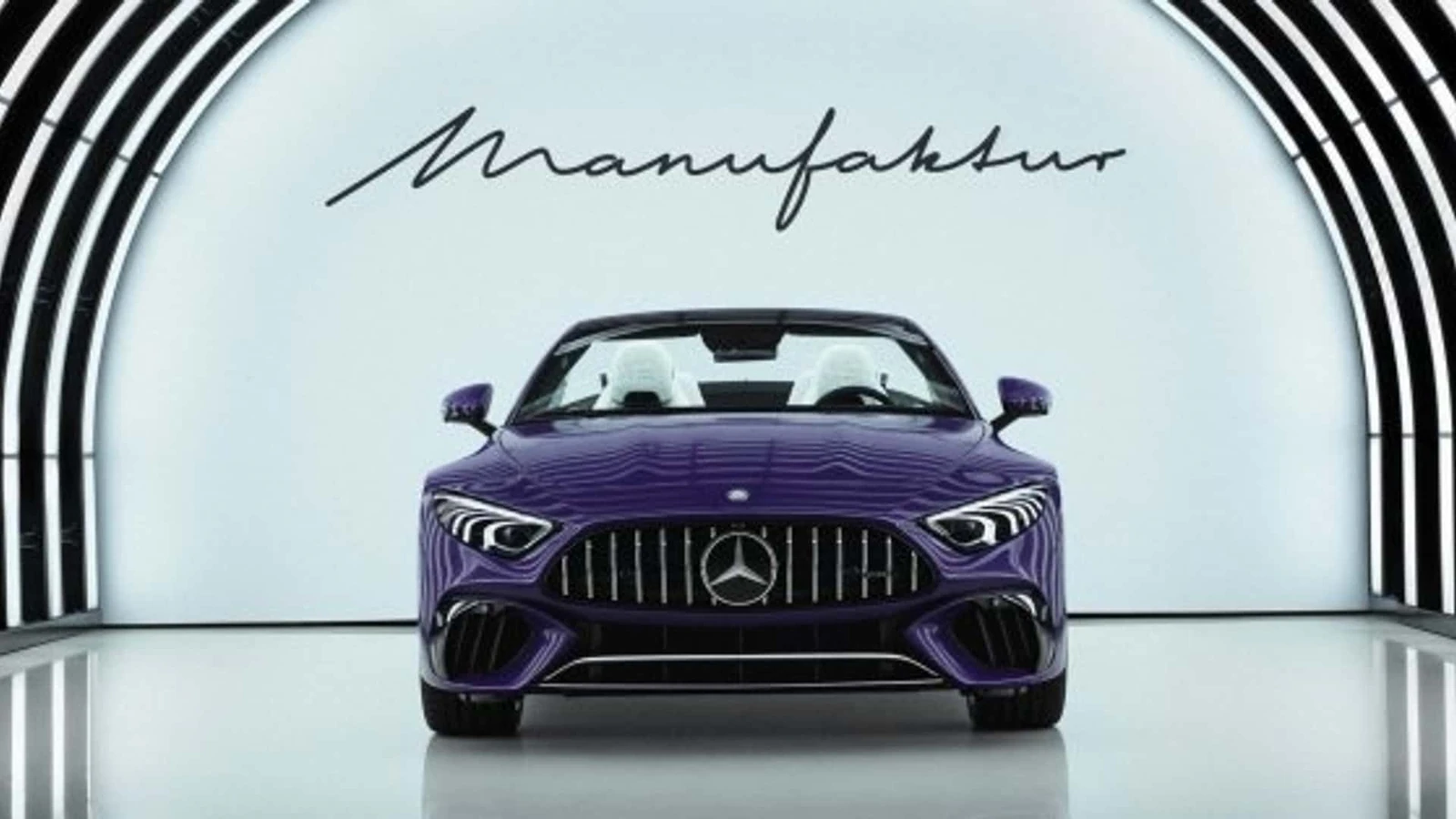
Mercedes-AMG has built a single Mercedes-AMG SL 55 4Matic+ that will be handed to the winner of the 2026 FAGE WTA Finals singles title, with the keys presented during the trophy ceremony on November 15, 2026 in Indian Wells, California. The car was unveiled at a WTA Clubhouse event in Los Angeles ahead of the tournament, which runs from November 8 to 15.

It is a one-off commission, so the exact specification cannot be ordered from a dealer: it exists for one champion and one result on court. The runner-up does not receive it, and the doubles champions get a different prize entirely.

The car was produced through Mercedes-AMG's Manufaktur Made to Measure programme, the division that handles bespoke commissions. Its exterior is finished in a Manufaktur Made to Measure Ultraviolet paint drawn from the WTA's own colour scheme, and it rides on 21-inch AMG forged cross-spoke wheels.

Inside, the SL swaps its standard trim for Crystal White Manufaktur Nappa leather with AMG carbon fibre trim, custom-designed door sills and embroidered headrest cushions. A personalised badge carries the champion's name, which means the car cannot be finished until the tournament has a winner.

The mechanical package is untouched. The 4Matic+ all-wheel-drive system and the rest of the AMG performance hardware carry over from the standard SL 55, with the Manufaktur work limited to paint and upholstery. That is consistent with how the programme has handled earlier one-off commissions.

Mercedes has not published power or torque figures for this particular car, and because the drivetrain is unchanged from the standard SL 55 4Matic+, its output is whatever that model already produces rather than anything specific to the prize. The sources do not restate those numbers, so the safest reading is that the winner gets a standard SL 55 underneath the bespoke finish.

Nor is there a price to quote. The car is a gift tied to the championship rather than a retail order, and no value has been announced for the commission. What is confirmed is that it cannot be bought: it is a single build for a single outcome.

The singles champion is the only driver who takes the SL 55 home. Doubles winners instead receive complimentary 12-month leases of Mercedes-Benz vehicles, a separate arrangement confirmed by the WTA and Mercedes-Benz.

The handover closes out the first season of Mercedes-Benz's role as the WTA Tour's Premier Partner and Exclusive Automobile Partner, a deal that began at the start of the 2026 season. Sarah Swanson, chief brand officer at WTA Ventures, described the car as a fitting way to round off that first season and pointed to the Mercedes-Benz Signature Court and other fan-facing programmes the partnership has produced this year.

Christina Schenck, vice president of digital and communications and investor relations at Mercedes-Benz AG, said the champion's car was made just for her, as individual as her own journey to the top, and that every time she gets into her new Mercedes-Benz, the feeling should be: 'Welcome home'.

A one-off prize car is marketing as much as product. The Ultraviolet paint and Crystal White cabin give Mercedes-AMG a visible presence in a women's tennis final watched well beyond the United States, and the personalised badge turns a standard SL 55 into something no buyer can replicate.

For drivers and car buyers, the practical takeaway is narrower: nothing about the SL 55's chassis, all-wheel-drive system or performance changes here, so the prize says more about how Mercedes-AMG wants the Manufaktur name understood, as a route to individual finishes, than about any new engineering. The one thing the commission does guarantee is timing: the car stays unnamed until the final point is played, and the champion collects it on November 15.

Open this article ↗
Electric / TDCN ORIGINAL

UK government set to cut 2030 EV sales target from 80% to 60%

The Zero-Emission Vehicle Mandate review follows SMMT forecasts that manufacturers will miss the 2026 target by nearly six percentage points.

The UK government is expected to lower its mandated electric vehicle sales targets this week, with the 2030 goal reportedly set to fall from 80% to 60% of new car sales. Transport Secretary Louise Haigh is due to set out the revised Zero-Emission Vehicle (ZEV) Mandate in the coming days, according to reports from The Guardian and the BBC cited by Autocar.

The move follows sustained pressure from an industry whose electric sales have not kept pace with the quotas. The Society of Motor Manufacturers and Traders (SMMT) forecasts that just 27.2% of cars sold across the whole of this year will be electric, against a mandated 33% EV mix for 2026.

What is reportedly changing

Government insiders are said to suggest the 2030 EV sales target could be reduced from 80% to 60%, with car makers retaining access to various flexibilities within the mandate's mechanisms until 2034. Under the existing framework, manufacturers must hit annually increasing EV sales mix targets on the way to an 80% share by 2030, with a ban on new combustion-engined car sales following in 2035.

The Guardian reports that Haigh will finalise the plan after a crunch meeting on Wednesday intended to settle the dispute between the transport, energy and business departments. The changes are expected to be revealed this week.

Why the targets are being revisited

The existing quotas have proven out of step with organic consumer demand, forcing many manufacturers to heavily subsidise their electric cars at significant cost, or to pay penalties for non-compliance. The gap between mandate and market is forecast to widen: the SMMT expects EV sales to reach 32% next year against a 38% target, and to fall 14.5 percentage points behind the 52% target in 2028.

Electric car uptake has nonetheless grown. More than 500,000 were sold from January to November, a 30% year-on-year increase, driven in part by large rises in petrol and diesel costs and by manufacturers expanding their portfolios downwards into more affordable EVs.

SMMT chief executive Mike Hawes framed the problem as one of demand rather than supply. Almost one in three new cars registered in October was electric, he said, describing it as great progress achieved at enormous cost, with industry and government spending billions to help drivers switch. He warned that support cannot be sustained indefinitely while the gap to mandated targets is set to more than double by 2028, just as a new EV-only tax is introduced. Higher targets may force supply, he said, but they do not create demand, and the review must deliver substantive reform effective immediately.

Relaxing the mandate will relieve pressure on manufacturers, but it weakens a central plank of the UK's decarbonisation policy. Had the targets been kept and met, the ZEV mandate was expected to deliver 14% of the government's targeted CO2 reductions between 2028 and 2032. That is the trade-off behind the review: a slower, more market-aligned transition in exchange for less of the emissions saving the policy was designed to lock in.

What is still unconfirmed

The 60% figure and the extension of mandate flexibilities to 2034 rest on briefings to The Guardian and the BBC rather than a published government document, so the final numbers could differ when Haigh sets out the plan. The timing of the announcement, described as due this week, has not been formally confirmed either.

Open this article ↗

Keep scrolling to read the next story.

Older articles →