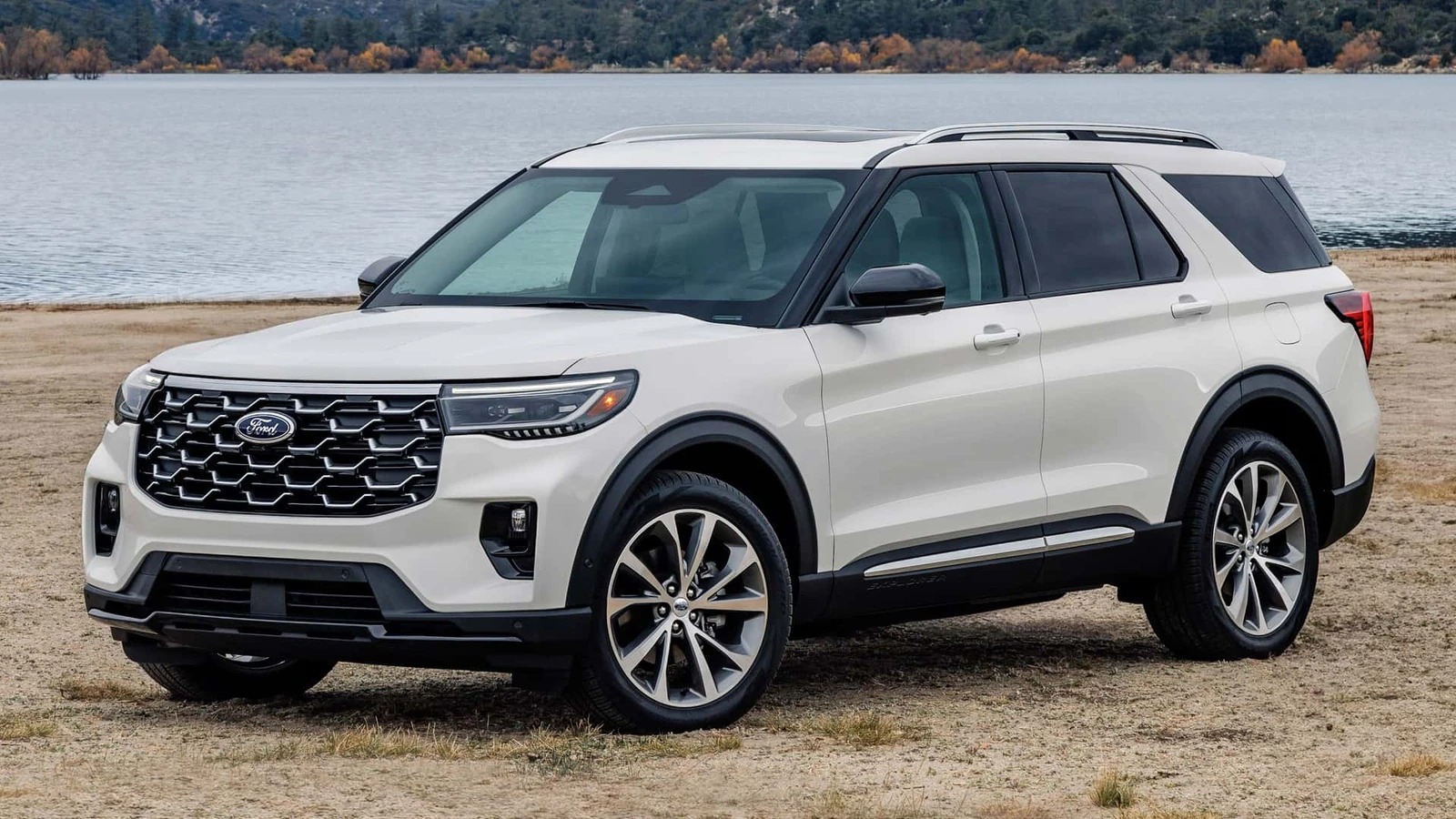
The US National Highway Traffic Safety Administration has opened a preliminary evaluation into roughly 1,236,155 Ford Explorer SUVs from the 2021 to 2026 model years after occupants suffered burns when a front seat-mounted side airbag deployed. The agency has logged 11 incidents, 10 of which produced second- or third-degree burns serious enough to need medical treatment.
Ford has not issued a recall, and a preliminary evaluation does not guarantee one will follow. The review is at the fact-finding stage, before the agency decides whether a defect exists across the fleet.
What the investigation covers
The probe names six model years of the Explorer, all built with the same side airbag design now under review. The component in question is the seat-mounted side airbag in the front row, not the steering-wheel or curtain airbags, and NHTSA says it has no indication the issue extends to rear seating positions or to other front airbags.
The agency's opening summary states that its Office of Defects Investigation received reports from owners and from the manufacturer of burn injuries after the front seat-mounted side airbag deployed in crashes involving these Explorers. The filing describes the injuries as second- or third-degree burns requiring medical treatment.
Against a population of more than 1.2 million vehicles, 10 injury cases work out to about 0.00089 percent of covered Explorers. That ratio is the tension at the centre of the case: the injury count is tiny in absolute terms, but burns of that severity from a device meant to protect occupants are the kind of complaint that pushes a preliminary evaluation open quickly.
No recall, and no statement from Ford
A preliminary evaluation can end in several ways. NHTSA may close the review without further action, escalate it to an engineering analysis, or move straight to a recall request if Ford's own data points that way.
Ford has not issued a public statement addressing the specific burn complaints described in the filing. The Explorer has drawn other regulatory action this year, including a rear suspension fracture recall and a separate roof rail recall, both unrelated to this airbag inquiry.
Owners who want to check whether a particular vehicle identification number carries any open action can search NHTSA's recall lookup tool directly, since the agency's database updates as filings like this one progress.
For now the practical position for Explorer owners is unchanged: no fix has been ordered, and the question of whether the airbag design constitutes a defect is still open. The scope of any remedy, if one comes, has not been announced.