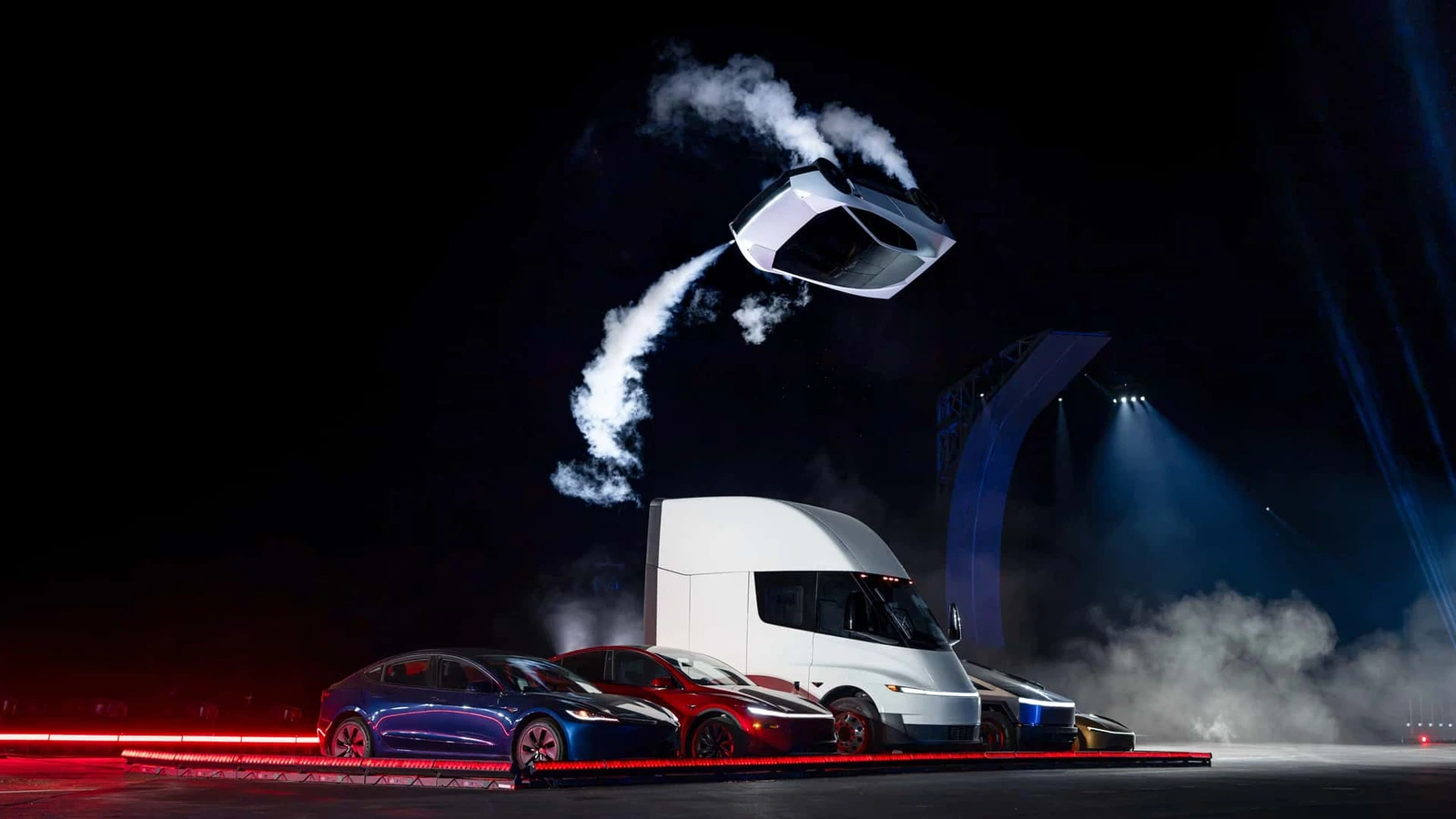
Tesla has released multiple onboard angles of the Roadster prototype performing its headline stunt: launching, flipping upside down and landing. The demonstration, which was uncrewed, drew both interest and skepticism, and the new footage lets viewers judge the action for themselves.
The car relies on a cold-gas thruster system to make its leaps. It uses high-pressure nitrogen at up to 10,000 psi, stored in a 200-liter tank that takes between two and six hours to refill. Tesla hopes to cut that to just under half an hour, though where and how owners will refill the tank has yet to be determined.
How the flying Roadster works
The thruster setup packs a considerable amount of potential energy just behind the driver. It is a high-pressure nitrogen system capable of reaching 10,000 psi, and the 200-liter tank currently requires two to six hours to fill. Tesla's target is a refill time of just under 30 minutes, but the refuelling infrastructure question remains open.
The base Performance model does without the cold-gas thruster system. The Thrust variant adds thrusters to the rear to enable sub-two-second 0-60 launches. The Rocket, a single-seat version, is the one that performs the kickflip, and it would likely never be street-legal even if Tesla builds it.
Production plans and prototype status
As it stands, the cold-gas-packing Roadster remains a prototype. Tesla is aiming for a production start date sometime in 2028. The standard Performance model is expected to reach production, but any version that fires nitrogen out the back, bottom or sides will likely remain outside the realm of practicality, possibility and legality.
That matters because the flying stunt is the most extreme expression of the Roadster's design, yet the versions most buyers will actually be able to park in their garage are the ones without thrusters. The theatrics generate attention, but the production reality is more conventional.