INDEPENDENT AUTOMOTIVE NEWSGLOBAL PERSPECTIVE / AUSTRALIAN EDITION
TDCNTHE DAILY
CAR NEWS.

The road ahead.
Every day.

RSS ↗
Latest/Electric

455 original articles

Electric / TDCN ORIGINAL

Lucid says service wait times fell 20% as it expands repair network

The EV maker is adding service centres and mobile technicians under a turnaround plan from new CEO Silvio Napoli, who admitted the company had underinvested in service.

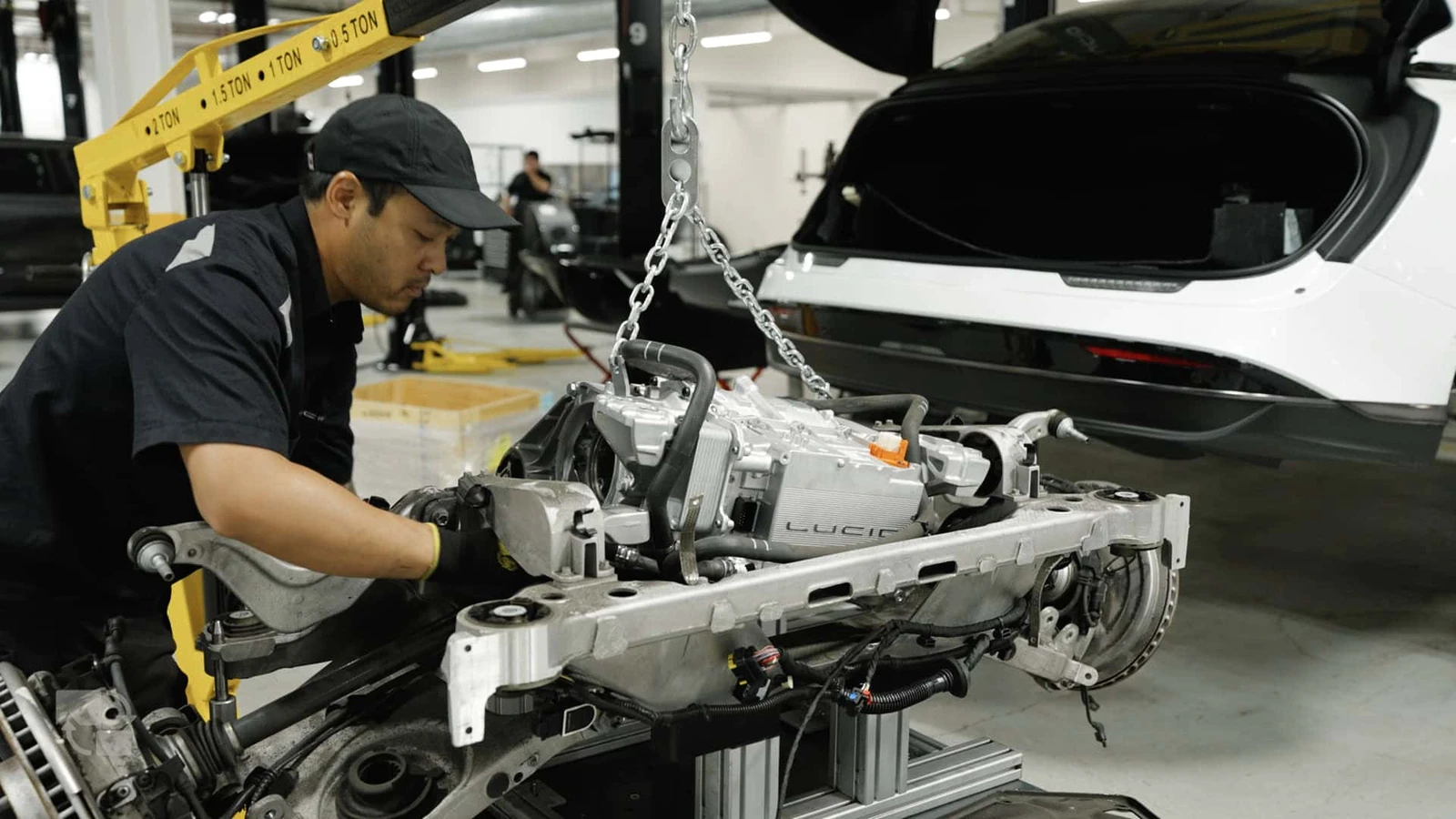
Lucid says it cut global service wait times by 20% in the third quarter of this year compared with the previous quarter, as it expands its repair network and hires more staff. The direct-to-consumer luxury EV maker is building more service centres in North America, Europe and the Middle East and adding mobile technicians to reach owners who are not near a physical location.

The push is part of a wider turnaround plan from new CEO Silvio Napoli, who took over this summer with a mandate to cut costs and reduce losses. On his first earnings call as CEO in August, Napoli acknowledged that Lucid had "underinvested in service".

What Lucid is changing

Lucid currently operates around 40 service centres across the United States, and owners outside those areas rely on mobile servicing. The company says it increased technical and support staffing by more than 40% globally in the third quarter compared with the second, and is targeting a 50% increase by the end of this year and 60% by early 2027.

Mobile service capacity is up 15% since the second quarter, with a target of a 40% increase by the end of the year, and 20 new Gravity support vehicles are helping transport technicians to cars in need. Lucid is also opening combined sites that pair a studio showroom with a service centre: the first opened in Mission Viejo, California, with two more due before the end of the year in Los Angeles and Dallas, and another planned for Chicago in early 2027.

"We are building a broader, more accessible service network that supports our guests wherever they are in the ownership journey," said Billy Hayes, Lucid's new chief customer officer. He said the company is expanding its network, adding service personnel and increasing mobile service capacity to reduce wait times.

Why the service build-out matters now

Lucid is preparing to launch the first vehicles on its midsize platform, more affordable cars it sees as its first with true mainstream potential, with production set to start in the second half of 2027. A larger, cheaper line-up would put far more cars on the road than the Air and Gravity have, and a service network that already strains under today's volumes would struggle further.

Napoli has also shaken up the executive ranks, made deep staff cuts and reduced production at Lucid's Arizona factory to better balance supply with demand, as sales of the Air and Gravity have been slow to grow. He has focused the company on robotaxi partnerships, the midsize vehicles and the customer experience. Service is one of the few levers a young EV maker can pull that directly affects owners, and the 20% wait-time reduction is a concrete early measure of whether the turnaround is reaching customers, not just the balance sheet.

What Lucid has not announced

Lucid has not published a price list for service visits, so what an individual repair costs, and whether the network expansion changes what owners pay, has not been announced. The company's figures cover wait times, staffing and mobile capacity only; it has not disclosed absolute wait times in days, the total number of mobile technicians, or how many of the planned new centres will be studio-plus-service sites.

Open this article ↗
Safety / TDCN ORIGINAL

NHTSA opens probe into 1.2 million Ford Explorers over airbag burns

The preliminary evaluation covers 2021-2026 Explorers and 11 reported incidents, 10 of them involving second- or third-degree burns; no recall has been issued.

Image: Motor1

The US National Highway Traffic Safety Administration has opened a preliminary evaluation into roughly 1,236,155 Ford Explorer SUVs from the 2021 to 2026 model years after occupants suffered burns when a front seat-mounted side airbag deployed. The agency has logged 11 incidents, 10 of which produced second- or third-degree burns serious enough to need medical treatment.

Ford has not issued a recall, and a preliminary evaluation does not guarantee one will follow. The review is at the fact-finding stage, before the agency decides whether a defect exists across the fleet.

What the investigation covers

The probe names six model years of the Explorer, all built with the same side airbag design now under review. The component in question is the seat-mounted side airbag in the front row, not the steering-wheel or curtain airbags, and NHTSA says it has no indication the issue extends to rear seating positions or to other front airbags.

The agency's opening summary states that its Office of Defects Investigation received reports from owners and from the manufacturer of burn injuries after the front seat-mounted side airbag deployed in crashes involving these Explorers. The filing describes the injuries as second- or third-degree burns requiring medical treatment.

Against a population of more than 1.2 million vehicles, 10 injury cases work out to about 0.00089 percent of covered Explorers. That ratio is the tension at the centre of the case: the injury count is tiny in absolute terms, but burns of that severity from a device meant to protect occupants are the kind of complaint that pushes a preliminary evaluation open quickly.

No recall, and no statement from Ford

A preliminary evaluation can end in several ways. NHTSA may close the review without further action, escalate it to an engineering analysis, or move straight to a recall request if Ford's own data points that way.

Ford has not issued a public statement addressing the specific burn complaints described in the filing. The Explorer has drawn other regulatory action this year, including a rear suspension fracture recall and a separate roof rail recall, both unrelated to this airbag inquiry.

Owners who want to check whether a particular vehicle identification number carries any open action can search NHTSA's recall lookup tool directly, since the agency's database updates as filings like this one progress.

For now the practical position for Explorer owners is unchanged: no fix has been ordered, and the question of whether the airbag design constitutes a defect is still open. The scope of any remedy, if one comes, has not been announced.

Open this article ↗

Keep scrolling to read the next story.

Older articles →