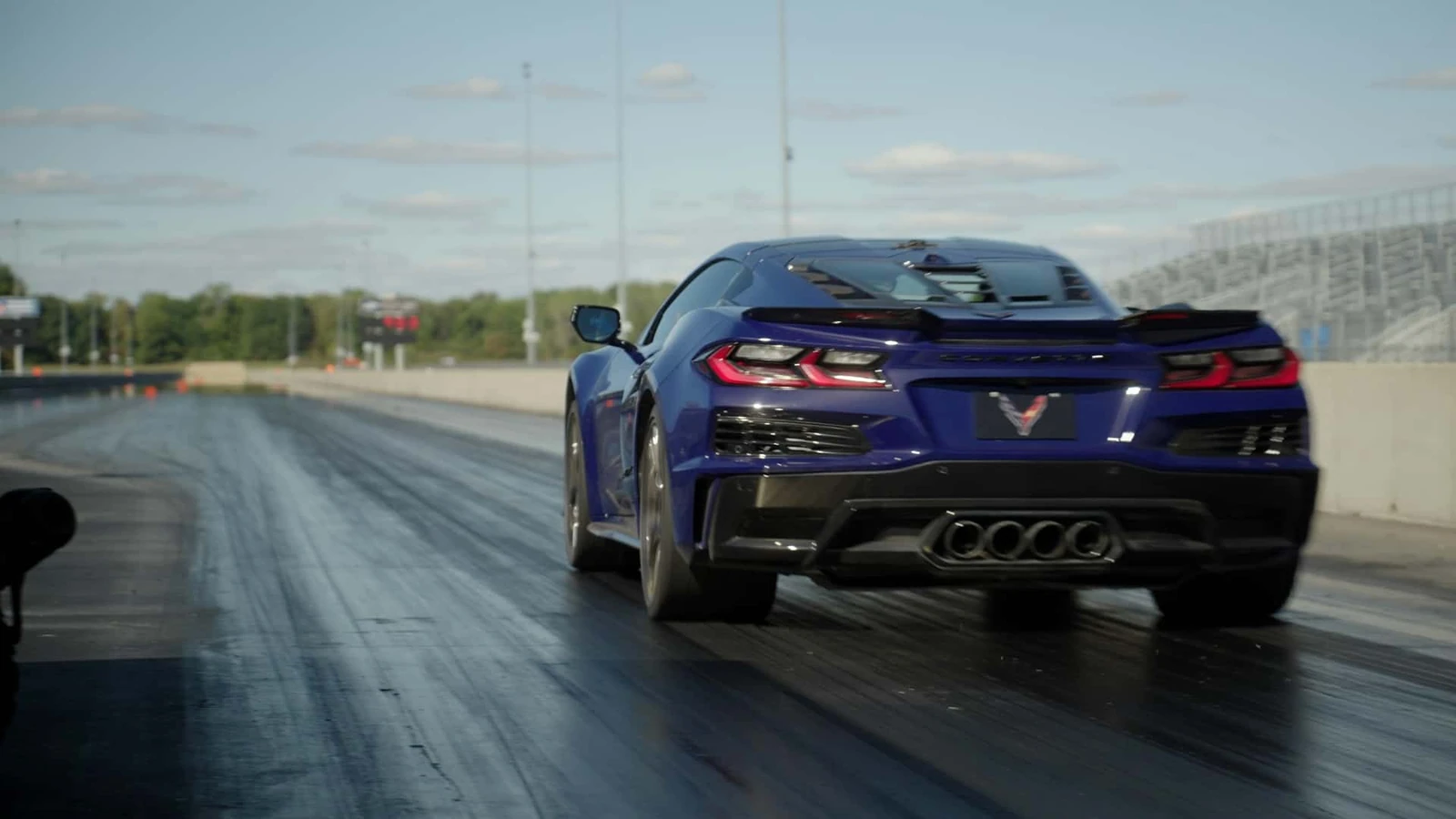
General Motors has been granted a US patent for a launch control system that watches a drag strip's staging lights and launches the car automatically. US Patent 12,780,203, granted on November 3, covers a camera-based setup that predicts the green light and triggers the launch without the driver touching a pedal.
The patent, titled "Methods and Systems for Coordinating Launch Control for Vehicles for Racing," was first filed in January 2025 and published in July 2026 before issuing this week. It describes cameras trained on the Christmas Tree, software that reads the light sequence, and a control system that manages braking, torque and throttle through the start.
How the system is meant to work
According to Road & Track, the system uses onboard cameras to identify the Christmas Tree and track its light pattern in real time. Once the car is staged, it can prepare for launch before the green light appears, holding brake pressure and staging torque automatically after the driver releases the pedals. The car handles the holding and the timing rather than the driver's foot.
Road & Track described it as the possible dawn of push-button drag racing and said the patent could change how amateur racers approach a starting line, adding it would be eager to see how close the system could come to cutting a perfect light if GM ever builds it.
The automation follows a pattern at GM, which has also patented active aero control and an over-the-air camera update system, both aimed at letting software do work that used to sit entirely with hardware or driver input.
Pro Tree and Sportsman Tree timing
The patent's most specific detail is how it distinguishes two starting-light formats. A Pro Tree fires all three amber lights simultaneously, with the green appearing 0.4 seconds later, rewarding reaction time over anticipation. A Sportsman Tree fires its ambers in sequence, spaced half a second apart, before the green comes on. The system is designed to recognise which format it is looking at and adjust its predicted launch timing to match.
The two formats reward different skills, so a system that guessed wrong would either jump early or launch late. That distinction is the heart of the idea: a camera that can tell the formats apart is doing the job a driver's eyes and reflexes normally do, and doing it without the human error that decides so many amateur drag races.
What GM has not said
The patent does not specify how the camera tells the two formats apart in poor lighting or at unfamiliar tracks, details that would matter to anyone racing with it. Nothing in the filing names a vehicle, a model year or even a vague production timeline, and GM has not confirmed any plan to bring the system to market.
That leaves the obvious questions open. Which models would get it, whether it would arrive as a software feature on existing cars or only on new ones, and what it would cost are all unannounced. For now the patent is a statement of intent rather than a product, and drivers will only benefit if GM decides the system is worth putting on a showroom car.