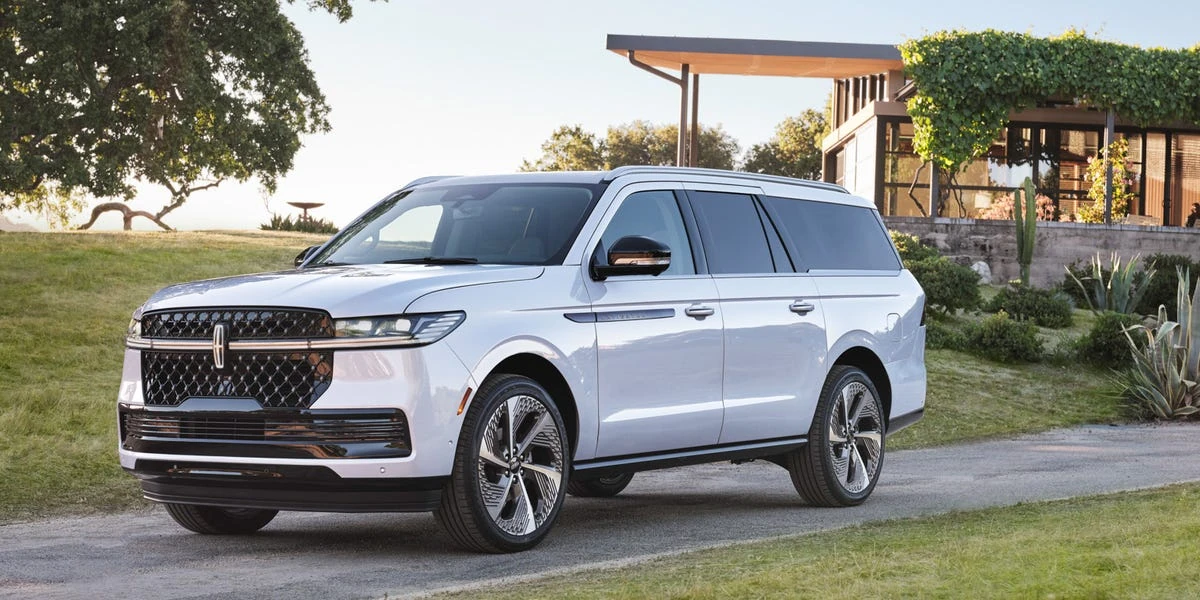
Lincoln is recalling 36,994 Navigators from the 2025 to 2027 model years because the front passenger seat can move without anyone touching a control, according to recall documents the brand filed with the National Highway Traffic Safety Administration.
The culprit is the Chauffeur Seat Feature, which lets second-row occupants adjust the front passenger seat through a touchscreen built into the centre console. Residue on that display can register as input and set the seat moving forward, back, up or down.
How the seat ends up moving on its own
Lincoln's filing describes two failure paths. In the first, residue on the touch-activated screen causes the front passenger seat to move unexpectedly in any direction. In the second, pressing the home screen button on the rear touchscreen at the same moment as a seat adjustment can send the seat all the way to the end of its track, with no further button presses needed.
An empty seat sliding around is mostly unsettling. An occupied one is the real safety concern, since the seat can move into a passenger without warning, which is why the recall exists.
The fix turns the feature off
Owners are asked to take affected Navigators to an authorised dealer, where the Chauffeur Seat Feature will be deactivated at no cost. The trade-off is plain: the rear touchscreen control that lets second-row passengers reposition the front seat will no longer function.
For buyers who optioned the feature as a convenience, that is a small loss of function in exchange for removing an unpredictable one. Lincoln says dealers and owners should already have been notified by mail. Anyone who has not received a letter can check whether their SUV is covered through NHTSA's VIN lookup or by searching year, make and model, which also surfaces any other open recall alerts.
A large SUV with a software-flavoured fault
The recall covers 36,994 vehicles across three model years of Lincoln's full-size SUV. It is a mechanical fix for what is essentially an input problem: a screen that reads stray residue as a command. That is the kind of fault that tends to appear in vehicles that route more and more cabin functions through touch panels, and it is why the remedy targets the control rather than the seat hardware itself.
Lincoln has not said whether a revised touchscreen or updated software will eventually restore the feature, so for now deactivation is the whole remedy.