INDEPENDENT AUTOMOTIVE NEWSGLOBAL PERSPECTIVE / AUSTRALIAN EDITION
TDCNTHE DAILY
CAR NEWS.

The road ahead.
Every day.

RSS ↗
Latest/New cars

455 original articles

New cars / TDCN ORIGINAL

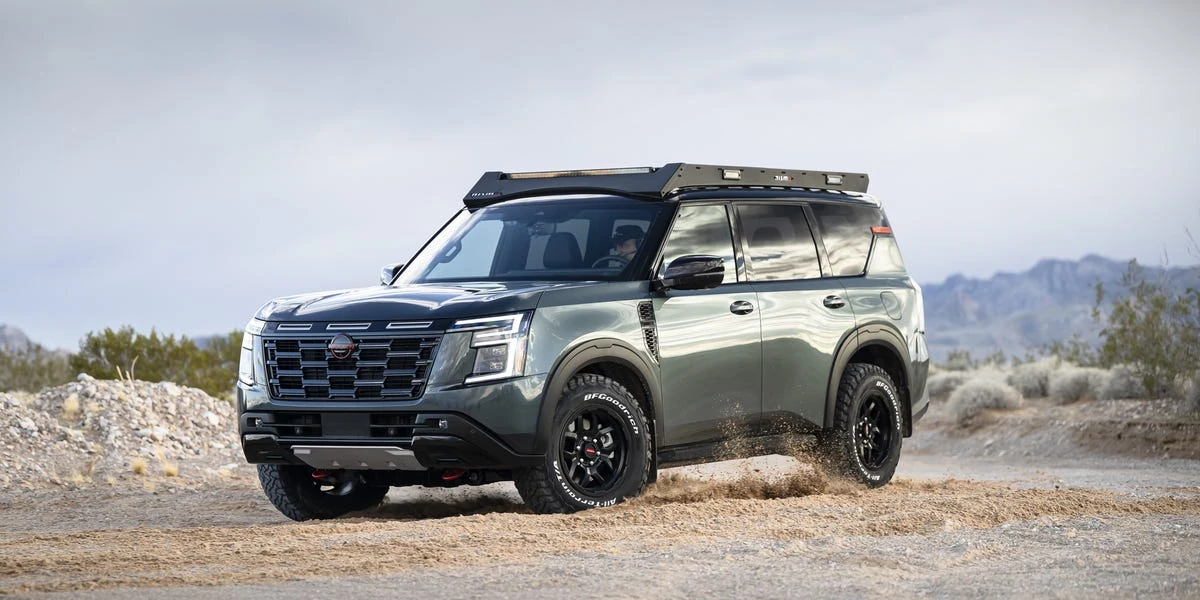
Nissan revives Patrol name on 2027 Armada Pro-4X, priced from $81,265

The off-road trim gains Patrol and 'Since 1951' badging plus optional NISMO parts, and marks the nameplate's first US appearance since 1969.

Nissan has renamed the off-road version of its full-size SUV the 2027 Armada Patrol Pro-4X, bringing the Patrol nameplate back to the United States for the first time since 1969. The renamed model starts at $81,265, $4,690 more than the 2026 version's $76,575.

Production begins in November, and the vehicle will make its public debut at the 2026 Los Angeles auto show later this month. The Patrol badge returns as the overseas off-roader marks its 75th anniversary, with production having started in 1951.

What the Patrol badge changes

The newly renamed model carries a Patrol badge across the rear and Armada lettering on the D-pillar, with "Patrol" and "Since 1951" badges on the centre console. Nissan has also added optional equipment for 2027: NISMO rock sliders, a NISMO roof rack, and NISMO Axis wheels wrapped in BFGoodrich all-terrain tyres.

The Patrol name is not new to Nissan, only to American showrooms in recent decades. The second-generation Patrol was sold through Datsun dealerships in 1969 as the first Nissan-badged vehicle offered in the US. Since the current Armada launched for 2017, the SUV has effectively been a rebadged version of the Patrol sold in other markets, so the rename formalises a link Nissan had kept out of US branding.

Mechanicals carry over unchanged

Beyond the badges and optional accessories, the Pro-4X is unchanged. It keeps an electronic locking rear differential, adaptive air suspension and a metal underbody skid plate. The twin-turbocharged 3.5-litre V-6 continues to produce 425 horsepower, sent to all four wheels.

That continuity means buyers are paying the higher price for the name and the added personalisation options rather than for extra capability. The hardware that defines the Pro-4X, from the locking differential to the air suspension, was already on the previous version. The $4,690 increase is therefore best read as a repositioning of the trim rather than a mechanical upgrade, and shoppers comparing it with the 2026 model should weigh the NISMO add-ons as options rather than standard fitment.

Timing and availability

The Armada Patrol Pro-4X is a US-market model, and Nissan has confirmed production starting in November alongside the Los Angeles auto show debut. Pricing is confirmed at $81,265 before any options, including the new NISMO parts.

Nissan has not announced Australian availability or pricing for the renamed model, so local buyers should treat the US figures as a guide to the vehicle's positioning rather than a local sticker price.
Open this article ↗
Electric / TDCN ORIGINAL

Euro 7 emissions rules arrive on 29 November with brake dust limits for EVs

The EU's first standards to cover brake and tyre particles set a stricter 3mg/km threshold for electric cars plus minimum battery durability targets.

Euro 7 emissions regulations take effect across the EU on 29 November, and for the first time they cover more than exhaust fumes: brake particle emissions and tyre wear fall inside the rules, which means electric cars are affected too.

The standards also introduce battery durability requirements, setting minimum capacity thresholds a car must hold over defined periods and distances.

Stricter particle limit for electric cars

Brake particle rules apply to both electric and combustion-engined cars, but the thresholds differ. EVs must meet 3mg/km (4.8mg/mile) while ICE cars are allowed 7mg/km (11.3mg/mile). The gap reflects regenerative braking, which does more of the slowing work in an EV and so reduces reliance on conventional friction brakes and the dust they produce.

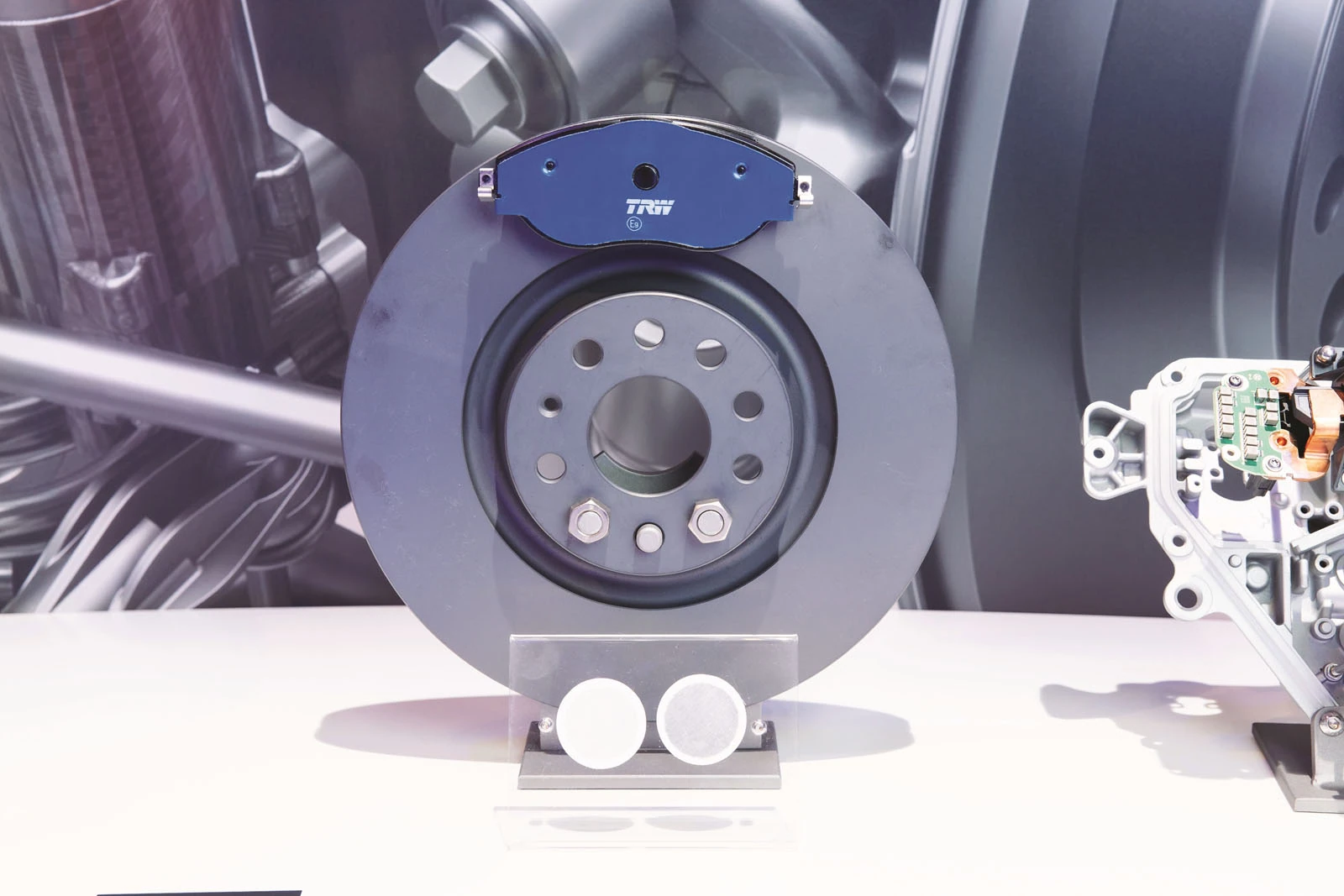
The regulation targets particles of 10 microns or smaller (PM10), generated when brake pads grip steel discs to convert a moving car's kinetic energy into heat. A large share of that dust comes from the steel disc rather than the friction pad, which is why hardening the disc surface is one route to cutting emissions.

Battery durability thresholds

Under the battery durability requirements, a car must retain at least 80% of its original capacity for the first five years or 100,000km (62,000 miles), and 72% between five and eight years or 160,000km (99,422 miles), whichever comes first in each case.

That gives buyers a regulatory floor for how much range a used EV should still deliver, rather than leaving degradation to warranty terms alone.

Aftermarket suppliers move first

Euro 7 currently applies only to new cars and original equipment, but replacement parts suppliers are already working to the same criteria, since Regulation ECE R90 requires aftermarket brake materials to match factory parts and be safe on the road.

ZF Aftermarket, through its TRW braking brand, has developed a next-generation DTEC dust-reducing disc and pad combination aimed at cutting fine particle emissions. ZF expects manufacturers to pick from a range of disc surface treatments rather than a single answer, with the right mix of surface treatment and pad friction compound dictated by a vehicle's inertia and engine type.

Hardening a disc surface can make noise and vibration behaviour harder to control, so the trade-off is not free. The catch for drivers is that cleaner braking may arrive through parts changes rather than anything visible on the showroom floor.

What is not yet settled

The sources cover the EU rules only. No Australian equivalent has been announced in the material provided, so Australian buyers should not assume the same brake particle or battery durability limits apply to cars sold locally.

Open this article ↗

Keep scrolling to read the next story.

Older articles →