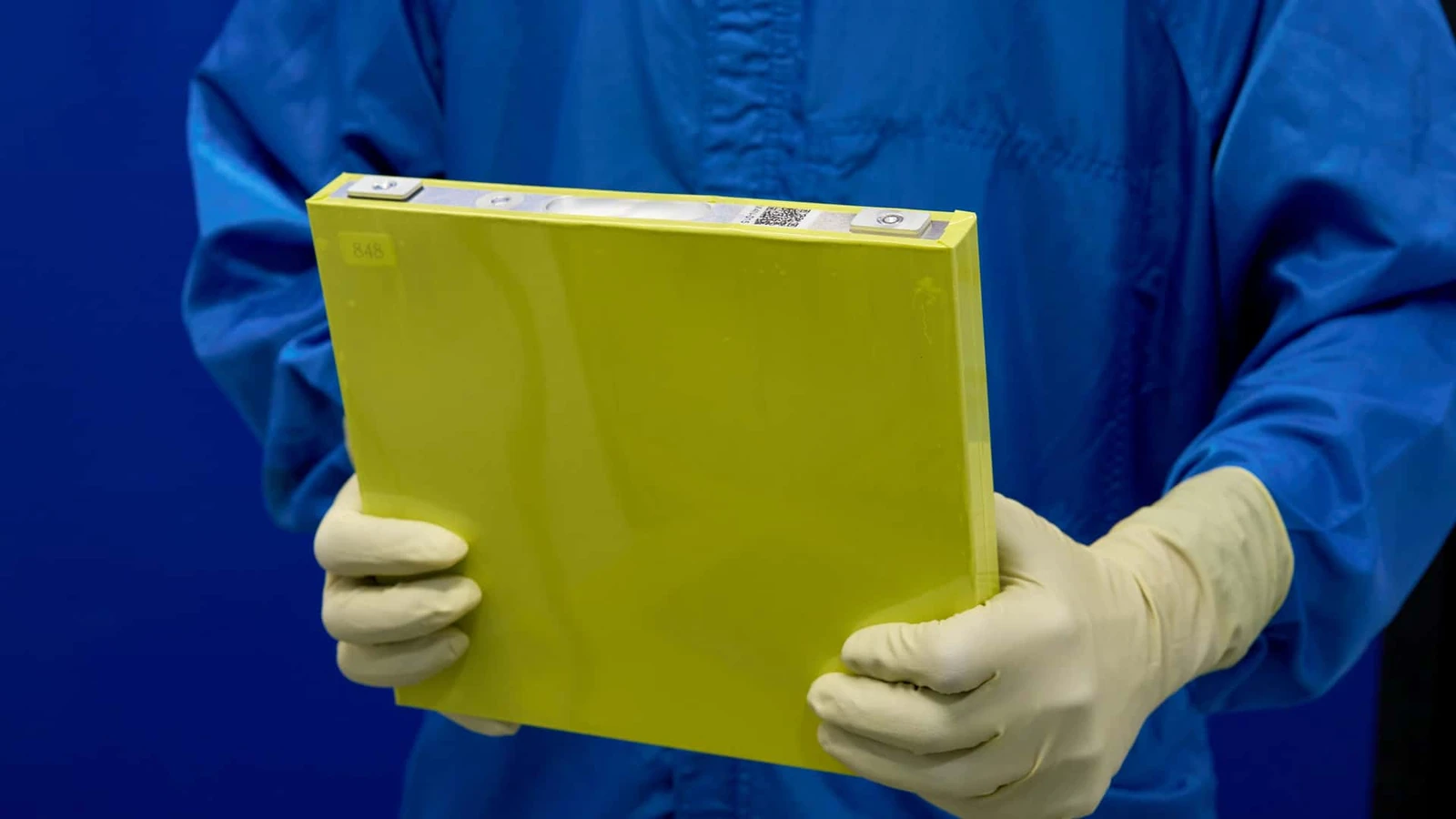
Requiring electric car batteries sold in Europe to use EU-made cells could add about €2,100 to the price of an EV with a 60 kWh pack, according to a September 22 policy brief from Brussels think tank Bruegel. The report, picked up by Euronews, warns that carmakers are likely to pass at least part of that extra cost on to buyers.
The calculation is simple: EU-made cells could cost €50 to €85 per kilowatt-hour more than imported ones, and multiplied across a 60 kWh battery that comes to roughly €2,100. A proposed low-carbon steel requirement could add a further €200 per car, while simplifying vehicle approval would save manufacturers an estimated €61 per vehicle.
Why Europe wants its own battery cells
Policymakers want a larger share of the batteries powering Europe's electric cars made locally, to secure jobs and reduce dependence on China. The pressure behind that push is real: EU car production has fallen 19% since 2019, buyers purchased 2.2 million fewer new cars in 2025 than in 2019, and the wider automotive sector employs around 14 million people.
Building a local battery industry has proved difficult. Northvolt's failure, Porsche's retreat from manufacturing at Cellforce and shelved ACC factories show how hard it is to match China's costs, and even batteries made in Europe often rely on equipment and know-how from Asia. Bruegel notes that South Korean firms already own 65% of Europe's battery cell manufacturing capacity, while Chinese companies own 55% of the capacity currently under construction.
Bruegel also points to continued exports and roughly €3 billion in quarterly investment in battery and EV factories, while raising concerns that Europe is gradually losing technology, suppliers and overseas customers. The report's authors argue foreign investment can help Europe catch up, since European factories need that outside expertise to function.
Who ends up paying
What buyers actually pay depends on the final form of the rules, government subsidies, and how much of the extra cost carmakers choose to pass on. Bruegel argues protection should be temporary, giving European carmakers time to build cheaper EVs.
The report does not specify which models or segments would be covered; that depends on the final shape of the legislation, which has not been settled. What it does say is that those shopping at the most affordable end of the market would be hit hardest, since a fixed euro increase weighs more heavily on a cheap car than an expensive one.
The timing is also open. The brief is a policy recommendation rather than enacted law, and no start date for the battery or steel requirements is given. That matters because the €2,100 figure is a projection of a rule that does not yet exist in final form, not a price change drivers can already see on a sticker.
Tariffs, hybrids and the China question
Europe's additional duties on Chinese EVs, which can be as high as 35.3%, targeted fully electric cars while excluding plug-in hybrids. Bruegel points to flattening BEV imports from China while hybrid imports surge. It also cites French research finding that EVs excluded from purchase subsidies suffered a 60% sales decline relative to eligible models, which suggests subsidies strongly shape adoption.
Bruegel suggests agreeing with China to temporarily limit the number of electric cars and plug-in hybrids sent to Europe, giving European carmakers more time to develop cheaper EVs, with a clear end date and restrictions that could tighten if China broke the deal. Fewer Chinese cars available could in turn make them more expensive. Europe previously limited Japanese car imports and Canada now limits Chinese EV imports, both illustrating the same trade-off: protecting local carmakers can raise prices for buyers.
The smarter read for anyone shopping in the meantime is to watch the subsidy rules as closely as the battery rules. The French evidence suggests eligibility for purchase incentives moves sales far more sharply than a few hundred euros of manufacturing cost, and subsidies are the lever governments can pull to offset the local-content premium Bruegel describes.