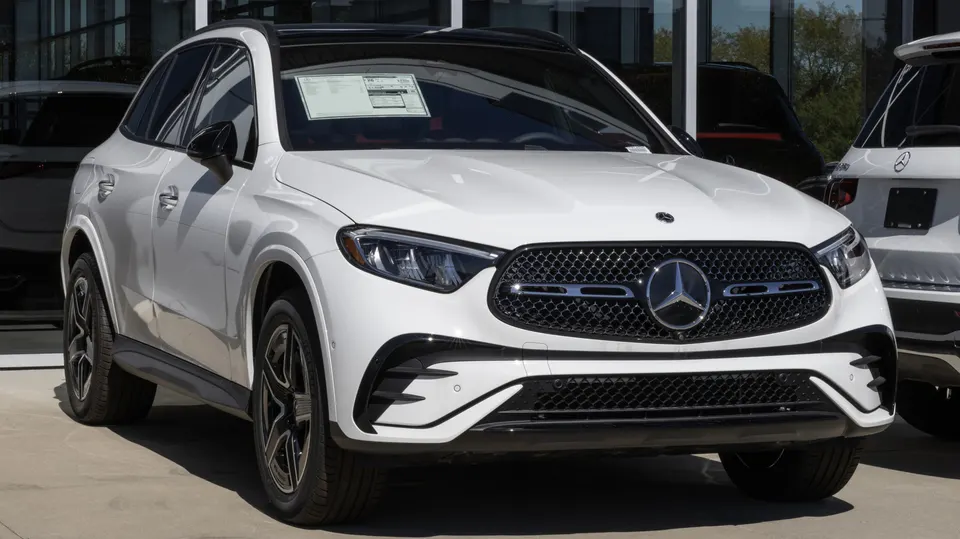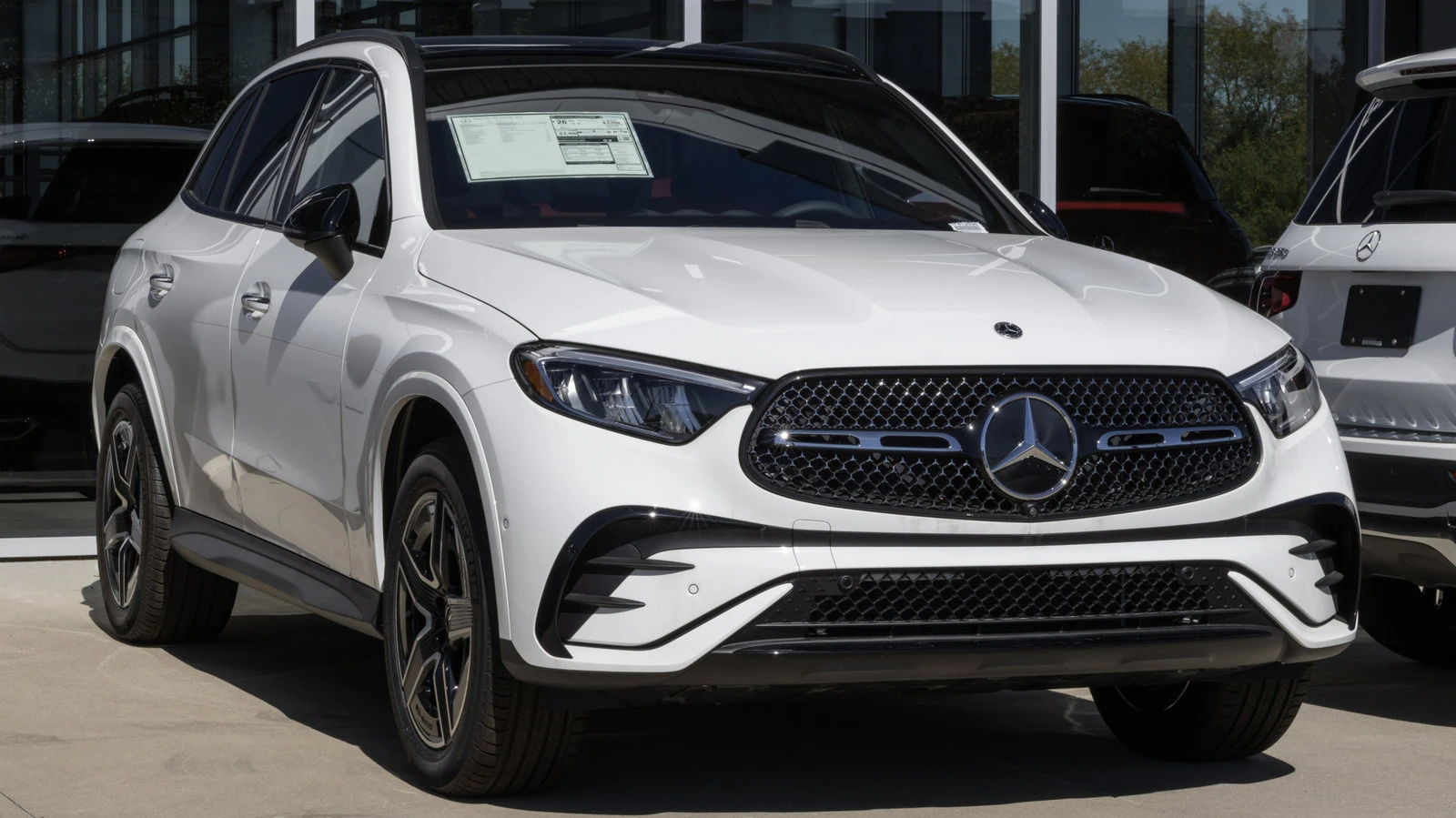
Mercedes-Benz's plan to build the GLC in the United States has reportedly slipped by more than two years, with unnamed sources telling Automotive News that American production may not start until May 2030. The German automaker confirmed earlier this year that it would add the SUV to its US manufacturing footprint but never gave a firm start date.
The reported timing lands well beyond earlier forecasts that assembly could begin in late 2027. No explanation for the delay has been given.
Why the tariff maths may have changed
The GLC is currently built in Europe and imported to the US subject to a 15% tariff. One possible reason for the revised schedule is a report that the US Commerce Department could cut that rate to 10%, a change that would save Mercedes millions of dollars. If the lower rate arrives, the urgency behind fast-tracking North American GLC output eases considerably.
The stakes are not small. Mercedes sold almost 54,000 GLCs in the US through the first nine months of 2026, and more than 71,000 across 2025. A tariff bill on volumes that size is exactly the kind of cost that makes local assembly attractive, which is why a delay is a bottom-line decision as much as a manufacturing one.
Alabama expansion continues regardless
Mercedes already runs a major plant in Alabama, where it builds the GLE, GLE Coupe and GLS. The site built its 5 millionth vehicle earlier this year, and the company has committed to investing more than $7 billion in its US operations by 2030, with $4 billion of that directed specifically at the Alabama facility.
That commitment suggests the GLC delay is a scheduling question rather than a retreat from American production. The plant's existing large SUV lineup gives Mercedes a base to work from, even if the compact SUV arrives later than first expected.
The current GLC is unlikely to be built there
If the reported timing holds, the current-generation GLC probably will not be the one assembled in the US. Mercedes launched the second-generation GLC in 2022, and analysts doubt it would make sense to tool up for a model that will be eight years old by 2030.
That points to the next-generation GLC as the more likely candidate for North American assembly. Very little is known about that car, though it is expected to keep a broad selection of combustion and hybrid powertrains while continuing to offer an all-electric GLC variant.
For buyers, the practical effect of the reported delay is that the GLC stays a European import for longer, and its US pricing remains exposed to whatever tariff rate applies. Mercedes has not announced which model year or variant would be built in Alabama, and the 2030 date itself rests on unnamed sourcing rather than a company statement.