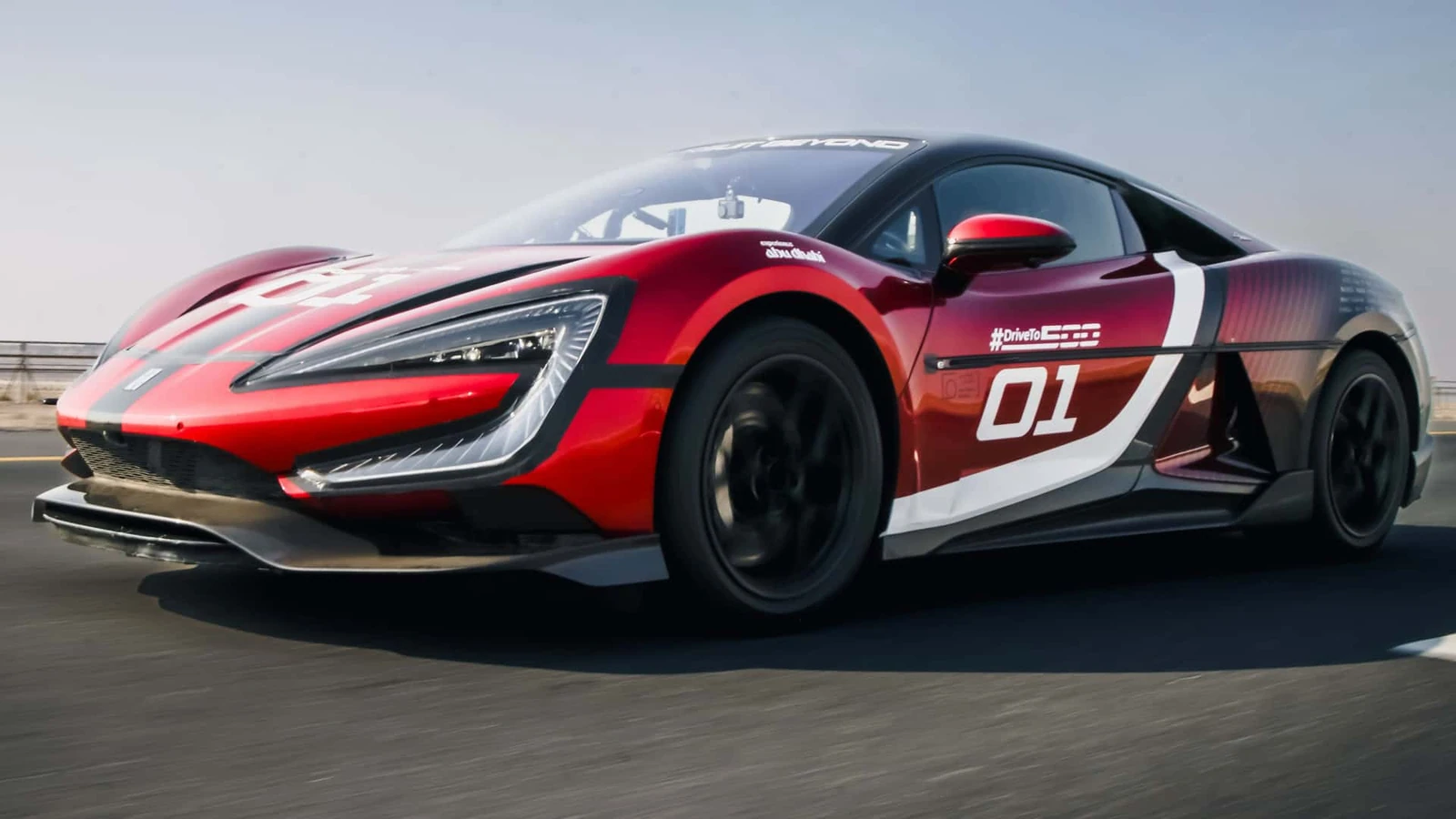
BYD's Yangwang U9 Xtreme has become the first production car to exceed 500 kph, reaching 503.17 kph (310.7 mph) on a closed public road in Abu Dhabi's Al Dhafra Region on November 1. The FIA and Guinness World Records both ratified the result, which was set over a roughly 10-kilometre stretch of the E11 road with German racing driver Marc Basseng at the wheel.
The run adds to a record the U9 Xtreme had already taken in September 2025, when it reached 496.22 kph (308.3 mph). Breaking the 500 kph mark had been BYD's stated target since the previous year, and no other production car had previously managed it.
Four runs over two days to find the limit
The record did not come on the first attempt. Two runs on October 31 topped out at 490 kph (304.4 mph), after which engineers adjusted the car's aerodynamics, suspension settings and tire pressures for stability and performance. The official 503.17 kph figure came on the final run of the second day, recorded by a Racelogic unit.
The ratification covers a single-direction run, which is where the result differs from convention. Record attempts are usually split into two runs in opposite directions to account for elevation change, wind speed and mechanical failure. That leaves room for Rimac, Bugatti and Koenigsegg to question the benchmark, though Guinness World Records lists the U9 Xtreme as holding the highest speed by a production car and by an electric production car in a single-direction run. The FIA has also confirmed the achievement on its website.
Quad-motor powertrain and a 1,200-volt pack
The U9 Xtreme is the most powerful and fastest version of the U9 supercar, with four electric motors producing a combined 2,977 horsepower. It uses a 1,200-volt lithium iron phosphate battery pack capable of a 30C discharge rate, and runs on semi-slick GitiSport e-GTR2 Pro tires with titanium calipers and carbon-ceramic rotors providing stopping power.
That specification explains why the car can sustain a run of this kind. A 30C discharge rate on an LFP pack points to a battery built to dump energy quickly rather than chase outright range, which is the right trade for a machine whose headline number is a top speed rather than a distance between charges.
Thirty cars, and no price yet
BYD plans to build just 30 units of the U9 Xtreme. The sources do not state a price for the model, so what each of those 30 buyers will pay has not been announced.
The record matters beyond the badge. An electric car holding the outright production-car speed record, not a separate EV class, shifts the terms of the argument for buyers weighing electric performance against combustion flagships. The single-direction caveat is the part to watch: if a rival answers with a two-way run above 500 kph, the headline changes hands on a technicality rather than a faster car.