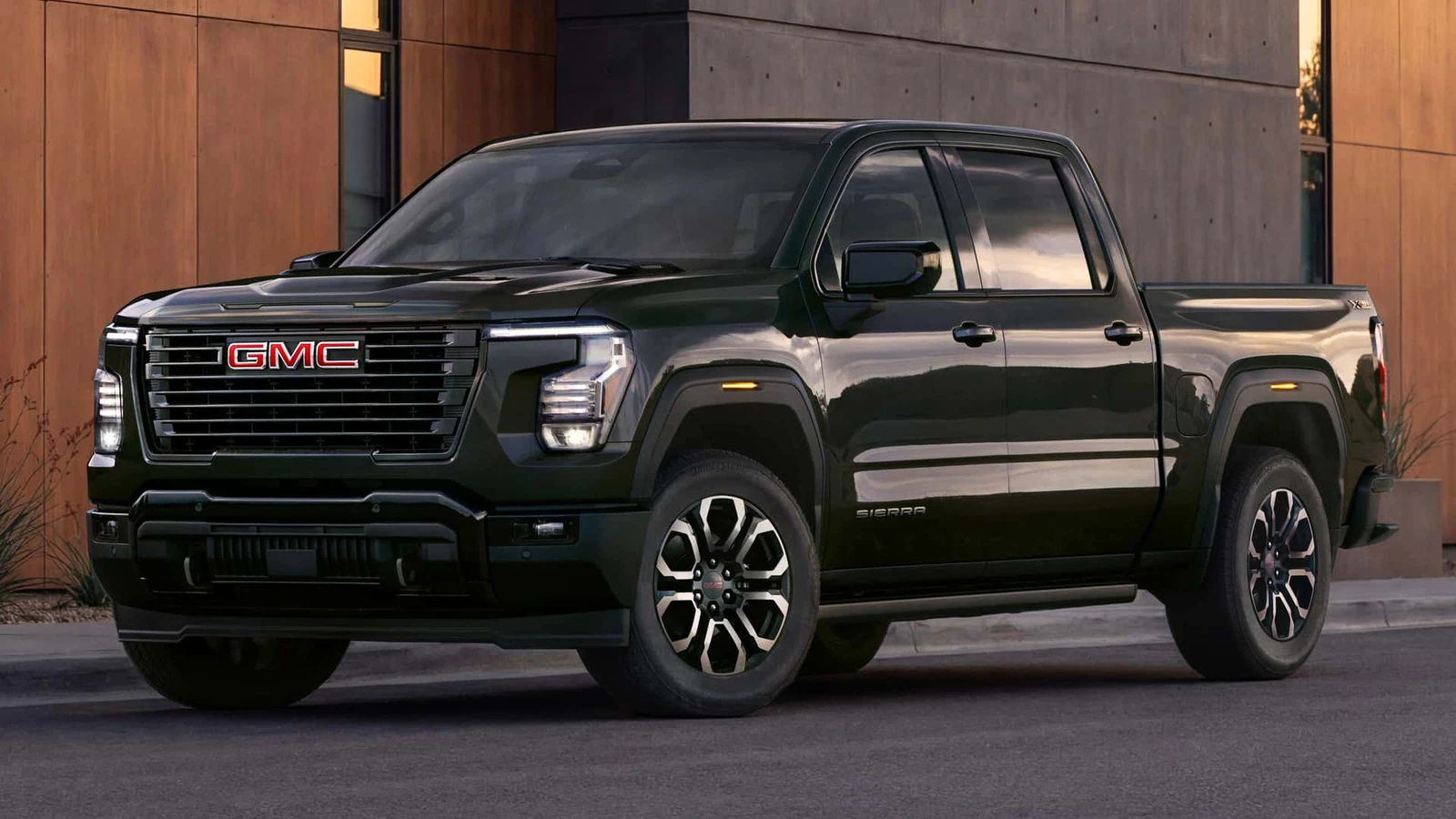
The redesigned V8 engines in the 2027 GMC Sierra 1500 deliver more power than the units they replace but return worse fuel economy, and none of them matches the carryover 3.0-litre Duramax diesel at the same trim level, according to GM's 2027 fuel economy table.
The figures, reported by GM Authority from GM's own ratings, settle the trade-off buyers have been weighing since the new engines were announced: the diesel remains the efficiency leader across two-wheel-drive and four-wheel-drive configurations.
How the V8 ratings break down
The 5.7-litre L76 V8 in two-wheel-drive Pro and Elevation trims is rated at 15 mpg city, 19 mpg highway and 17 mpg combined. In four-wheel-drive Pro, Elevation, AT4 and Denali trims the same engine is listed at 16 mpg city, 20 mpg highway and 18 mpg combined.
The larger 6.6-litre V8 is thirstier again. Denali and Denali Ultimate trucks with that engine return 14 mpg city, 18 mpg highway and 15 mpg combined, while the off-road AT4X is rated at 13 mpg city, 17 mpg highway and 15 mpg combined. A separate AT4X configuration on mud-terrain tyres drops to 13 mpg city, 16 mpg highway and 14 mpg combined.
The diesel stays well ahead
At the same trim levels the Duramax tells a different story. Two-wheel-drive diesel trucks in Pro, Elevation and Denali trims reach 23 mpg city, 28 mpg highway and 25 mpg combined, and four-wheel-drive Duramax models in Pro, Elevation, AT4 and Denali trims manage 22 mpg city, 26 mpg highway and 24 mpg combined.
Even the diesel AT4X, usually the thirstiest trim in a truck range, is rated at 20 mpg city, 22 mpg highway and 21 mpg combined. That is six mpg better on the combined cycle than the petrol AT4X on standard all-terrain tyres, a gap wide enough to shift running costs for owners who tow or haul regularly.
That matters because the diesel is not a new engine fighting a new one on unequal footing. It is a carryover option beating the redesigned petrol line on the same test cycle, in the same trims, on GM's own numbers. For anyone cross-shopping the two, the fuel bill maths starts from a clear disadvantage for the V8.
More power, worse mileage than the engines they replace
The new 402-horsepower 5.7-litre V8 replaces the outgoing 5.3-litre, which made less power but returned better mileage: 16 mpg city, 20 mpg highway and 17 mpg combined in four-wheel-drive form for 2026. The new engine gains output yet still trails that combined figure.
The 481-horsepower 6.6-litre V8 follows the same pattern against the 6.2-litre it replaces. The outgoing 6.2-litre returned 15 mpg city, 19 mpg highway and 17 mpg combined, two mpg ahead of the new unit's 15 mpg combined rating in comparable Denali configurations.
GMC has already detailed the enhanced turbocharged 2.7-litre TurboMax four-cylinder as part of the 2027 Sierra lineup, rated at 350 horsepower and 455 pound-feet of torque. Every one of the four engines now uses a 10-speed automatic, so the efficiency differences come down to displacement, tuning and compression rather than gearing.
The pattern is consistent across every comparison: the redesigned V8s bring more power, return less mileage than the engines they replace, and leave the Duramax as the efficiency leader by a wide margin. Buyers weighing the 2027 Sierra's price and trim spread against real-world running costs now have the official numbers to work from.
What is still open
The fuel economy table covers the engine and trim combinations above; GM's ratings are the source for every figure here. Australian availability and pricing for the 2027 Sierra 1500 have not been announced, and the ratings quoted are in US mpg under the EPA system.