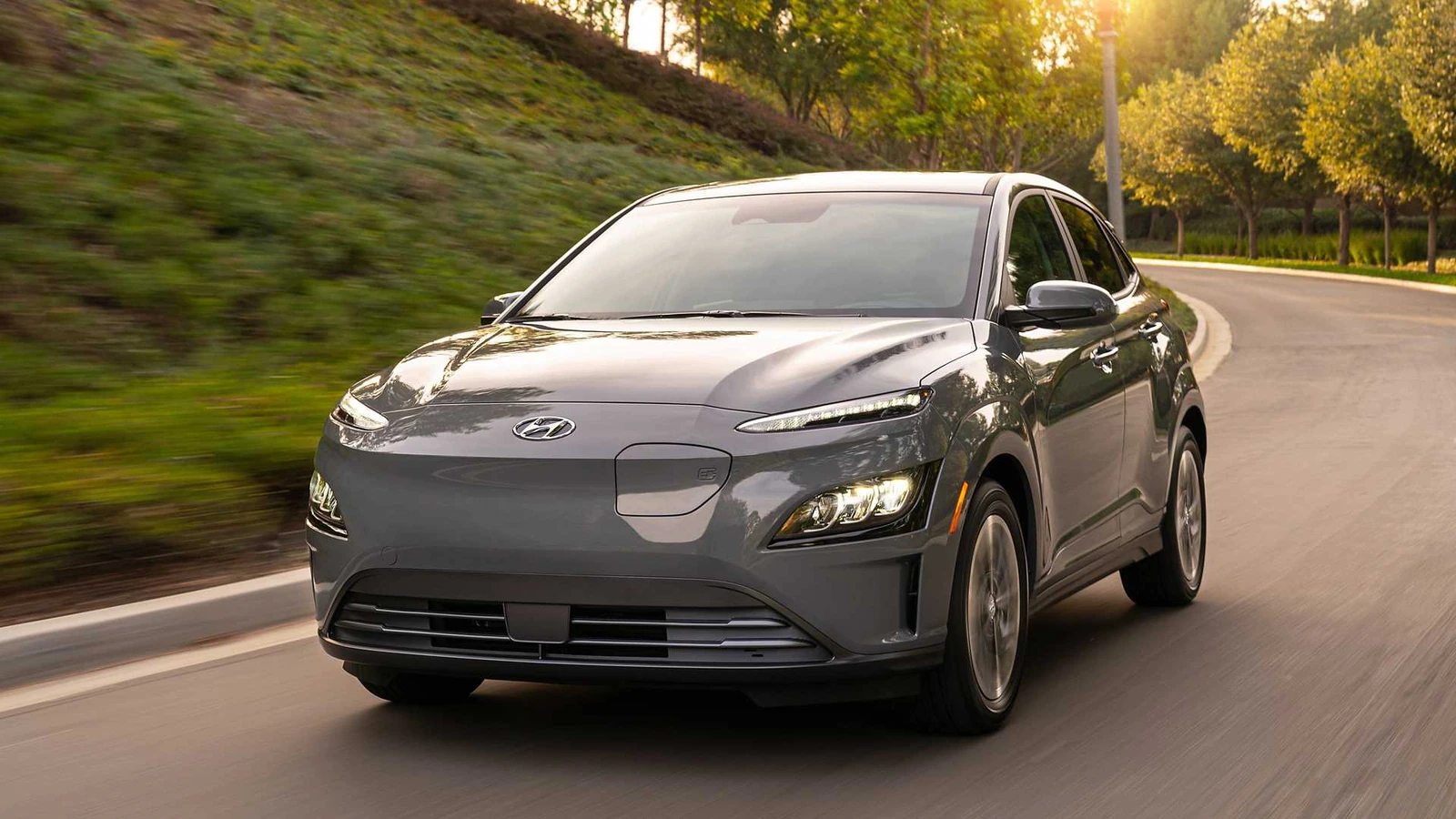
Hyundai is recalling 29,058 first-generation Kona Electric crossovers in the United States because their airbags and seatbelt pretensioners may fail to deploy in a crash. The affected vehicles were built in South Korea between August 28, 2018 and July 26, 2023, covering model years 2019 through 2023.
The recall also takes in nearly 9,000 Hyundai Veloster N petrol hatchbacks sold in the US between 2019 and 2022, which share the same fault. Hyundai says it is not aware of any crashes, fires or injuries linked to the problem in the US.
What is failing in the airbag control unit
The fault lies in the Airbag Control Unit (ACU). According to the recall report published by the National Highway Traffic Safety Administration, data written to the unit's memory can become corrupted under certain driving conditions, which switches on the airbag malfunction light on the instrument cluster and deactivates the airbag system. With the system out of action, the airbags will not fire in a crash, raising the risk of injury to the driver and passengers.
Hyundai says the corruption can occur if the control unit reboots or loses power while it is writing data to its internal memory. Its North American office opened a fresh investigation in 2024 after warranty claims for the airbag warning light rose.
A software fix, not a hardware one
Hyundai worked with ZF, the supplier of the airbag control units, to reproduce the problem on other vehicles but could not. A fault was eventually induced during bench testing, and a solution was found.
The remedy is a free software update carried out at a Hyundai service centre, so owners will need to book a dealer visit rather than fix the car at home. Hyundai says the new software rolls back to the last known valid data if a transfer is interrupted for one of the reasons above.
Hyundai is aware of 331 individual incidents tied to the ACU issue across the Kona Electric and Veloster N. The Kona Electric involved is the previous-generation model, which went out of production in 2023.
Why the recall matters for owners
An airbag warning light is easy to treat as a minor annoyance, but here it signals that the restraint system has switched itself off. That makes the free software update more than routine housekeeping: it restores a safety function that drivers cannot see working until the moment it is needed.
The recall is also a reminder that software, not just parts, can disable safety equipment. Hyundai's fix is a rollback routine rather than a new component, which means the repair is quick once an owner gets an appointment, but it still depends on owners acting on the notice.