INDEPENDENT AUTOMOTIVE NEWSGLOBAL PERSPECTIVE / AUSTRALIAN EDITION
TDCNTHE DAILY
CAR NEWS.

The road ahead.
Every day.

RSS ↗
Latest/New cars

455 original articles

New cars / TDCN ORIGINAL

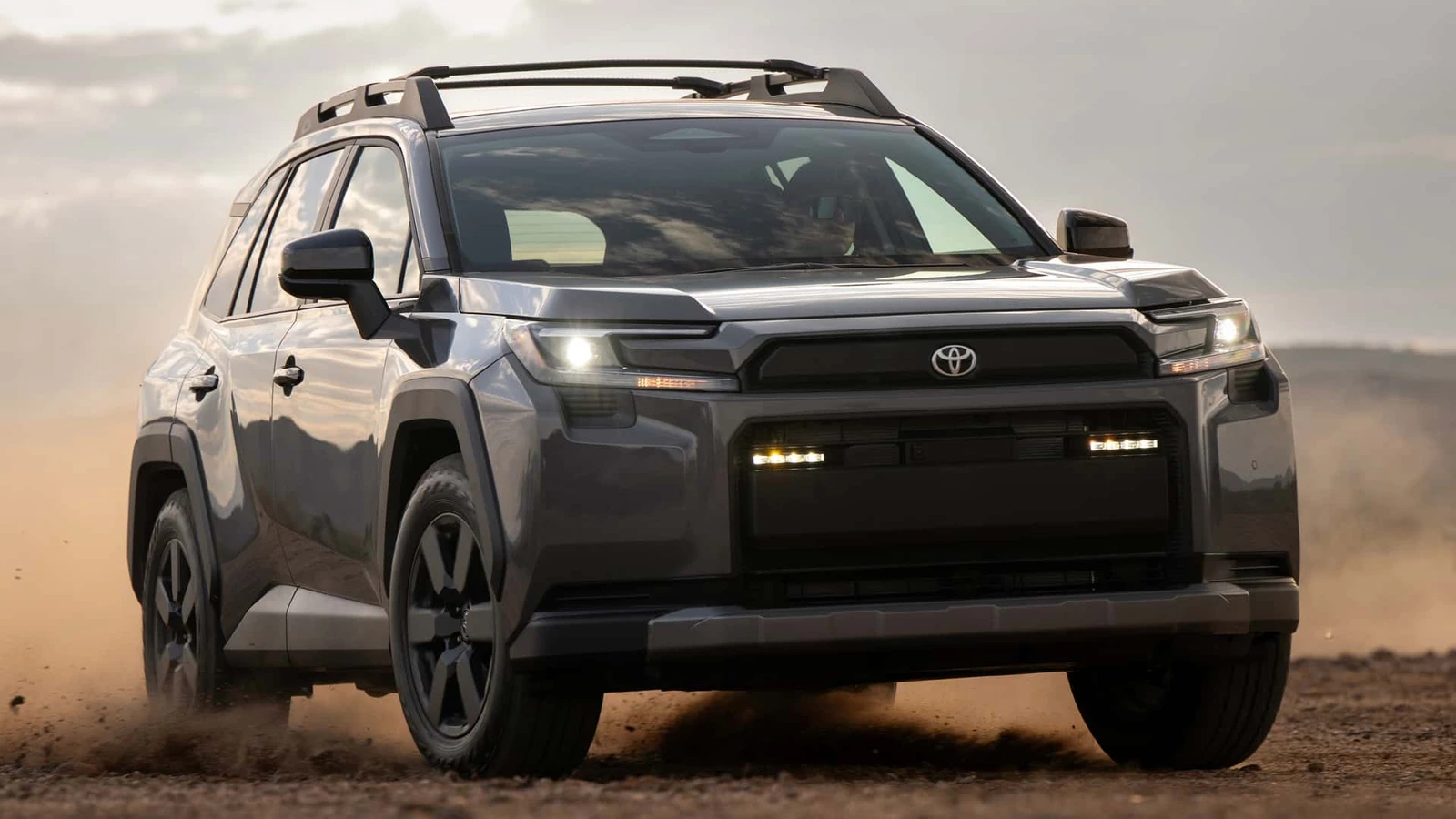
Toyota raises 2027 RAV4 prices and lifts the Woodland by an inch

The off-road trim gains revised springs, shocks and jounce bumpers for 9.1 inches of clearance, while every 2027 RAV4 costs more than the 2026 car.

Image: Motor1

Toyota has confirmed pricing and specifications for the 2027 RAV4, and every version costs more than the model it replaces. The hybrid range opens at $33,895 for the front-drive LE, $400 above the 2026 figure, while the plug-in hybrid line starts at $43,695, a $600 increase.

The headline hardware change belongs to the Woodland trim, which picks up revised suspension components and an extra inch of ground clearance. Toyota announced the details on November 5, and the hybrid models are due at dealers before the end of 2026, with the updated plug-in hybrids following in early 2027.

What the 2027 lineup costs

The front-drive LE hybrid is priced at $33,895, the front-drive SE at $36,695 and the front-drive XLE Premium at $38,095. Adding all-wheel drive to any of those trims costs $1,600, up from $1,400 in 2026.

The all-wheel-drive-only Woodland hybrid is listed at $42,250, the XSE at $43,495 and the Limited at $45,495. Motor1 puts the Woodland hybrid at $40,655 including destination, a figure that reflects both the higher base price and the new off-road hardware.

Plug-in hybrid pricing runs from $43,695 for the entry SE through $47,650 for the Woodland, $49,395 for the XSE and $50,695 for the GR Sport. Destination charges rose by $145 compared with 2026, which pushes the real-world increase on a base hybrid closer to $545 once delivery is added. Buyers cross-shopping the new car against a 2026 RAV4 will find the gap wider than the sticker-to-sticker difference suggests.

Woodland gains clearance and off-road kit

The Woodland's ground clearance rises to 9.1 inches from the 8.1 inches of other RAV4 grades (excluding the GR Sport), achieved through revised springs, shocks and jounce bumpers. The trim also gets a chunkier front bumper, a truck-inspired grille, 18-inch wheels on all-terrain tyres, Rigid Industries LED fog lights and a tow hitch.

That extra inch puts the compact crossover in the same conversation as the lifted Grand Highlander Woodland for buyers who want more clearance from a family vehicle, though it does not turn the RAV4 into a rock crawler. The Woodland's price rise of $755 is the largest trim-level increase in the range.

Across the lineup, every all-wheel-drive RAV4 now gets Toyota's Multi-Terrain Select system, which replaces the old Trail mode. Snow mode moves into the same button cluster, consolidating controls that were previously split across two switches.

Plug-in hybrids switch to NACS and lose range in Woodland form

All plug-in RAV4s now come with a NACS charging port and Level 3 DC fast-charging capability, with the charge port relocated to the driver's side as part of the change. The onboard charger has been upgraded to a maximum of 11 kW on every trim.

The capability gains come at a mileage cost on the PHEV side. The Woodland plug-in hybrid is rated at 37 mpg combined with 46 miles of electric range, down from 49 miles last year, while the SE PHEV still leads the lineup at 52 miles thanks to its lighter, less off-road-focused setup.

The range figures are quoted in miles and should not be read across to WLTP or CLTC numbers from other markets, since Toyota has published them on the US test cycle.

Smaller changes across the range

Every 2027 RAV4 now comes with a backup camera washer, and the Remote Connect trial extends from one year to five years regardless of trim. Woodland versions also get redesigned all-weather floor and cargo mats.

The rollout timing mirrors last year's pattern: regular hybrids reach dealers before the end of 2026, while the updated plug-in hybrids arrive early in 2027. That means Woodland PHEV shoppers will wait longer than hybrid buyers for the new suspension hardware.

Toyota has not announced Australian pricing or timing for the 2027 RAV4, so the figures above apply to the US market only.
Open this article ↗
New cars / TDCN ORIGINAL

US automakers' lobby group renews call for a full ban on Chinese cars

The Alliance for Automotive Innovation wants Congress to legislate restrictions that currently exist only as Biden-era connected-vehicle rules.

Image: Carscoops

The Alliance for Automotive Innovation, the lobby group whose members include Ford, General Motors, Toyota, Volkswagen and Hyundai, has renewed its push for a complete ban on Chinese vehicles in the United States, urging Congress to act. Its president, John Bozzella, asked lawmakers to "stop Chinese automakers from doing here what they've gotten away with in Europe".

The call lands at a moment when Chinese-built cars are effectively already locked out of the US market by tariffs and connected-vehicle rules, but with no law guaranteeing those barriers last.

What the lobby group is actually asking for

Bozella's argument rests on two concerns: privacy and vehicle surveillance, and a wish to shield domestic manufacturers from competing with products that are considerably cheaper and, in many respects, more sophisticated.

He cited EU imports of more than 1.1 million Chinese-built vehicles in the first eight months of 2026, already above the total for the whole of 2025. That comparison is the group's warning shot: Europe's market has absorbed Chinese volume quickly, and the alliance does not want the same to happen in America.

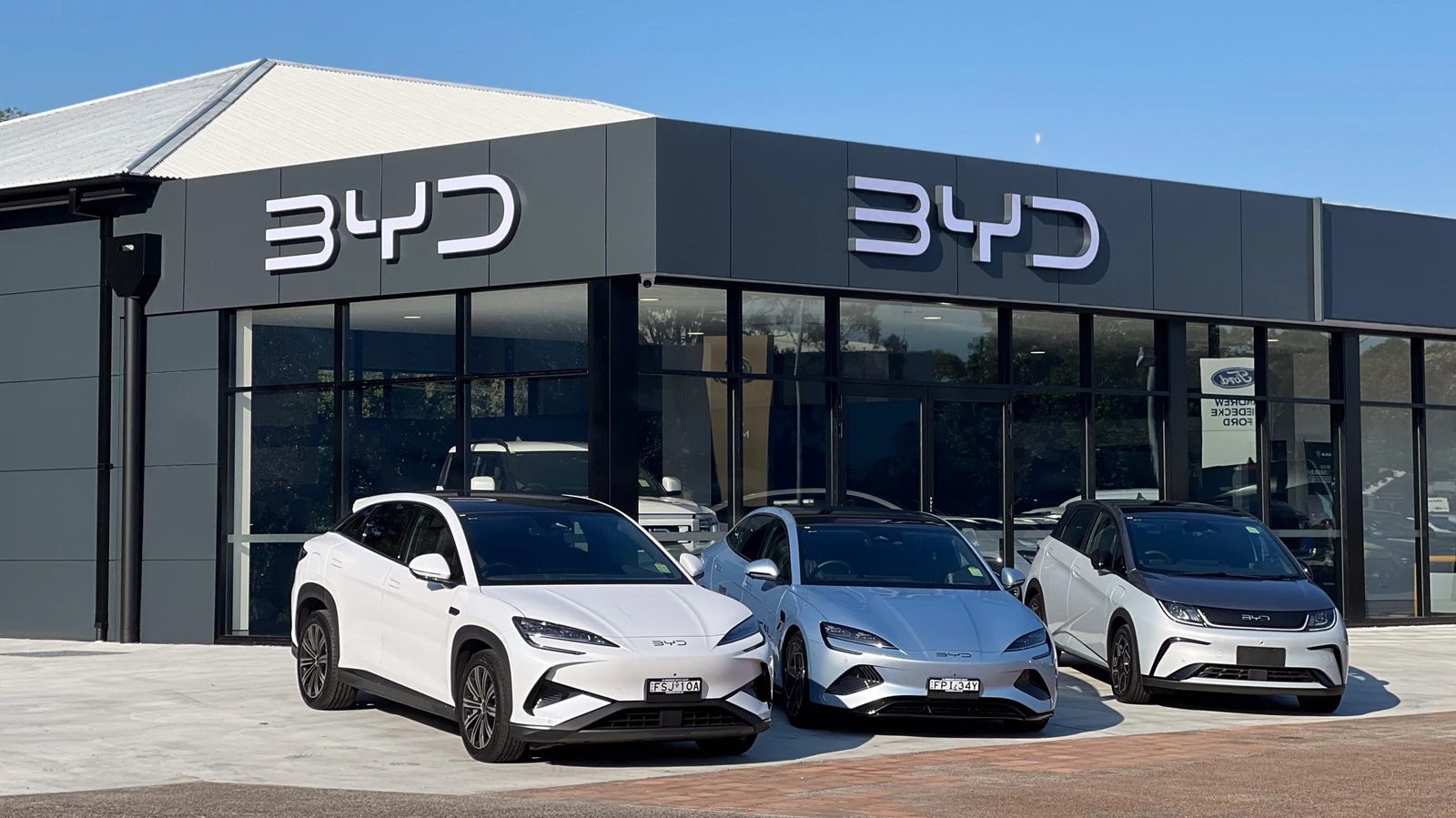
Chinese EV makers like BYD are squarely in the crosshairs as US automakers' lobby group renews its call for a full ban on Chinese cars.
Chinese EV makers like BYD are squarely in the crosshairs as US automakers' lobby group renews its call for a full ban on Chinese cars., Image: Carscoops

The restrictions already in place

Chinese automakers do not currently sell cars in the US, and tariffs are a large part of the reason. In January 2025 the Biden administration finalised connected-vehicle restrictions aimed at certain Chinese and Russian technology, and at manufacturers with sufficient ties to either country.

Those rules bite in stages. Software restrictions, and the ban on covered manufacturers selling new connected vehicles, take effect for the 2027 model year. Restrictions covering vehicle-connectivity hardware follow for the 2030 model year, with a separate January 2029 deadline for hardware that has no associated model year.

Crucially, the rules apply even to vehicles built in the USA, which is essentially what pushed Polestar out of the American market. For buyers, that means a car's software and connectivity supply chain now matters as much as where the badge was bolted together.

The Connected Vehicle Security Act of 2026

The legislative vehicle for making those barriers more durable is the Connected Vehicle Security Act of 2026, sponsored by Republican Bernie Moreno and Democrat Elissa Slotkin. It would write the restrictions into federal law, covering connected vehicles, specified software and connectivity hardware linked to countries of concern, and it also targets companies that try to sidestep the rules by renaming, rebranding or restructuring covered products.

The bill advanced unanimously from the Senate Commerce Committee in July, giving it genuine bipartisan support. That unanimity is the strongest signal in the story: the committee vote suggests the measure is not a partisan gesture, even if its path through the full chamber is not yet settled.

When a full ban would take effect

A full ban is not a single switch, and the sources do not put a date on one. What is scheduled is the connected-vehicle regime: software restrictions and the prohibition on covered manufacturers selling new connected vehicles apply from the 2027 model year, with hardware restrictions following for the 2030 model year and a January 2029 deadline for hardware without an associated model year.

If the Connected Vehicle Security Act of 2026 becomes law, it would lock those restrictions in as federal statute rather than leaving them as administrative rules, but the sources give no separate commencement date for the Act itself beyond that framework. In other words, the 2027 model year is the point at which the software-side ban starts to bite, and 2029 and 2030 are the hardware milestones, while a formal full ban depends on Congress passing the bill and on whether it survives a possible veto.

Trump's stateside caveat

President Donald Trump could veto the whole thing if he chooses. He said in September that he would be open to Chinese cars in America as long as they are built stateside, a position the alliance's members would not welcome, and one lawmakers may not share either.

The politics cut in an unusual direction. The people paying an average of more than $50,000 for a new car might not be too dismayed by Chinese competition, since cheaper, more sophisticated products are exactly what the alliance says it fears. The fight, then, is less about whether Chinese cars are good and more about whether the US market stays protected long enough for domestic makers to answer them.

Open this article ↗

Keep scrolling to read the next story.

Older articles →