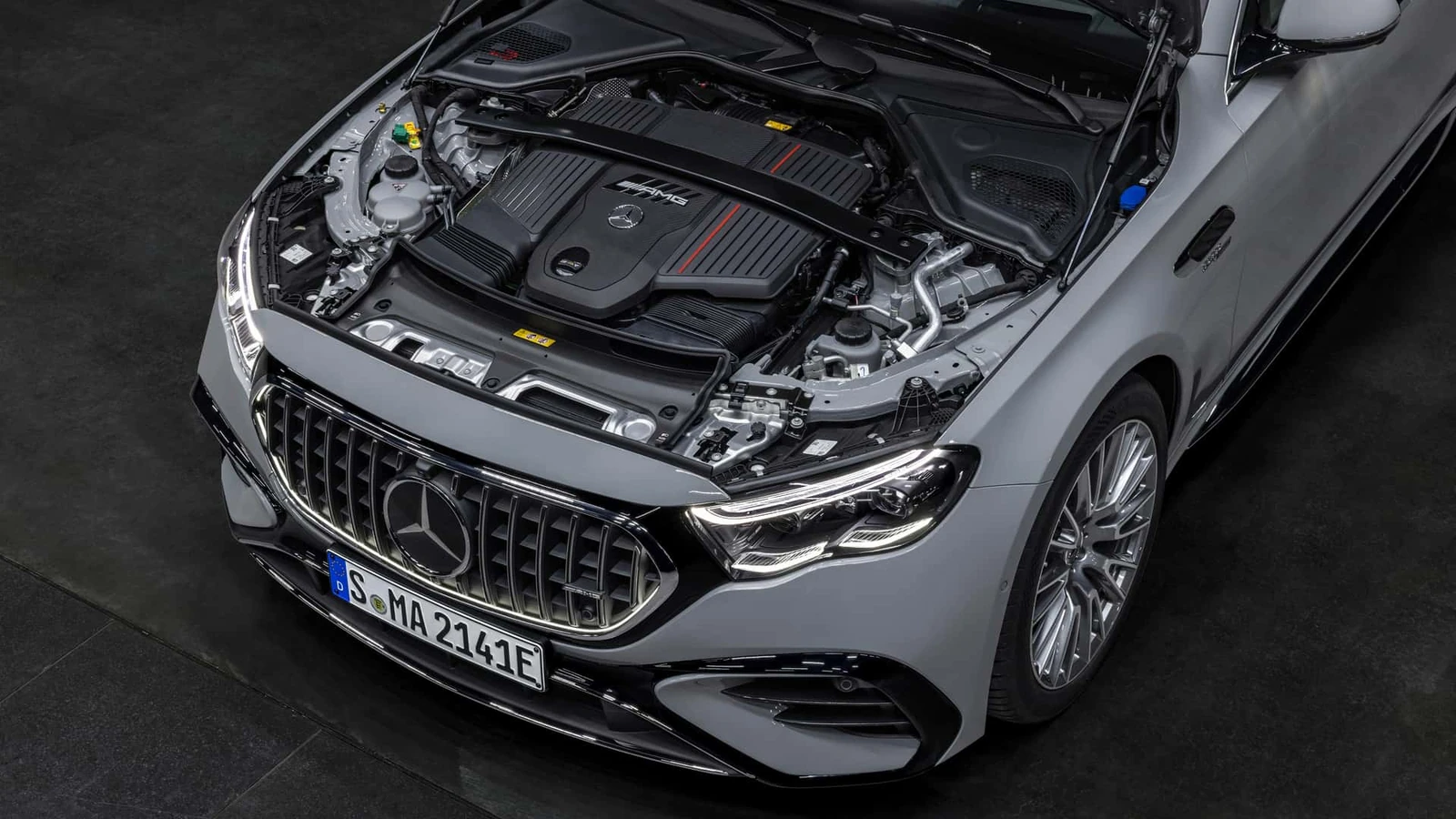
Mercedes-Benz chairman Ola Källenius says the company's petrol and diesel engines have at least another decade of production ahead of them, setting a timeline that runs well past 2030. Speaking at a media roundtable in Pune, India, he put the minimum life of the combustion engine at 10 years and the likely figure at 15.
He framed the move to electric cars as a 20 to 25-year industrial shift rather than something completed by 2030 or 2035, and tied the survival of combustion models to continued customer demand.
What Källenius said about the combustion timeline
According to Autocar India's account of the roundtable, Källenius said: "The combustion engine, it will be around for minimum 10, probably 15 years more". He was equally direct about the condition attached to that runway, saying the engines stay as long as there is meaningful demand for what he called high-tech, electrified internal combustion.
That phrasing matters. Mercedes is not positioning its combustion engines as a placeholder until electric cars take over. They are being sold as electrified products in their own right, which is how the company squares a long combustion horizon with its electric plans.
EU-7 ready engines and the V8
Mercedes is investing in its combustion lineup ahead of the Euro 7 emissions standard, with a range of engines the company describes as EU-7 ready rather than already certified under the new rules. The newest V8 remains in production for select high-end models, sitting alongside plug-in hybrids and full electric cars.
The V12 also continues for select applications as electric models expand through 2027. For buyers weighing a large-engined Mercedes, that means the decision is not being forced by the calendar alone.
Diesel stays for high-mileage drivers
Källenius named light commercial vehicles and larger passenger models as the places diesel still makes the most sense, saying the company's diesel portfolio is ready for the future and that the fuel will stay in the portfolio for the foreseeable future.
The strongest case is for drivers covering 60,000 to 70,000 kilometres a year, roughly 37,000 to 43,000 miles. That is the band where diesel's efficiency advantage over petrol or hybrid power still pays off. In India, Källenius noted that diesel's lower pump price gives high-mileage customers a further reason to stay with it.
The catch for private buyers is that this argument is built around annual distance. Below that mileage band, the maths favours petrol, hybrid or electric depending on charging access, which is why Mercedes is keeping all of them in the plan rather than narrowing to one.
A 40-model programme across electric and combustion
Mercedes is running a 40-model programme over three years spanning electric and combustion vehicles, according to Autocar India, with new models arriving through 2026 and 2027 and mixing petrol, diesel and battery power across the lineup.
Electrification remains in the product plan. Mercedes intends to offer an electric alternative across every meaningful model position by the end of the decade, and Källenius expects electric cars to take a bigger share of the brand's Indian sales next year.
The sources do not break the 40-model programme down model by model, so which specific nameplates get petrol, diesel, plug-in hybrid or battery power has not been detailed. Mercedes has also not announced Australian model timing or pricing from this roundtable, so local buyers should treat the 2026 and 2027 arrival window as a global product plan rather than a confirmed showroom schedule.
What it means for buyers planning their next car
For high-mileage drivers and fleet operators, the practical read is that diesel and efficient petrol engines are not disappearing overnight. At annual use near the 37,000-mile mark, lower fuel burn can still outweigh the higher purchase price compared with a similar petrol model.
Electric cars gain ground fastest where charging is dense and grids are cleaner, since lower running costs can offset a higher purchase price over several years. Where charging is scarce or long-distance highway use dominates, the 10 to 15-year horizon gives buyers room to plan around combustion and plug-in hybrids for at least one more ownership cycle.
The strategy is unusual in how openly it is built on customer demand rather than a fixed end date. That gives Mercedes room to keep volume models on sale where electric demand lags, while still committing to an electric option in every meaningful segment by 2030.