INDEPENDENT AUTOMOTIVE NEWSGLOBAL PERSPECTIVE / AUSTRALIAN EDITION
TDCNTHE DAILY
CAR NEWS.

The road ahead.
Every day.

RSS ↗
Latest/Industry

455 original articles

Industry / TDCN ORIGINAL

Chery considers building cars in Canada as it plans 2027 launch

The Chinese automaker says Canada alone could justify a factory, and it is talking to investors about using existing plant capacity.

Image: Carscoops

Chery is weighing local vehicle production in Canada alongside its plan to start selling cars there next year, with an executive saying the market is large enough to support a factory even without access to the United States. The Chinese automaker is one of several manufacturers moving into Canada under a trade deal that allows 49,000 Chinese-made electric and hybrid vehicles into the country each year at a reduced tariff rate.

Guibing Zhang, Chery's executive vice president, said in an interview with Bloomberg that Canada is worth having a factory for manufacturing even without the American market, and that the company is looking for the right opportunity and discussing possible formats.

No site or product line announced yet

Chery has not announced where in Canada a factory would be located or which models it would build. The company's preferred route is to find an existing local plant with spare capacity rather than start from scratch, and Zhang said Chery has begun speaking with investors across Canada who are enthusiastic about Chinese car manufacturers. Building a new plant remains an alternative, but it would be expensive and hard to justify unless the import quota is raised substantially or removed altogether.

That caution is easy to understand. Chery is currently competing for a share of just 49,000 imported vehicles a year, so there is no need to spend billions of dollars on a new factory at this stage. Using an underused plant would let the company establish a Canadian manufacturing footprint at far lower cost and risk, while keeping its options open if the quota grows.
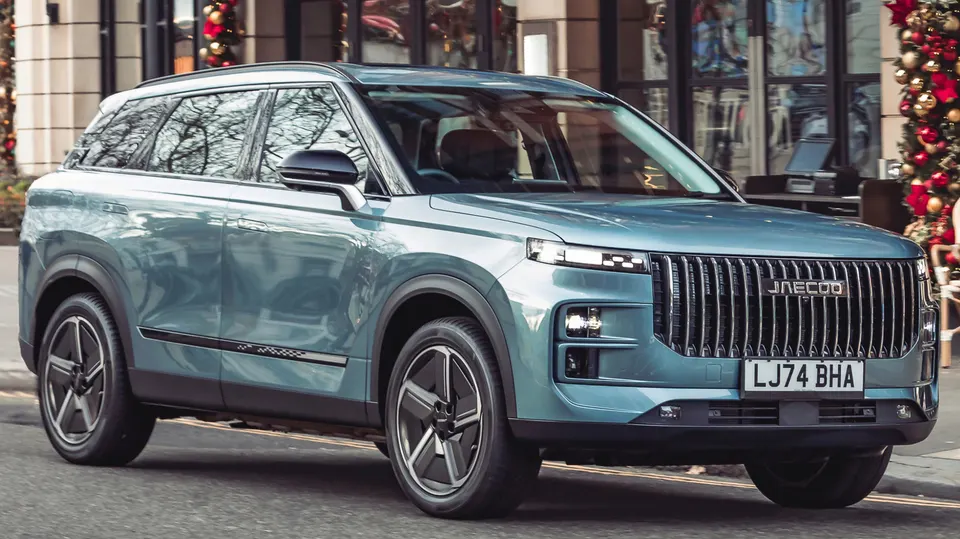
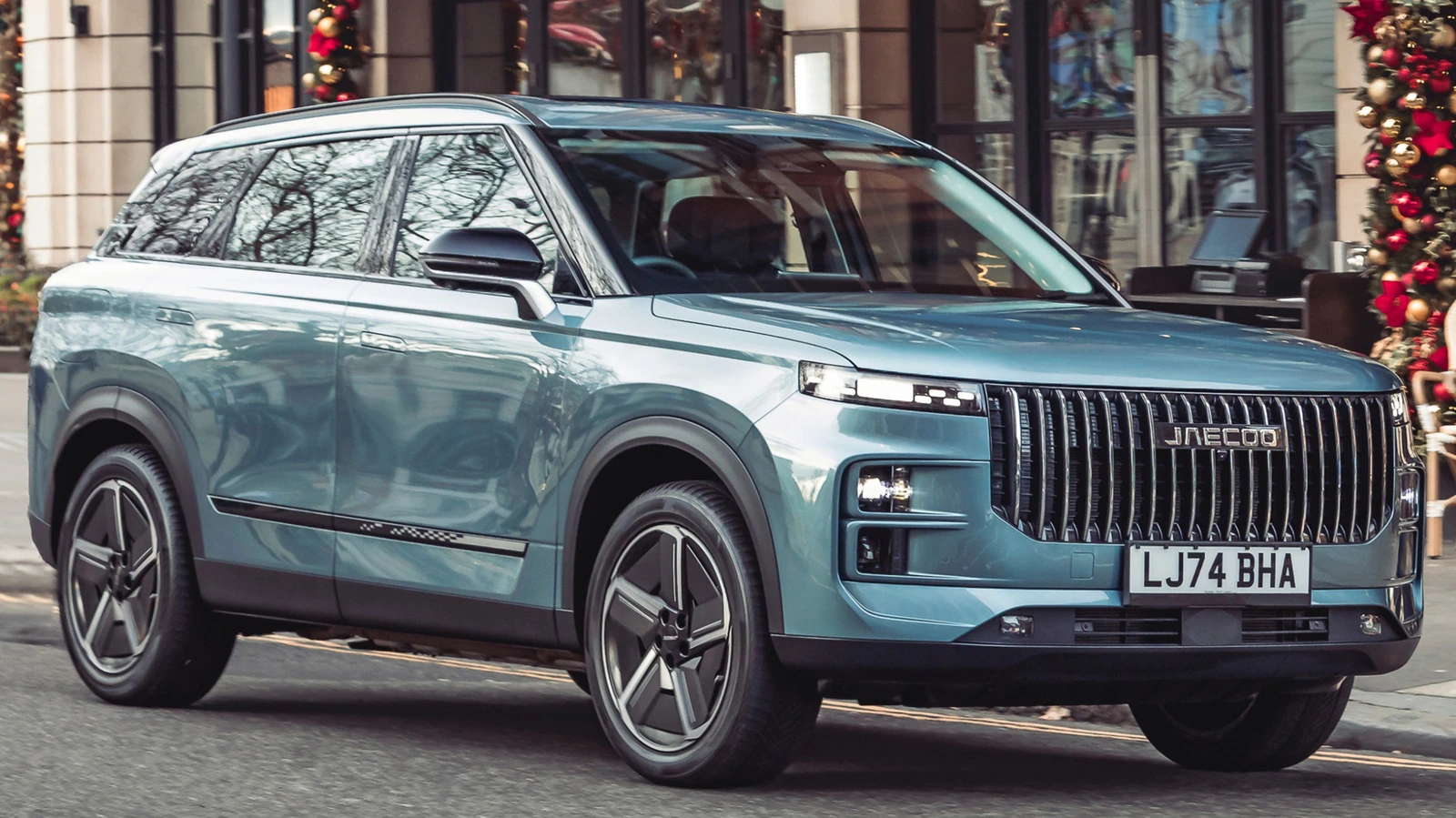
A Jaecoo SUV, from Chery's sub-brand lineup, previews the kind of vehicle the Chinese automaker could build in Canada after 2027.
A Jaecoo SUV, from Chery's sub-brand lineup, previews the kind of vehicle the Chinese automaker could build in Canada after 2027., Image: Carscoops

Canada's quota draws several Chinese brands

The trade agreement between Canada and China permits 49,000 Chinese-built EVs and hybrids to be imported at a reduced tariff rate, and BYD, Geely and Chery are among the companies taking advantage. Chery intends to launch its vehicles in Canada next year.

Chery has already shown it is willing to share space with established automakers elsewhere. It signed a memorandum of understanding with Nissan in the UK that could see vehicles built at Nissan's Sunderland site, and it operates an ex-Nissan factory in South Africa where it will start building its own vehicles.

Ottawa draws a line at knockdown kits

Canada has welcomed Chinese vehicles but does not want companies simply assembling so-called knockdown kits, which are built elsewhere, partially disassembled and shipped over for local workers to reassemble. A report earlier this year said Stellantis was considering that approach with EVs from Leapmotor, drawing sharp criticism from federal Industry Minister Melanie Joly and Ontario Premier Doug Ford.

Flavio Volpe, president of the Automotive Parts Manufacturers' Association, told CTV News that such vehicles are completely manufactured in China with Chinese components, then partially disassembled and reassembled by several hundred workers like flat-pack furniture, which he contrasted with making cars in Canada, buying C$3 billion worth of parts a year and employing 10,000 to 12,000 people.
Open this article ↗
New cars / TDCN ORIGINAL

Ram Rampage compact pickup launches in Europe from €44,000 before tax

The Brazilian-built Rebel and R/T arrive through importer KW Auto with first deliveries due in February 2026, priced above a US-market Ram 1500.

Image: Carscoops

Ram's compact Rampage pickup will reach European buyers from €44,000 before taxes, with first deliveries expected in February 2026 and distribution in major markets handled by importer KW Auto. Two high-specification trims are being offered, the off-road-flavoured Rebel and the road-focused R/T, three years after the model launched in South America.

Two trims, two four-cylinder engines

The Rebel uses a 2.2-litre turbodiesel four-cylinder making 197 hp (147 kW), while the R/T carries a turbocharged 2.0-litre petrol four rated at 268 hp (200 kW). Both send power to all four wheels through a nine-speed automatic gearbox, and neither is electrified.

The Rampage is a unibody compact truck measuring 198 inches (5,028 mm) long, built on the Small Wide platform sourced from the Jeep Compass with a multilink rear suspension. Its bed holds 980 litres (34.6 cubic feet), and payload is quoted between 1,653 and 2,238 lbs (750 to 1,015 kg), the top figure comparable with one-tonne midsize pickups.

Standard equipment is generous: a 12.3-inch infotainment screen, a 10.3-inch digital instrument cluster, leather upholstery, 12-way power front seats, Harman Kardon audio and Level 2 driver assistance. The Rebel adds plastic cladding and 17-inch wheels on all-terrain tyres, while the R/T gets a sportier body kit, lowered suspension, a louder exhaust and 19-inch alloys.

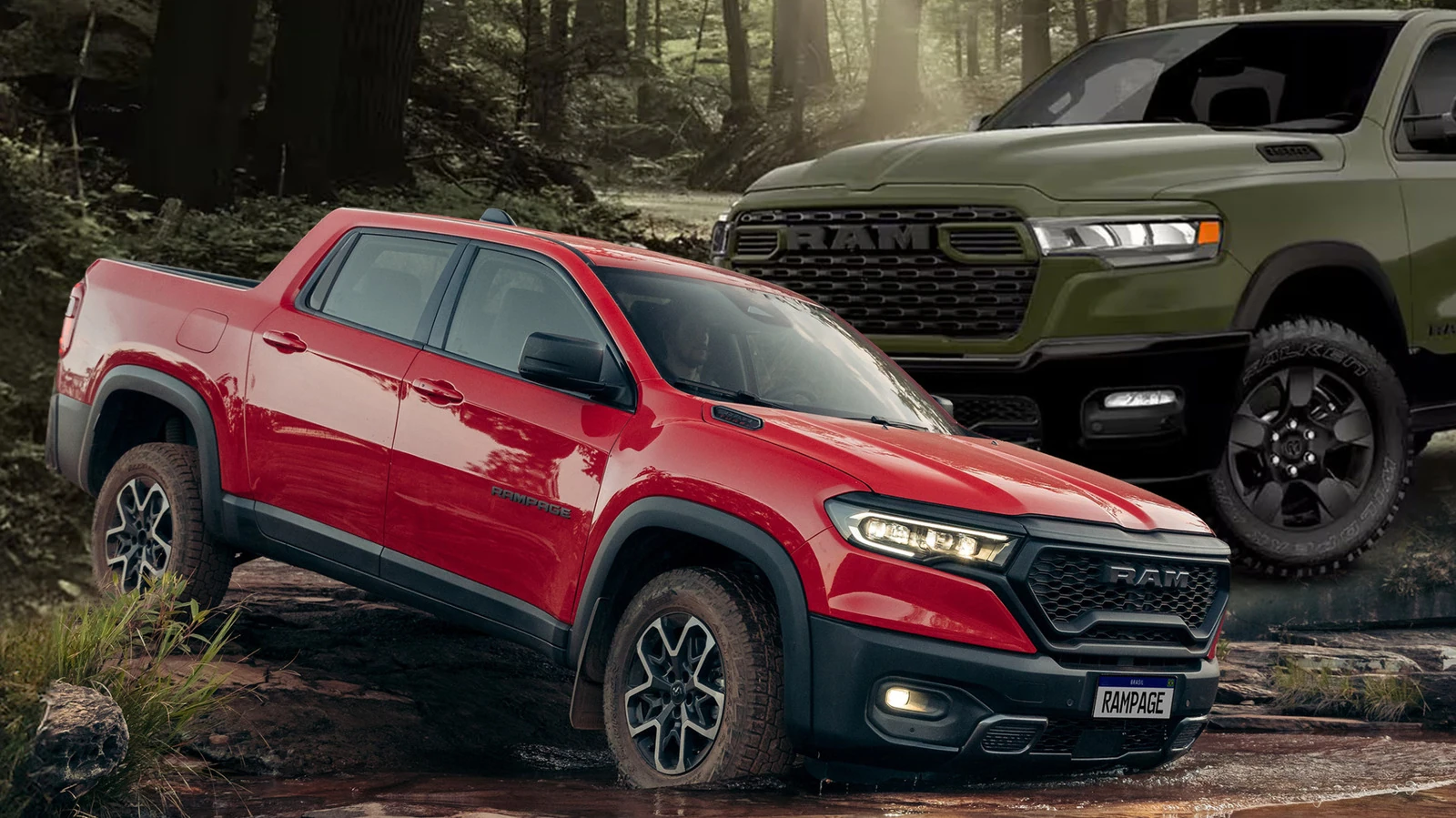
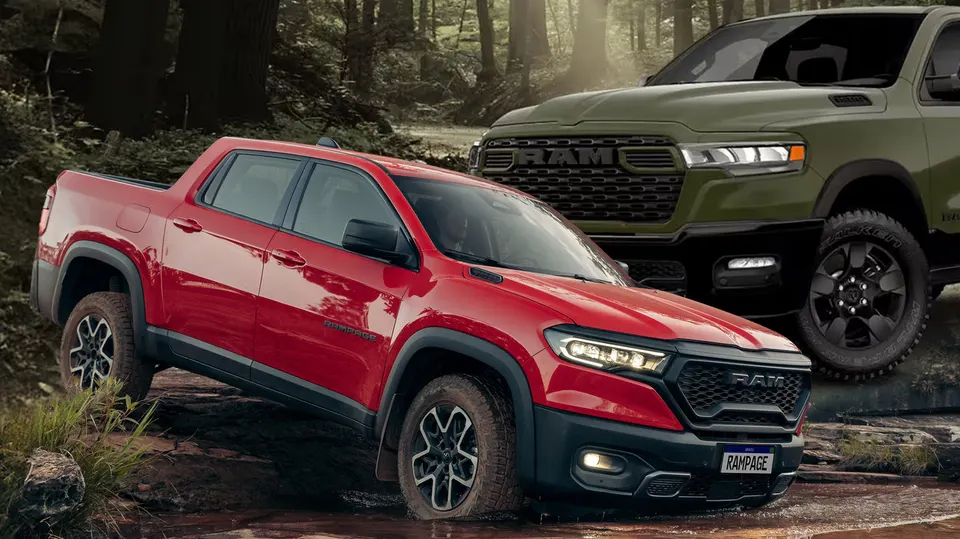
The new Ram Rampage compact pickup, shown here in red, brings Ram's rugged styling to a smaller European-focused package
The new Ram Rampage compact pickup, shown here in red, brings Ram's rugged styling to a smaller European-focused package, Image: Carscoops

A compact truck priced like a full-size one

The European figure sits well above Brazilian pricing, which runs from R$199,990 to R$225,490 (about $36,300 to $41,000) depending on specification. For American buyers, the contrast is sharper still: the full-size Ram 1500 starts at $42,025 in Tradesman form, and the better-equipped Big Horn at $47,280. Europeans are therefore paying more for a compact four-cylinder unibody pickup than Americans pay for a full-size six-cylinder truck.

That gap is partly a matter of specification. Ram is aiming the Rampage at lifestyle buyers, which is why only the flagship trims crossed the Atlantic rather than the cheaper versions sold in South America.

The competitive picture in Europe is unusual. The Rampage will be the only compact unibody pickup on sale there, since its South American rivals, the Ford Maverick and Renault Niagara, are not offered. Buyers wanting an alternative will be looking at traditional midsize ladder-frame trucks: the Ford Ranger starts at €46,590 in Germany and the Toyota Hilux at €46,746 in the same market. Against those, the Ram's €44,000 pre-tax figure undercuts both on list price, though the comparison is not like for like given the size and construction differences.

What is still open

Ram has not published individual pricing for each European market, so the €44,000 figure is the headline starting point before taxes rather than a country-by-country price list. Equipment lines and final on-road costs may vary by market once KW Auto's distribution rolls out ahead of the February 2026 deliveries.

US buyers still cannot order a Rampage. Ram is developing a separate midsize Dakota on a ladder-frame chassis for the American market, which despite the shared name will differ from the South American Dakota that uses Chinese underpinnings.

Open this article ↗

Keep scrolling to read the next story.

Older articles →