INDEPENDENT AUTOMOTIVE NEWSGLOBAL PERSPECTIVE / AUSTRALIAN EDITION
TDCNTHE DAILY
CAR NEWS.

The road ahead.
Every day.

RSS ↗
Latest/New cars

457 original articles

New cars / TDCN ORIGINAL

Rimac confirms two more BMW models in the pipeline beyond the i7

Mate Rimac says the follow-up cars are under development but BMW has not named them or given a launch date.

Image: Carscoops

Rimac is working with BMW on two further models beyond the new i7, according to company founder Mate Rimac. In an interview with Auto News, he confirmed that "there are two more cars in the pipeline" being developed alongside the German automaker.

The i7 is the first BMW to use a battery system the two companies developed together, and the additional cars would extend a supply relationship that Rimac says it won on technical and commercial merit rather than an existing contract.

What is known about the two extra BMW models

BMW has not announced which vehicles these are, what they will be called or when they will reach showrooms, so the names and on-sale dates remain open. Carscoops notes that new products from BMW's Neue Klasse line-up look like the most likely candidates, but that is speculation rather than a confirmed plan.

What is confirmed is the hardware underneath. The i7 pairs BMW's Gen6 4695 lithium-ion cylindrical cells with its Gen5 module-based technology in a scalable architecture that other vehicles can use, and Rimac builds the system at its campus near Zagreb. A scalable pack design is what makes it practical for BMW to spread the same approach across more than one model, which is consistent with Rimac's talk of further cars without confirming any of them.

How Rimac won the BMW battery contract

Rimac described the pitch in the same interview. He toured BMW executives around the Rimac Campus while it was still early in construction and showed them where he planned to put a production line for the automaker. BMW told him it had no contracts with Rimac, and he replied: "It doesn't matter, I'm building it for you".

He framed the win as a commercial as well as engineering achievement. "BMW is premium," he said. "You have to be the best technically and commercially to supply them. They have to be competitive on the market and they cannot pay a premium to get components from a company that's not optimized".

Rimac's supply business now reaches well beyond BMW. Its technology appears in the Koenigsegg Regera, the Aston Martin Valkyrie, the Porsche 911 GTS T-Hybrid and the Ceer EVs being built in Saudi Arabia.

A faster Rimac after Porsche's exit

In September a consortium of investors bought Porsche's 21% stake in Rimac Group and its 45% share of the Bugatti Rimac joint venture. Rimac says the change lets it decide faster, and he contrasted the old ownership with the new setup: "A big company like Porsche is always risk aware and risk averse, and the decision-making process is long. Now I can sit down with my management team, make a decision and go".

That matters for a company whose business is winning component contracts on speed and cost as much as on performance. Rimac has grown from building eight examples of the Concept One to owning Bugatti and supplying drivetrains and batteries to established brands, and shorter approval chains suit the pace at which those deals are decided.
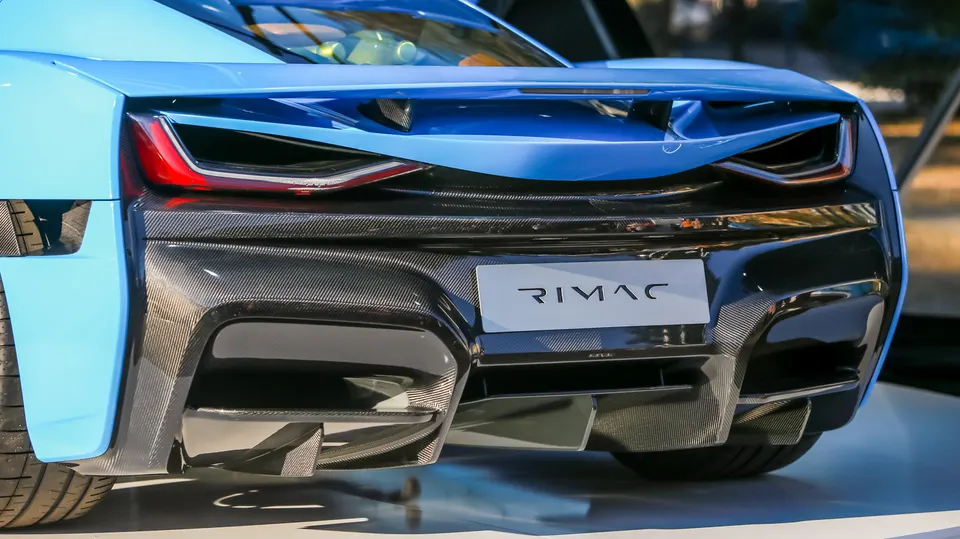
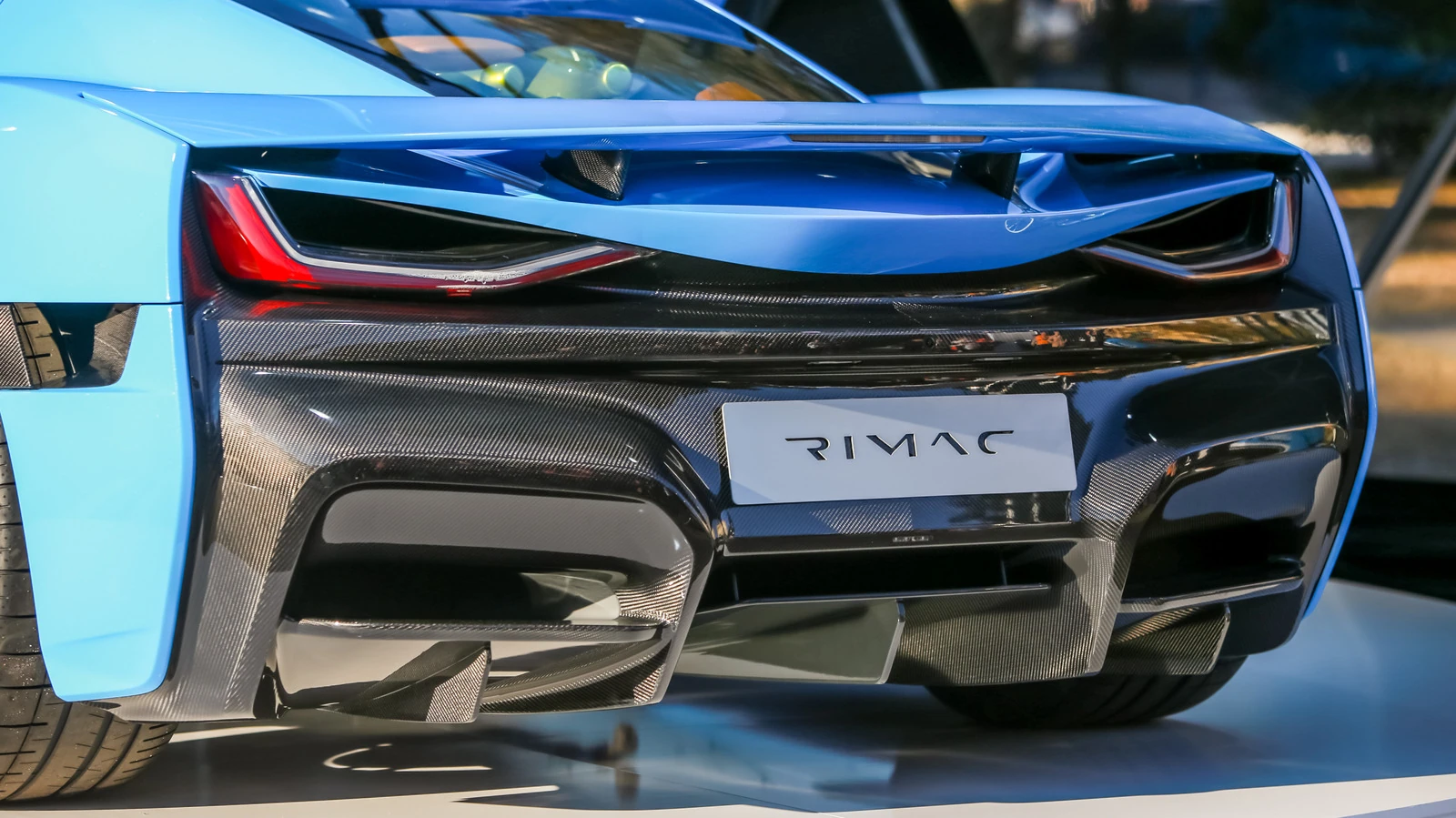
Rimac's electric performance expertise is what drew BMW to its battery technology
Rimac's electric performance expertise is what drew BMW to its battery technology, Image: Carscoops
Open this article ↗
Performance / TDCN ORIGINAL

Two Porsche 911s arrive at SEMA with Maserati and GM V8 swaps

A 1978 911 SC now runs a Ferrari-built Maserati F136 V8, while a 997 GT3 has traded its flat-six for a dry-sump 6.0-litre LS2.

Image: Motor1

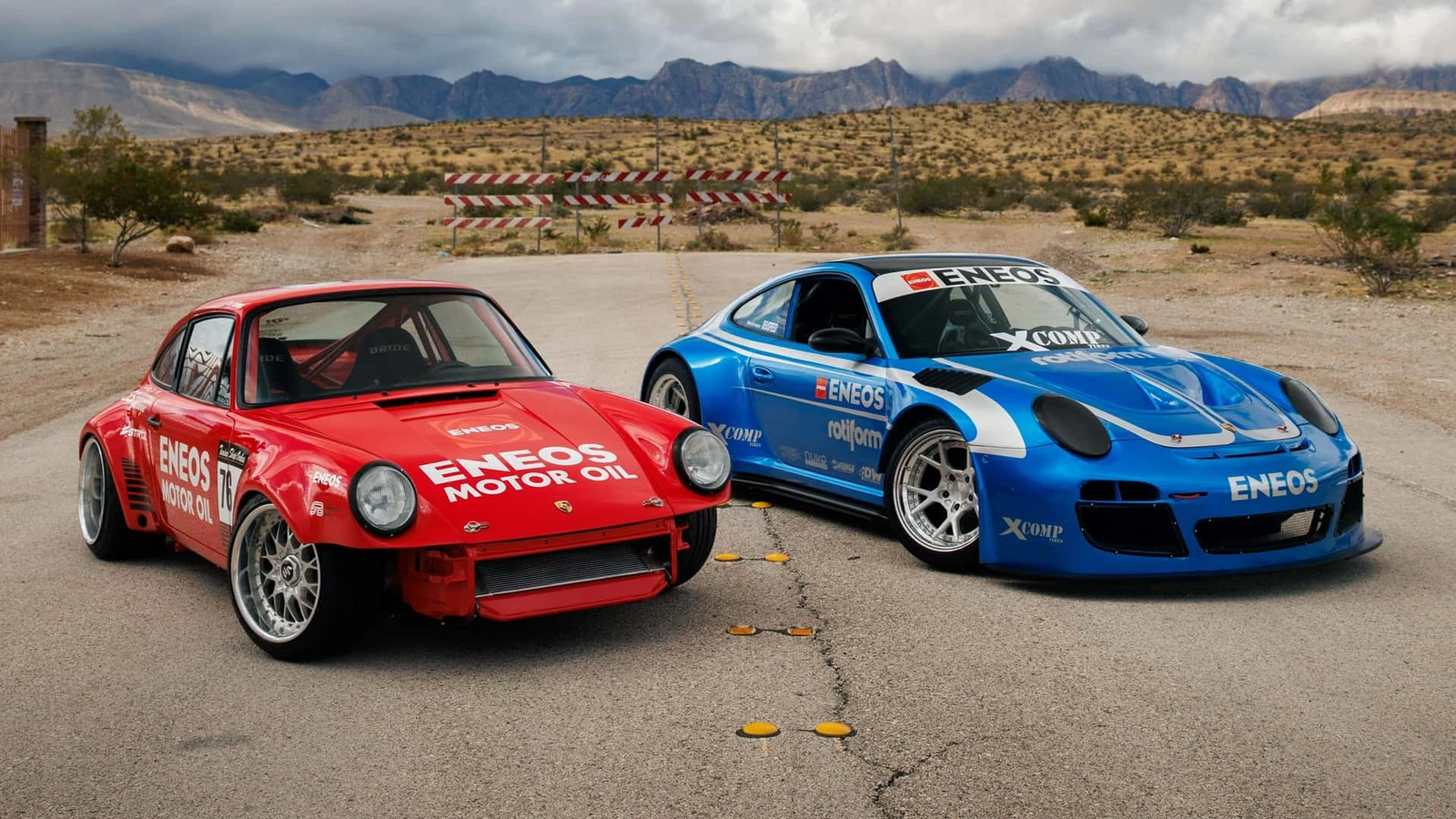
Two Porsche 911s are on display at the 2026 SEMA Show in Las Vegas, each running a V8 in place of the flat-six the factory fitted. One is a 1978 911 SC converted by Jimmy Oakes to take a 4.3-litre Ferrari-built Maserati F136 V8; the other is a 2007 997 GT3 owned by Faruk Kugay that now runs a dry-sump 6.0-litre LS2.

Both cars are presented through Eneos Oil and are on show until November 6 at the Las Vegas Convention Center. Neither is a Porsche-built concept: they are private builds made to find out what else fits in a 911 engine bay.

The Italian V8 911

Oakes's car, a 1978 911 SC, carries the F136 V8 that was originally fitted to a 2007 Maserati Quattroporte. The engine is a flat-plane-crank unit, and Maserati and Ferrari shared engineering resources for years before that arrangement ended in 2023, which is how a Ferrari-developed engine ended up badged as a Maserati.

Marrying the Italian V8 to the Porsche required substantial fabrication. The F136 is mated to a Porsche 996 transmission via a Kennedy Engineered Products bellhousing, a custom clutch and flywheel, and an engine cradle built specifically for the conversion. Engine management comes from a Link ECU G5 Voodoo Neo 6, with custom Stainless Bros headers and exhaust, and individual throttle bodies adapted from BMW E90/E92 M3 S65 parts.

That throttle-body work is reportedly enough to let the F136 rev to an 8,000-rpm limit. The car also gained upgraded brakes, coilovers and a roll cage. It sat in the Eneos booth during the Rays Wheels Silver Lot takeover.

The drift-focused LS2 GT3

Kugay's 2007 997 GT3 has followed a longer path. It previously ran a Subaru STI EJ25 flat-four, itself an unusual swap, before being rebuilt around a 6.0-litre LS2 with LS3 cylinder heads and a dry-sump setup intended for sustained sideways abuse.

The GT3 had its first large-scale public outing during the Optima driving experience in SEMA's Bronze Lot. Few 911 GT3 builds discard both the standard flat-six and an earlier replacement engine within the same car's life.

Porsche has used V8s in the 928, Cayenne and 918 Spyder, but never in a production 911. That is the gap these two cars fill: they are not attempts to improve on Porsche's own engineering, but experiments in what the engine bay can accommodate.

What has not been announced

Neither build has a published power or torque figure in the source material, so output for both the F136 and the LS2 conversion has not been announced. The only performance number given is the reported 8,000-rpm ceiling for the Maserati-derived V8.

The two cars share a sponsor but answer different questions about what a 911 can become, one leaning on Italian V8 character and the other on a robust American V8 built for drift duty.

Open this article ↗

Keep scrolling to read the next story.

Older articles →