Mercedes-Benz plans to bypass a second generation of Level 3 hands-free driving and move directly toward Level 4 autonomy, with the company's chief technology officer saying a production car at that level will not arrive until after 2030. The strategy marks a retreat from the position Mercedes held in 2023, when Drive Pilot became the first Level 3 system approved for use on US roads.
The newest S-Class reached the US market without Drive Pilot fitted, a signal of the change in direction as the automaker concentrates on more advanced driver assistance rather than incremental hands-off driving.
Why Drive Pilot fell short
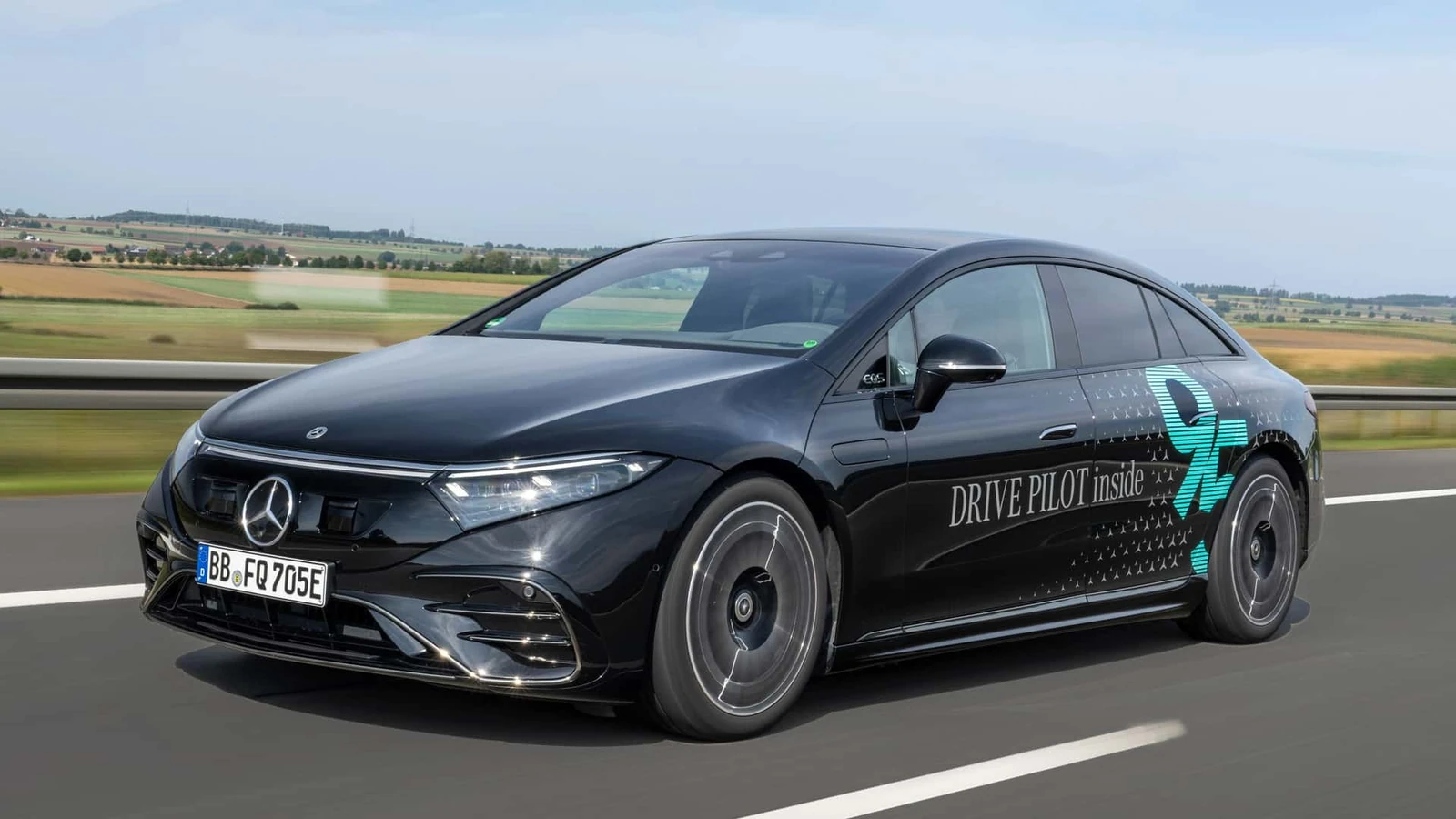
Drive Pilot launched on the S-Class and EQS and allowed drivers to take their eyes off the road under defined conditions. Its usefulness was capped by an operating limit of roughly 40 mph, which confined the system to slow-moving traffic rather than ordinary highway cruising, and it worked only on certain roads and in certain conditions.
Jörg Burzer, Mercedes-Benz's chief technology officer, discussed the reversal at a media roundtable with Road & Track, describing the early Level 3 push as a lesson in timing. "Sometimes if you are too early, then you see that you have to work on what the customer really wants," he said.
That matters because a hands-off system that only switches on in a jam asks drivers to learn new habits for a narrow slice of their journey. Mercedes' own account suggests the capability arrived ahead of the use case, not behind it.
A more capable Level 2 takes priority
The company's immediate focus is MB.DRIVE Assist Pro, a point-to-point assistance system intended to handle more of the driving on highways and in urban environments. Mercedes says it can assist with lane changes, intersections, turns and traffic lights.
The updated S-Class reportedly carries as many as 27 sensors to support these functions. Drivers must still pay attention and stay ready to take over, which keeps the system at Level 2.
For buyers, that means the near-term gain is a system that works across more of a normal drive rather than one that briefly removes their hands on a restricted stretch of road. The trade-off is that eyes-off driving, the headline feature of Level 3, disappears from the plan for now.
Level 4 is the long-term target
Level 4 describes a vehicle that can complete all driving tasks within its defined operating conditions without a human supervising. Burzer expects that technology to reach a production Mercedes-Benz sometime after 2030, and says the rollout will likely be gradual once it does.
Mercedes has not announced which models will receive Level 4 first, nor which markets will get it at launch. Given the post-2030 timing and the gradual approach Burzer describes, the first cars to carry it are likely to be a narrow, expensive subset of the range rather than a broad option across the lineup.
What Mercedes has not said
The sources do not confirm pricing for MB.DRIVE Assist Pro, nor whether Drive Pilot will be withdrawn from existing markets or simply left to age out of new models. Mercedes has also not committed to a date for the first Level 4 car beyond the post-2030 estimate.
The direction is clear enough: Mercedes would rather sell drivers a system that helps on every trip than one that takes over on a few. Whether that bet looks right depends on how quickly Level 4 hardware arrives, and on whether rivals keep pushing eyes-off driving in the meantime.