INDEPENDENT AUTOMOTIVE NEWSGLOBAL PERSPECTIVE / AUSTRALIAN EDITION
TDCNTHE DAILY
CAR NEWS.

The road ahead.
Every day.

RSS ↗
Latest/Electric

457 original articles

Electric / TDCN ORIGINAL

Mercedes-AMG's electric GT gets console dials that tune handling and traction

The AMG Race Engineer system lets GT55 and GT63 drivers adjust cornering agility, accelerator response and nine traction levels from the centre console.

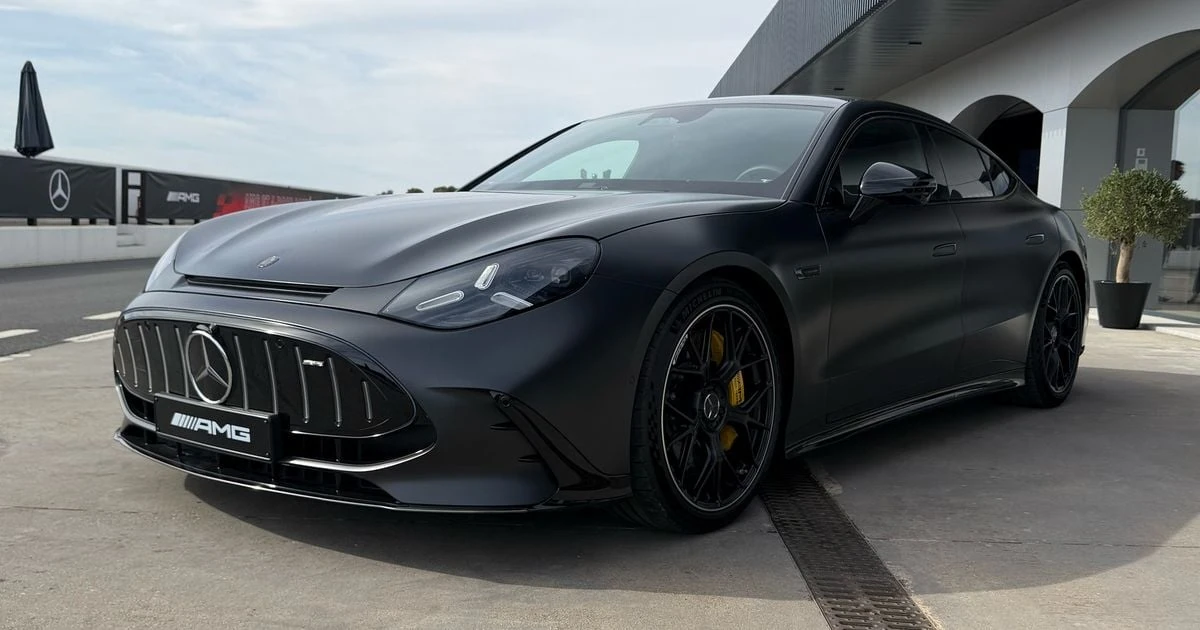
Mercedes-AMG's new electric GT 4-Door Coupe will let drivers retune how the car turns into corners, responds to the accelerator and manages wheelspin, using three rotary dials on the centre console. The AMG Race Engineer system is offered on the GT55 and GT63, the two electric variants of the four-door.

The setup pairs a central vehicle-control computer with dials labelled Response Control, Agility Control and Traction Control. Mercedes-AMG product manager Oliver Ganzmann, speaking at the car's launch in Spain, described the agility function as changing the sensation of the car's wheelbase.

How the three dials work

Turning up agility makes the car feel as though it has a shorter wheelbase and turns in more eagerly, Ganzmann said, while dialling it back gives a more stable feel closer to a longer-wheelbase car. The effect comes from adjusting torque distribution to change how the car rotates through a corner, with AMG saying drivers can pick behaviour from slight understeer through neutral handling to controlled oversteer.

Response Control changes how the motors react to accelerator inputs, and Traction Control offers nine levels of intervention. The individual agility and traction settings are available in Sport, Sport+ and Race modes with electronic stability control switched off, while accelerator-response adjustment stays available with stability control on.
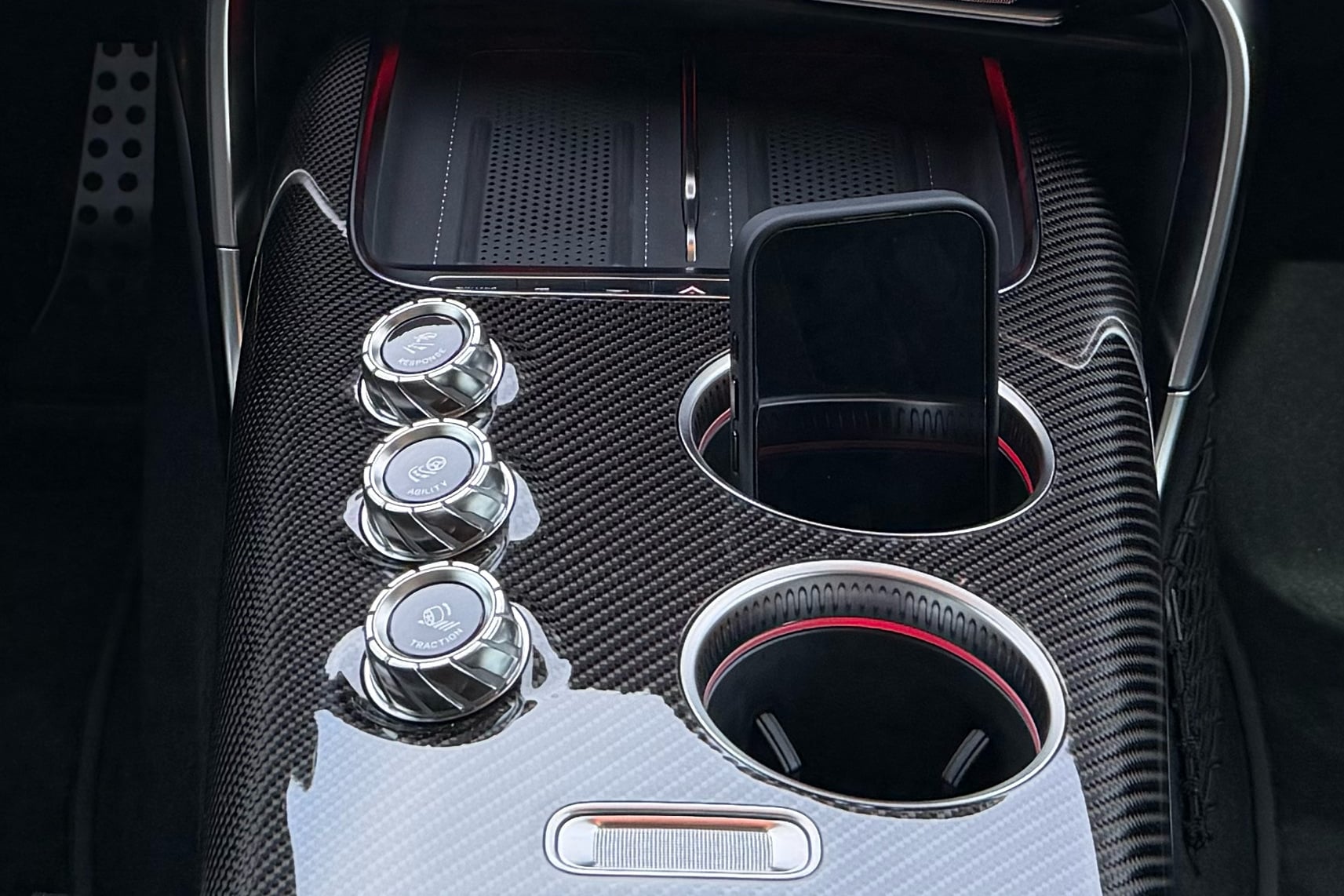
The three console dials that tune handling and traction sit front and center in the AMG GT's carbon-trimmed tunnel.
The three console dials that tune handling and traction sit front and center in the AMG GT's carbon-trimmed tunnel., Image: CarExpert

The hardware underneath

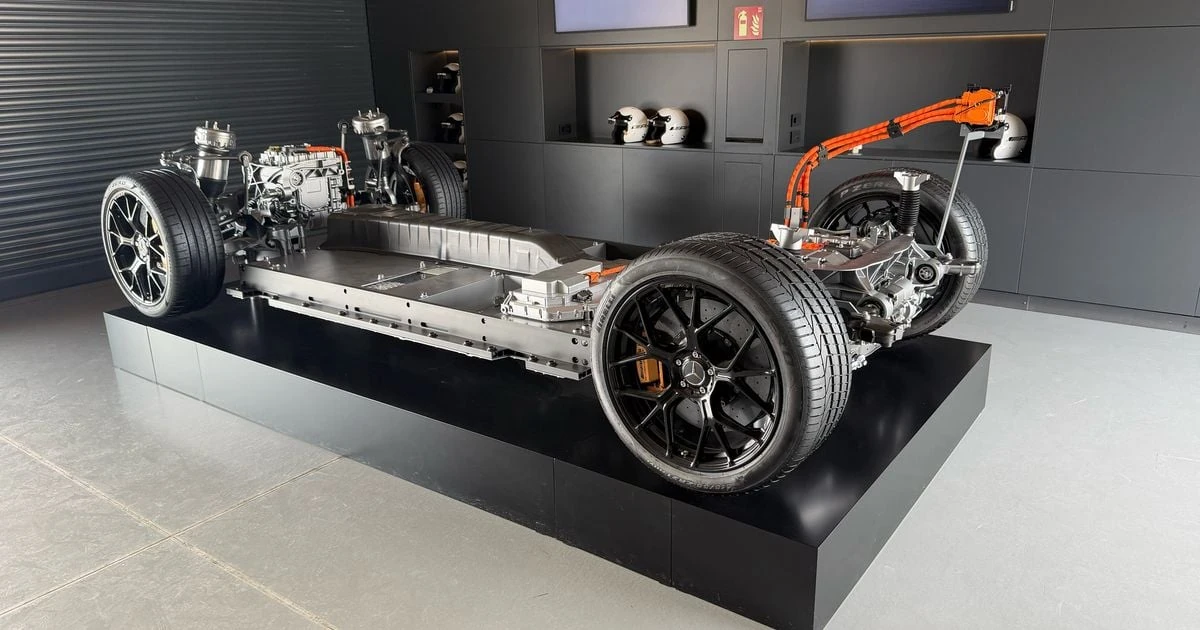
The GT63 has up to 860kW of power and 2000Nm of torque for the system to manage, while the GT55 is quoted at 600kW. Both use three electric motors, one at the front and two at the rear; the rear pair share a housing but run independently so torque can be split between the rear wheels.

René Szczepek, who oversees driving dynamics simulation and integration at Mercedes-AMG, said a stiff, stable base chassis is a prerequisite for adding that much torque vectoring and software control. The AMG Active Ride Control suspension uses hydraulically linked dampers instead of conventional anti-roll bars, and three-chamber air springs allow the spring rate to change while the hydraulic system controls body roll.
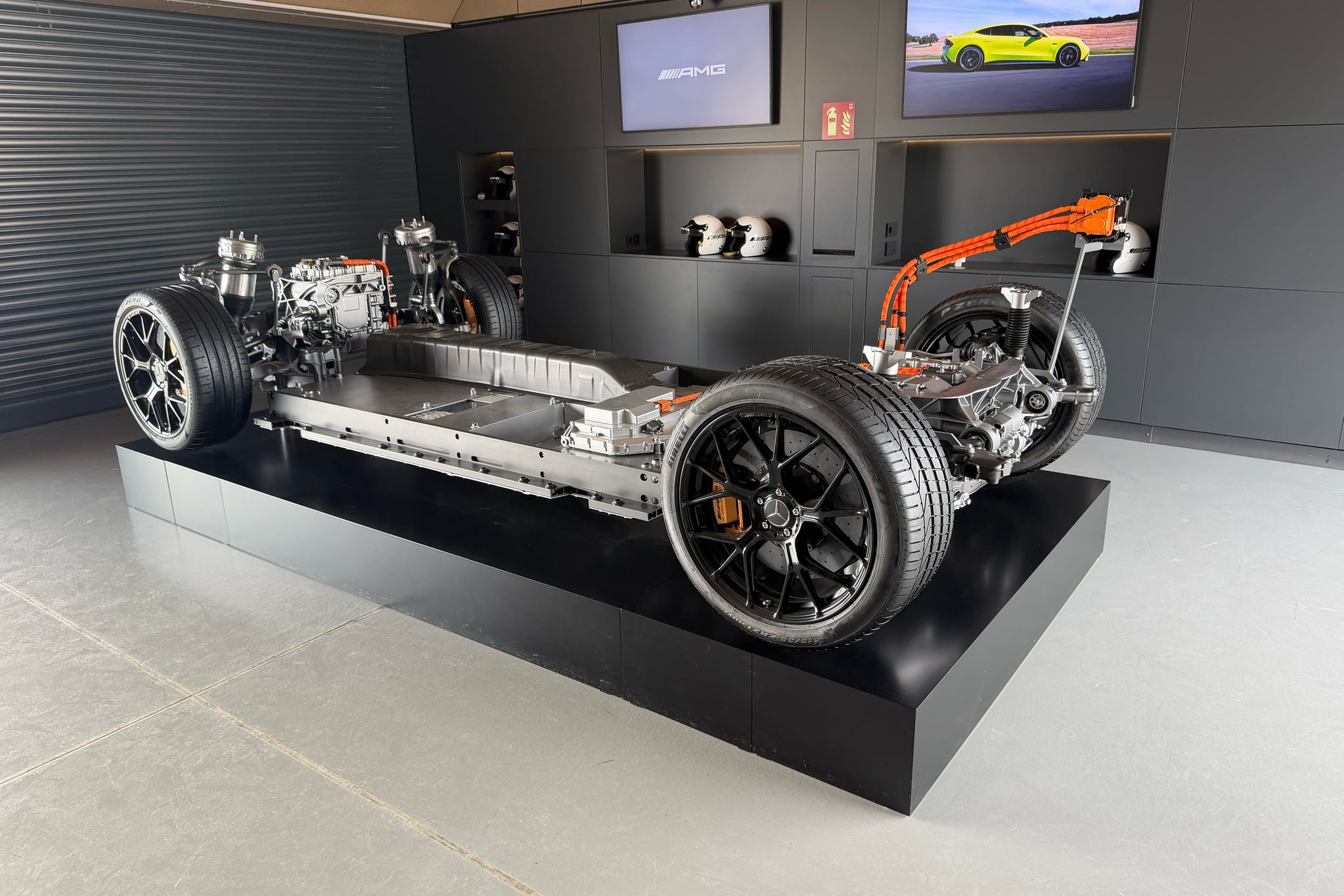
Stripped of bodywork, the GT's electric platform and rear-drive hardware are laid bare.
Stripped of bodywork, the GT's electric platform and rear-drive hardware are laid bare., Image: CarExpert

What buyers still don't know

Mercedes-AMG has not announced pricing for the electric GT 4-Door Coupe in the material available, so what the GT55 and GT63 will cost remains unconfirmed. Range figures, battery capacity and charging details for the electric four-door have also not been stated.

Australian availability and local pricing have not been announced either, so buyers here will need to wait for a Mercedes-AMG statement before treating the car as confirmed for this market.

What is clear is the intent behind the dials. Plenty of fast electric cars already let drivers pick a traction level; letting them reshape cornering balance on the move is a rarer offer, and it puts the sort of adjustment usually reserved for a race engineer's laptop into the hands of the person in the driver's seat.
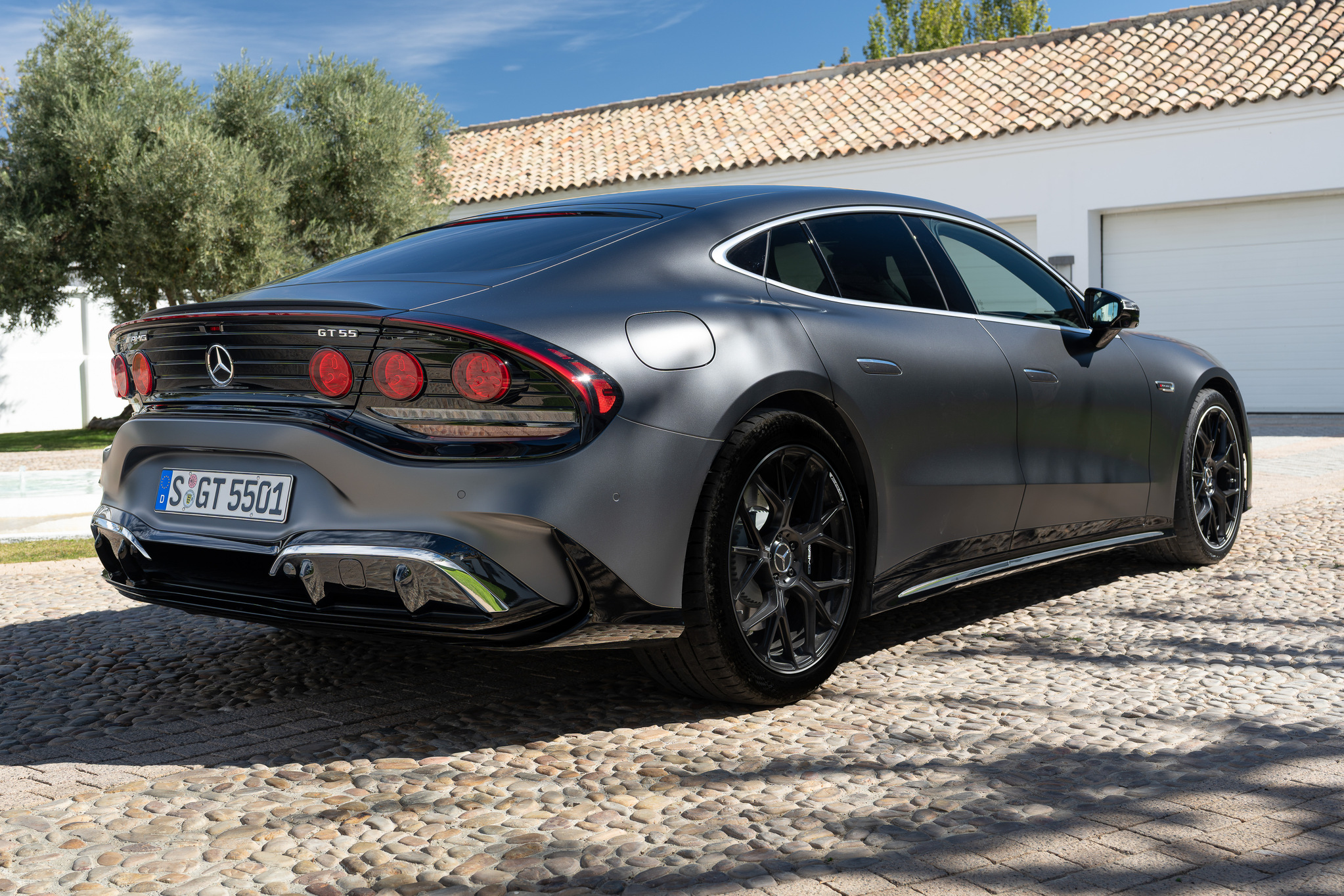
The AMG GT's fastback rear hints at the hardware beneath, but key specs remain under wraps.
The AMG GT's fastback rear hints at the hardware beneath, but key specs remain under wraps., Image: CarExpert
Open this article ↗
Electric / TDCN ORIGINAL

Mercedes-AMG's electric GT63 packs 860kW from three axial-flux motors

AMG's new electric four-door uses YASA-derived axial-flux units built in Berlin, with twin rear motors enabling torque vectoring.

The Mercedes-AMG GT63 4-Door Coupe pairs an 860kW electric drivetrain with three axial-flux motors, two of them mounted side by side at the rear in a shared housing but each driving its own wheel. The powertrain was detailed at the car's launch in Spain, where AMG engineers walked through the hardware behind the GT55 and GT63.

Axial-flux motors from a British specialist, built in Berlin

The motors trace back to British specialist YASA, which Mercedes-Benz acquired in July 2021. According to René Szczepek, who handles driving dynamics simulation and integration at Mercedes-AMG, Mercedes-Benz now produces them at a factory in Berlin.

The axial-flux design differs from a conventional radial-flux motor: magnetic flux runs parallel to the axis of rotation rather than perpendicular to it, and YASA's arrangement places the stator between two disc-shaped rotors. That packaging freedom matters in a car where the motors must share space with suspension, brakes and crash structures. AMG puts the front rotor-and-stator arrangement's width at about 90mm, with each rear motor around 80mm wide, while the complete drive units also carry gearing, inverters and cooling equipment.

YASA says shorter windings and direct oil cooling help the motors hold output under sustained use, a point that matters because winding heat sets how much power can be delivered and for how long. Building the units in Berlin required roughly 100 production processes, about 65 of them new to the company, and Mercedes says the work has generated more than 30 patent applications.

Two rear motors, one housing, separate control

Housing the rear motors together simplifies assembly handling, Szczepek explained, but the two remain mechanically independent so their outputs can be controlled separately. That separation is the foundation of rear torque vectoring, where varying drive at each wheel shapes how the car behaves.

For AMG buyers, the engineering detail is arguably more revealing than the headline output. A single power figure says little about the machinery producing it, and cylinder counts and engine layouts no longer give electric AMG models the shorthand they once gave combustion ones. The axial-flux hardware, the cooling strategy and the separate rear drive control are the things that will define how the car actually drives.

Range, battery and price still to be confirmed

The sources detail the motors but not the rest of the electric package. Range, battery size and charging speed for the GT63 4-Door Coupe have not been announced in the material available, so no figure should be assumed yet.

Pricing and an on-sale date are likewise not stated in the source material, and the Spanish launch event is the only timing detail given. Buyers waiting on those numbers will need to wait for Mercedes-AMG to publish them.

Open this article ↗

Keep scrolling to read the next story.

Older articles →