INDEPENDENT AUTOMOTIVE NEWSGLOBAL PERSPECTIVE / AUSTRALIAN EDITION
TDCNTHE DAILY
CAR NEWS.

The road ahead.
Every day.

RSS ↗
Latest/Electric

457 original articles

Electric / TDCN ORIGINAL

Mercedes-AMG's electric GT63 packs 860kW from three axial-flux motors

AMG's new electric four-door uses YASA-derived axial-flux units built in Berlin, with twin rear motors enabling torque vectoring.

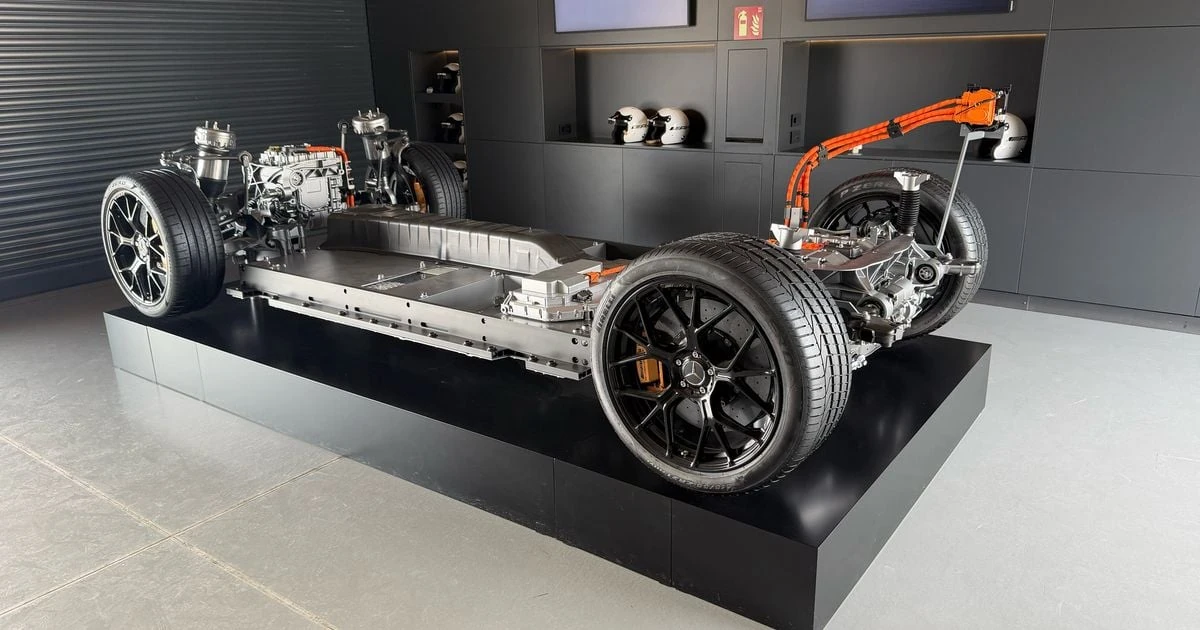
The Mercedes-AMG GT63 4-Door Coupe pairs an 860kW electric drivetrain with three axial-flux motors, two of them mounted side by side at the rear in a shared housing but each driving its own wheel. The powertrain was detailed at the car's launch in Spain, where AMG engineers walked through the hardware behind the GT55 and GT63.

Axial-flux motors from a British specialist, built in Berlin

The motors trace back to British specialist YASA, which Mercedes-Benz acquired in July 2021. According to René Szczepek, who handles driving dynamics simulation and integration at Mercedes-AMG, Mercedes-Benz now produces them at a factory in Berlin.

The axial-flux design differs from a conventional radial-flux motor: magnetic flux runs parallel to the axis of rotation rather than perpendicular to it, and YASA's arrangement places the stator between two disc-shaped rotors. That packaging freedom matters in a car where the motors must share space with suspension, brakes and crash structures. AMG puts the front rotor-and-stator arrangement's width at about 90mm, with each rear motor around 80mm wide, while the complete drive units also carry gearing, inverters and cooling equipment.

YASA says shorter windings and direct oil cooling help the motors hold output under sustained use, a point that matters because winding heat sets how much power can be delivered and for how long. Building the units in Berlin required roughly 100 production processes, about 65 of them new to the company, and Mercedes says the work has generated more than 30 patent applications.

Two rear motors, one housing, separate control

Housing the rear motors together simplifies assembly handling, Szczepek explained, but the two remain mechanically independent so their outputs can be controlled separately. That separation is the foundation of rear torque vectoring, where varying drive at each wheel shapes how the car behaves.

For AMG buyers, the engineering detail is arguably more revealing than the headline output. A single power figure says little about the machinery producing it, and cylinder counts and engine layouts no longer give electric AMG models the shorthand they once gave combustion ones. The axial-flux hardware, the cooling strategy and the separate rear drive control are the things that will define how the car actually drives.

Range, battery and price still to be confirmed

The sources detail the motors but not the rest of the electric package. Range, battery size and charging speed for the GT63 4-Door Coupe have not been announced in the material available, so no figure should be assumed yet.

Pricing and an on-sale date are likewise not stated in the source material, and the Spanish launch event is the only timing detail given. Buyers waiting on those numbers will need to wait for Mercedes-AMG to publish them.
Open this article ↗
Electric / TDCN ORIGINAL

Chevrolet adds NACS charging and a power boost to the 2027 Silverado EV

The Trail Boss Max Range now makes 750 hp in WOW mode, and every 2027 Silverado EV leaves the factory with a Tesla-style charging port.

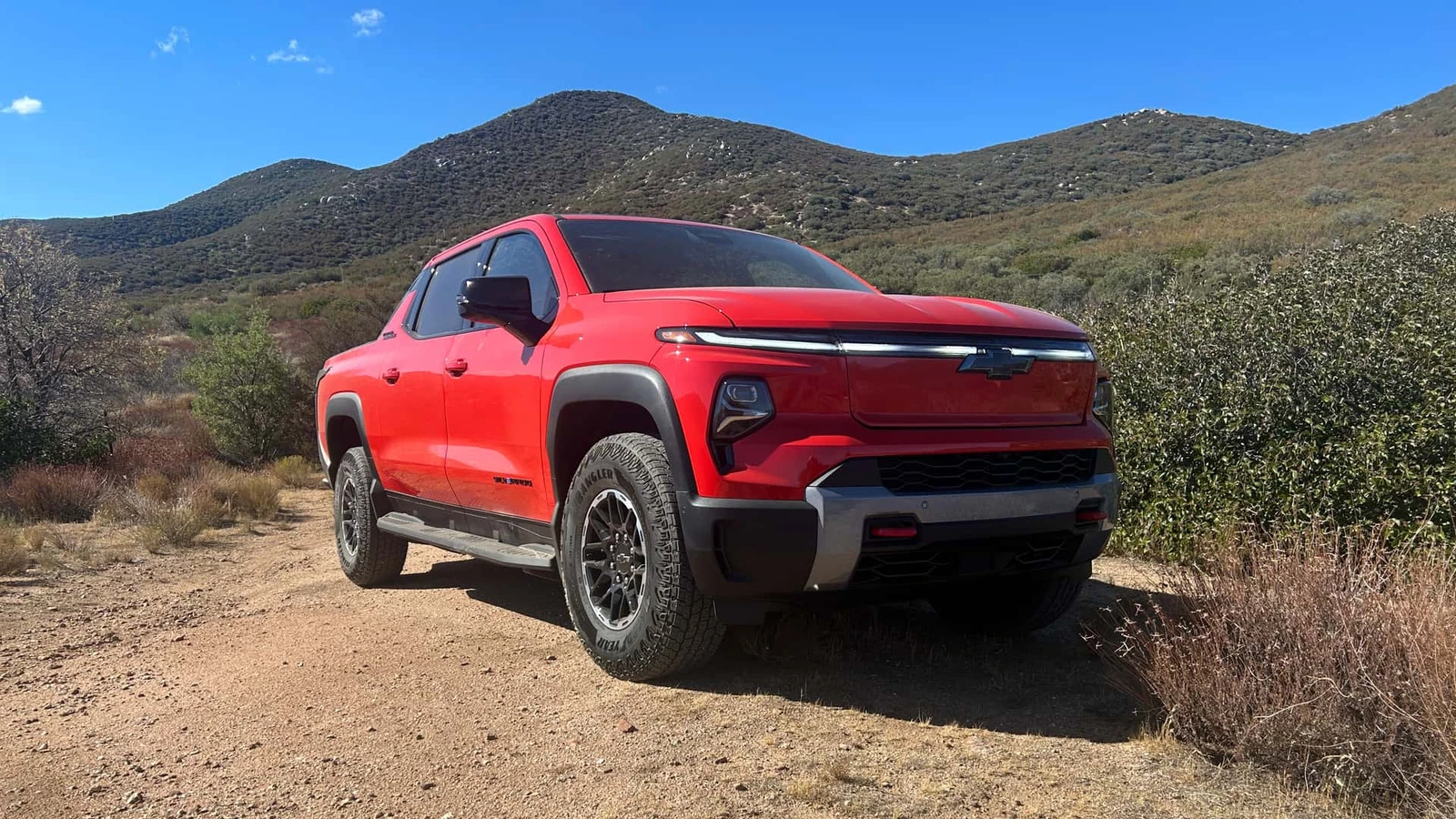
Chevrolet has given the 2027 Silverado EV a power increase on its most expensive trim and fitted a native Tesla-style NACS charging port to every version of the electric pickup. Production of the 2027 model began last month at GM's Factory Zero in Michigan.

The headline figure belongs to the Trail Boss with the Max Range battery, which now produces 750 horsepower and 775 pound-feet of torque, 25 hp more than the outgoing model. Chevrolet has not said how much power the truck makes when that mode is switched off.

The 750 hp figure comes with a catch

The extra output is only available in Wide Open Watts mode, which Chevrolet describes as pushing every metric to the top for maximum acceleration rather than something intended for regular use. Outside WOW mode the published output is lower, and the company has not disclosed the figure.

The rest of the lineup carries over unchanged on power. The entry-level WT trim makes 510 hp with 490 or 580 lb-ft of torque depending on battery capacity, the LT Standard Range is rated at 605 hp and 605 lb-ft, the LT Extended Range at 645 hp and 765 lb-ft, and the Trail Boss Extended Range at 625 hp and 775 lb-ft. All Silverado EV trims use a dual-motor, all-wheel-drive setup.

The Trail Boss also carries a two-inch suspension lift, a more aggressive off-road body kit, 35-inch tires, standard four-wheel steering and new driving modes. The RST trim, previously the top of the range, has been discontinued.

Every trim gets a NACS port

The charging change applies across the 2027 Silverado EV range, as it does to all 2027 GM EVs: the trucks now ship with a native NACS inlet, so they can plug into Tesla Superchargers and other NACS-equipped chargers without an adapter.

That matters more for daily ownership than the power bump does. A factory-fitted inlet removes the adapter that drivers of earlier GM electric vehicles needed to use the largest fast-charging network in North America, and it puts the truck on the same standard Tesla uses for its own vehicles.

New cameras and higher prices

Chevrolet has added three camera-based features for 2027. Cabin Glance shows a live video feed of the interior on the infotainment screen, Security Recording captures video from the on-board cameras when the alarm is triggered, and the Surround Vision Recorder continuously records footage while the vehicle is in use, similar to Tesla's Dashcam.

Prices rise on every trim. The base Silverado EV Standard Range starts at $56,085 including destination charges, $700 more than before, while the LT and Trail Boss with the Extended Range battery cost $1,000 more than last year. The top-spec Trail Boss with the Max Range battery now starts at $90,395, $1,200 above the 2026 model.

Chevrolet has not announced Australian availability or local pricing for the 2027 Silverado EV, so buyers outside North America have no confirmed timing or AUD figure yet.

Range and the missing test cycle

The Trail Boss is the longest-range model in the lineup, with up to 478 miles (about 769 km) on the Max Range battery. That is the highest figure Chevrolet quotes for any Silverado EV variant.

The sources do not state which test cycle that 478-mile figure is measured on, so it should be treated as a manufacturer claim rather than a like-for-like comparison with range figures quoted on other cycles. Buyers comparing the Silverado EV against rivals rated on EPA, WLTP or CLTC procedures should check the cycle before treating the numbers as equivalent.

Open this article ↗

Keep scrolling to read the next story.

Older articles →