INDEPENDENT AUTOMOTIVE NEWSGLOBAL PERSPECTIVE / AUSTRALIAN EDITION
TDCNTHE DAILY
CAR NEWS.

The road ahead.
Every day.

RSS ↗
Latest/Industry

457 original articles

Industry / TDCN ORIGINAL

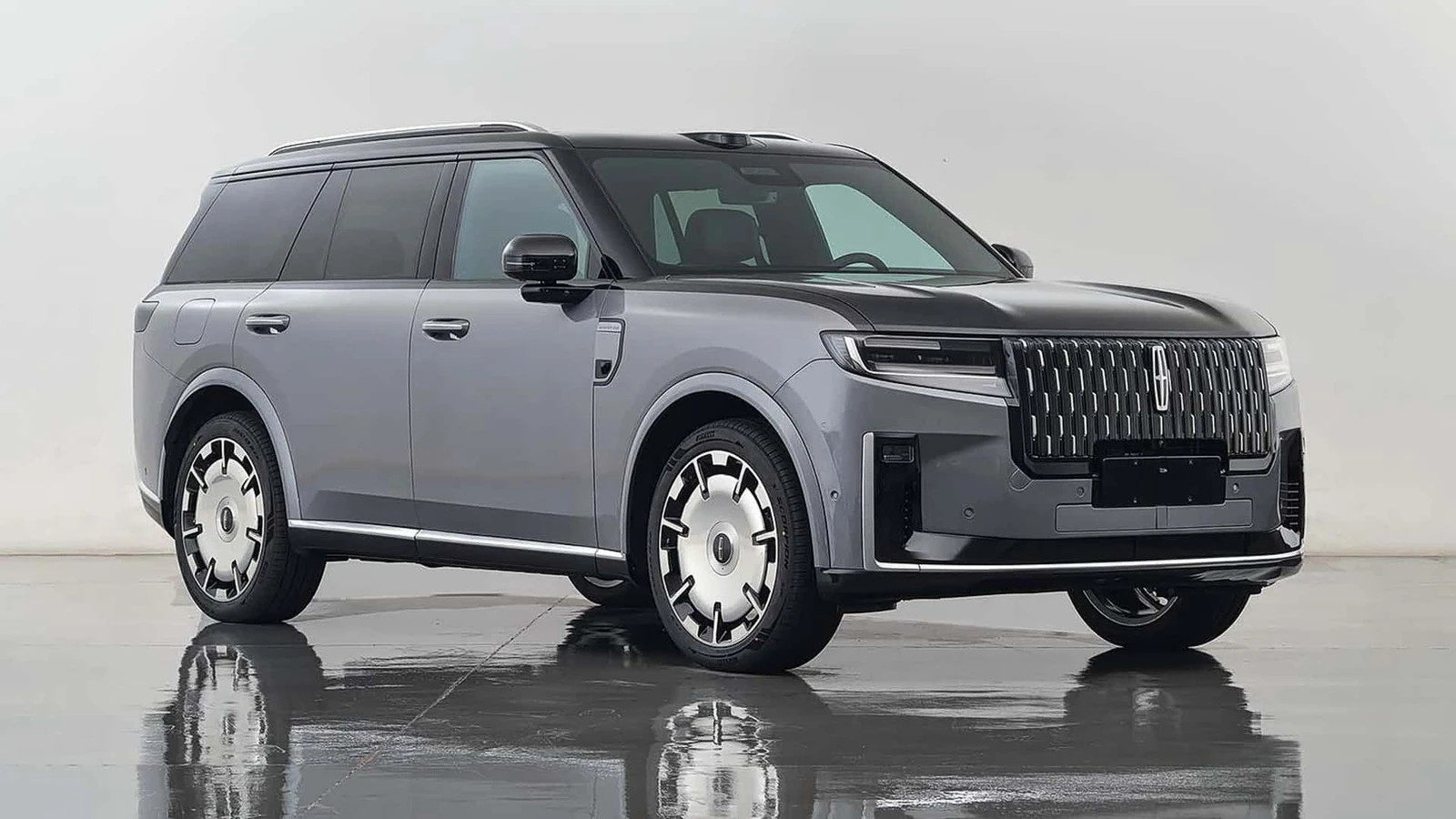
Lincoln Aviator EX8 plug-in hybrid revealed in Chinese homologation filing

China's industry ministry has published details of a Changan-built Aviator PHEV with a 1.5-litre turbo engine, a model with little apparent connection to the US Aviator.

Lincoln's Aviator nameplate is returning as a plug-in hybrid in China, with homologation details of the Aviator EX8 published by the country's Ministry of Industry and Information Technology (MIIT). The vehicle is built by Changan, Lincoln's Chinese joint venture partner, and shares nothing in common with the US-market Aviator PHEV that was discontinued for 2024.

A Changan-built Lincoln with a 1.5-litre engine

Combustion power in the Aviator EX8 comes from a Changan-made 1.5-litre turbocharged engine producing 148 horsepower. The MIIT filing did not disclose the electric motor setup or its output, nor the battery size or the range the EX8 will offer.

Dimensionally the EX8 is roughly the same size as the old Aviator, but its powertrain is a different proposition: a four-cylinder turbo in place of the V6 turbo that powered the previous model. The filing also shows roof-mounted lidar, which points to some level of advanced driver-assist equipment when the car launches.

Why Lincoln needs this car in China

The EX8 is one of Ford China's most recent attempts to compete in the country's new energy vehicle market. Ford took a similar approach about a year ago with the Bronco New Energy, an extended-range and full electric crossover developed with and built by its JMC joint venture partner. Changan Ford, the partner behind the Aviator EX8, already builds Chinese-market versions of Ford combustion vehicles such as the Escape, and produces the US-market Lincoln Corsair and Nautilus.

Lincoln currently has no NEV on sale in China. It previously sold the Corsair PHEV, but that model was dropped when the Corsair was facelifted for 2026. That leaves the brand without an electrified entry in a market crowded with midsize PHEV and EREV rivals, among them the Lynk & Co 08. The Aviator EX8 therefore has to be competitive on powertrain and packaging, not just badge, for Lincoln to keep selling cars in China.

Unlikely to reach US showrooms

There is very little chance the Aviator EX8 will leave China for the US market. Lincoln is importing cars to the US, but plans to discontinue the China-made Nautilus and Corsair by 2030 and build more vehicles domestically. The EX8's development with Changan also makes it likely it would not comply with the US connected cars ban.

Pricing, an on-sale date and full electric-only range figures have not been announced. What the MIIT filing does establish is the shape of Lincoln's next Chinese product: a Changan-engineered PHEV wearing a nameplate American buyers last saw in 2024.
Open this article ↗
Electric / TDCN ORIGINAL

Volkswagen and Skoda add battery pre-heating to older ID.4, ID.5 and Enyaq EVs via OTA update

More than 200,000 early-build electric crossovers get the cold-weather charging feature from November 2027, though some cars need a dealer visit first.

Volkswagen and Skoda will begin rolling out an over-the-air software update in the second half of November 2027 that adds battery preconditioning to the oldest ID.4, ID.5 and Enyaq electric crossovers on the road. The update covers vehicles built between 2020 and 2024, roughly 200,000 Enyaq models among them, and arrives years after owners first found their cars could not pre-warm the high-voltage battery before fast charging.

From 2024 onward, all three models were fitted with automatic battery preconditioning at the factory, so later cars do not need the update.

What the update changes

For the Skoda Enyaq, software version 3.9 introduces the battery pre-heating function along with an updated welcome screen that boots up fully without user confirmation. The package also includes security updates and a fix for the Online Connectivity Unit.

Volkswagen ID.4 and ID.5 owners receive the same improvements under software version 3.9.1, which additionally improves the reliability of the electric door handles and AC charging.

How preconditioning works in these cars

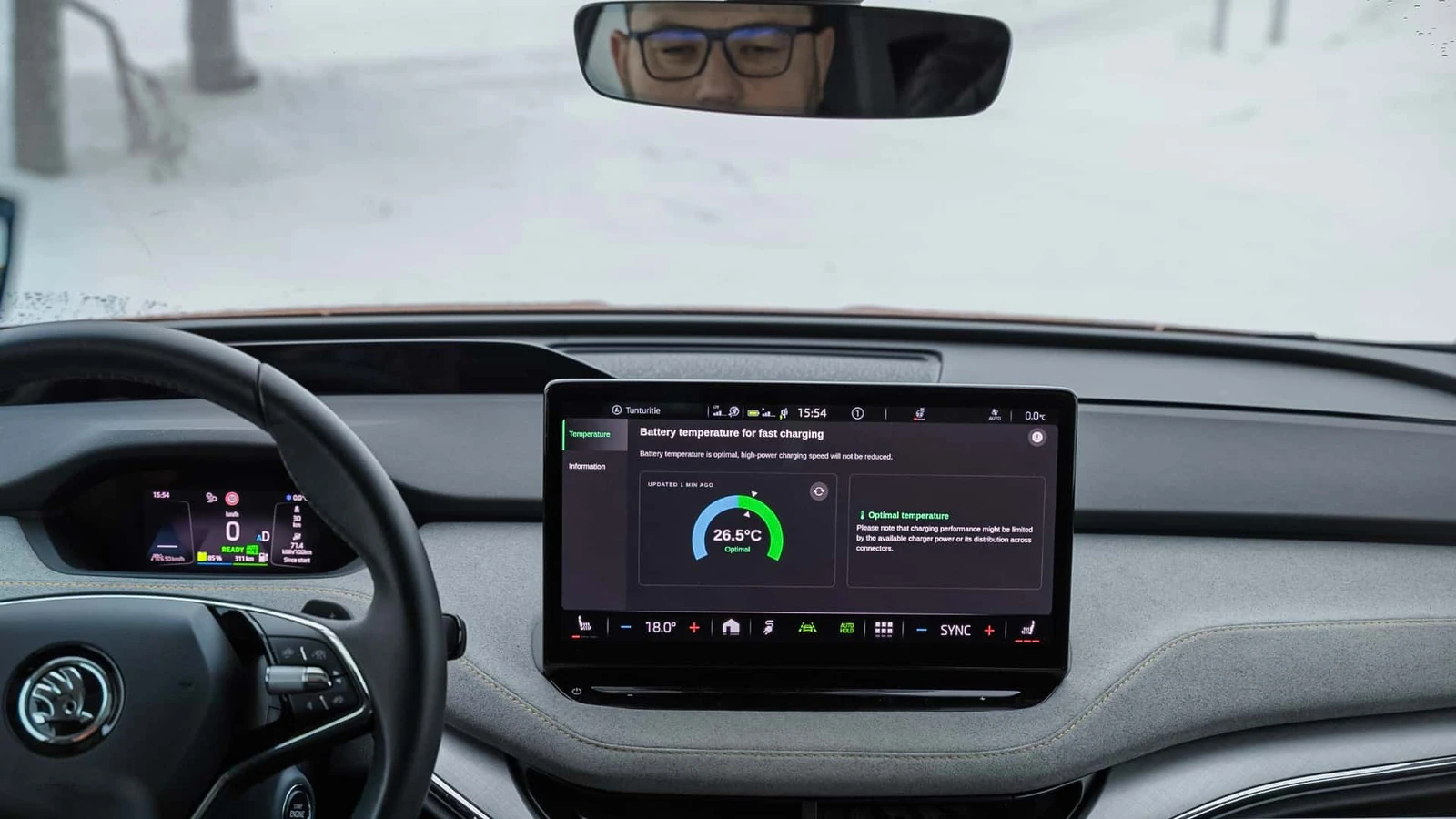
The feature can only be switched on manually, through a new virtual screen in the infotainment system. The heating button is active only when the battery temperature is below 20 degrees Celsius (68 degrees Fahrenheit), according to Jiri Vlcek, Skoda's project manager for online updates. The software also displays the battery's current temperature so drivers can monitor it.

Once activated, the battery heats gradually to its optimum temperature of about 25 degrees Celsius (77 degrees Fahrenheit), a process that can take 30 to 40 minutes. Both automakers recommend factoring that time into the drive to a fast charger. A battery at its optimum temperature can accept higher power from a DC fast charger, shortening the stop.

Skoda engineers tested the function in freezing conditions. Vlcek said the apparent simplicity for the user masks the work behind it: the update intervenes in the vehicle control unit, the battery control unit and the infotainment system, which he said places enormous demands on implementation and on comprehensive testing.

Rollout stages and the dealer-visit catch

The rollout will happen in waves, with the first cars receiving the feature from the second half of November and another wave following two weeks later. Owners running version 3.8 will be prompted to install the latest software automatically over the air. Cars on older software must first install version 3.8, which prepares the vehicle for the pre-heating function, before version 3.9 introduces it. Cars still running version 2.x need a visit to an authorised service centre to obtain the software that enables preconditioning.

The staged approach means owners of the earliest cars, the ones most likely to be on 2.x software, face the longest wait and a workshop appointment. That matters because those are precisely the vehicles whose owners have gone without the feature the longest.

Why owners waited, and what changes

The first ID.4 and Enyaq crossovers left the assembly lines in 2020, but their high-voltage batteries could not be preconditioned for fast charging, which produced longer-than-expected charging times in cold weather. Some owners worked around the gap with do-it-yourself methods: a custom-made microcontroller or a dedicated diagnostics dongle paired with an OBD programming app. The official update replaces those improvisations with a factory-sanctioned function.

The sources do not state how many minutes faster a DC charging stop becomes once the battery is at its optimum temperature, nor do they give a charging power figure for the pre-warmed pack. What is clear is the mechanism: a warmer battery accepts more power from a fast charger, and the car now has a button for it.

Open this article ↗

Keep scrolling to read the next story.

Older articles →