INDEPENDENT AUTOMOTIVE NEWSGLOBAL PERSPECTIVE / AUSTRALIAN EDITION
TDCNTHE DAILY
CAR NEWS.

The road ahead.
Every day.

RSS ↗
Latest/New cars

457 original articles

New cars / TDCN ORIGINAL

2027 Chevrolet Trax gets a facelift, a $2,000 price rise and a smaller lineup

Chevrolet has cut the Trax range from five trims to three, with the surviving LT now starting at $25,495 and the RS and Activ at $28,295.

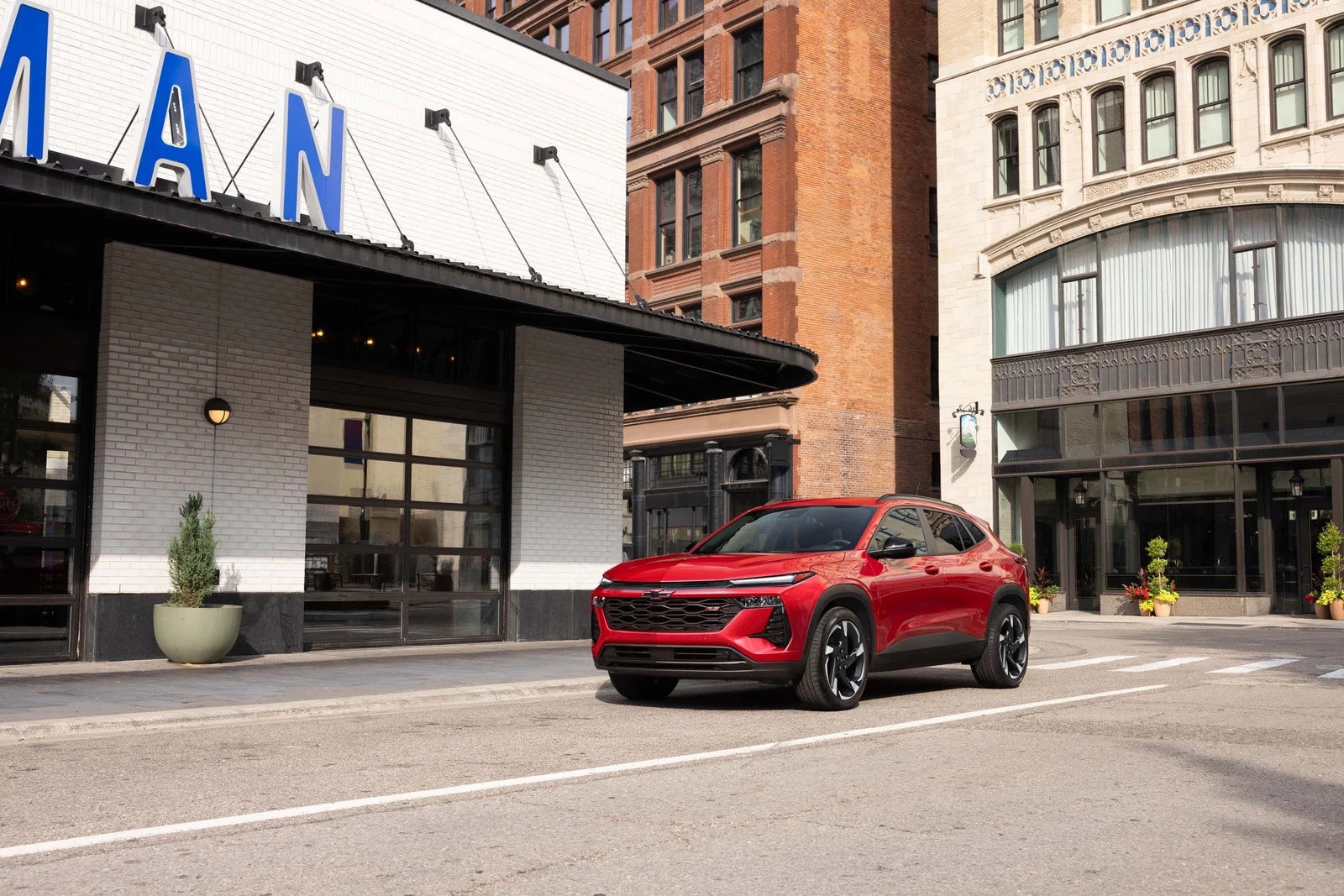
The 2027 Chevrolet Trax will start at $25,495, $2,000 more than the entry price of the 2026 model, as Chevrolet gives the subcompact SUV a facelift and reduces its lineup from five trims to three.

Chevrolet published the 2027 Trax pricing on its consumer site, and the model is scheduled to go on sale in the spring of 2027.

What the facelift changes

The updated Trax adopts a modestly revised exterior look with new headlights and taillights. Inside, it gains a new screen arrangement pairing a standard 11.0-inch digital instrument cluster with an 11.3-inch infotainment display.

Chevrolet has also updated the electrical software and added a batch of driver assistance features: automatic reverse braking, safety seat alert, side bicyclist alert, rear cross-traffic braking, front park assist, rear seatbelt indicators and automatic emergency braking for intersections.

The extra equipment gives buyers something for the higher asking price, though the $2,000 jump is steep for a facelift that stops short of a full redesign. For shoppers in this segment, the new standard screens and the expanded safety list are the concrete gains to weigh against the increase.

Trims and pricing

The LT becomes the entry point at $25,495 now that the LS has been dropped. The top of the range is shared by the RS and Activ, both priced from $28,295, up from $27,495 for 2026.

Chevrolet has not announced engine specifications or fuel economy figures for the 2027 Trax, so the powertrain details remain unconfirmed for now. Order books are also still closed: Chevrolet has given the spring 2027 on-sale date but no word yet on when customers can place an order.

Why the Trax matters

The Trax has been a 10Best winner for Chevrolet, and the price rise lands on a model that has traded on value in the subcompact SUV class. Cutting two trims simplifies production and showroom choices, but it also removes the cheapest route into the nameplate, pushing the starting point up by $2,000 in one model year.

The spring 2027 timing means buyers have a wait ahead before the facelifted car reaches dealers, and the missing engine and economy details leave a gap in the picture until Chevrolet publishes them.
Open this article ↗
New cars / TDCN ORIGINAL

Hyundai and Kia patent wheels whose spokes can close at speed

A granted US patent describes movable internal blades that seal the wheel's openings for aerodynamics, then reopen to cool the brakes.

Image: Carscoops

Hyundai and Kia have been granted a US patent for a wheel that can switch between open and closed configurations, using movable blades behind the spokes to seal the gaps when aerodynamic efficiency matters most. US Patent 12,779,902 B2 was granted on November 3, 2026, with the underlying application first published in June 2025.

The design targets a long-standing trade-off in wheel engineering: open spokes feed air to hot brakes, while closed faces cut drag but starve them of cooling.

How the two-position wheel works

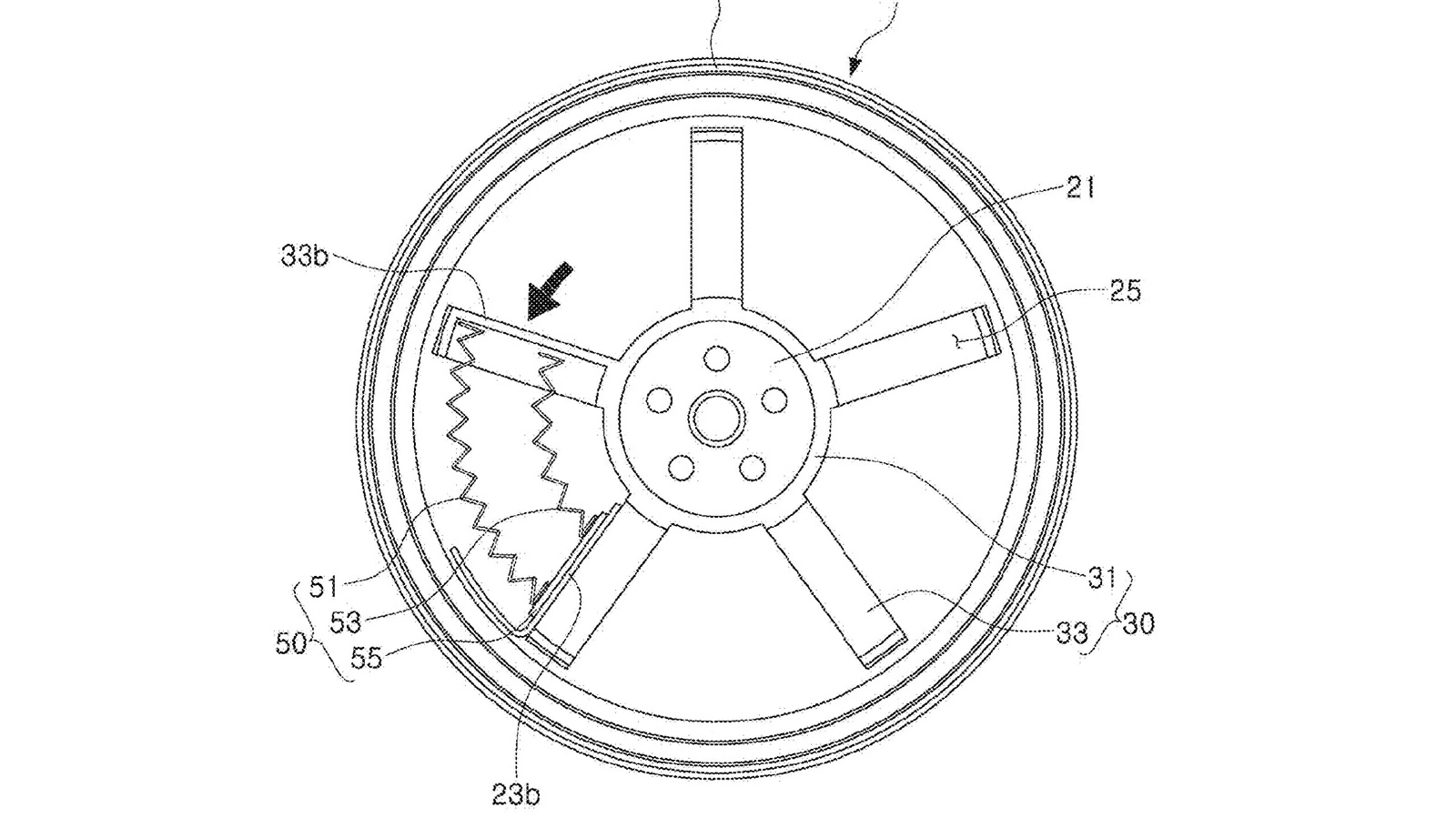
The structural spokes do not move. Behind them sits a separate assembly with a rotating central ring and several blades; turning the ring one way slides the blades behind the gaps between the fixed spokes, smoothing airflow over the wheel, and turning it back exposes the openings again so air can reach the brakes.

Hyundai's filing lists several ways to drive that assembly, including electric motors, hydraulics or pneumatic actuators, plus a shape-memory alloy component that changes length when electronically activated to push the mechanism into its closed position, with a spring or similar elastic part pulling it back when the actuator releases. A small control board mounted inside the wheel would manage the system.

All that hardware makes the wheel complex, and likely expensive to replace if something goes wrong.

Patent drawing shows the two-position spoke mechanism that closes at speed
Patent drawing shows the two-position spoke mechanism that closes at speed, Image: Carscoops

Why the trade-off matters

Hyundai estimates that wheels and tyres account for roughly 25% of a vehicle's aerodynamic resistance at highway speeds, so trimming that drag could stretch range whether the car is electric or not. Permanently sealing the openings solves the drag problem but restricts airflow to brakes, which generate considerable heat.

The patent's logic rests on use patterns: at highway speeds drivers are rarely braking hard, so brakes seldom get overly hot, whereas around town or on a long mountain descent overheating is far more likely, which is where reopening the wheel pays off.

The catch is that the benefit is a marginal one, and the mechanism adds parts, cost and potential failure points to a component that is normally a simple casting. For drivers and car buyers, the appeal is fuel and range gains without the usual penalty of closed-face wheels.

What is still unconfirmed

Hyundai has not said whether the system would activate at a specific speed, or exactly how much drag it would eliminate, so the fuel or range saving has not been quantified.

Nor is production guaranteed: the design could end up on the shelf like plenty of other patents, though the underlying idea is a reasonable one given how hard every automaker is chasing marginal gains in fuel economy and range.

Open this article ↗

Keep scrolling to read the next story.

Older articles →