INDEPENDENT AUTOMOTIVE NEWSGLOBAL PERSPECTIVE / AUSTRALIAN EDITION
TDCNTHE DAILY
CAR NEWS.

The road ahead.
Every day.

RSS ↗
Latest/New cars

457 original articles

New cars / TDCN ORIGINAL

Hyundai and Kia patent wheels whose spokes can close at speed

A granted US patent describes movable internal blades that seal the wheel's openings for aerodynamics, then reopen to cool the brakes.

Image: Carscoops

Hyundai and Kia have been granted a US patent for a wheel that can switch between open and closed configurations, using movable blades behind the spokes to seal the gaps when aerodynamic efficiency matters most. US Patent 12,779,902 B2 was granted on November 3, 2026, with the underlying application first published in June 2025.

The design targets a long-standing trade-off in wheel engineering: open spokes feed air to hot brakes, while closed faces cut drag but starve them of cooling.

How the two-position wheel works

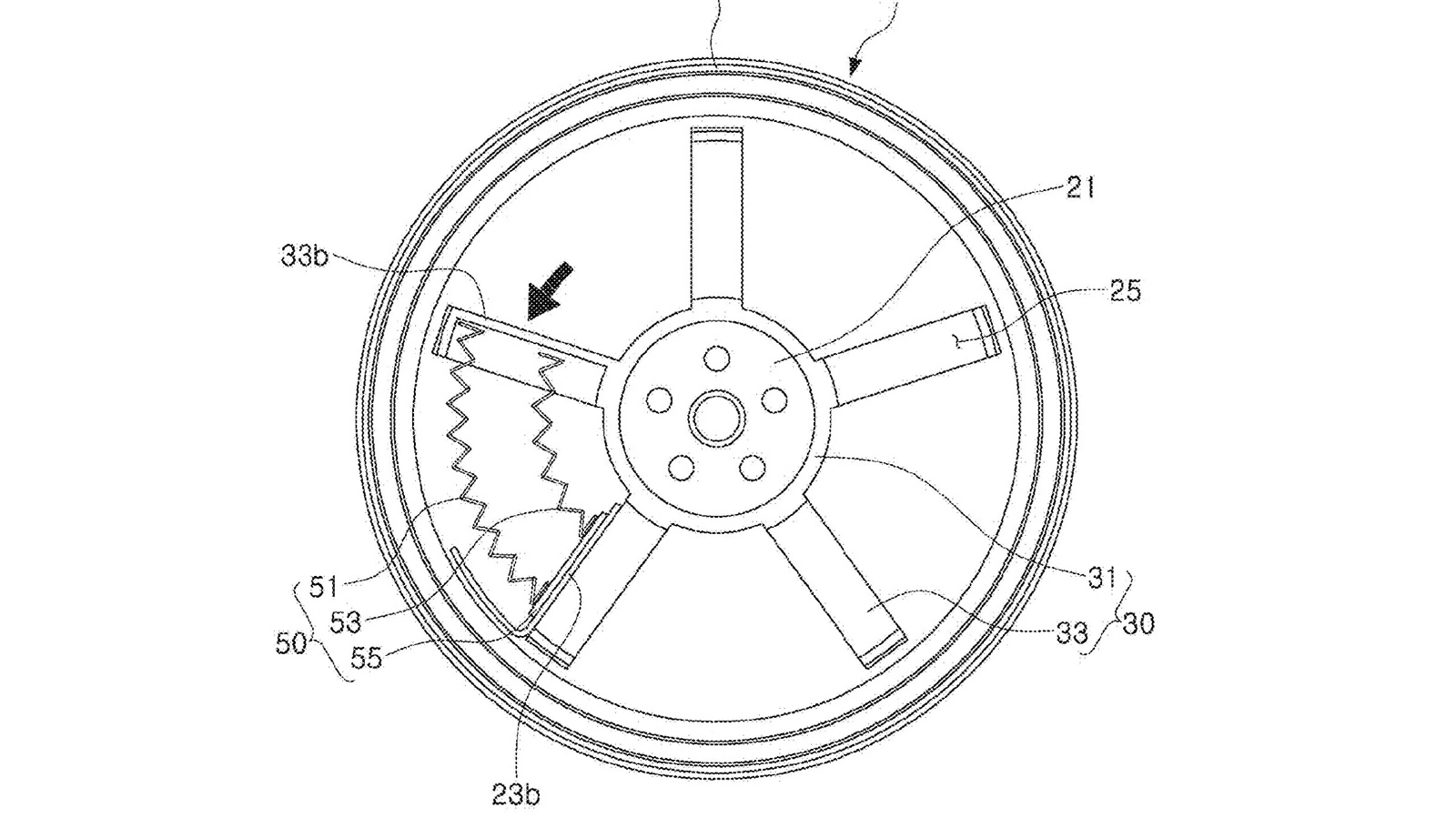
The structural spokes do not move. Behind them sits a separate assembly with a rotating central ring and several blades; turning the ring one way slides the blades behind the gaps between the fixed spokes, smoothing airflow over the wheel, and turning it back exposes the openings again so air can reach the brakes.

Hyundai's filing lists several ways to drive that assembly, including electric motors, hydraulics or pneumatic actuators, plus a shape-memory alloy component that changes length when electronically activated to push the mechanism into its closed position, with a spring or similar elastic part pulling it back when the actuator releases. A small control board mounted inside the wheel would manage the system.

All that hardware makes the wheel complex, and likely expensive to replace if something goes wrong.
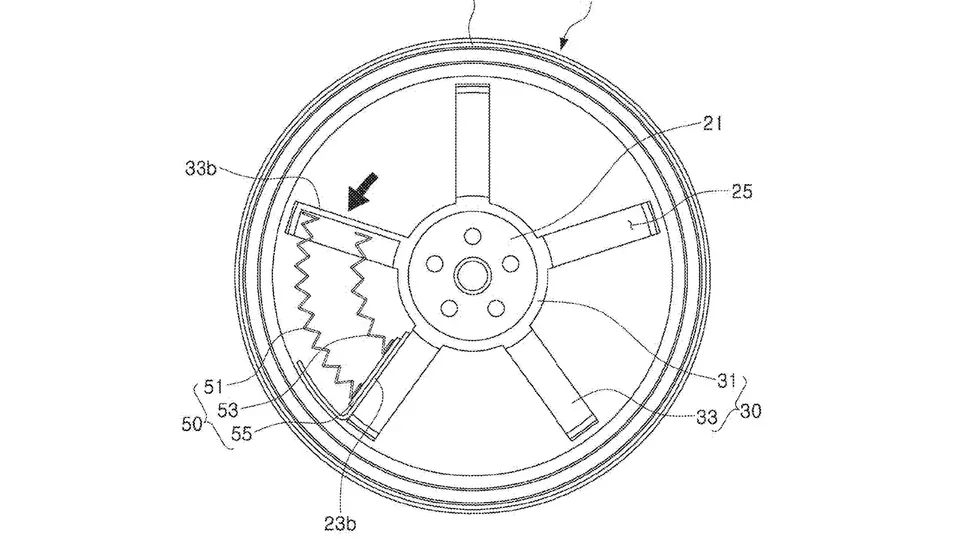
Patent drawing shows the two-position spoke mechanism that closes at speed
Patent drawing shows the two-position spoke mechanism that closes at speed, Image: Carscoops

Why the trade-off matters

Hyundai estimates that wheels and tyres account for roughly 25% of a vehicle's aerodynamic resistance at highway speeds, so trimming that drag could stretch range whether the car is electric or not. Permanently sealing the openings solves the drag problem but restricts airflow to brakes, which generate considerable heat.

The patent's logic rests on use patterns: at highway speeds drivers are rarely braking hard, so brakes seldom get overly hot, whereas around town or on a long mountain descent overheating is far more likely, which is where reopening the wheel pays off.

The catch is that the benefit is a marginal one, and the mechanism adds parts, cost and potential failure points to a component that is normally a simple casting. For drivers and car buyers, the appeal is fuel and range gains without the usual penalty of closed-face wheels.

What is still unconfirmed

Hyundai has not said whether the system would activate at a specific speed, or exactly how much drag it would eliminate, so the fuel or range saving has not been quantified.

Nor is production guaranteed: the design could end up on the shelf like plenty of other patents, though the underlying idea is a reasonable one given how hard every automaker is chasing marginal gains in fuel economy and range.
Open this article ↗
Industry / TDCN ORIGINAL

Bugatti marks 20 years in America with 21-car Las Vegas gathering

Twenty of the hypercars at Wynn Las Vegas belonged to private owners, as Bugatti confirmed a third of Tourbillon production is destined for the US.

Image: Motor1

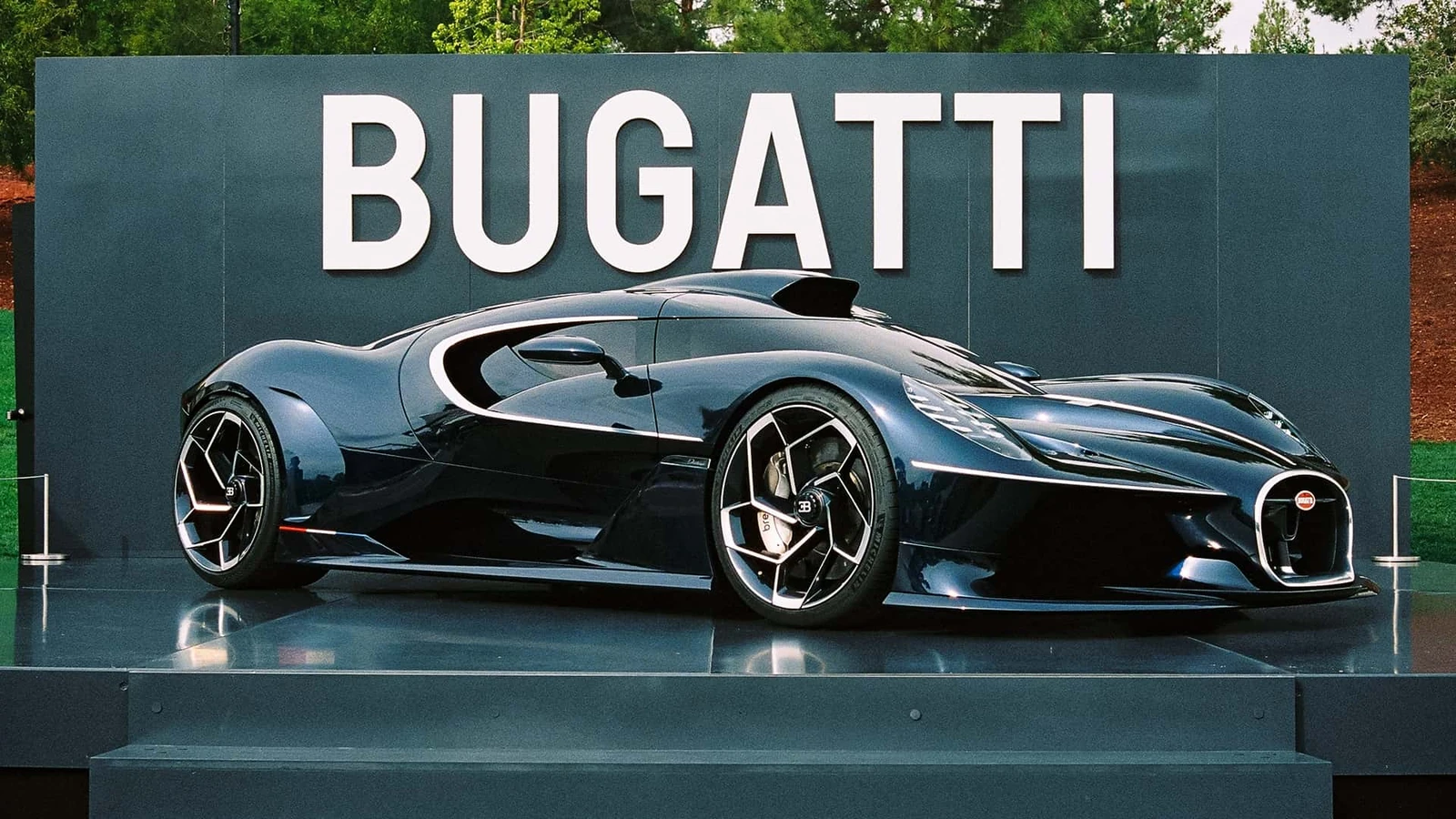
Bugatti assembled 21 hypercars at Wynn Las Vegas to mark two decades since the Veyron first reached American roads, with 20 of the cars supplied by private owners who drove or trailered them to the event. The gathering ran alongside the Concours at Wynn Las Vegas, held from October 31 to November 1, which organisers said drew more than 7,500 attendees across the full show.

The display spanned customer cars from the Veyron, Chiron and Tourbillon eras and put the Destrier back in the spotlight after its public debut at Monterey Car Week earlier this year. Destrier is a Bolide-based commission from Bugatti's Programme Solitaire division, and it is the third one-off to emerge from that programme after Brouillard and the FKP Hommage.

A one-off built on the Bolide's chassis

Destrier uses the chassis of the Bolide, the track-only hypercar platform that underpins Bugatti's most extreme recent build. Programme Solitaire has previously produced the FKP Hommage, a 1,578-horsepower one-off that revisits the Veyron's shape using Chiron-based hardware.

Bugatti has not published a value for the 21 cars gathered at the event. The wider Concours exhibition around them carried an estimated $1.3 billion across its 385 entries, a figure that covers the whole show rather than Bugatti's line-up alone.

Bugatti's American footprint

Bugatti's own figures put the American fleet at 353 cars across 12 dealerships nationwide, numbers the company says make the United States its largest single market worldwide. That count has built up gradually since the Veyron arrived in 2006.

Twelve dealerships supporting 353 cars works out to under 30 vehicles per location on average. That sparse footprint reflects a model built on direct commissioning and long-term relationships instead of walk-in showroom traffic, the same pattern behind Destrier and the earlier Solitaire projects.

Sascha Doering, COO of Bugatti of the Americas, framed the anniversary around the people rather than the hardware, saying the United States has helped shape Bugatti's modern history and that owners and enthusiasts across the country have embraced the brand with remarkable passion. Hendrik Malinowski, Bugatti's Managing Director, said the company introduced the Veyron to the United States twenty years ago, beginning a journey that would far exceed its expectations, and that America is now its largest market.

One in three Tourbillons earmarked for US buyers

Bugatti confirmed alongside the anniversary announcement that one in three Tourbillon units built will go to American buyers. The Tourbillon replaces both the Veyron and the Chiron at the top of the range, and that one-third share roughly matches the American slice of Bugatti deliveries since 2006.

The brand did not say how that split compares with regional allocations for the Chiron, so whether the Tourbillon marks a shift toward the US or a continuation of the existing pattern has not been announced.

The ratio is the clearest signal of where Bugatti expects its growth to come from. A single market taking a third of a low-volume flagship's output is a deliberate allocation choice, and it tells US buyers that the brand's newest model is being spread across regions rather than concentrated at home in Europe.

A milestone measured in owners, not units

The anniversary event leaned on the owner community rather than a product launch. Twenty private cars turning up for a weekend is a meaningful sample of a national fleet of 353, and it underlines how much of Bugatti's US presence rests on commissioning relationships rather than showroom traffic.

For anyone watching the brand from outside, the practical takeaway is the Tourbillon allocation: a third of production is spoken for by American customers before most buyers will see the car in person. Bugatti has not disclosed a price for the Tourbillon in this announcement, and no US pricing was given for the model in the anniversary material.

Open this article ↗

Keep scrolling to read the next story.

Older articles →