INDEPENDENT AUTOMOTIVE NEWSGLOBAL PERSPECTIVE / AUSTRALIAN EDITION
TDCNTHE DAILY
CAR NEWS.

The road ahead.
Every day.

RSS ↗
Latest/New cars

457 original articles

New cars / TDCN ORIGINAL

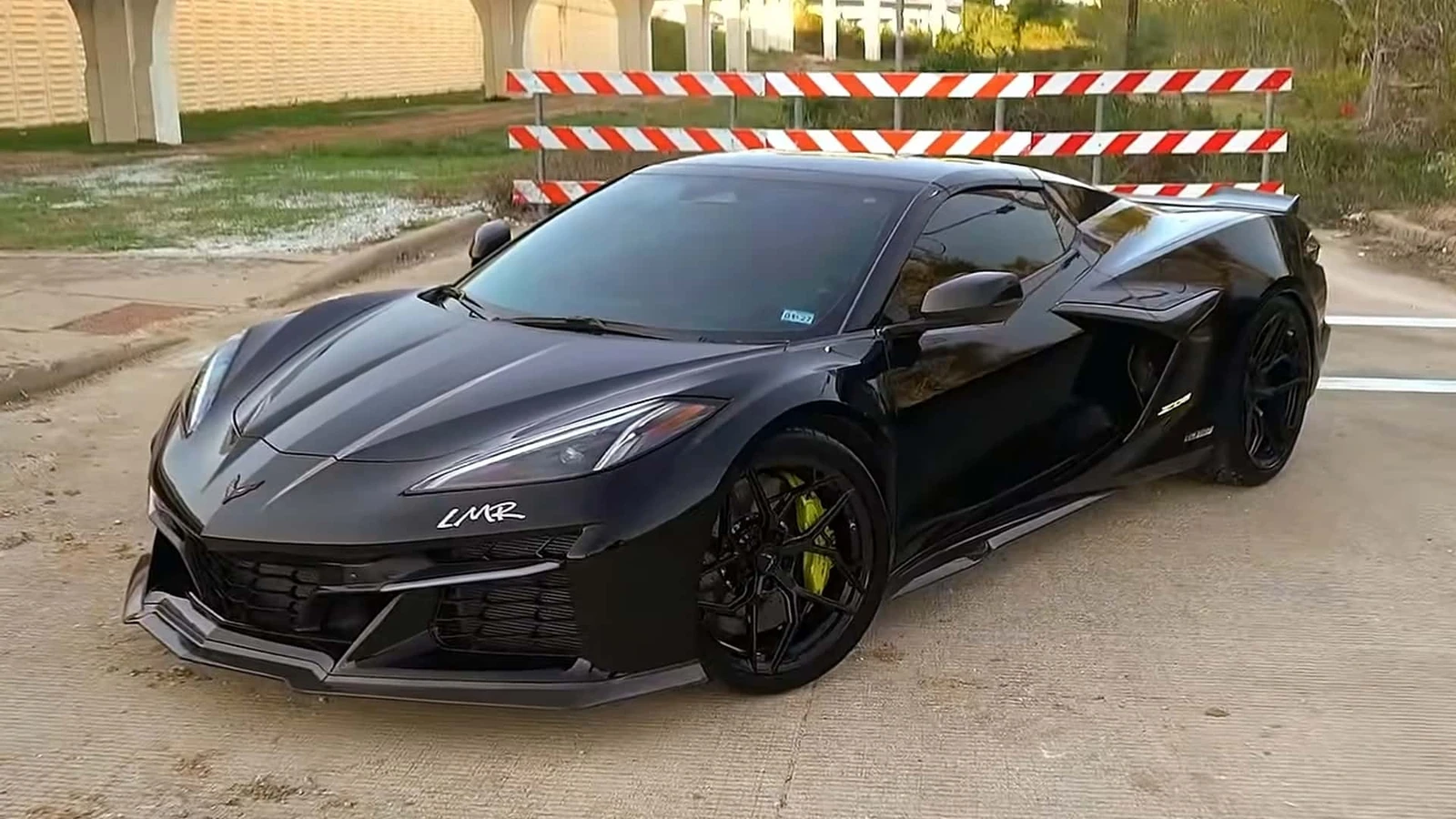
Texas tuner fits twin turbos to 2027 Corvette Z06 for 810 rear-wheel horsepower

Late Model Racecraft's build runs on 93-octane pump gas and is estimated at around 1,000 hp at the crank, a figure the shop calculated rather than measured.

Image: Motor1

Houston-based tuning shop Late Model Racecraft has fitted a pair of turbochargers to a customer's 2027 Chevrolet Corvette Z06, taking it to 810 rear-wheel horsepower and 588 pound-feet of torque on 93-octane gasoline.

The car had already been modified with naturally aspirated bolt-ons at another shop and was running on E85 when it arrived, baselining at roughly 597 rear-wheel horsepower before LMR began work.

What went into the build

LMR installed Precision mirror-image ball-bearing turbochargers, picked because they are air-to-water units rather than grease-lubricated turbos. Shop owner Steven Fereday says that choice avoids the chore of greasing turbos every 1,500 miles, which keeps the car simple to live with.

An air-to-water intercooling system with a heat exchanger routes coolant to both sides of the engine bay to manage the heat the turbos generate under boost. The downpipes feed a deliberately short exhaust, which Fereday says helps the flat-plane-crank V8 keep its characteristic snarl despite forced induction.

Custom engine and transmission software tuning completes the package. LMR adjusts clutch pressure and shift behaviour so the C8's dual-clutch transmission can cope with the extra torque, which Fereday identifies as the real limiting factor on builds of this size.

Dyno figures and the crank estimate

On LMR's own dyno the finished car made 810 rear-wheel horsepower and 588 pound-feet, a gain of about 213 rear-wheel horsepower over its pre-turbo baseline, with the fuel system switched away from E85 entirely.

LMR puts crank output at around 1,000 horsepower, but that is a calculation rather than a direct engine-dyno measurement. The confirmed figure remains the 810 rear-wheel horsepower reading from the shop's equipment.

For context, Chevrolet rates the factory 2027 Z06's naturally aspirated 5.5-litre V8 at 670 horsepower, with peak power at 8,400 rpm and an 8,600 rpm redline from its flat-plane crank. The tuner's measured rear-wheel number already clears the manufacturer's crank rating, and driveline losses mean the gap at the engine is wider still.

How it drives, and what owners should know

Fereday says the car still behaves like a stock Z06 in Touring mode. Turbo noise is audible under underpasses at a cruise, but there is no drama at part throttle.

He recommends stickier rear tyres for owners planning first- or second-gear acceleration runs, because the factory rubber struggles to put the torque down without spinning.

Tuning can be tailored per customer. LMR can program anything from a loud burble tune that pops on deceleration to the subtle, factory-like behaviour this particular Z06 received.

The pitch to Z06 owners is a 93-octane car that can be driven daily, parked in the garage and driven hard again without special maintenance in between. Twin-turbo work on GM's small-block family is a broader trend, with twin-turbo crate V8 builds chasing similar output without relying on specialised fuels.

Two things a reader might reasonably ask are not addressed in the source material: LMR has not announced a price for the conversion, and no output figure has been quoted for the standard Z06 in rear-wheel terms, so the before-and-after comparison rests on this car's own baseline rather than a factory measurement.
Open this article ↗
Electric / TDCN ORIGINAL

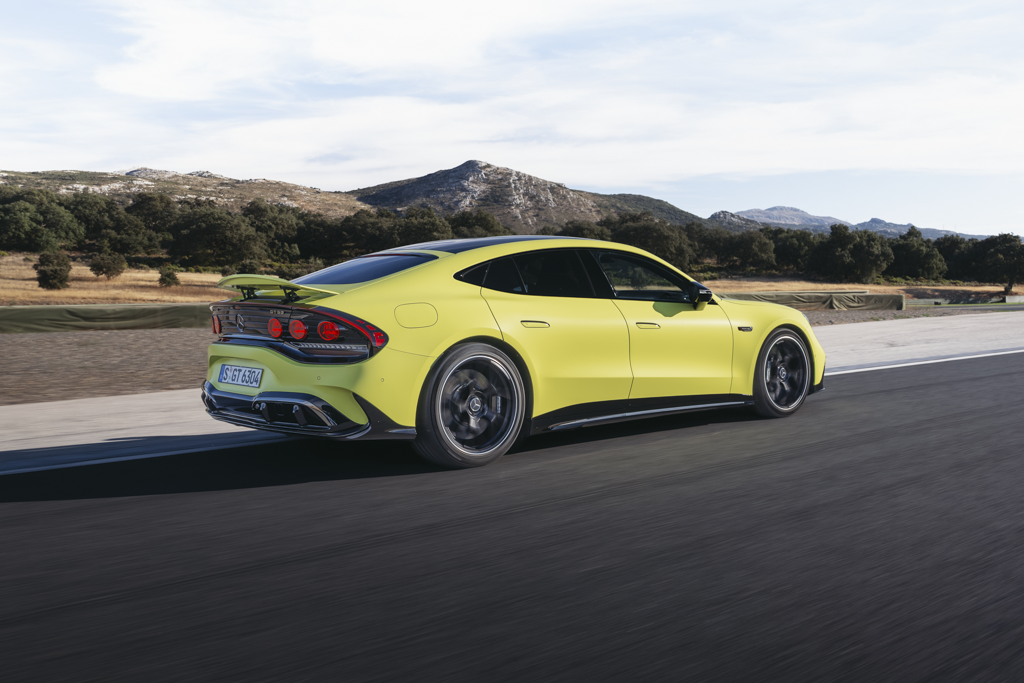
Mercedes-AMG's electric GT four-door fakes a V8 with 1600 sound files

The electric GT55 and GT63 borrow the AMG GT R's V8 soundtrack and simulate nine-speed shifts, while the GT53 gets a six-cylinder voice.

Mercedes-AMG's new electric GT 4-Door Coupe uses more than 1600 audio files to recreate the sound of the company's V8, paired with simulated nine-speed gearshifts and vibrations, the brand says. The GT55 and GT63 draw their soundtrack from the petrol V8 used in the AMG GT R.

The system is built around a drive mode called AMGFORCE Sport+, which adds manual simulated shifts through the steering wheel paddles, with the V8 sound audible both inside and outside the car. The entry-level GT53 gets its own version of the mode, reproducing a six-cylinder engine instead.

How the artificial V8 works

The audio is mixed in real time to follow what the driver does. Individual samples are broken into smaller loops and recombined to reproduce acceleration, gear changes and exhaust burbles.

Speaking at the car's launch in Spain, Mercedes-AMG product manager Oliver Ganzmann said the brief went past making a fast electric car. "For us, a performance car is about emotion, about character, about the feeling you get behind a steering wheel," he said.

Ganzmann framed the mode as a deliberate link to the brand's petrol past. "Obviously, we know what's connected to emotions when it comes to an AMG, and that's an authentic V8 experience," he said, describing AMGFORCE Sport+ as combining the V8 sound from the AMG GT R with an emulated nine-speed shift.

The shifts are theatre rather than hardware. The GT55 and GT63's rear electric motors use a single-stage transmission, not the nine-speed automatic the system imitates, so the torque interruptions and vibrations drivers feel are simulated too. Ganzmann said drivers who have owned an AMG V8 should feel at home in the mode.

Drivers can tune the cabin sound through a SoundSlider menu with Powerful, Balanced and Minimal settings, plus a scale running from Classic to Futuristic. Keeping a six-cylinder voice for the GT53 preserves a hierarchy familiar from petrol AMGs, even though all three versions of the new four-door are electric.

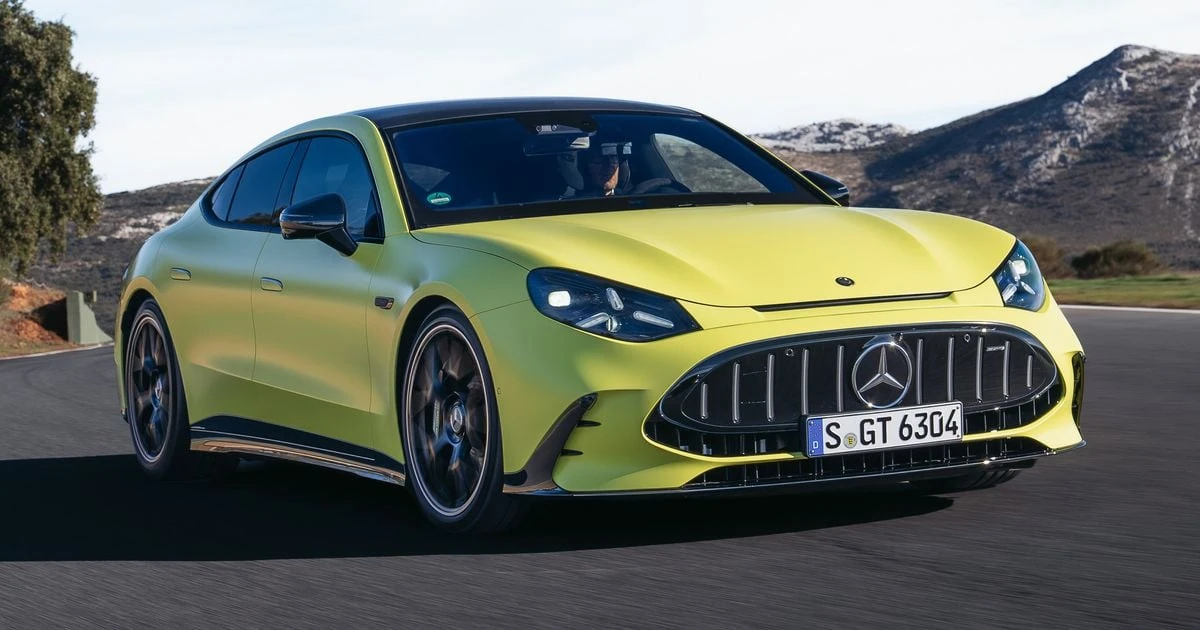
The AMG GT four-door's electric powertrain hides behind a soundtrack of 1,600 V8 samples.
The AMG GT four-door's electric powertrain hides behind a soundtrack of 1,600 V8 samples., Image: CarExpert

What AMG has not announced

The sources cover the powertrain's character rather than its numbers. Power, torque, battery capacity, charging rates and official range figures for the GT55, GT63 and GT53 have not been announced in the material available, and no range test cycle is quoted.

Pricing and market availability are likewise unconfirmed. The car's launch took place in Spain, but the sources do not state an on-sale date, a price or which countries will receive it. Buyers in markets outside those confirmed will need to wait for AMG's full specifications.

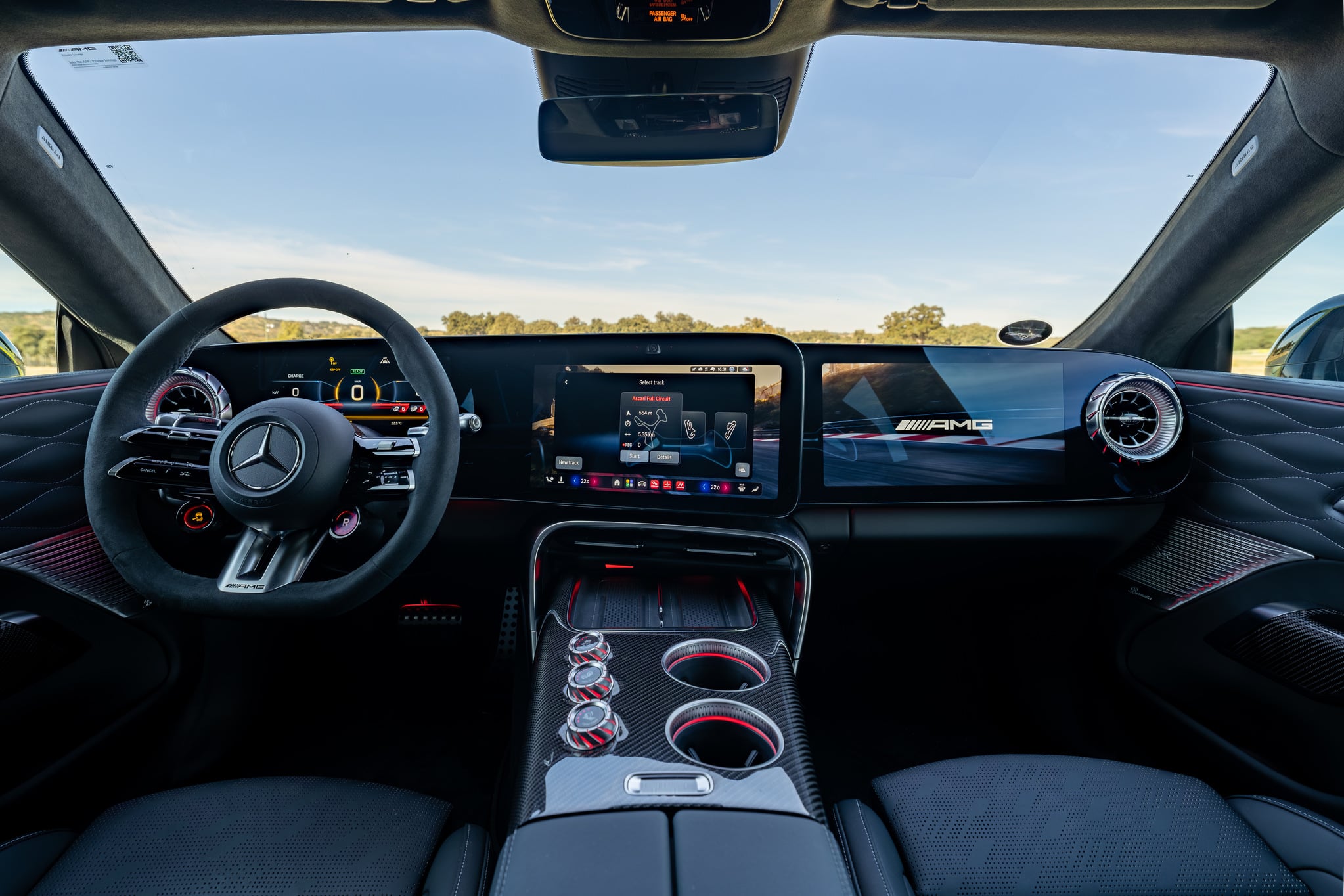
Inside, AMG's cabin tech will decide how convincingly the fake V8 rumbles through the speakers.
Inside, AMG's cabin tech will decide how convincingly the fake V8 rumbles through the speakers., Image: CarExpert

AMG joins a growing group of noisy EVs

AMG is not alone in giving electric performance cars artificial engine noise and gearshifts. Hyundai has already introduced both in its electric N range, including the Ioniq 6 N, whose N e-Shift system simulates gear changes.

That matters because the engineering problem is the same across the industry: electric motors deliver power smoothly and near-silently, which removes much of the sensory feedback that performance-car buyers have been trained to expect. Simulated sound and shifts are a way of filling that gap without giving up the instant response of an EV.

The catch is that the effect is software, not mechanical. Drivers who want the real thing will still notice the single-stage transmission underneath, but AMG is betting that the soundtrack and the simulated shifts are what most buyers actually miss.

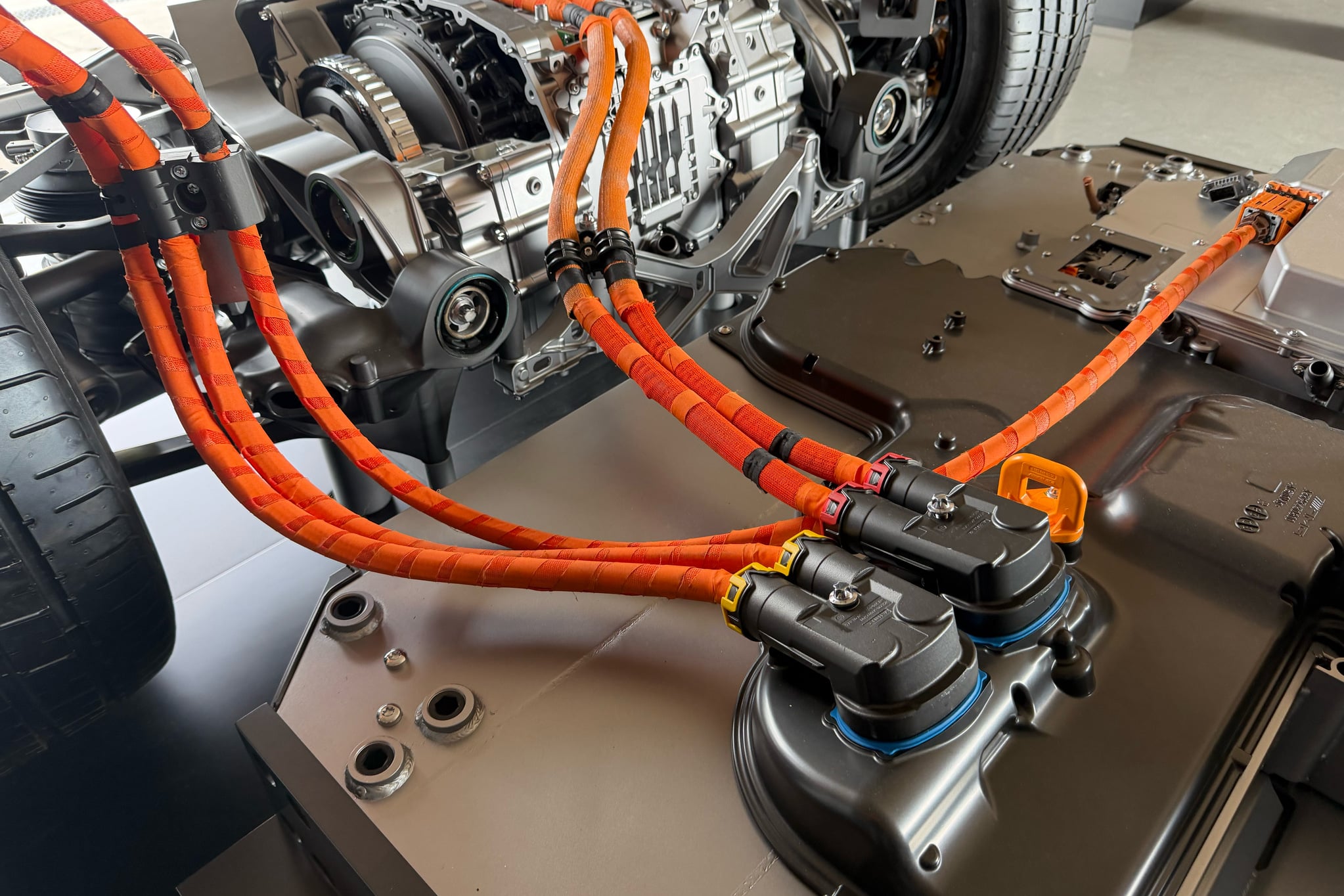
Under the skin, orange high-voltage cabling feeds the electric motors that replace the V8.
Under the skin, orange high-voltage cabling feeds the electric motors that replace the V8., Image: CarExpert
Open this article ↗

Keep scrolling to read the next story.

Older articles →