INDEPENDENT AUTOMOTIVE NEWSGLOBAL PERSPECTIVE / AUSTRALIAN EDITION
TDCNTHE DAILY
CAR NEWS.

The road ahead.
Every day.

RSS ↗
Latest/New cars

457 original articles

New cars / TDCN ORIGINAL

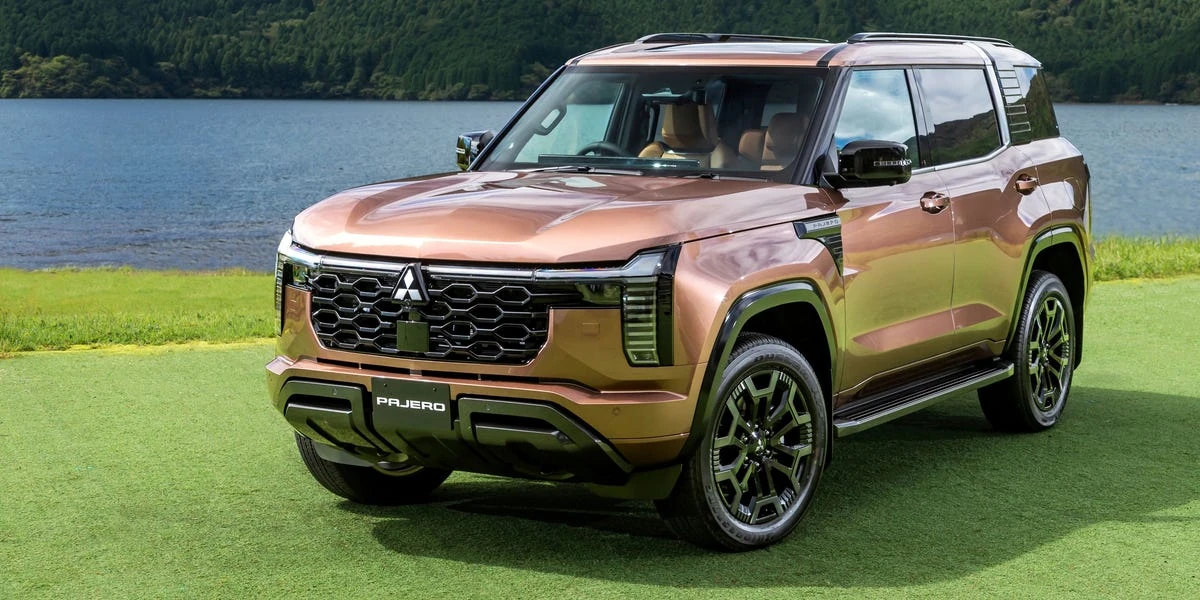
Mitsubishi details new Pajero SUV with diesel power and Japan pricing

The ladder-frame seven-seater goes on sale in Japan next month, but Mitsubishi still has not decided on US availability.

Mitsubishi has released full specifications and pricing for the new Pajero SUV, which is set to go on sale in Japan next month. The three-row, ladder-frame off-roader will be offered with a 2.4-litre turbo-diesel engine in its home market, and Mitsubishi has not yet decided whether to sell it in the United States.

Dimensions and hardware

The Pajero measures 193.7 inches long, 75.8 inches wide and 75.2 inches tall, putting it within a few inches of the Toyota 4Runner in overall size, though it is narrower. It has three rows of seats with room for seven and comes with standard four-wheel drive.

That ladder-frame construction and standard 4WD place the Pajero squarely in the body-on-frame SUV class alongside the 4Runner and Land Cruiser, rather than the car-based crossovers that dominate most showrooms. For buyers who actually use low-range gearing and tow, that is the more relevant comparison.

Diesel powertrain and economy claim

The Japan-market engine is a 2.4-litre turbo-diesel inline-four producing 201 horsepower and 354 pound-feet of torque. Mitsubishi claims fuel economy of 28 mpg on the WLTP cycle.

That diesel is considered unlikely to reach the US market. The torque figure is the headline number here: a torquey diesel suits an off-roader's low-speed work, and the WLTP economy claim, while measured on a different cycle from US EPA figures, suggests the Pajero is not as thirsty as its size might imply.

Japan pricing and the US question

Japanese pricing starts at the equivalent of $39,000 and rises to $50,000 for the loaded Super Exceed trim pictured. For reference, the Toyota 4Runner starts at around $44,000 and the Land Cruiser at nearly $60,000 in the US.

Those figures are for Japan and are not a guide to what the SUV would cost in America. Even so, they suggest Mitsubishi could undercut the 4Runner on price if the Pajero were brought over, which would be a strong position for a brand looking to re-establish an off-road reputation.

Mitsubishi's US arm acknowledged the Pajero's global debut in August with a statement saying no decision had been made on a US introduction, but that the model's return strengthens the company globally by reconnecting it with one of its most iconic nameplates. Car and Driver expects the SUV to eventually reach the US as the Montero, though that remains unconfirmed.

What is not yet announced: US pricing, US engine options, an on-sale date for America, and whether the Montero name would definitely be used.
Open this article ↗
New cars / TDCN ORIGINAL

Hyundai puts $450m into Alabama to build hybrid and range-extender engines

The Montgomery plant will add engine capacity for hybrids and EREVs, with the Santa Fe range-extender due at dealers in the first half of 2027.

Image: Carscoops

Hyundai will spend nearly $450 million expanding engine production at its Montgomery, Alabama plant to support hybrids and range-extended electric vehicles, an investment tied to the refreshed Santa Fe and the next-generation Tucson. The announcement was made by Alabama officials on October 28, with Governor Kay Ivey's office confirming the outlay.

The range-extender side of the plan has a date attached: Hyundai has already confirmed the Santa Fe EREV will be built at the Alabama facility and reach dealers in the first half of 2027.

What the Alabama money buys

The spending goes into the existing Montgomery site rather than a new factory, and is aimed at widening what the plant can build in powertrain terms. Governor Ivey's office said the investment prepares Hyundai Motor Manufacturing Alabama for the refreshed Santa Fe and the all-new Tucson, and the governor confirmed hybrid versions of the next-generation Tucson are among the plant's future products.

Montgomery already employs around 4,200 people, according to state officials. The expansion broadens the range of work the facility can handle rather than adding a separate production line elsewhere.

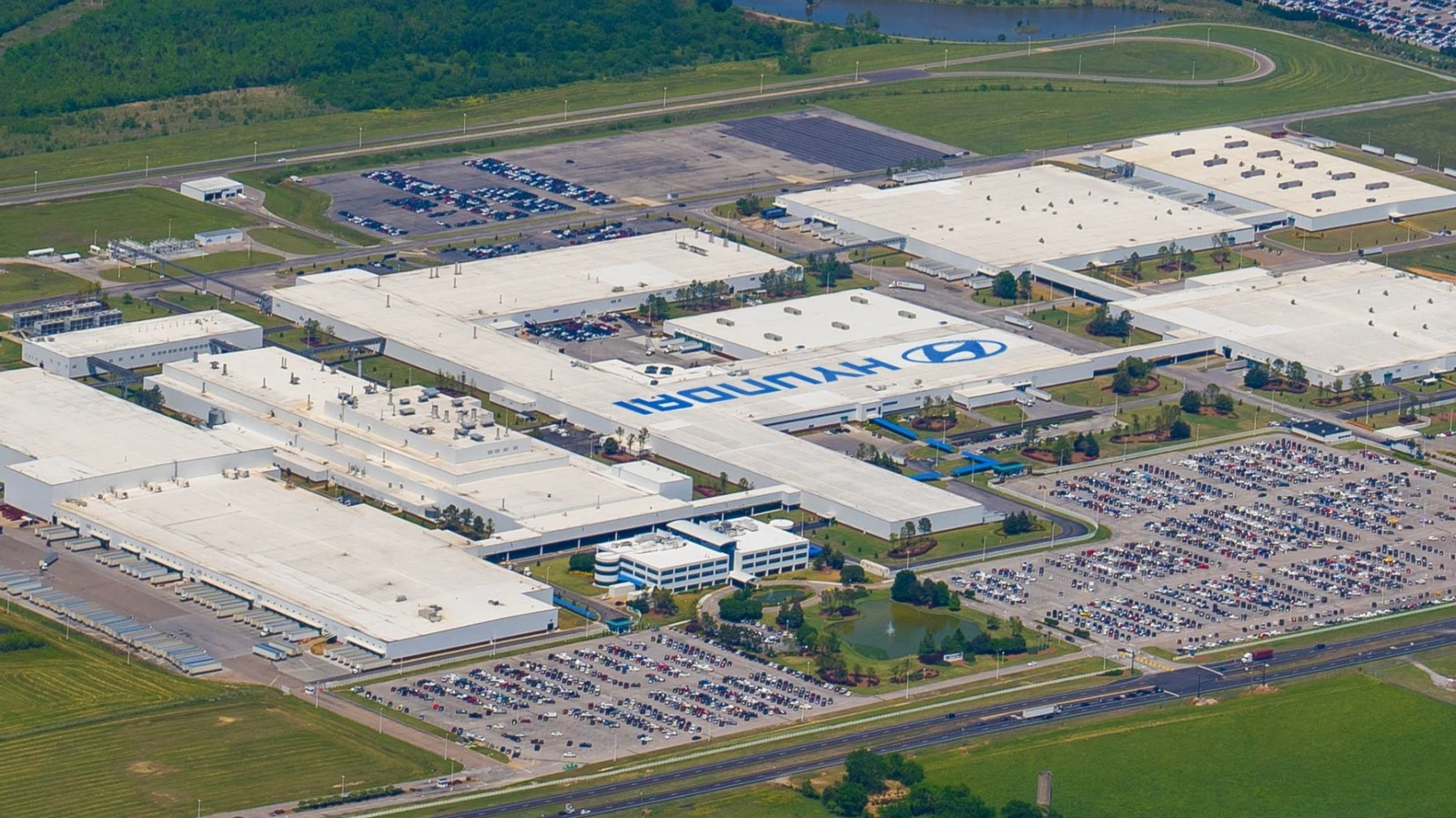
Hyundai's Alabama manufacturing complex, where a $450m investment will add hybrid and range-extender engine production
Hyundai's Alabama manufacturing complex, where a $450m investment will add hybrid and range-extender engine production, Image: Carscoops

The Santa Fe EREV and its 600-mile target

The Santa Fe EREV pairs a conventional electric drivetrain with a small combustion engine that exists only to charge the battery pack, so the wheels are driven electrically at all times. Hyundai's stated target is more than 600 miles of total range, a manufacturer figure rather than an independently measured result.

That 600-mile number is not a battery-only figure. Hyundai has not announced a Santa Fe that travels 600 miles on electric power alone, and the production specifications and official ratings have yet to be published. The same applies to efficiency and price: Hyundai has not announced how much the Santa Fe EREV will cost or how efficient it will be, so both remain open until the production figures are released.

How far the Santa Fe can go on battery charge before the engine starts is likewise unannounced. Hyundai has given a total range target but no battery-only range figure for the SUV.

The appeal of the layout is straightforward: owners can run on electric power alone and, when charge runs low, the engine tops up the battery, so a fuel stop substitutes for a charging stop. The cost is the weight of carrying both an electric drive system and combustion hardware, plus the packaging and maintenance considerations that come with the combination. Hyundai's Genesis GV90 EREV uses the same basic idea.

Hybrids are the bigger part of the plan

The Alabama work sits inside a wider North American strategy. At its 2026 CEO Investor Day, Hyundai said North America would offer more than 10 hybrid models by 2030, with hybrids accounting for half the regional sales mix. Production will be split between the Alabama operation and Hyundai Motor Group Metaplant America in Georgia.

Hyundai has also lifted its North American parts sourcing target to 80% by the end of the decade. Building more electrified vehicles and their components in the region is central to that goal and should soften the effect of tariffs.

For buyers, the practical read is that Hyundai is committing engine capacity to hybrids and range-extenders at the same time as it sells petrol and fully electric models such as the facelifted Tucson. The Alabama expansion is the groundwork; the showroom payoff depends on the Santa Fe EREV's final specs, which Hyundai has not yet published.

Open this article ↗

Keep scrolling to read the next story.

Older articles →