INDEPENDENT AUTOMOTIVE NEWSGLOBAL PERSPECTIVE / AUSTRALIAN EDITION
TDCNTHE DAILY
CAR NEWS.

The road ahead.
Every day.

RSS ↗
Latest/Electric

465 original articles

Electric / TDCN ORIGINAL

Lucid teases Cosmos electric SUV as production slips to late 2027

The sub-$50,000 SUV remains on target on price, but Lucid has pushed back its build date and still has no certified range figure.

Image: Motor1

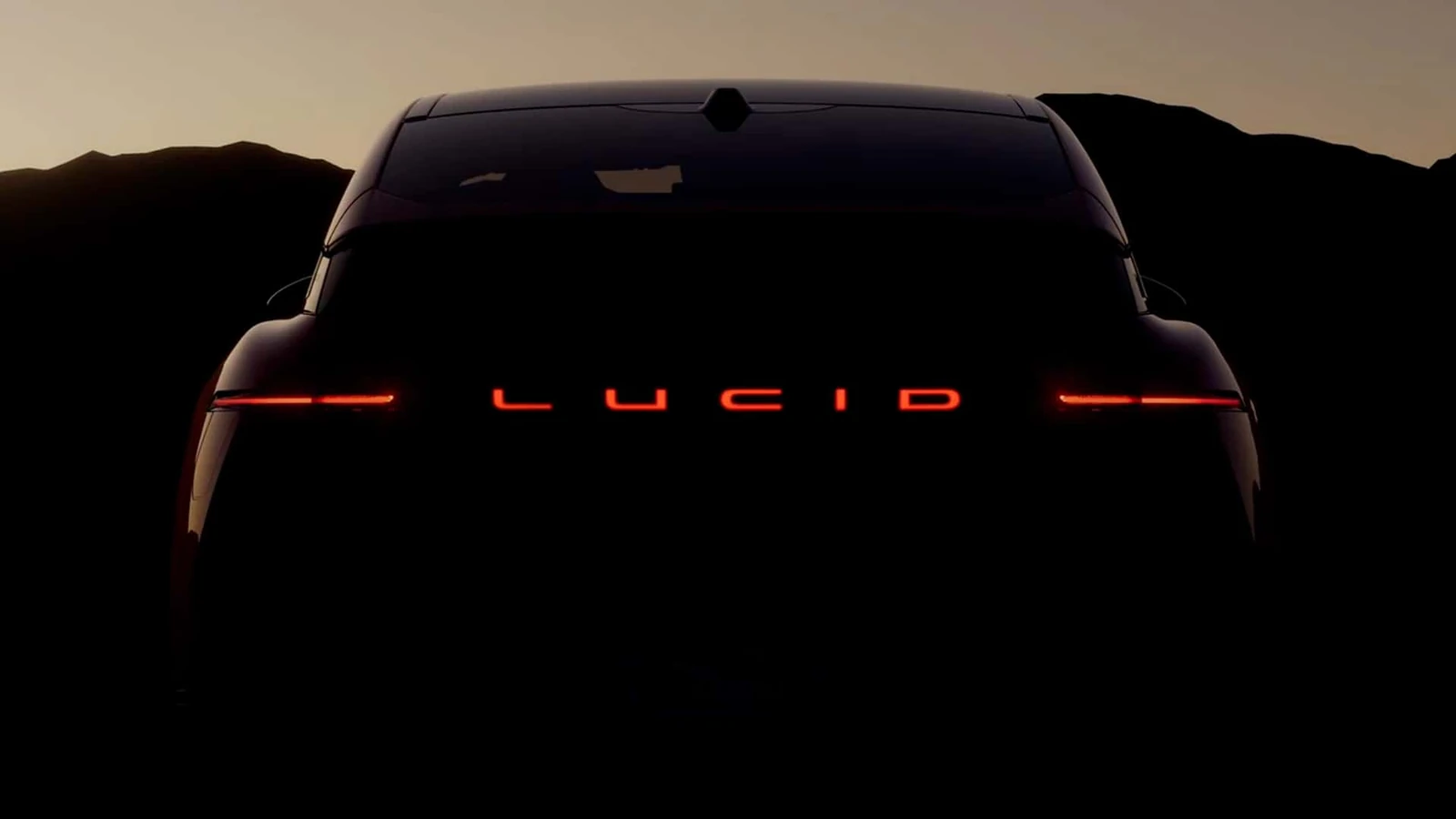
Lucid has released a new teaser for the Cosmos, the electric SUV it intends to sell for under $50,000 in the US, while confirming that production has moved to the second half of 2027. The teaser arrived on November 6 and showed lighting details and a rear roofline the company had not previously revealed.

The timing was reconfirmed three days later on Lucid's third-quarter earnings call, when CEO Silvio Napoli told investors the Cosmos is now due in the second half of 2027. Lucid had originally pencilled the vehicle in for late 2026.

What the teaser shows, and what it leaves out

The clip is narrow in scope. Lucid showed exterior cues, a sculpted rear end and a distinct lighting signature, but did not confirm trim names, interior layout or a finished production design. No further specifications accompanied the video and images.

Lucid calls the Cosmos the anchor of its Midsize program, a vehicle intended to pull the brand toward a broader, less expensive customer base than the Air sedan or the Gravity SUV ever targeted. The company says it cannot wait "to share this feeling with even more people".

Several basics remain unannounced: there is no EPA-certified range number, no confirmed delivery date and no trim-specific pricing. Lucid says it plans to announce reveal and production dates in the first quarter of 2027.

Projected range, efficiency and charging

Lucid is projecting roughly 300 miles of range from a 69-kilowatt-hour battery pack, a size well below what the Gravity or Air carry. The company pairs that with a claimed maximum efficiency of 4.5 miles per kilowatt-hour.

On charging, Lucid estimates the pack can add 200 miles of range in 14 minutes. Those range, efficiency and charging figures are internal projections rather than independent, production-level testing or certified results.

The distinction matters for buyers weighing the Cosmos against established rivals. A 300-mile figure carries real weight only once it has been through EPA testing, and Lucid's own numbers are the only ones on the table until then.

Price target holds below $50,000

Lucid has positioned the Cosmos with a starting price below $50,000 in the US, undercutting every current model in its lineup by a wide margin. A trim-specific MSRP has not been announced.

The gap between projection and certification is the central risk in the Cosmos story. A sub-$50,000 SUV with 300 miles of range would reshape the brand's reach, but only if the final numbers hold up once the vehicle reaches EPA testing and actual deliveries begin.

Lucid's own production schedule has slipped once already, which makes the projected figures harder to bank on than a certified number from a vehicle already on sale.

Production status and Lucid's quarterly numbers

Lucid says testing, final-stage prototyping and validation of its Midsize program continued through the third quarter, and pilot production has now entered its final phase.

Separate from the teaser, Lucid's third-quarter 2026 operating numbers showed 3,806 vehicles delivered and 2,954 built, after the company cut a shift at its Arizona plant.

For drivers and car buyers, the practical takeaway is a longer wait than Lucid first signalled. Anyone holding off on a sub-$50,000 electric SUV now has a build window in the second half of 2027 at the earliest, with the reveal date and full specifications still to come in the first quarter of 2027.
Open this article ↗
Industry / TDCN ORIGINAL

Rivian plans robots for up to 80% of factory tasks, starting at 20%

CEO RJ Scaringe says the Mind Robotics spinoff will first automate repetitive pick-and-place posts, with no timeline announced for the wider rollout.

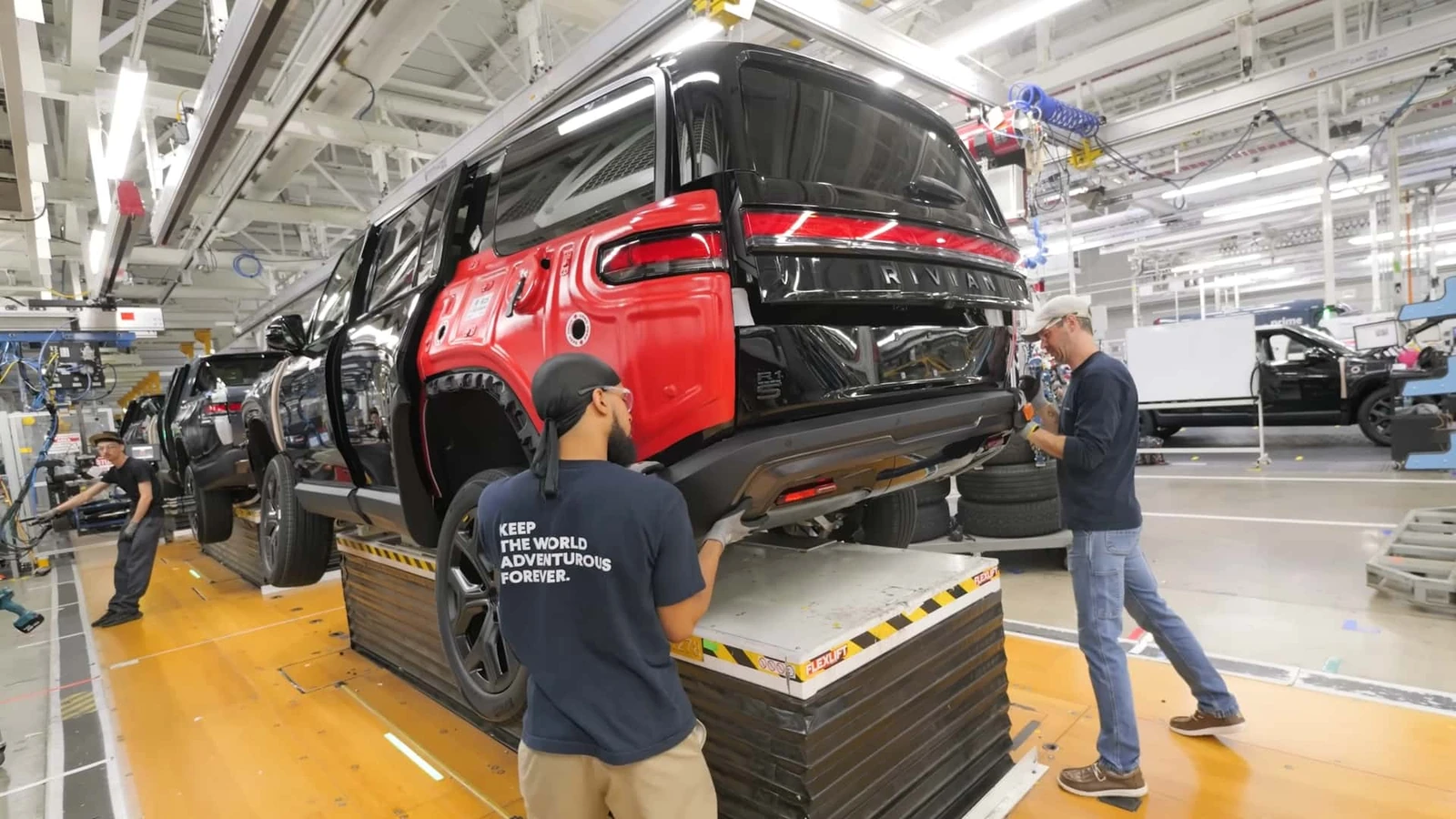
Rivian intends to hand as much as 80% of the work on its factory floors to AI-enabled robots, beginning with about 20% of plant tasks, according to CEO RJ Scaringe. The effort runs through Mind Robotics, the startup Rivian spun off last year to develop autonomous driving and what Scaringe calls physical AI.

Scaringe gave the figures in an interview with Kleiner Perkins, and no date has been announced for when the robots will reach Rivian's production lines. The company builds the R1S, R1T and R2 electric vehicles.

What the first robots would actually do

The initial targets are not the big fixed arms already common in car plants worldwide, including Rivian's. Those machines are manually programmed to repeat one task and only work when a part arrives in exactly the same position every time.

Rivian's robots are aimed at the human jobs that involve some variability: picking a part out of a bin and placing it on a fixture. Scaringe says AI-enabled robots can detect small differences in where parts sit inside a bin and adapt.

"These are the immediate opportunities we see," he said. "And these tend to be the ones that often are the least interesting jobs." He added that depending on the section of the plant, up to 50% of the labour is in pick-and-place posts.

That framing matters for anyone weighing a Rivian purchase or watching the company's costs: the plan attacks the most repetitive, least skilled work first, which is where automation is easiest to justify and hardest to argue against.

Filming workers to train the software

Engineers recorded how a wide range of factory tasks are carried out, then fed the footage into software that decodes what happens in each frame and issues commands to the robot. Scaringe said thousands of tasks were filmed and characterised by difficulty, both in terms of dexterity and reasoning.

"The model gets smarter over time," he said.

Rivian and Mind Robotics have also recruited staff from the consumer electronics industry. Scaringe drew a direct line between the two fields: someone who worked on a tactile-sensing phone has skills a robot needs, because a robot needs tactile sensing too.

Which models are affected

The robots are a manufacturing change rather than a product one, and the sources do not tie the plan to specific vehicles. Rivian's current line-up is the R1S SUV, R1T pickup and R2, and the automation effort is described at the level of plant tasks rather than individual models.

The same hardware-first, software-later approach shows up in Rivian's Gen2 R1S and R1T. Those vehicles carry the hardware for point-to-point hands-free driving, with the software due to arrive on a small scale through an over-the-air update in late 2026 and a wider rollout in 2027.

Rivian has not said which plants will get the robots first, how many units it will deploy, or what the programme will cost.

Why a carmaker is building robots

Rivian is not alone in pushing automation further, but the 80% figure is a statement of ambition rather than a schedule. The company has not said when that level will be reached, only that it starts at roughly 20%.

The commercial logic is straightforward. Pick-and-place work is a large share of labour in some plant sections, and it is the kind of job that is hardest to fill and easiest to standardise once the robot can cope with variation.

For buyers, the near-term effect is indirect: cheaper, more consistent assembly is the goal, not a new model or a new feature. The more immediate product news remains the hands-free driving software coming to Gen2 R1S and R1T from late 2026.

Open this article ↗

Keep scrolling to read the next story.

Older articles →