INDEPENDENT AUTOMOTIVE NEWSGLOBAL PERSPECTIVE / AUSTRALIAN EDITION
TDCNTHE DAILY
CAR NEWS.

The road ahead.
Every day.

RSS ↗
Latest/Performance

464 original articles

Performance / TDCN ORIGINAL

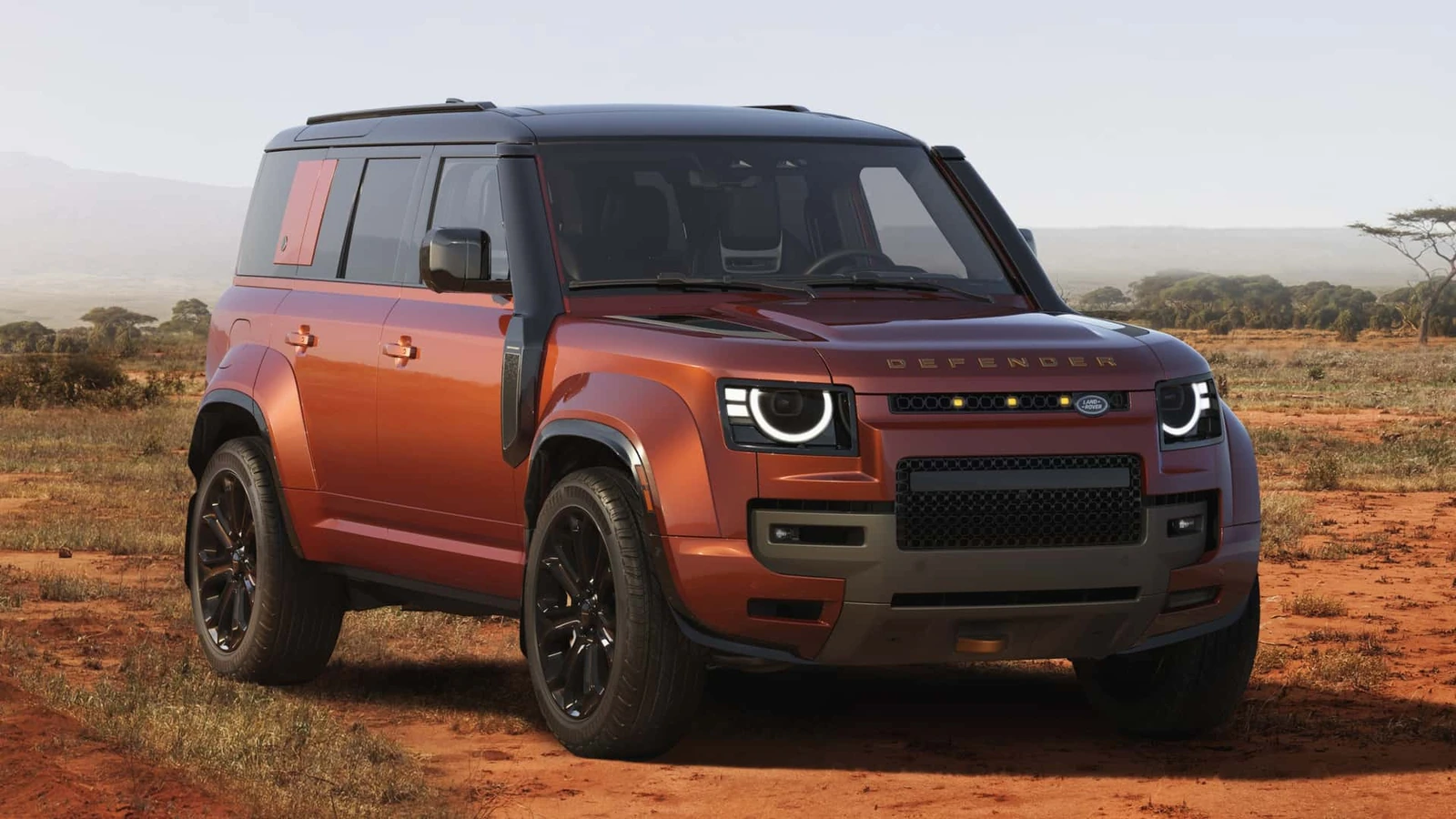
Land Rover expands Defender palette with six Atlas paint shades

Two of the new colours are reserved for the Octa performance model in the US, while the other four join the wider range as open options.

Image: Motor1

Land Rover has added six paint colours to the Defender's Atlas personalisation programme, announced on November 10, spanning the 90, 110 and 130 body styles. The shades draw their names from locations in Kenya, Italy, Ireland, England and Australia.

Two of the six, Mara Red and Pantelleria Blue, reinterpret older Defender colours, while Galway Green and Buckingham Blue return as heritage shades and Aira Green and Jenolan Gold are new additions.

What each colour references

Mara Red takes its cue from Kenya's Maasai lands and reworks the former Masai Red, while Pantelleria Blue reinterprets Pageant Blue against the volcanic island off Sicily. Both, along with Galway Green, are reserved for the Octa performance model in the US.

Galway Green is named for the Irish county. Buckingham Blue is a revival of a shade Land Rover sold on the Defender between 2006 and 2013, before the current generation arrived. Those two join the range as open options rather than Octa exclusives.

The genuinely new colours are Aira Green, named for the Aira Force waterfall in England's Lake District, and Jenolan Gold, drawn from the limestone caves beneath Australia's Blue Mountains. Each Atlas colour pairs with a black contrast roof, and a white contrast roof is optional on selected Defender 90 and 110 models depending on trim and market.

Where the colours are available

Atlas paint can be specified on selected 90, 110 and 130 models, including newer variants such as the Defender Vertex, Defender X and Defender Octa, though trims and regional specifications limit access.

Buyers cannot get Atlas paint on the Defender S, Hard Top S, 130 Outbound, Trophy Edition, or region-specific editions including the Mena 525 Ultimate and China Black Outfit. Octa Black is also excluded, despite the Octa receiving three Atlas-exclusive colours elsewhere in the lineup.

The Hard Top, the Defender's commercial-oriented variant built for professional use, comes in 90 and 110 forms and sits inside the same personalisation update. Land Rover advises buyers to confirm availability with a dealer, since trim-level access varies by body style and specification, and timing for Aira Green and Jenolan Gold can differ by market even though both now sit in the regular Atlas programme.

Land Rover has not announced separate pricing for the Atlas colours, so it is not yet clear whether any of the six carries a premium over standard paint.

An expanding palette, not a one-off

The six join a palette Land Rover has been building out all year: Namib Orange arrived earlier in 2026 alongside Tasman Blue, Woolstone Green and Carpathian Grey. Atlas is an expansion of an already growing lineup rather than a single release.

Nothing under the sheet metal changes. The electric-hybrid Defender 110 keeps its own powertrain lineup entirely separate, and Land Rover treats Atlas as an exterior update.

Defender traces its lineage to the original Land Rover of 1948, and the SUV is still designed and engineered in the UK for sale across 121 countries. For buyers, the practical effect is more choice at the top of the range and a narrower set of colours on entry trims and special editions, which is where the restrictions bite hardest.
Open this article ↗
Electric / TDCN ORIGINAL

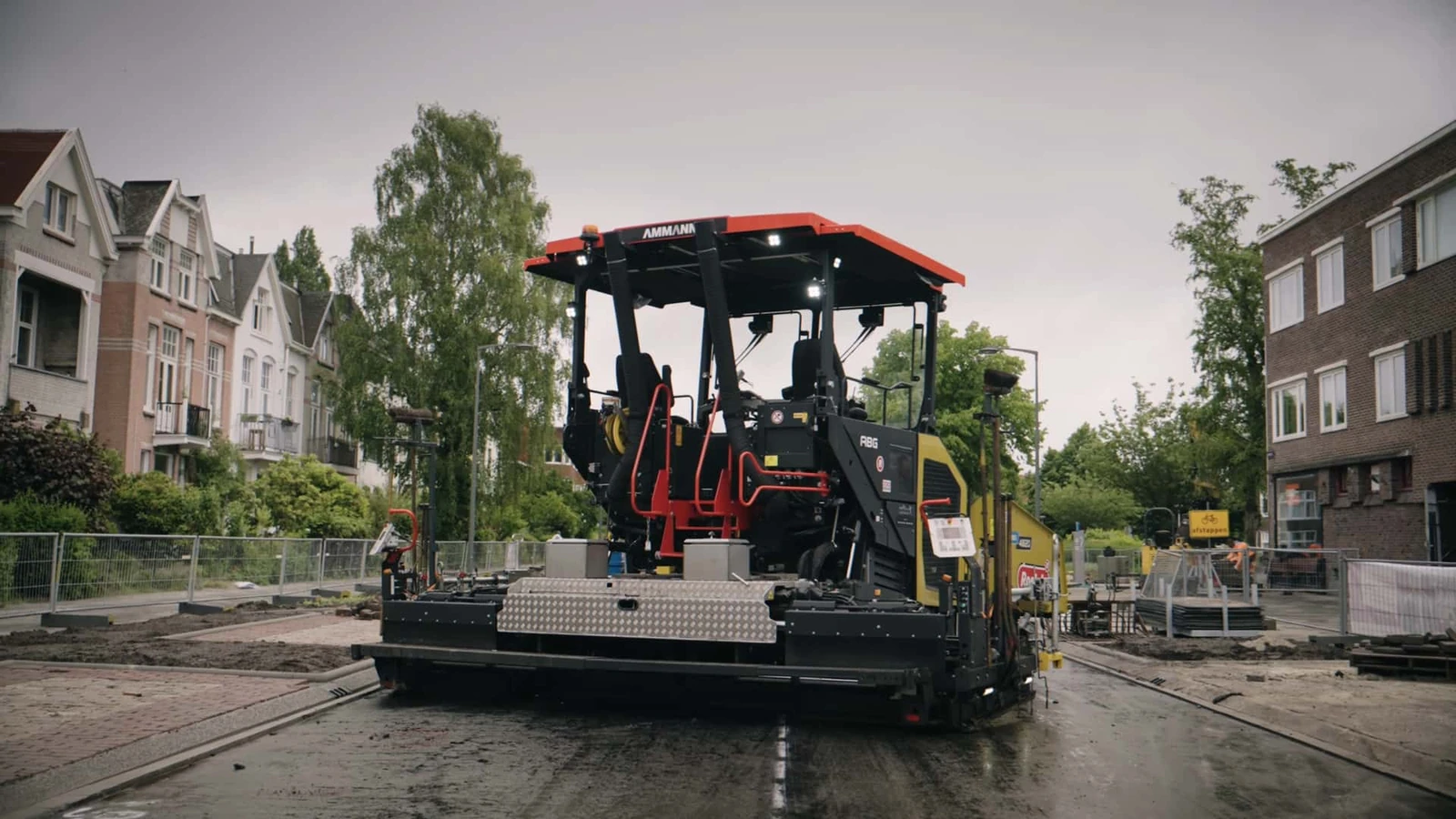
Ammann's electric asphalt paver lays up to 1,200 tonnes a day on a Volvo Penta powertrain

The Swiss-built eABG 4820 runs a 99 kW motor and a 270 kWh battery pack, and can recharge from a CCS2 connector at up to 150 kW.

Switzerland's Ammann has turned one of its mainstream diesel asphalt pavers into an electric machine, the eABG 4820, using a powertrain supplied by Volvo Penta. The company says it is one of the largest electric pavers on the market, with a maximum output of 1,200 tonnes of asphalt per day when a charging stop is included.

Without intermediate charging, the paver lays between 350 and 450 tonnes of asphalt, and its peak hourly rate is 500 tonnes. Volvo Penta supplies the batteries, motors, power electronics and control technology, while Ammann assembled the system using its experience with hydraulic-powered machinery.

Paving width and where it makes sense

The eABG 4820 uses a 99-kilowatt electric motor fed by a 270-kilowatt-hour battery pack split into three separate units. The cells are nickel-cobalt-aluminum oxide (NCA) traction batteries, and Ammann says the pack holds enough energy for an entire work shift.

Charging is possible through a CCS2 connector at up to 150 kW, which refills the pack in roughly one and a half hours, or through AC charging at up to 22 kW, which takes 12 hours. The proprietary ABG e+ screed heat system draws on an external power supply rather than the traction battery.

Philipp Bramer, who heads Ammann's e-paver development team, framed the engineering challenge around energy management rather than the motor alone. "It comes down to energy management and architecture," he said. "The electric driveline doesn't just power the machine. It communicates seamlessly with the hydraulics. Simultaneously, the intelligent control system makes sure that the system supplies exactly the right amount of energy to the machine."

The catch for contractors

The machine can pave at widths of up to 21.3 feet, or 6.5 metres, which covers most common paving scenarios. Ammann positions it for job sites where emissions and noise are sensitive, since the electric driveline is significantly quieter than a diesel rig.

Ammann also claims the paver emits up to 70 percent less carbon dioxide than a diesel equivalent. That figure is a manufacturer claim rather than an independently measured result.

The quieter operation is the practical selling point. Diesel pavers are loud enough that a paving crew and nearby residents notice them, and an electric machine changes the working environment on residential streets and in dense urban areas where paving often happens alongside occupied buildings. Fewer moving parts in an electric driveline also removes many of the maintenance tasks tied to a diesel engine, along with their costs.

Electrification shifts work to the depot. Construction companies need charging equipment installed where machines are parked overnight, and they need a way to top up on the jobsite if a shift runs long. The 1,200-tonne daily figure depends on that mid-shift charging stop, so the headline number and the 350 to 450 tonne figure without charging describe two different working days.

Ammann has not announced pricing for the eABG 4820, and the sources do not specify which markets it will be sold in or when deliveries begin.

Open this article ↗

Keep scrolling to read the next story.

Older articles →