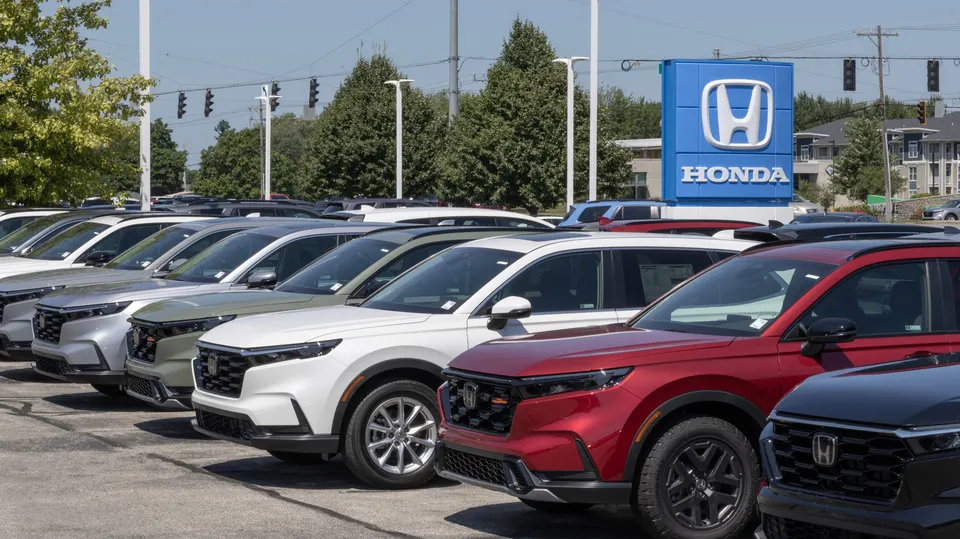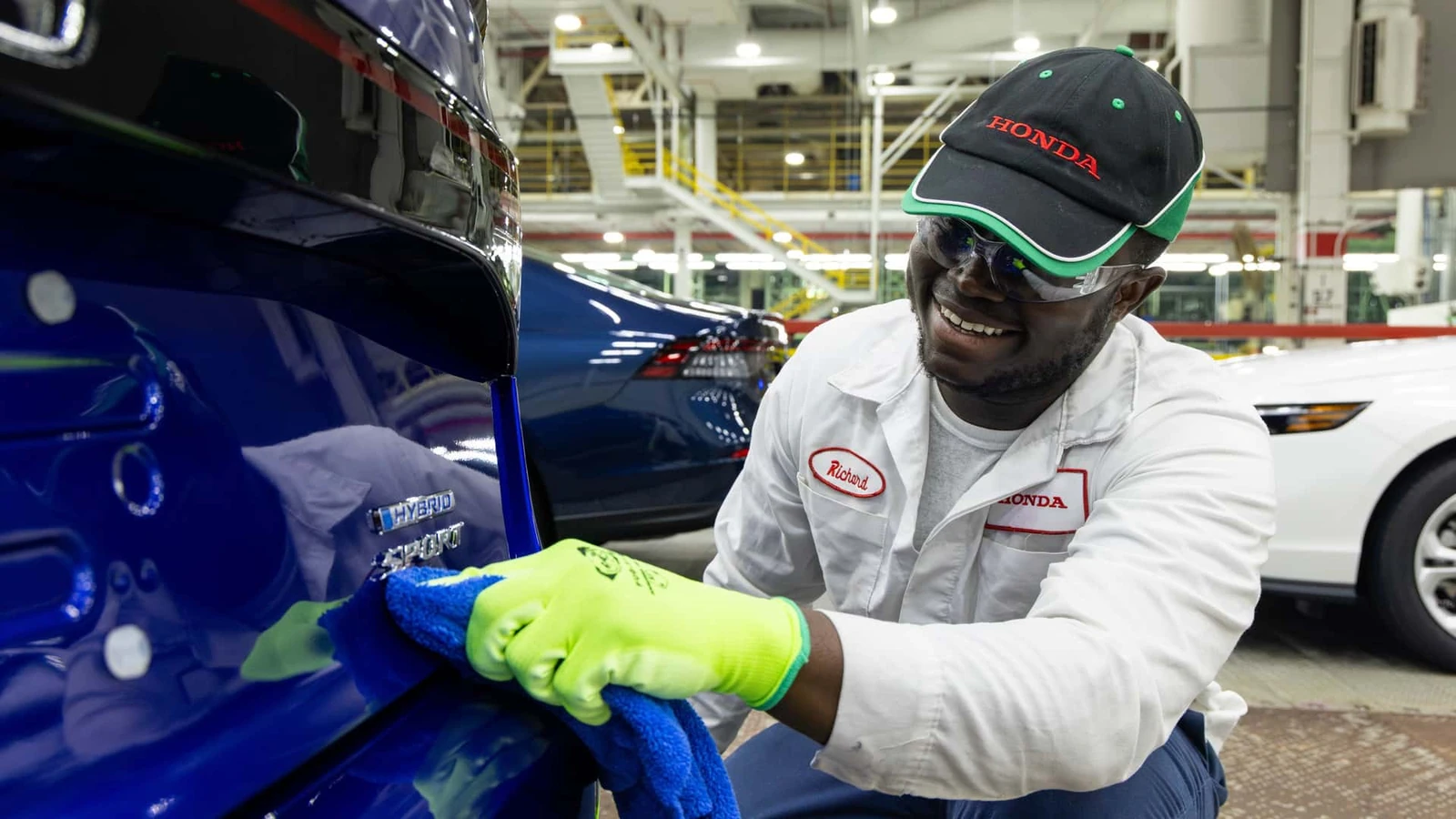
Honda will build a new $3 billion assembly plant in Ohio focused on hybrid models, with production expected to begin in 2029 subject to final government approvals. The site will sit between Honda's existing East Liberty and Marysville operations and is planned to employ more than 2,000 workers.
At full capacity the factory is designed to build up to 240,000 vehicles a year, lifting Honda's total US auto-production capacity to roughly 1.3 million vehicles annually, a scale the company has not reached before in its domestic footprint.
What the plant is built to do
Honda says the factory will use what it describes as leading-edge automation, data-driven technologies and flexible production systems, and will be able to build hybrids, conventional petrol models and battery-electric vehicles on the same line. That flexibility is a hedge: it keeps the site useful whichever way demand for electrified models moves over the next decade.
Ohio officials put the full commitment at $3.38 billion, a figure that folds in upgrades to Honda's existing Anna Engine Plant and Honda Transmission Plant-Ohio alongside the new assembly site, for a combined 2,390 jobs statewide. Honda confirmed the investment on November 9, with the project announced a day later by Governor DeWine's office, JobsOhio, One Columbus and Union County.
Retooling for new hybrid powertrains
The new factory is only part of the plan. Honda is retooling the Anna Engine Plant to build a new four-cylinder engine for compact and midsize vehicles made in North America, and updating the Transmission Plant-Ohio to support two next-generation hybrid powertrains. Those hybrids will first be used by compact and midsize vehicles starting next year, with a hybrid setup for larger models following in the coming years. Honda expects hybrid-system production capacity at the transmission plant to climb 250 percent in the coming years.
Honda has also confirmed it is retooling its Alabama Auto Plant to boost vehicle production and manufacture a new hybrid V6. The new V6 hybrid, previewed last November, pairs the engine with up to three electric motors in all-wheel-drive models; Honda says those versions should accelerate 10 percent quicker than current non-hybrid V6 models while delivering a 30 percent improvement in fuel economy.
The four-cylinder hybrid system is the fifth generation of Honda's hybrid hardware and is expected to debut with the new CR-V, pairing a 2.0-litre four-cylinder with a pair of updated electric motors. Honda is targeting more than 10 percent better fuel economy and a 30 percent reduction in production costs compared with the current powertrain, and models using it should get the same S+ Shift system as the new Prelude, which simulates traditional gear shifts. The plant work lines up with Honda and Acura's plan to launch 15 new hybrid models globally by the end of the decade, with a particular focus on North America.
Which models will be built there
Honda has not said which vehicles will roll off the new line, and that gap is where most of the public interest has landed. A person briefed on the plan told Automotive News the Ohio factory is expected to build the next-generation Acura MDX along with two new flagship crossovers, a report that also raised the possibility of Honda building the rumoured Pilot XXL at the site. Honda declined to confirm specific models for the site, so the MDX connection remains a sourced report rather than a confirmed product plan.
The report tracks with Acura's own public roadmap. The brand has said it wants more SUVs than it currently offers, including a three-row model built for rougher terrain than anything in the lineup today, and has pointed toward an eight-passenger flagship as part of that expansion. Honda's trademark filings have also hinted at where the broader lineup is headed, though none of that confirms what will be built in Union County.
For buyers, the practical read is that Honda's next wave of hybrids is being engineered around larger vehicles as well as compacts, and the company is committing American factory space to them rather than importing. Until Honda names the models outright, though, anyone waiting on a specific SUV has no confirmed answer.