INDEPENDENT AUTOMOTIVE NEWSGLOBAL PERSPECTIVE / AUSTRALIAN EDITION
TDCNTHE DAILY
CAR NEWS.

The road ahead.
Every day.

RSS ↗
Latest/Industry

471 original articles

Industry / TDCN ORIGINAL

BYD recalls Great Tang SUVs in China after fitting wheels the wrong way round

The automaker blames a coding error for front and rear rims being swapped at the factory, and says the cars remain safe to drive.

Image: Carscoops

BYD has recalled examples of its Great Tang electric SUV in China after some cars left the factory with their wheels fitted the wrong way round, with rear rims mounted on the front axle and front rims on the rear. The company says the mix-up poses no safety risk and has not disclosed how many vehicles are affected.

A coding error, not a parts failure

BYD traced the fault to an error in coding and says it has corrected the problem and added extra visual inspections on the production line. Affected wheels will be replaced by the company, with warranty periods restarted from 11 November 2026.

The automaker, which carried out unspecified tests of its own, says handling and safety were unaffected. That is a narrow recall by the standards of a typical safety campaign: the fix is cosmetic and procedural rather than a remedy for a defect that could cause a crash, which explains why BYD has been comfortable saying so little about the size of the affected build.

Why the timing is awkward

The recall lands while BYD faces closer scrutiny as it expands into overseas markets and broadens its model range aggressively. Last month the Shark 6 ute was recalled in Australia over a spare wheel support that could come loose and endanger motorists, and earlier this week court-appointed bailiffs acting for Jaguar Land Rover raided BYD's Netherlands offices amid claimed similarities between the BYD Ti7 and the reborn Land Rover Defender.

None of those episodes involves the same component as the Great Tang recall, but together they put BYD's quality control under a spotlight at the very moment it is asking buyers in new markets to trust its badge. For shoppers, the practical takeaway is that the Great Tang fix is a warranty matter rather than a reason to avoid the car.

The Great Tang's global plans

The all-electric Great Tang is due for a global rollout soon. It is roughly the size of a standard-wheelbase Lincoln Navigator and has already proved popular in China, priced at around US$37,000, with more than 100,000 reservations reported before sales began and 14,000 deliveries made so far.

It sits at the top of BYD's Dynasty line, which has already sent some models overseas, including the recently revealed Atto 8, known in China as the Tang L. BYD has not announced Australian availability or pricing for the Great Tang, and the recall notice covers the Chinese market.
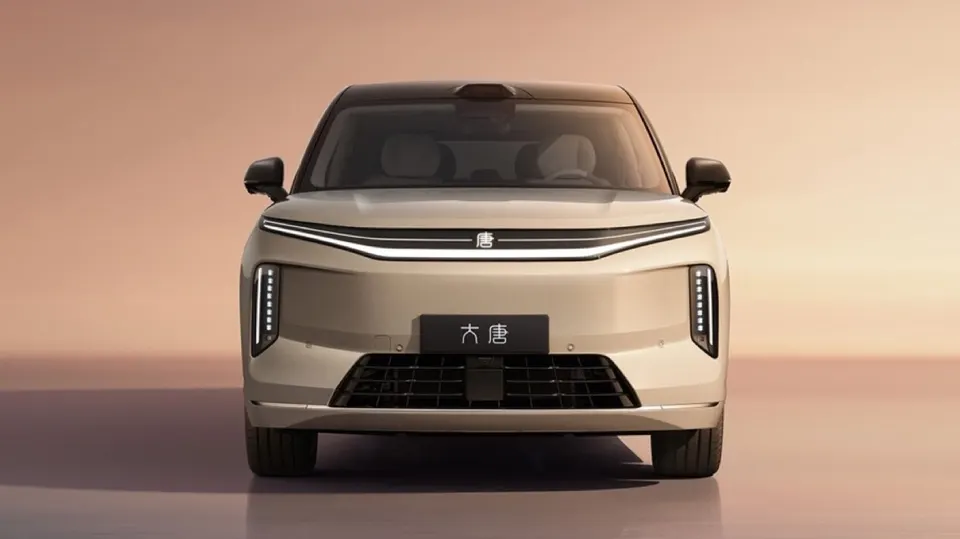
The Great Tang SUV at the center of BYD's recall over incorrectly fitted wheels
The Great Tang SUV at the center of BYD's recall over incorrectly fitted wheels, Image: Carscoops
Open this article ↗
Electric / TDCN ORIGINAL

Rimac ends Nevera production after 71 cars, short of its 150 target

Mate Rimac says the electric hypercar did its job, with the last 10 Nevera Rs due to reach customers by the end of the year.

Image: Motor1

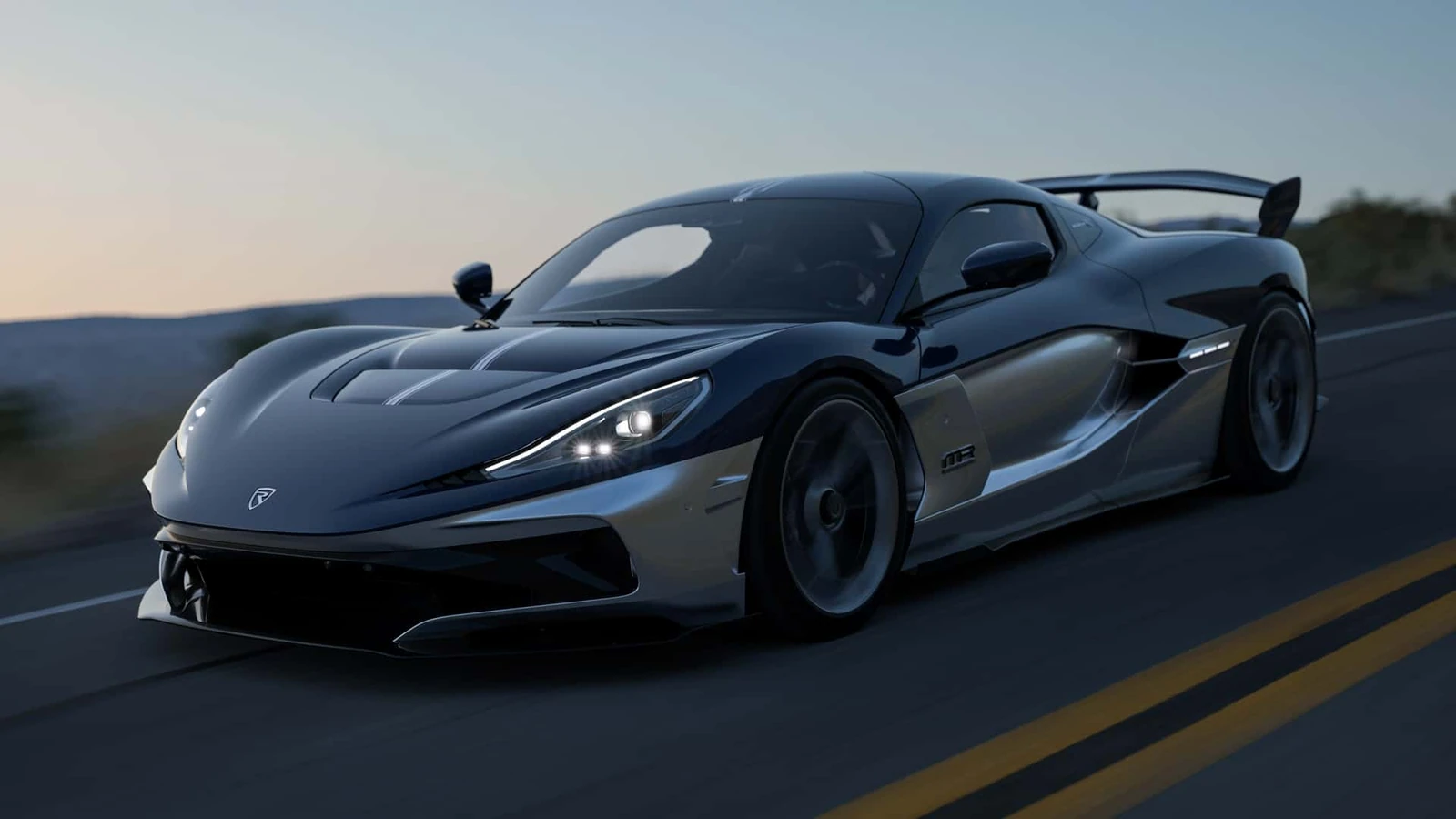
Rimac is closing the book on the Nevera. The Croatian manufacturer will build the final 10 Nevera Rs, with all of them due to be delivered to customers by the end of this year, after which production stops.

Mate Rimac said in an Instagram video that Rimac Automobili has built 71 Nevera hypercars since deliveries began in 2022: 51 standard Neveras and 20 Nevera Rs. When the car was revealed in 2018 as the C Two concept, the plan was for 150 examples.

Why the Nevera stopped short of its original target

Rimac has not publicly explained why output fell to 71 cars rather than the 150 originally planned, and Motor1 has asked the company for more information. What the CEO has said is that the volume was enough for what the car was meant to achieve. In the video, Mate Rimac called it the most sold electric hypercar in the world and said that without it there would be no Tourbillon and no factory.

That framing points to the Nevera as a calling card rather than a volume product. For a small Croatian maker, a hypercar that establishes engineering credibility and underwrites the wider business can justify itself at 71 units, even against a 150-car plan.

The numbers that made its reputation

The Nevera's four electric motors produced 1,914 horsepower, with a claimed 0-60 mph time of 1.85 seconds, a 258 mph top speed and a quarter-mile time of 9.1 seconds. The Nevera R pushed output to 2,107 hp, cutting 0-60 mph to 1.74 seconds, reaching 124 mph in 4.38 seconds and 186 mph in 8.66 seconds, and completing the quarter-mile in 8.23 seconds. The production Nevera debuted in 2021.

Those figures are the manufacturer's own claims, and they explain why the car mattered out of all proportion to its sales count. They also set the benchmark the Nevera R was built to beat.

What Rimac has become since

The company now stretches well past hypercars. Rimac Technology develops and supplies advanced EV components, and Rimac Group holds a major stake in Bugatti Rimac, the 2021 joint venture. That partnership produced the Bugatti Tourbillon, a hybrid hypercar combining three electric motors with a naturally aspirated 8.3-litre V16 for 1,800 hp.

Rimac also has Verne, an autonomous robotaxi in the mould of the Tesla Cybercab, plus a ride-hailing service. Verne was unveiled in 2024 and began operations earlier this year.

The Nevera's end is therefore less a retreat than a handover: the hypercar that proved what Rimac could do has been retired while the supply, joint-venture and robotaxi businesses carry the name forward. For buyers, the practical consequence is simple. The Nevera is now a closed chapter, and the last 10 Nevera Rs are the final new examples anyone will be able to order.

Open this article ↗

Keep scrolling to read the next story.

Older articles →