INDEPENDENT AUTOMOTIVE NEWSGLOBAL PERSPECTIVE / AUSTRALIAN EDITION
TDCNTHE DAILY
CAR NEWS.

The road ahead.
Every day.

RSS ↗
Latest/New cars

343 original articles

New cars / TDCN ORIGINAL

Rob Dahm's 13-rotor Miata runs under its own power at SEMA

The YouTuber's latest build pairs a display-only 12-rotor engine with a single-rotor unit that actually drives the car, and it is on show at Haltech's booth in Las Vegas.

Image: Motor1

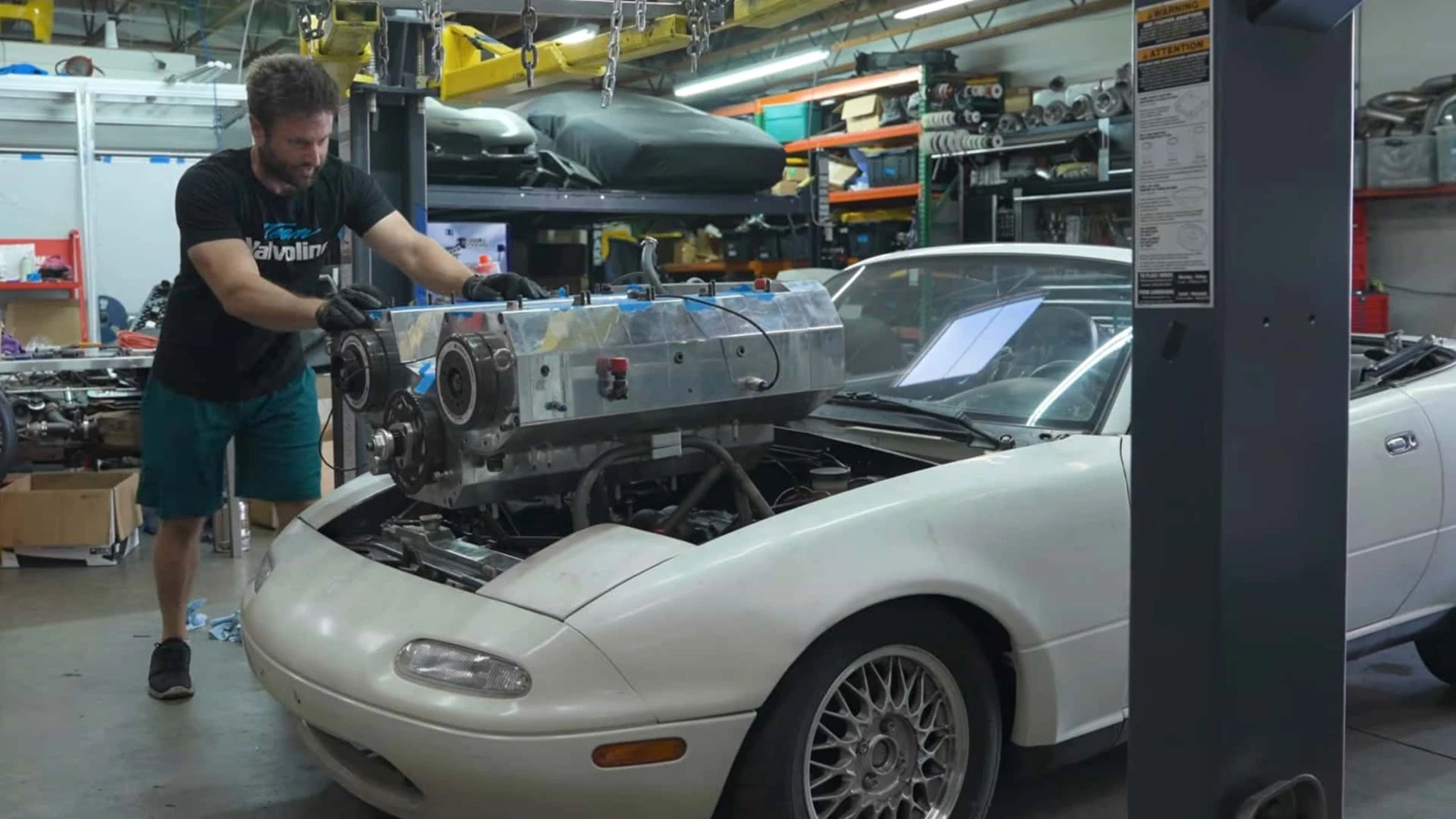
Rob Dahm has fitted 13 rotors to a first-generation Mazda MX-5, and the car drives. The build is on display at Haltech's booth in the Central Hall for the full run of the 2026 SEMA Show in Las Vegas, which takes place November 3 to 6.

Dahm, known for squeezing ever more outlandish engines into early MX-5 chassis, was asked by Haltech, the engine management company sponsoring the build, to bring something to its SEMA stand. He decided one rotor, or even twelve, was not enough.

Only one of the two rotary engines drives the car

The headline number is misleading on purpose. The huge 12-rotor engine mounted where a normal motor would sit does not power the car at all. Propulsion comes from a separate single-rotor engine fitted with a Garrett GBC22 turbocharger, while the 12-rotor sits on top purely for show.

Dahm's team left the wiring, fuel lines and accessories in place on the 12-rotor so it looks fully functional, but it is not connected to the drivetrain. The aim was to make onlookers wonder how any of it works rather than spot an obviously missing part. The 12-rotor engine carries a claimed output of 4,500 horsepower.

That matters because the 13-rotor count describes the whole exhibit, not the drivetrain. Anyone quoting 4,500 hp as the Miata's power is quoting the display engine, not the single-rotor unit turning the wheels.

Custom mounts and three turbochargers in a tiny bay

Fitting both engines into a Miata engine bay meant building mounts from scratch, triangulated into the chassis to resist side-to-side wobble and a teeter-totter motion caused by the weight distribution.

Turbochargers, intake manifolds and fuel rails had to be refitted in a set order, partly because some parts helped brace others against the chassis. Three turbochargers went onto the combined setup, adding roughly 70 pounds each on top of an already overloaded front end.

The team reused components from earlier Dahm projects, including labelled wiring harnesses from past builds, because rebuilding everything from zero in the time available was not realistic.

Getting it running, and getting it loaded

Before the car could run, it had to roll, and the team treated that milestone as a test in itself. Loading it into a trailer brought its own crisis, with the team weighing ground clearance against a steep ramp while the rear end slid sideways under the shifted weight. Careful measurements and a willingness to risk scraping the undercarriage got it aboard.

Dahm's team confirmed the engine fires up and the car moves under its own power, even though the 12-rotor on top never needs to.

The build follows a run of engine swaps at this year's SEMA, including two Porsche 911s fitted with V8s. For Dahm, the 13-rotor Miata is less a lap-time proposition than a booth attraction built to stop traffic, and on that measure the two-engine layout does its job.
Open this article ↗
Australia / TDCN ORIGINAL

Australian new-car sales rise 6.8 per cent as diesel edges out EVs in October

VFACTS data shows the Toyota HiLux topping the monthly charts and BYD holding second place among brands, with diesel and electric market share separated by less than a point.

Australian new-vehicle sales totalled 107,493 units in October 2026, up 6.8 per cent on the same month last year, with diesel-powered vehicles returning to the top of the powertrain rankings after two months of electric leadership.

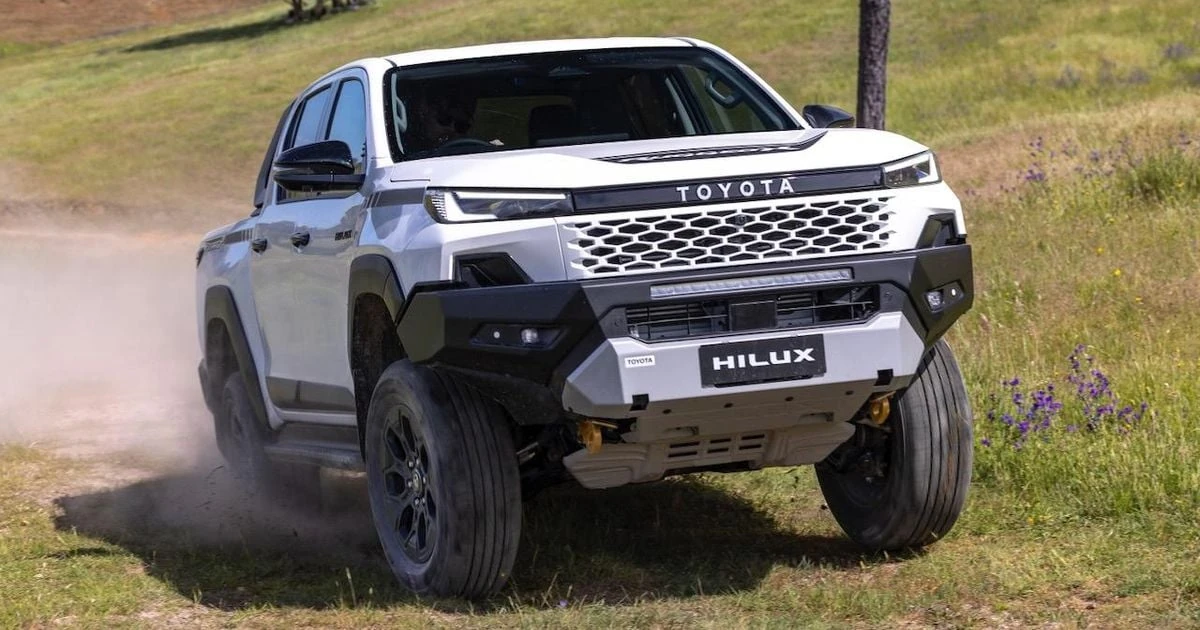
The Toyota HiLux was the best-selling model for the month, its first time on top this year, ahead of the Ford Ranger, which had won September and three other months in 2026.

Diesel and EV share nearly level

Diesels accounted for 23.9 per cent of October sales and EVs 23.1 per cent, a gap of less than one percentage point, even though diesel sales fell 14.7 per cent year-on-year.

Across the first 10 months of 2026 the order is different: petrol leads with 27.5 per cent of the market, diesels are second at 24.3 per cent and EVs third at 19.3 per cent.

So EV sales are still growing in Australia, but not fast enough in October to stay ahead of diesels: the segment slipped from first to second place month-on-month, and its year-to-date share of 19.3 per cent sits well behind petrol and diesel. The sources do not give a year-on-year percentage change for EV sales in October, so the exact pace of that growth has not been disclosed.

HiLux takes the month, Ranger still leads the year

The HiLux, until recently the only ute on sale with both diesel and electric powertrains, moved ahead of the Ranger for the month. The Ford remains narrowly in front year-to-date, with 42,699 deliveries and a lead of just 129 units.

Ranger sales rose year-on-year in October but not by enough to hold first place.

BYD cements second place among brands

Toyota was the top brand again, with sales up 4.7 per cent year-on-year. BYD posted only its second month above 10,000 sales in Australia and has ranked second every month since April, with Ford, Kia and Mazda competing for third.

Ford took third in October, Kia was fourth and comfortably ahead of Hyundai both for the month and year-to-date (66,601 against 60,580), and Mazda was fifth. MG finished ahead of every other Chinese brand except BYD.

Mazda's new CX-6e electric SUV has only recently begun deliveries and is positioned against the Tesla Model Y, Australia's best-selling EV. That rivalry is the one to watch in the electric segment: a mainstream brand entering the country's strongest EV nameplate's territory is a more direct test of demand than the monthly diesel-versus-EV split.

A record year within reach

Year-to-date sales stand at 1,065,191 units, up 2.5 per cent on the first 10 months of 2025, a record year for the Australian market. With two months left, 2026 could set a new high.

The October figures combine VFACTS data seen by CarExpert with data supplied by the Electric Vehicle Council. Diesel's return to the top is a reminder that powertrain leadership in Australia can swing month to month on the strength of a single high-volume model, and that overall market growth is currently being driven by demand across all fuel types rather than by electrification alone.

Open this article ↗

Keep scrolling to read the next story.

Older articles →