INDEPENDENT AUTOMOTIVE NEWSGLOBAL PERSPECTIVE / AUSTRALIAN EDITION
TDCNTHE DAILY
CAR NEWS.

The road ahead.
Every day.

RSS ↗
Latest/New cars

269 original articles

New cars / TDCN ORIGINAL

Ford updates the China-only Edge L with a new face and a 27-inch screen

The three-row SUV from the Changan Ford joint venture gets revised styling and a faster Snapdragon chip, but it stays off North American forecourts.

Image: Carscoops

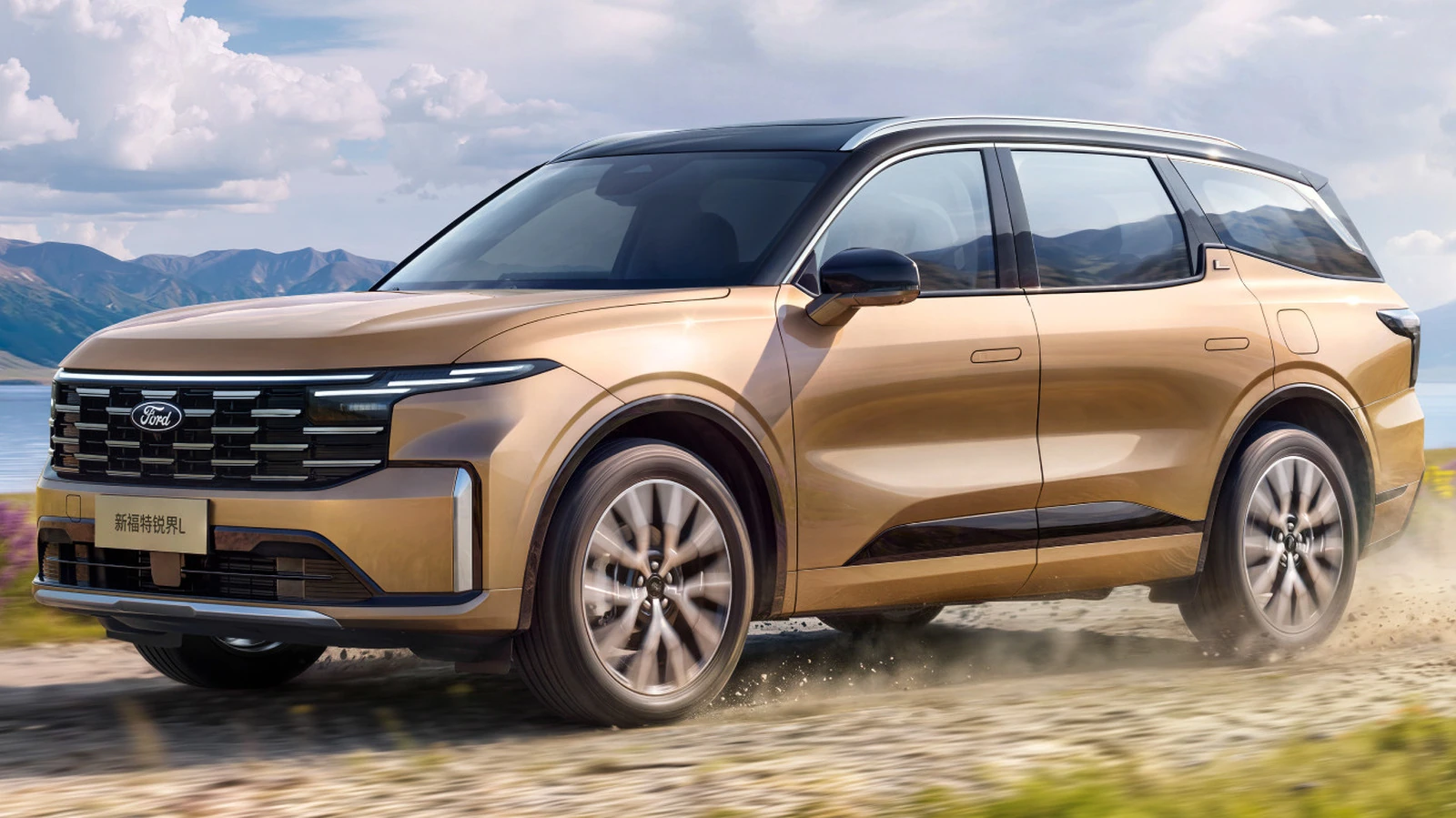
Ford has given the Edge L a mid-lifecycle facelift in China, where the three-row SUV is built and sold by the Changan Ford joint venture. The update, first introduced as a model in 2023, brings revised front and rear styling, new wheel designs and an upgraded infotainment chip.

The Edge L is not the Edge that North America lost. Ford discontinued the US-market Edge after 2024, but the Chinese version is a considerably larger vehicle on a front-wheel-drive platform, and it remains on sale in China and in select export markets such as Mexico.

What the facelift changes on the outside

The visual work concentrates on the ends of the car. The squared-off grille looks slightly wider because the revised LED headlights are better integrated into the chrome mesh, and the bumper has been reshaped with cleaner surfaces and vertical slits. New alloy wheels are offered in 19, 20 and 21-inch diameters.

At the rear, the dark-tinted LED taillights are smaller than before, paired with a new tailgate and a tweaked rear bumper. The side profile carries over unchanged from the pre-facelift Edge L.

Size is the point of difference. The Edge L measures 5,011 mm long with a 2,950 mm wheelbase, which makes it 39 mm shorter than the US-spec Explorer but with 75 mm less distance between the axles. The more fundamental split is underneath: the Edge L uses a front-wheel-drive platform, while the Explorer is built on a rear-wheel-drive longitudinal layout.
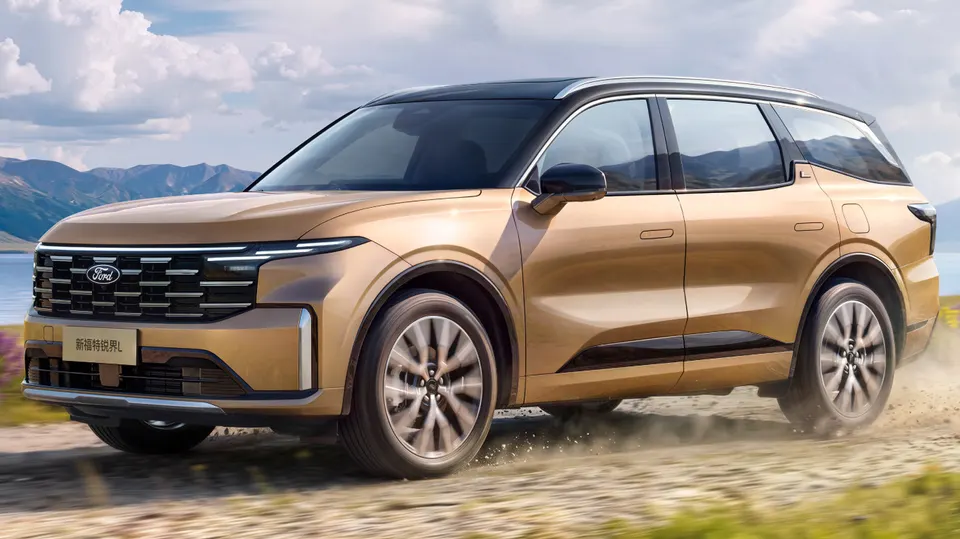
The facelifted Ford Edge L shows off its redesigned front end and lighting signature
The facelifted Ford Edge L shows off its redesigned front end and lighting signature, Image: Carscoops

Cabin tech and trim levels

Inside, the three-row seven-seat layout, 27-inch 4K touchscreen and 12.3-inch digital instrument cluster carry over. The infotainment now runs on a Qualcomm Snapdragon 8155 chip with Chinese-specific Ford SYNC Max software that includes AI integration.

The entry-level Fashion trim comes with the digital cockpit, a panoramic sunroof, tri-zone climate control, synthetic leather upholstery, active noise cancellation and Ford's Co-Pilot360 Level 2 driver assistance. The Supreme trim adds a head-up display, a B&O audio system, a 540-degree surround-view camera, and heated and ventilated second-row captain's chairs with power leg rests and a reclining function.

Powertrains and pricing in China

The engine range is unchanged. A turbocharged 2.0-litre EcoBoost four-cylinder produces 249 hp (185 kW) and drives through an eight-speed automatic. A hybrid 2.0-litre version makes a combined 275 hp (205 kW) and uses an eCVT, with a claimed single-tank range of up to 1,188 km (738 miles). Both are available with front-wheel drive or all-wheel drive.

Prices in China run from ¥229,800 to ¥299,800, which Carscoops converts to roughly $34,500 to $45,000. The similarly sized Explorer starts at $40,475 in the US.

Ford has not announced the Edge L for North America, so buyers there have no reason to expect it. The model's role is to hold ground in China's three-row SUV segment, where a long-wheelbase, screen-heavy cabin and a plug-free hybrid option are the selling points. For Australian buyers, the Edge L has likewise not been confirmed, and the sources give no Australian pricing or timing.
Open this article ↗
Electric / TDCN ORIGINAL

Used EVs sell faster than petrol and hybrid cars, iSeeCars study finds

The analysis of 1.5 million one-to-five-year-old vehicles puts average used EV prices at $32,533, between hybrids and petrol models.

Used electric vehicles are leaving dealer forecourts faster than petrol or hybrid cars, according to a study by the used-car analytics firm iSeeCars. The report, covering more than 1.5 million vehicles aged between one and five years old, found used EVs averaged 41.9 days on the market in September 2026, around 13 days fewer than petrol cars.

The finding comes despite used EV prices climbing sharply over the same period. Used EVs averaged $32,533 in September 2026, up 9.8 percent year on year, while hybrid prices rose 4.9 percent and petrol vehicle prices moved less than half a percent.

How the three powertrains compare on price and speed

Hybrids were the most expensive of the three categories on average at $34,476, with petrol cars the cheapest at $31,954. Hybrids also sat in the middle on selling time at about 48.6 days.

The direction of travel differs sharply by powertrain. Compared with September 2025, used EVs sold 10.1 percent faster, while petrol cars took 19.9 percent longer to move. That gap is the more telling number: buyers are not simply paying more for electric cars, they are choosing them over the alternative at a faster rate even as the price advantage disappears.

iSeeCars traces the price run to April 2026, when used EV values began rising steadily, peaking in August. The firm links the shift to soaring petrol prices in the United States.

The fastest-selling models overall are still petrol

Petrol cars hold the top two places on the overall fastest-selling list. The Lexus IS500, which ended production in 2025, leads, followed by the Audi A4 Allroad.

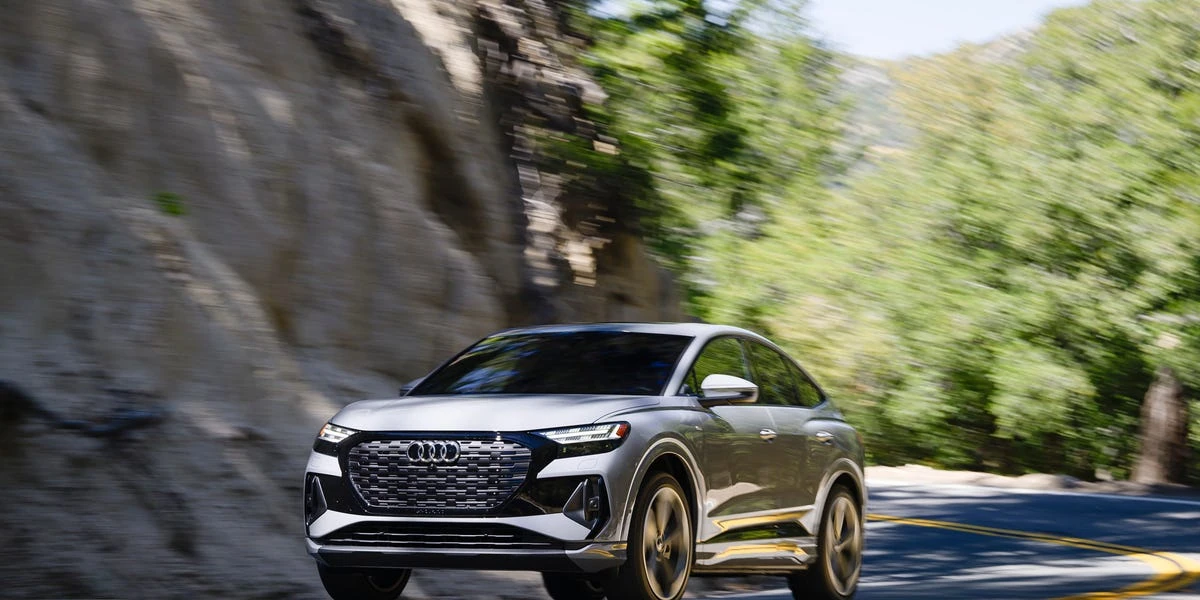
The first EV on that list is the Audi Q4 e-tron Sportback in third, at an average of 29.8 days on the market. Among EVs specifically, the fastest sellers were the Audi Q4 Sportback e-tron, the Toyota bZ4X and the Lexus RZ 300e.

Tesla did not place on the top-ten fastest-selling list, but its models posted some of the largest price gains of the year. The Model S averaged $10,636 more than in September 2025, the Model X rose by $9,336 and the Model 3 by about $3,870.

Luxury models more broadly outsold mainstream ones among used-car shoppers not looking at electric vehicles.

What the figures do and do not show

The study is a snapshot of dealer stock and selling times rather than a measure of total EV demand, and iSeeCars' figures are its own analysis rather than an official industry statistic. The data also covers the US market only, so it says nothing directly about used EV trends in Australia or elsewhere.

For buyers, the practical read is that the used EV market is tightening: cars are moving quickly and prices are climbing, so the bargains that characterised the segment in earlier years are thinning out. Shoppers weighing a used electric car against a petrol equivalent now face a smaller price gap than a year ago, but a much smaller choice of stock sitting still on forecourts.

Open this article ↗

Keep scrolling to read the next story.

Older articles →