INDEPENDENT AUTOMOTIVE NEWSGLOBAL PERSPECTIVE / AUSTRALIAN EDITION
TDCNTHE DAILY
CAR NEWS.

The road ahead.
Every day.

RSS ↗
Latest/Industry

272 original articles

Industry / TDCN ORIGINAL

Polaris reveals 400 hp RZR Pro R Factory Boost desert racer at $200,000

The carbon-bodied, race-ready side-by-side makes more power than a US-spec Audi RS3 and debuts at the 2027 King of the Hammers.

Image: Carscoops

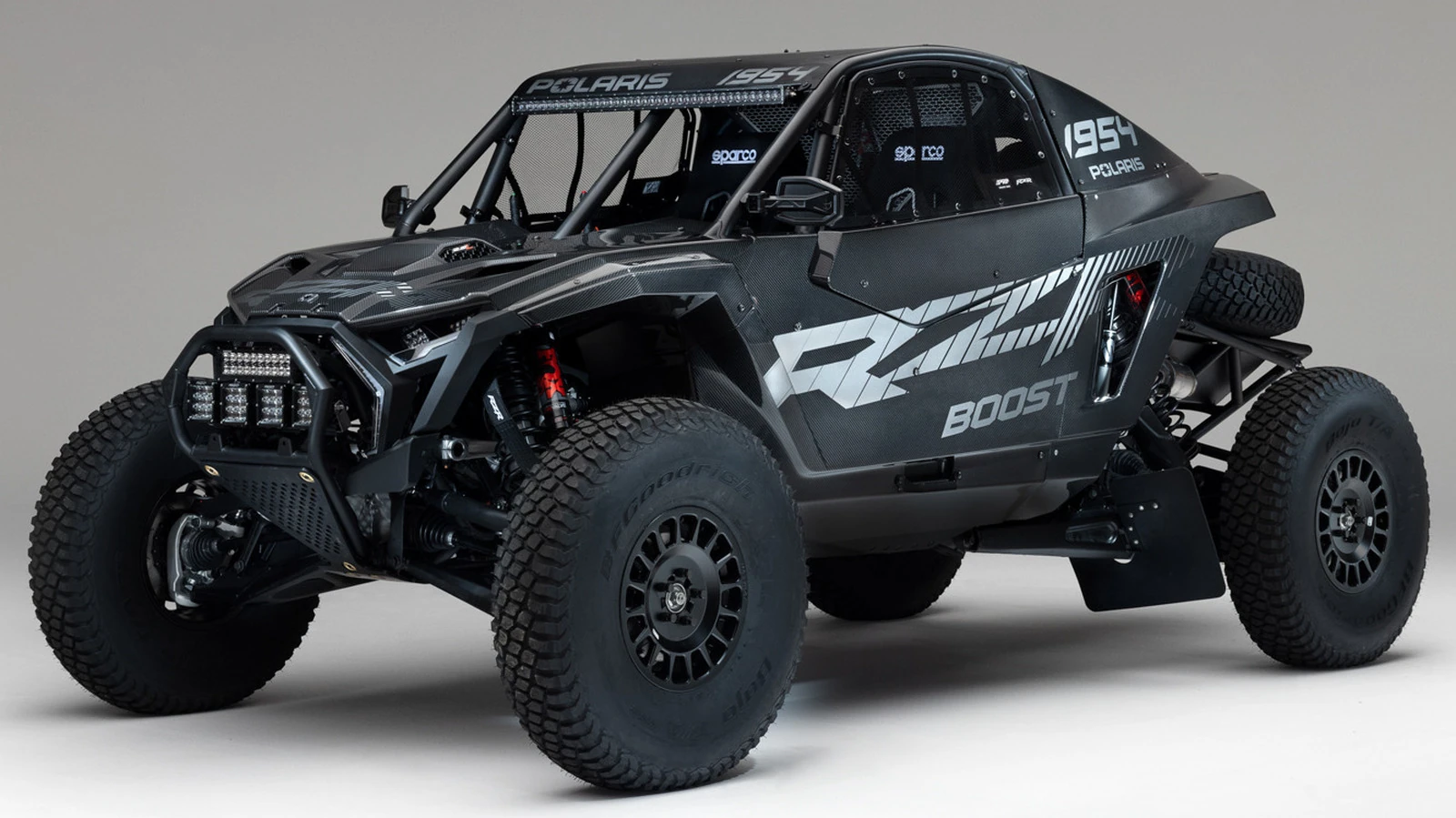
Polaris has unveiled the RZR Pro R Factory Boost, a desert and sand racing side-by-side producing 400 hp from a new turbocharged 2.0-litre four-cylinder called the ProStar Fury. It will make its competitive debut at the 2027 King of the Hammers, which runs from January 21 to February 6, 2027.

The new machine sits above the Pro R Boost that Polaris revealed a couple of months earlier, a 275 hp side-by-side using a turbocharged 2.0-litre inline-four. The Factory Boost's output exceeds the 394 hp of a US-spec Audi RS3, and its $200,000 starting price is almost three times that car's starting figure.

What the ProStar Fury engine and chassis bring

Polaris has not published a torque figure for the ProStar Fury engine. A full MoTeC package and ECU with different power distribution settings manage the engine's output.

The Factory Boost is built for speed across open terrain: lightweight carbon fibre bodywork, a design intended to cut through the air at more than 100 mph, and a wheelbase 6.5 inches longer than the standard car for stability and body control. It rides on BF Goodrich tyres, with custom three-inch internal bypass Dynamix DV Live Valve shocks and a Fox steering damper to handle bumps and larger impacts.

The racing hardware extends to a competition-ready cage and a cabin two inches wider than the consumer RZR Pro R. A 34-gallon fuel tank gives a driving range of more than 200 miles. Polaris has not stated which cycle that range figure is measured on.
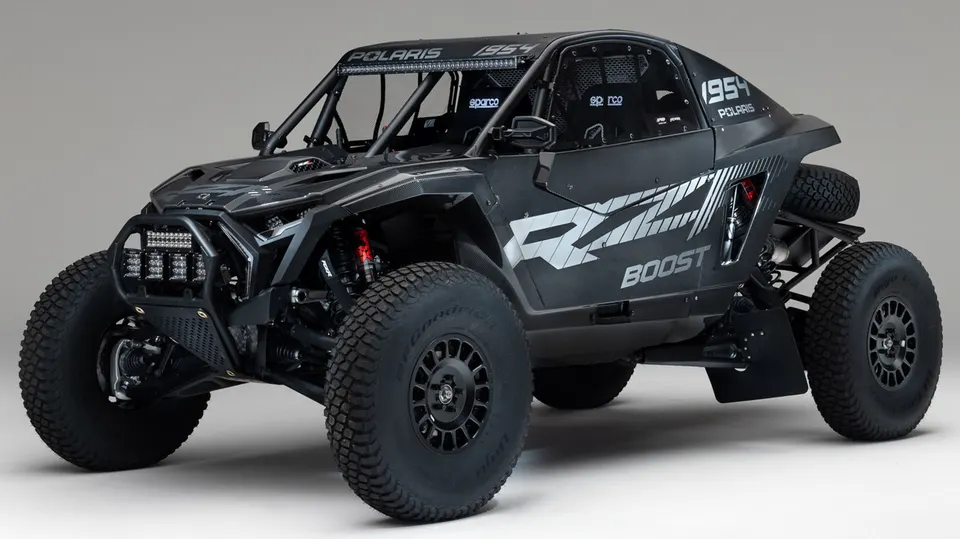
The Pro R Factory Boost in its black livery, wearing the ProStar Fury engine and race chassis that define the $200,000 desert racer
The Pro R Factory Boost in its black livery, wearing the ProStar Fury engine and race chassis that define the $200,000 desert racer, Image: Carscoops

Built by the factory race team, sold to anyone with the money

Each example will be built by the Polaris RZR Factory Racing team. Buyers do not need to run a racing team or be a competitive racer, but the outlay is steep: prices start at $200,000.

That price positions the Factory Boost as a specialist purchase rather than a mainstream RZR. It is not road legal, so the money buys a dedicated off-road competition machine rather than transport. For buyers already racing desert events, the factory-built preparation and the longer wheelbase address the two things that matter most in that discipline: stability at speed and the ability to absorb rough ground without losing control.

What is still unannounced

Polaris has not released torque output for the ProStar Fury, nor detailed the range test procedure behind the 200-mile-plus claim. Beyond the King of the Hammers debut window, no further competition plans have been announced.
Open this article ↗
New cars / TDCN ORIGINAL

Koenigsegg recalls seven US CC850 hypercars over parking brake software fault

The fix is a free over-the-air software update, issued after a car reportedly rolled away with reverse engaged and the engine running.

Image: Carscoops

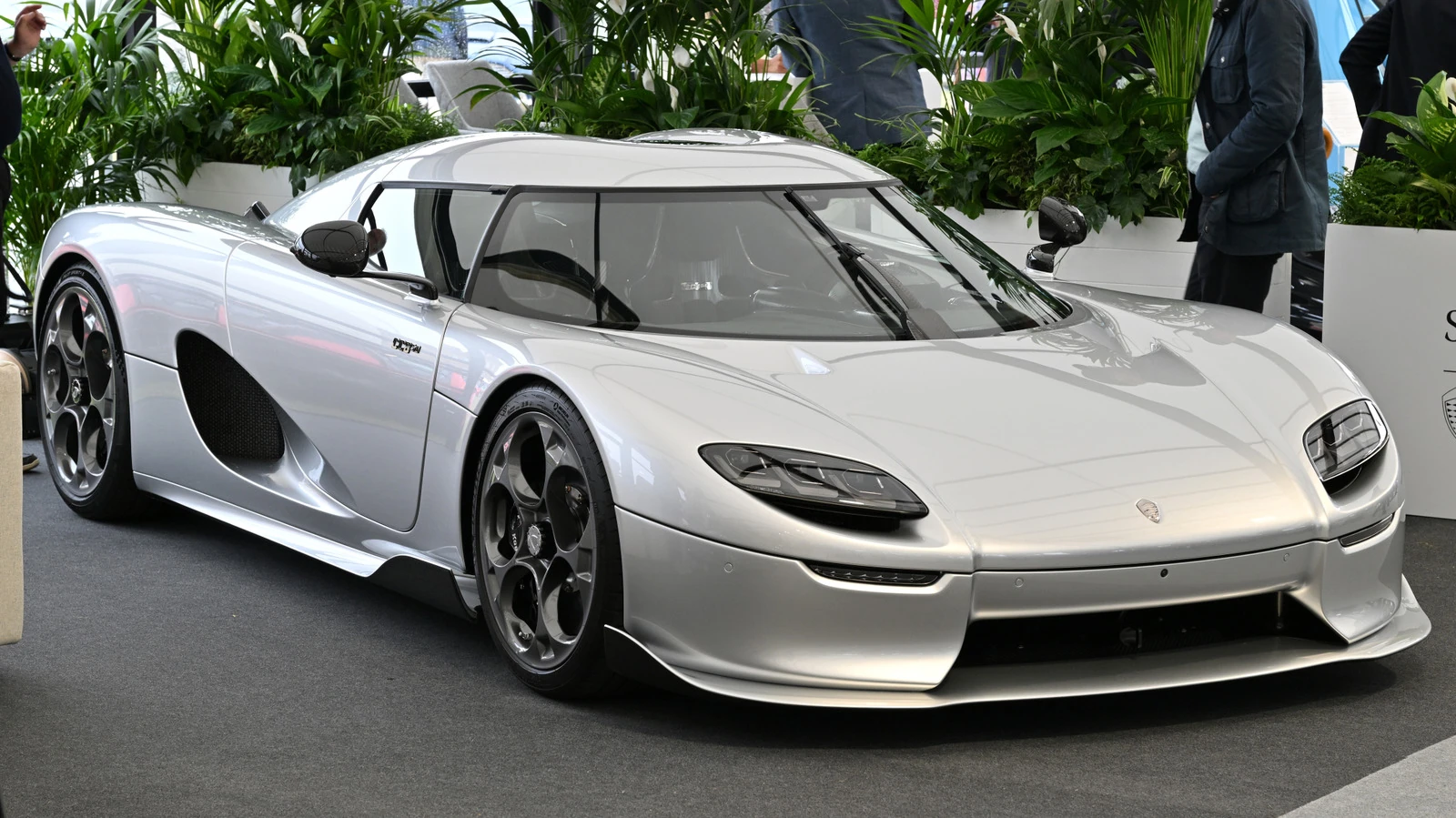
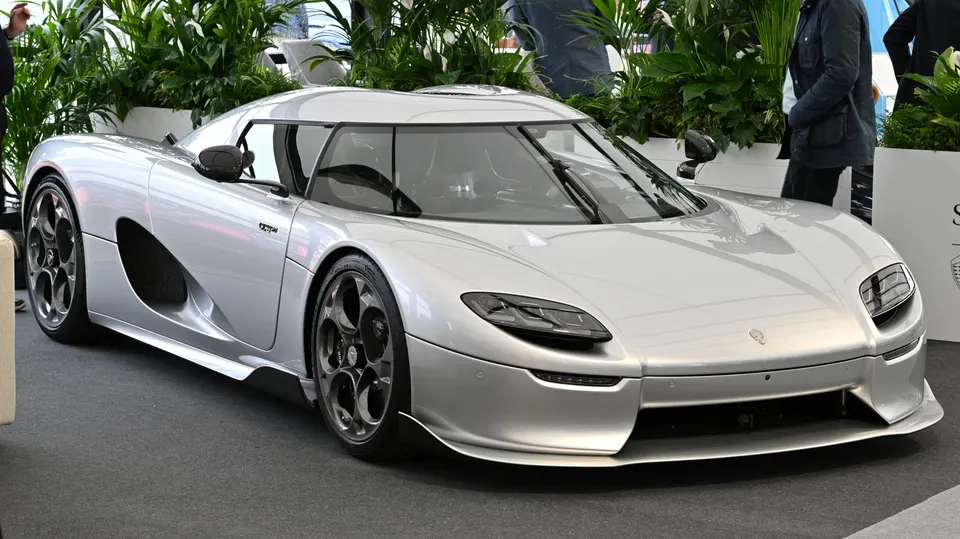
Koenigsegg is recalling all seven CC850 hypercars delivered in the United States to correct a software fault that can stop the electronic parking brake engaging, the US National Highway Traffic Safety Administration says. The recall covers cars built between September 28, 2025 and August 2, 2026.

The fault came to light after Koenigsegg received a report of a CC850 rolling away in the US on October 12, according to the recall notice. The driver had left the vehicle with the engine running and reverse gear engaged, and the car began to move.

What Koenigsegg found in testing

A week of internal testing traced the problem to a specific set of conditions: the parking brake will not engage while the transmission is in Reverse and the engine is running. In that state, the only way to apply the brake is to hold the button down continuously.

The notice does not say whether the roll-away caused any damage. NHTSA notes the condition falls outside the scope of its static parking brake tests, which suggests Koenigsegg issued the recall on its own initiative rather than because the CC850 breaches a Federal Motor Vehicle Safety Standard. That distinction matters for owners: this is a defect Koenigsegg chose to address, not a regulatory failure forced on it.

The remedy and how owners get it

All seven affected cars will receive a free over-the-air software update to resolve the issue. Owners who would rather not take the OTA update can bring their vehicle to an authorised Koenigsegg dealership and have the work carried out on site at no cost.

The sources do not state when owners will be notified or how long the update itself takes to install, so neither has been announced. What is clear is that no hardware change is involved: the entire fix is delivered in software.

The recall notice covers the seven cars delivered in the United States. Whether CC850s outside the US are affected has not been announced.

A very small fleet with a very unusual gearbox

Seven cars is a tiny recall by any measure, but the CC850 is a tiny-volume machine, so the campaign touches a meaningful share of the examples in customer hands in America. The car is priced at $3.6 million.

The CC850 is set apart from other Koenigsegg models by its nine-speed Lightspeed transmission, a part-manual, part-automatic unit with three shafts and seven clutches. It can be driven through a traditional clutch pedal and gated manual shift, or left to behave like a conventional automatic.

Ferrari has since introduced a manual transmission for the 12Cilindri built on a similar philosophy, though that version works as an add-on to an existing dual-clutch transmission. The comparison is useful context for buyers: Koenigsegg's layout is the more radical interpretation of a manual-automatic hybrid, and it is the sort of low-volume engineering that makes a software-driven parking brake fault worth fixing quickly rather than quietly.

The CC850 on display, one of just seven US-bound cars caught up in the parking brake software recall
The CC850 on display, one of just seven US-bound cars caught up in the parking brake software recall, Image: Carscoops
Open this article ↗

Keep scrolling to read the next story.

Older articles →