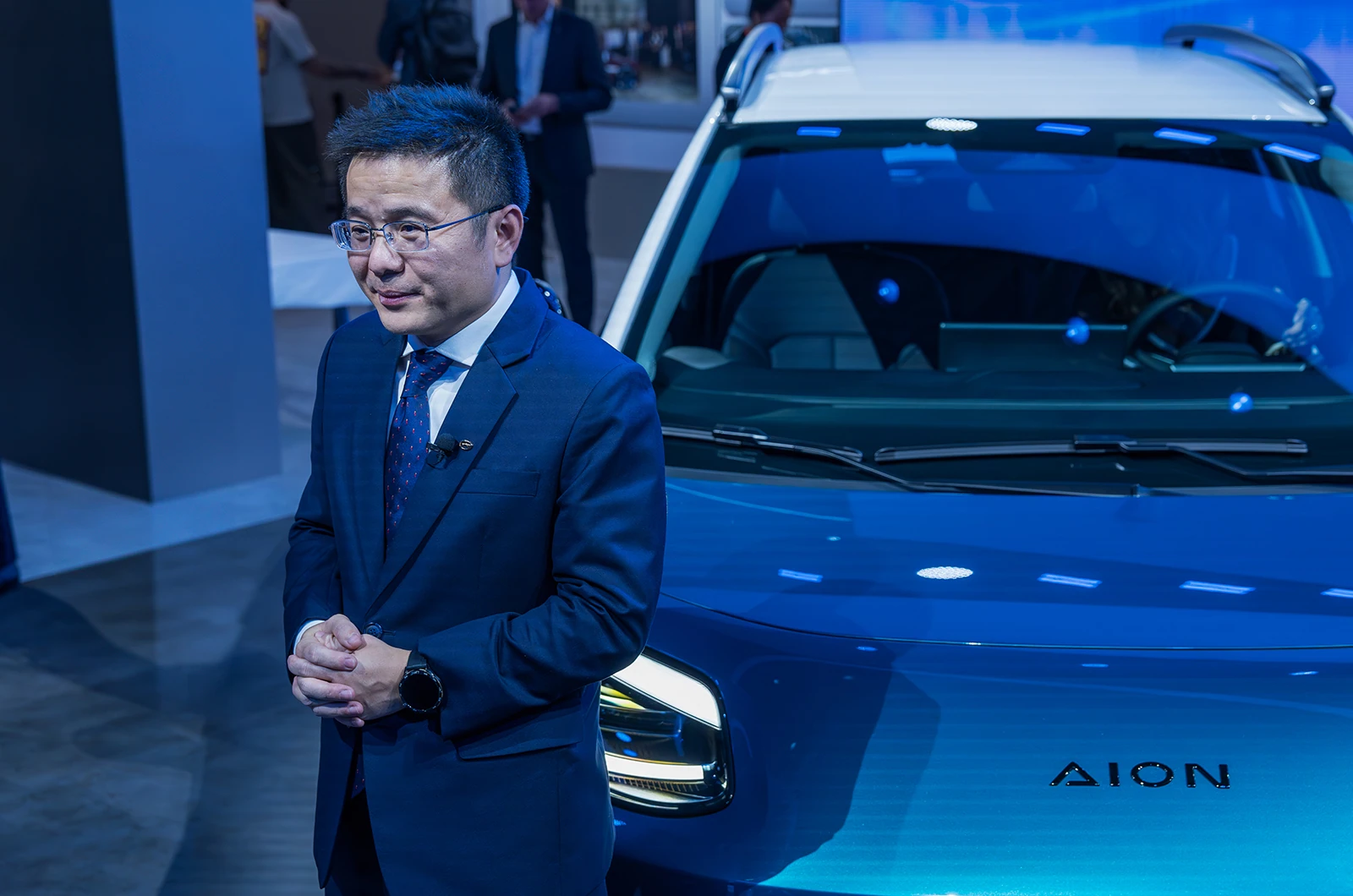
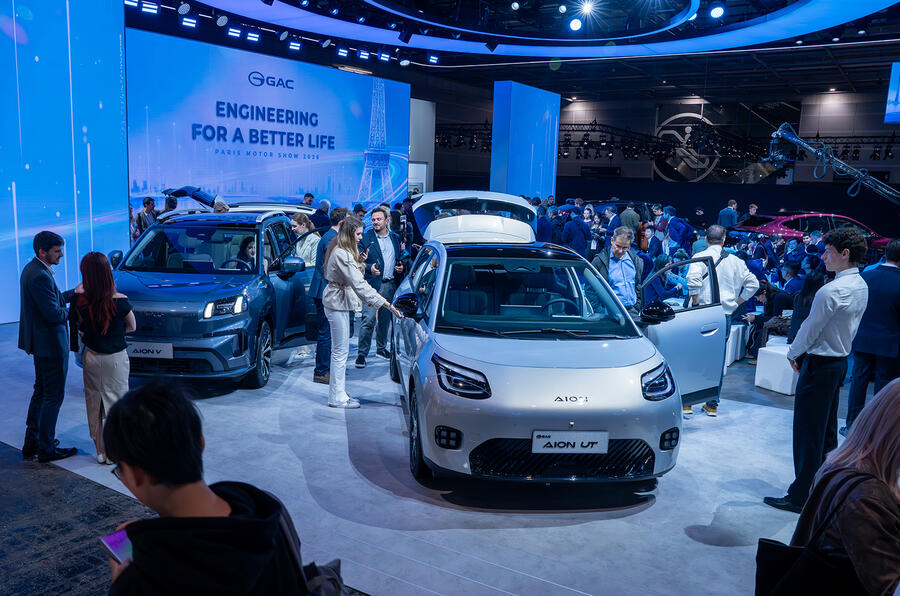
GAC has launched the AION UT Cross in Europe, a compact electric crossover it says was designed by its Milan studio and engineered around European roads and driving tastes. The announcement came at the 2026 Paris Motor Show, where GAC Europe Regional Center president Ma Haiyang set out the brand's plan to sell 210,000 vehicles a year in Europe by 2030.
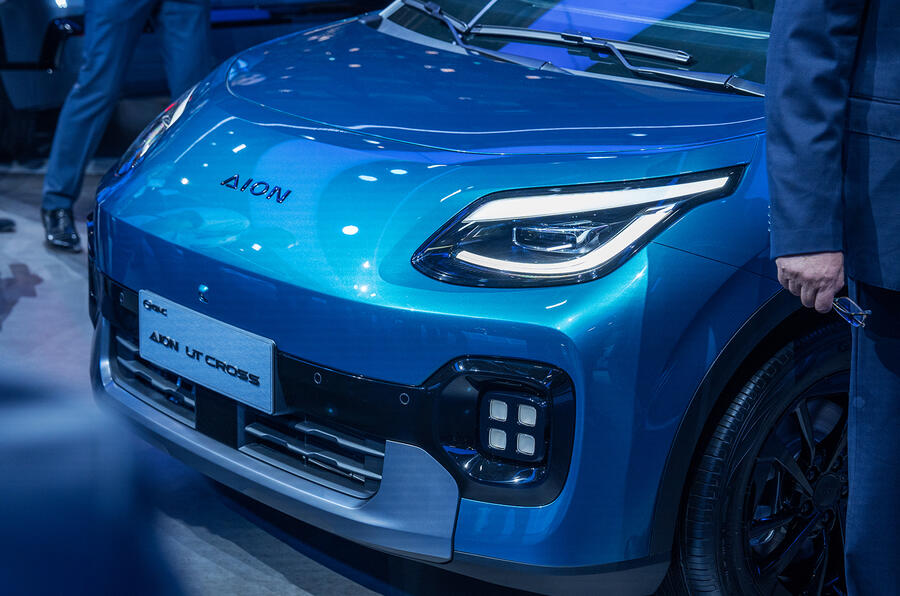
The UT Cross is the centrepiece of GAC's argument that it is not simply exporting Chinese-market cars to the continent. Ma said the Milan Advanced Design Center led both the AION UT Cross and the AION UT, including the two-tone floating roof and light clusters, and that the process followed European design logic from the first sketch rather than adapting an existing Chinese design.
A small car with a long wheelbase and a 440-litre boot
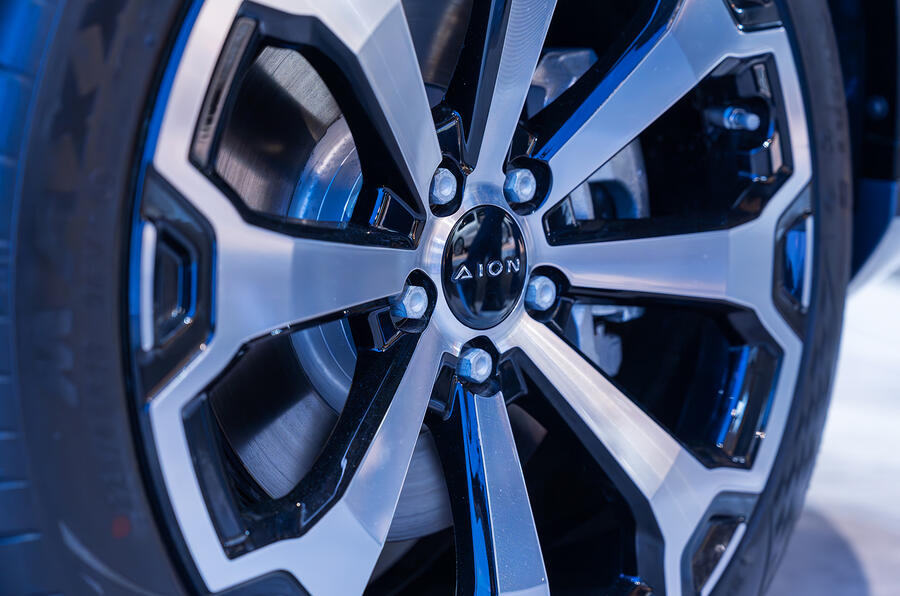
According to Ma, the UT Cross pairs a class-leading 2,750 mm wheelbase with a body kept compact for narrow European streets and tight parking. The boot measures 440 litres, there are 24 storage spaces and roof rails are fitted, while the chassis is tuned for European roads with enough ground clearance for outdoor use.
GAC's pitch is that the car covers two very different uses at once: city commuting and weekend trips with tents, bikes and skateboards. That is a sensible target in Europe, where one car often has to do everything for a household, but the claim rests on GAC's own description of the car rather than independent testing.
Range, battery and charging figures not yet announced
GAC has not published range, battery capacity, charging speed or European pricing for the AION UT Cross in the material released at the show. The car is confirmed as part of a European line-up that spans hybrid, plug-in hybrid and electric powertrains, but the UT Cross's own electric specifications have yet to be confirmed.
That leaves the most practical questions for buyers, how far it goes, how quickly it charges and what it costs, still open. GAC's stated European strategy is built on a full HEV, PHEV and EV range, with the GS7 PHEV also planned for the region, so the UT Cross will sit alongside combustion-assisted models rather than replacing them.
A service network built around parts and warranties
GAC used the Paris show to launch GAC CARE+, its global service brand, with Europe as the lead market. Ma said the Rotterdam Parts Distribution Center supports a parts order fulfilment rate above 95% with average shipping within 36 hours, and that the local European technical service team responds to repair needs within 48 hours.
The package includes three years of free pan-European roadside assistance through Allianz Partners, an 8-year/160,000 km vehicle warranty, an 8-year/200,000 km power battery warranty, a 10-year unlimited-mileage anti-corrosion warranty and a 3-year unlimited-mileage paint warranty. GAC also says dealer technicians are certified by the brand, and that it will open local-language call centres first in self-operated markets such as France.
Those terms matter more than usual for a less familiar brand. Long battery and anti-corrosion cover addresses the two worries that most often keep buyers away from new Chinese electric models, resale confidence and long-term durability, though the value depends on dealers honouring the terms across 30 countries.
R&D centre planned for 2027
GAC says a European R&D centre will open in 2027 with more than a hundred engineers, covering local customer research, product definition, legal compliance, powertrain and electric-drive calibration, chassis tuning, intelligent driving and on-site road testing. Ma said the aim is to test chassis repeatedly on European roads rather than tuning elsewhere and shipping the result in.
The company has been in Europe for eight years and has reached 30 countries, with more than 180 sales and service outlets planned this year across the UK, Germany, France, Italy and Spain. It also works with several European tier-1 suppliers.
The 210,000 annual sales target by 2030 is ambitious for a brand still building recognition, and it depends on the product, manufacturing and channel steps Ma described all landing together. The UT Cross is the first real test of whether European buyers accept a car defined locally but built by a Chinese manufacturer.