INDEPENDENT AUTOMOTIVE NEWSGLOBAL PERSPECTIVE / AUSTRALIAN EDITION
TDCNTHE DAILY
CAR NEWS.

The road ahead.
Every day.

RSS ↗
Latest/New cars

340 original articles

New cars / TDCN ORIGINAL

Uber plans 2,000 robotaxis across 20 cities by end of 2027

The ride-hailing giant says it will spend $10 billion on driverless cars, with roughly half the fleet earmarked for the United States.

Uber intends to have 2,000 robotaxis operating in its global fleet by the end of 2027, with about 700 of those online by the end of this year, the company said on its quarterly earnings call. The company put a $10 billion figure on the driverless-car push and said the fleet would be spread across roughly 20 cities worldwide.

About half of the 2,000 vehicles are destined for the United States, with the remainder divided between Europe, Asia and the Middle East, according to executive comments on the call. Uber chief executive Dara Khosrowshahi framed the shift as a commercial one: "Our focus on autonomous is now on commercial execution," he said, describing the next phase as delivering results that show Uber's advantage as a platform for commercialising autonomous vehicles at scale.

The cities and partners Uber has named

Uber has not published a full list of the 20 cities in the plan, and the sources do not name individual vehicle partners for the 2,000-car fleet. What is clear is that the robotaxis will come through Uber's web of autonomous-vehicle partnerships rather than a single supplier, with the company positioning itself as a platform for driverless rides.

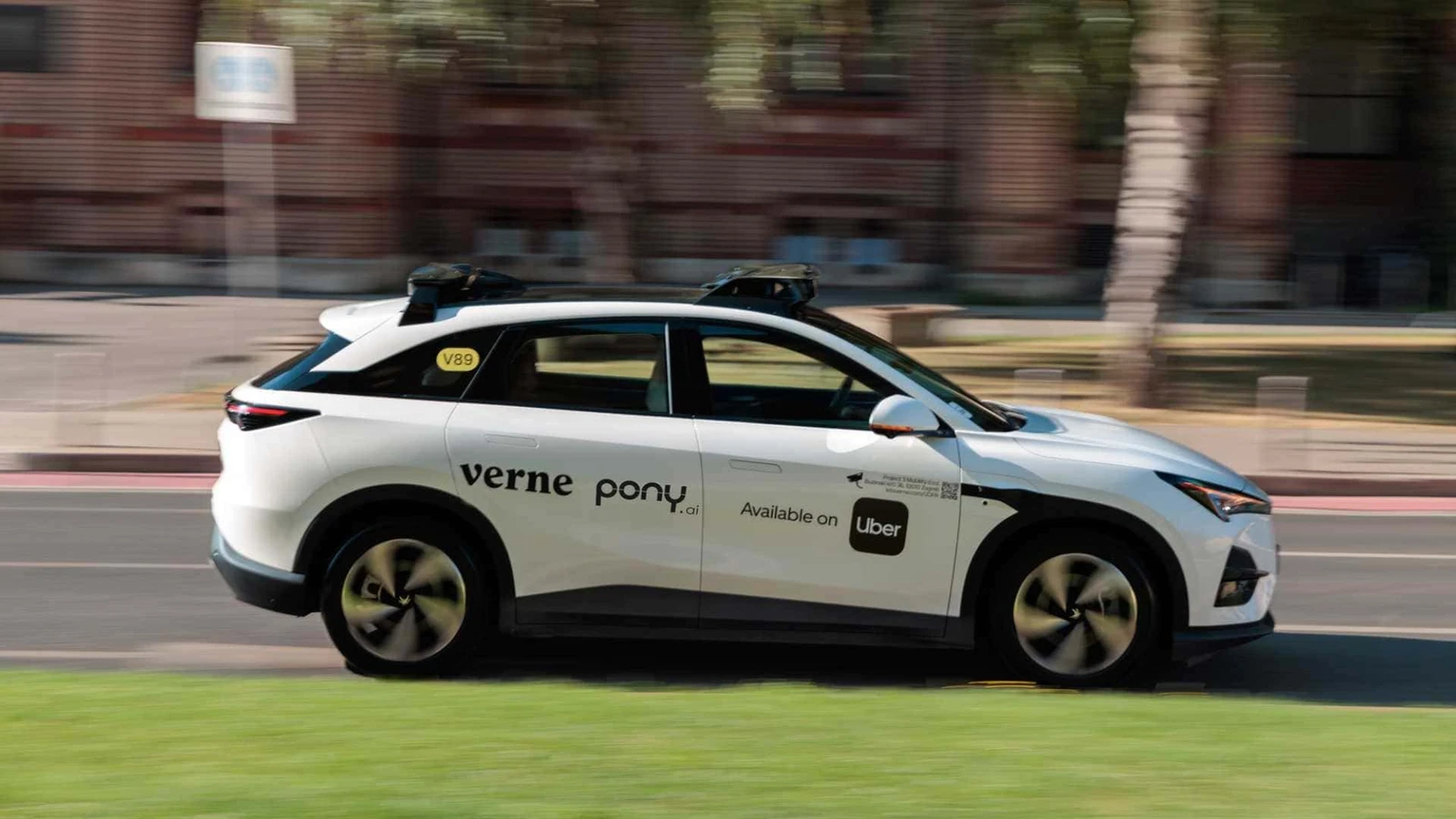
One partner is already visible on the road: in cities such as Atlanta, riders hail a Waymo robotaxi through the Uber app. That arrangement is the most concrete example of the partnership model Uber is scaling, even as the two companies discuss winding down their current contract.

Waymo is both partner and benchmark

Waymo already operates around 4,000 robotaxis across 15 US cities and aims to double that count to 8,000 by the end of this year. It plans to reach a fleet of 20,000 by the end of 2027, which would leave it with roughly four times Uber's planned 2027 total by the end of 2026.

The relationship is under strain. The Financial Times reported that the two companies have internal disagreements about robotaxis and are discussing ending their contract, and a Waymo executive described the partnership as "a little bit of a crapshoot" because Uber customers never knew whether a robotaxi or a human driver would arrive, according to Bloomberg. Waymo says it plans to end its exclusive deal with Uber in Austin and Atlanta in January 2028.

That matters because Uber's 2027 target is modest next to the incumbent it currently leans on. Hitting 2,000 cars would be a real milestone for a platform business, but it does not make Uber a fleet leader. The near-term priority is getting its other partnerships running at scale before the Waymo arrangement unwinds.

How the fleet gets paid for

Uber says it will fund the robotaxi fleet from its own earnings, though it may "bring in third-party capital" once the self-driving fleet grows beyond 10,000 cars. The company has floated an eventual goal of 120,000 robotaxis, according to the Financial Times, without attaching a timeframe.

The balance sheet gives it room to move: Uber said gross bookings rose 20 percent year over year to $59.8 billion. For riders, the practical question is where and when driverless cars actually show up in the app, and the 700 cars promised by the end of this year will be the first test of whether the 2027 figure is a plan or an aspiration.
Open this article ↗
Performance / TDCN ORIGINAL

Ford unveils 1966 Mustang R125 restomod marking 125 years of racing

The one-off SEMA show car pairs a 360hp Ford Racing crate V8 with a five-speed manual and a gold-and-red motorsport livery.

Image: Carscoops

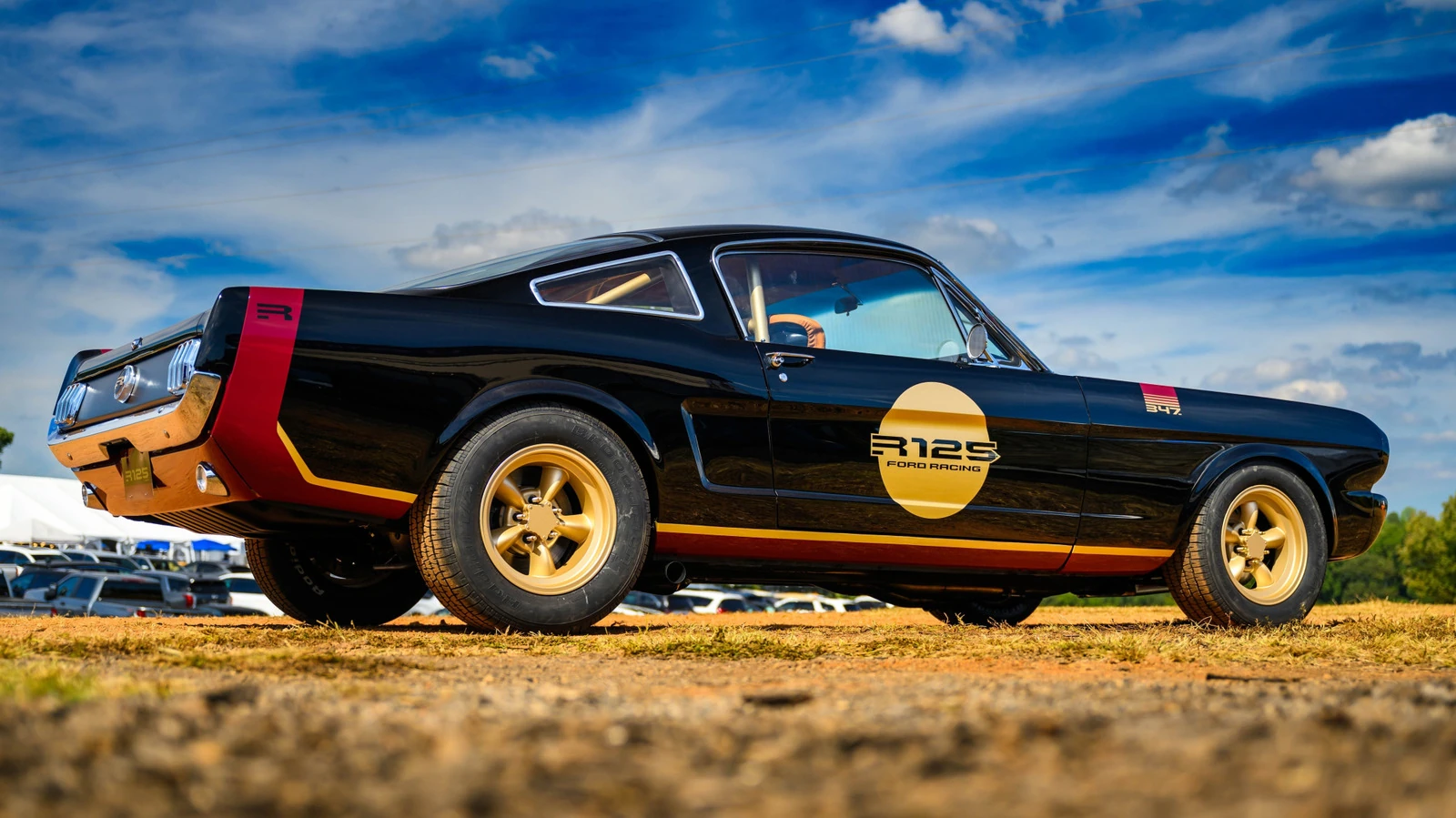
Ford has revealed a restored and modified 1966 Mustang called the R125, built to mark 125 years since company founder Henry Ford first went racing. The car is on display at SEMA and uses Ford Racing Parts throughout, with a naturally aspirated 5.7-litre V8 crate engine rated at 360 horsepower and 400 pound-feet of torque.

The anniversary dates to 1901, when Henry Ford built and raced his own car and took a victory that helped him secure the investment needed to found Ford Motor Company two years later. Ford's own line on the project is that racing is in its DNA.

A restomod that resists the power race

The R125's engine combines a Ford Racing Boss block with Edelbrock Pro-Flo electronic fuel injection and aluminium cylinder heads, and it drives through a Tremec five-speed manual transmission. Ford Racing also fitted two-piece valve covers and integrated spark plug wire looms to make the engine easier to service.

That 360hp figure puts the R125 well below the hypercar-power restomods that dominate the scene, a deliberate choice to build on the original Mustang's legacy with updated components rather than chase output records. For a car meant to celebrate the brand's competition history, a tractable, naturally aspirated V8 and a manual gearbox read as a more honest tribute than a big power number.

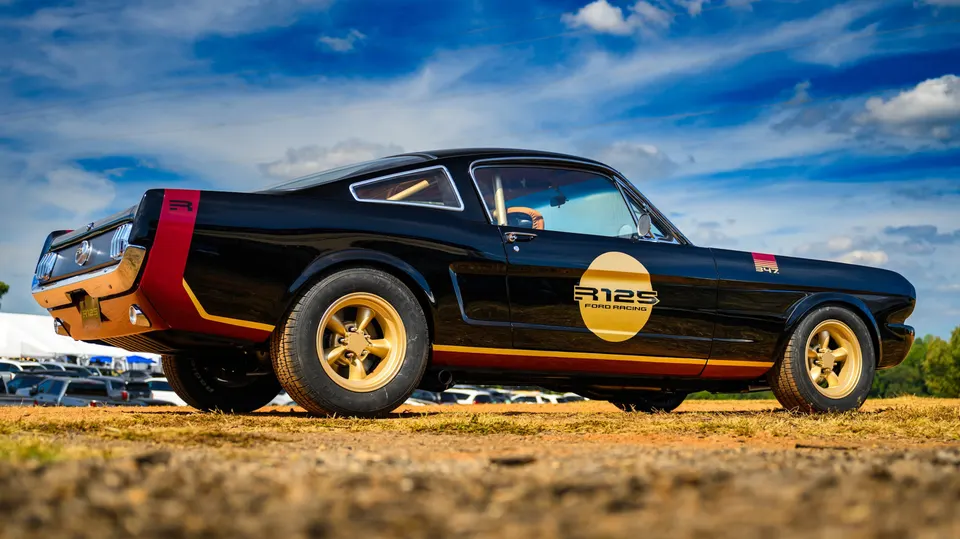
The 1966 Mustang R125 restomod in black with gold roundels and gold wheels, built to honor 125 years of Ford racing
The 1966 Mustang R125 restomod in black with gold roundels and gold wheels, built to honor 125 years of Ford racing, Image: Carscoops

Black paint, gold roundels and a roll cage

The exterior is finished in plain black under a gold-and-red motorsport-inspired livery, with a bright red stripe across the rear, a bumper and gold Ford Racing lettering, and gold roundels carrying an R125 Ford Racing logo on the doors. Gold wheels match the painted gold accents.

Ford has not released detailed photos of the interior. One image shows a subtle gold roll cage and a brown leather suitcase sitting where the rear seats would normally be.

Why Ford is leaning on its racing past

Chief executive Jim Farley has driven the brand's motorsport push since taking the role in 2020, rebranding Ford Performance as Ford Racing last year and overseeing the return to Formula 1 and a forthcoming LMDh prototype for next season's FIA World Endurance Championship.

The R125 fits that strategy neatly: it is a show car rather than a production model, so it carries the racing message without needing to justify itself on a price list. Ford has not announced pricing or a production run for the R125, and the car has so far appeared only as a SEMA display piece.

Open this article ↗

Keep scrolling to read the next story.

Older articles →