INDEPENDENT AUTOMOTIVE NEWSGLOBAL PERSPECTIVE / AUSTRALIAN EDITION
TDCNTHE DAILY
CAR NEWS.

The road ahead.
Every day.

RSS ↗
Latest/New cars

286 original articles

New cars / TDCN ORIGINAL

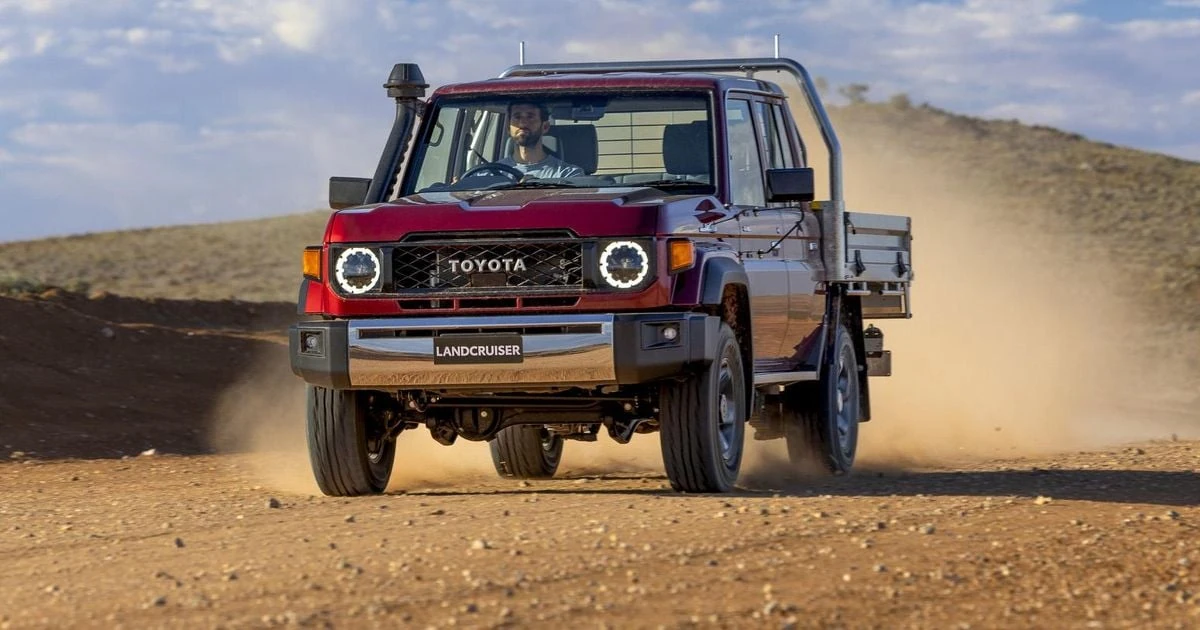
Toyota LandCruiser 70 Series gets $1300 price rise across every variant

The increase takes effect from November 1, 2026, with the WorkMate wagon now starting at $76,900 before on-road costs.

Toyota has raised the price of the LandCruiser 70 Series by $1300 across every model grade and body style, with the new pricing effective from November 1, 2026. The entry-level WorkMate wagon now starts at $76,900 before on-road costs.

What the new pricing looks like

The single-cab/chassis WorkMate is now $78,100 before on-road costs, while the double-cab/chassis version starts at $78,600. The cheapest Troop Carrier, the five-speed manual WorkMate, is priced from $78,500 before on-roads, and the top-spec GXL grade now starts at $79,100 before on-road costs for the manual wagon.

The 70 Series is sold in WorkMate, GX and GXL grades, across wagon, Troop Carrier, two-door single-cab/chassis and four-door double-cab/chassis body styles. Buyers can choose a six-speed automatic or a five-speed manual.
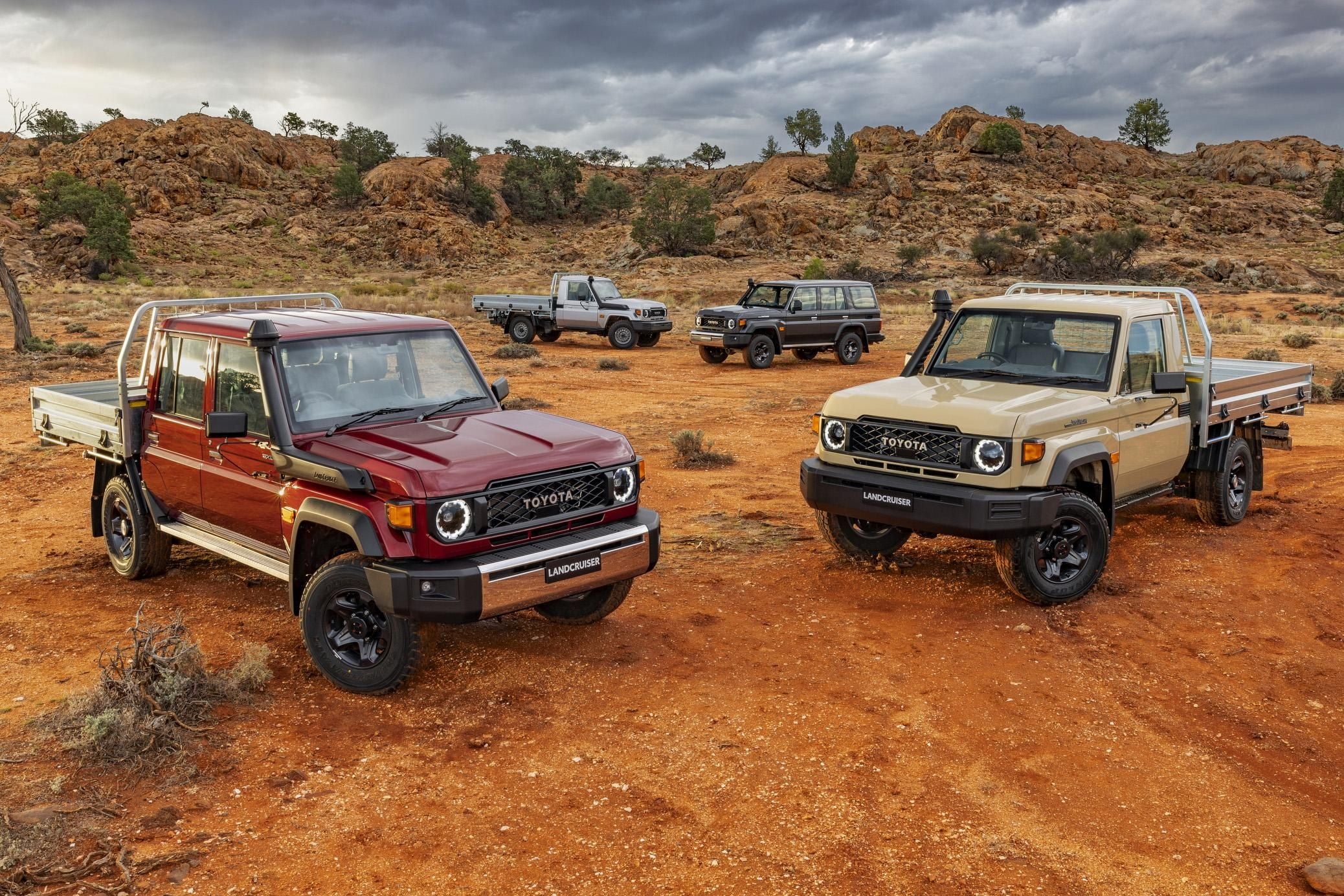
The LandCruiser 70 Series range, now $1300 dearer across every variant
The LandCruiser 70 Series range, now $1300 dearer across every variant, Image: CarExpert

Powertrains and equipment carry over

Automatic versions use a 2.8-litre four-cylinder turbo-diesel engine producing 150kW and 500Nm, paired with dual-range four-wheel drive. Three-pedal variants share the same engine but with torque trimmed to 450Nm.

Toyota has not confirmed whether the price rises come with any equipment changes. Standard kit on the WorkMate includes 16-inch steel wheels with a full-size spare, LED headlights, a snorkel, vinyl-trimmed seats and door cards, and a 6.7-inch touchscreen with Apple CarPlay and Android Auto. The mid-spec GX is offered only in two-door cab/chassis form with an automatic transmission, adding 16-inch alloy wheels and wheel-arch extensions. The GXL adds LED fog lights, chrome bumpers and drip rails, cloth seats and carpet flooring.
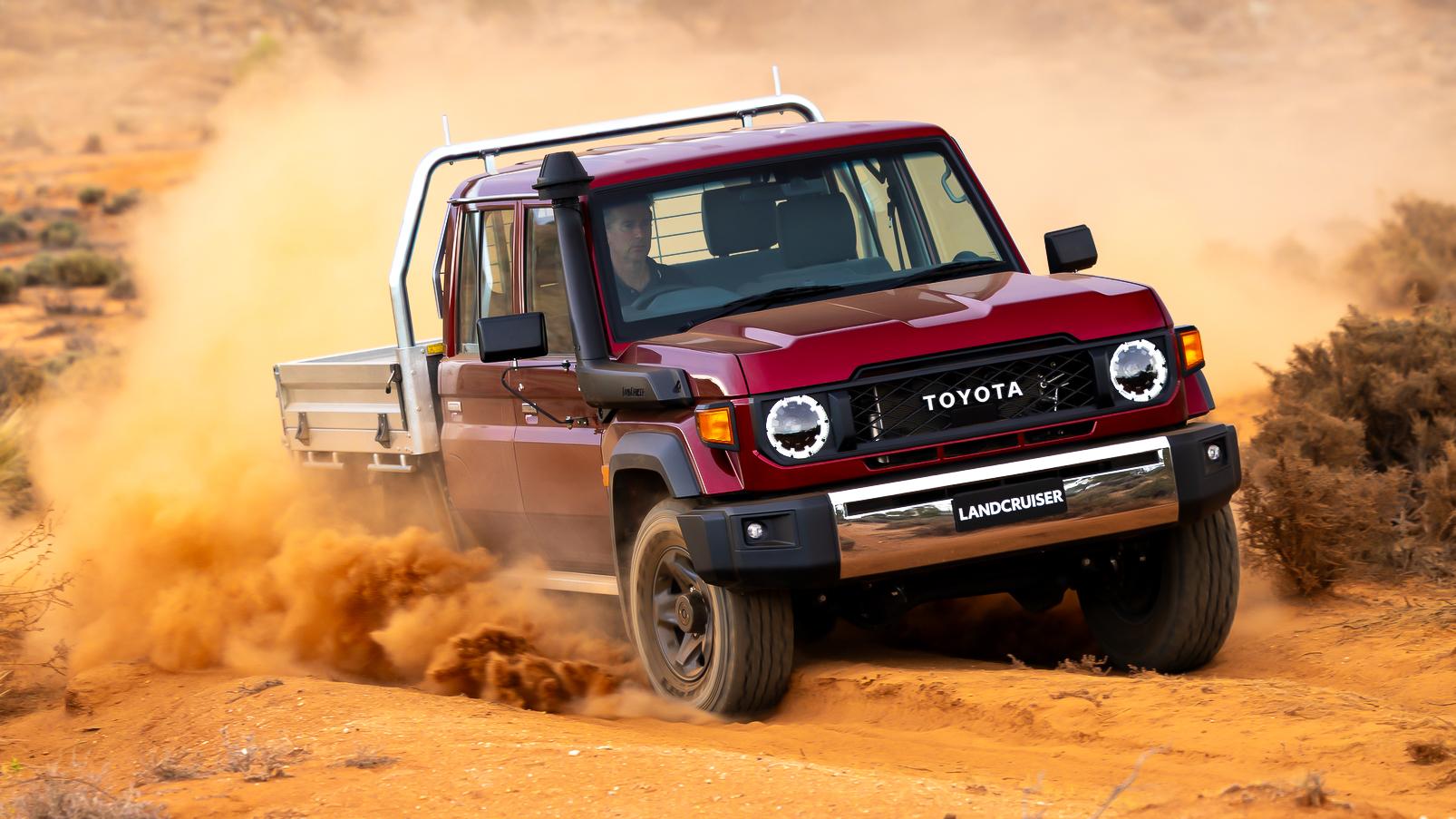
Mechanicals and equipment carry over unchanged despite the price rise
Mechanicals and equipment carry over unchanged despite the price rise, Image: CarExpert

Manual orders remain paused

Toyota Australia paused orders for manual transmission versions of the 70 Series earlier this year, with automatic versions staying available. The company has not confirmed when manual orders will reopen.

The $1300 increase follows price rises of up to $1000 on the Corolla hatchback range, apart from the flagship GR Corolla, in Australia last month. That pattern suggests Toyota is repricing across its Australian line-up rather than singling out the 70 Series, though buyers of the manual variants face the added uncertainty of not knowing when they can order one at all.

The five-door wagon is among the variants affected by the new pricing
The five-door wagon is among the variants affected by the new pricing, Image: CarExpert

Japanese-market update reported, Australian plans unconfirmed

Last month, website Creative Trend reported that Japanese versions of the 70 Series will be updated from January 2027, adding a 360-degree camera system and infotainment changes while deleting the passenger-side rear-view mirror. That report is unconfirmed and covers the Japanese market only.

Toyota Australia has not announced whether Australian-delivered 70 Series models will receive the same updates, so local buyers should treat the Japanese changes as a separate matter for now.
Open this article ↗
Electric / TDCN ORIGINAL

Karma reveals Eximius 1, a 1,200 hp V8 plug-in hybrid one-off

The first of nine bespoke commissions pairs a 6.2-litre V8 with electric motors for a claimed 2.7-second 0-60 mph time, with delivery set for 2027.

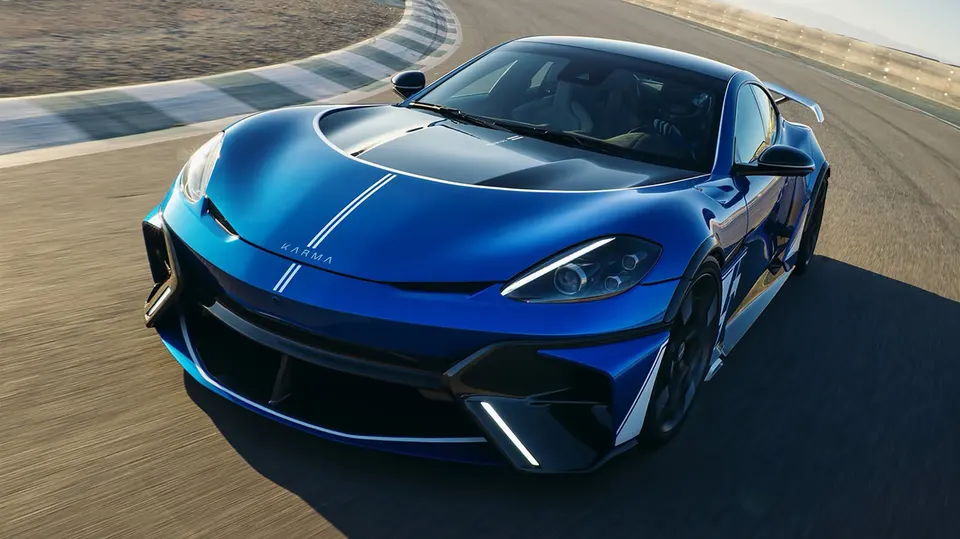
Image: Carscoops

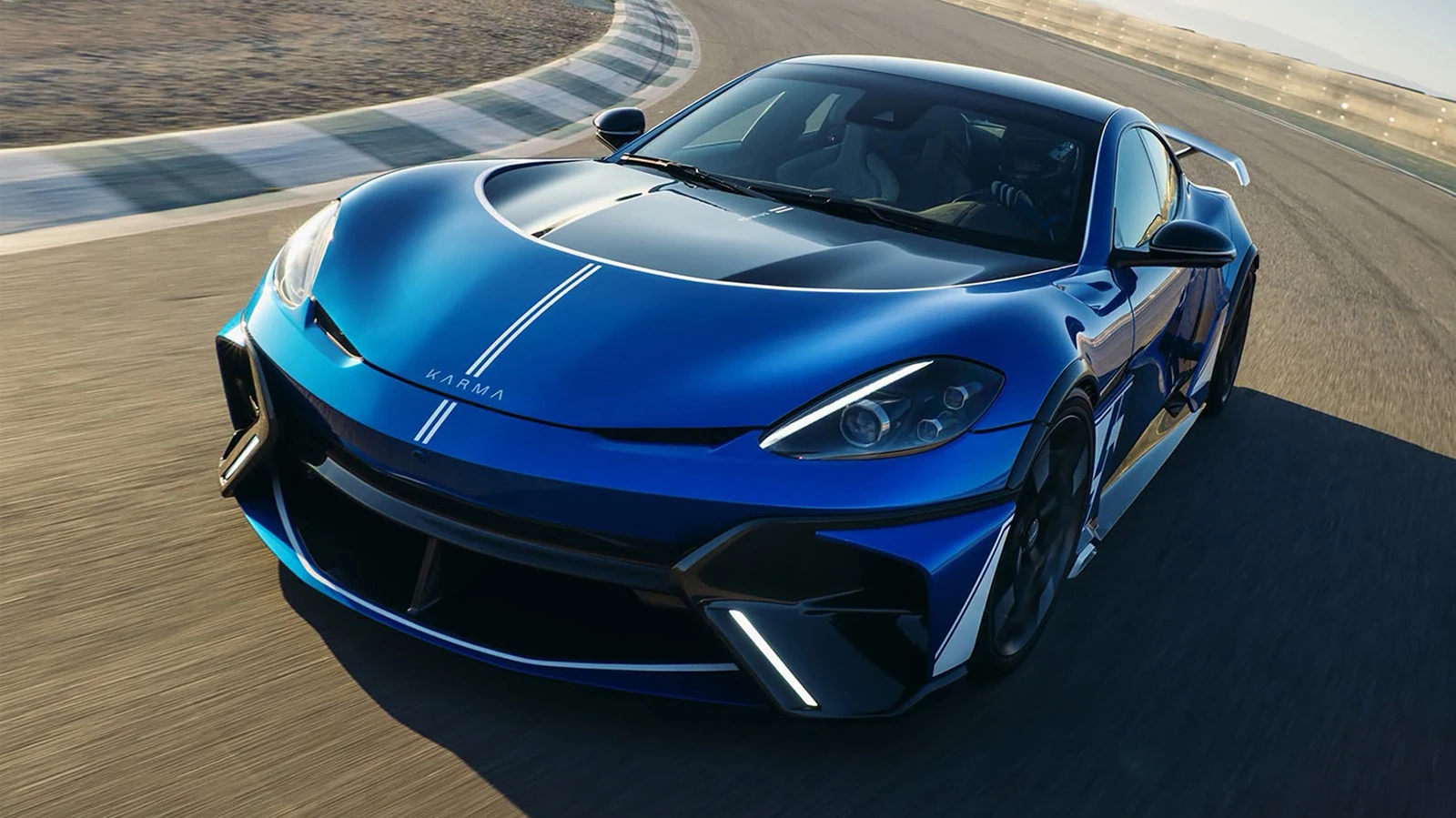
Karma Automotive has unveiled the Eximius 1, the first of nine one-off commissions built under a new bespoke programme for selected clients. The track-focused four-seater pairs a 6.2-litre V8 with electric motors for a combined output of around 1,200 hp.

The car is scheduled to be delivered in 2027 and will not be repeated. Karma has not disclosed pricing.

A Gyesera underneath, but almost nothing else carries over

The Eximius 1 is recognisably related to the Gyesera, the model that replaced the discontinued Revero, itself an evolution of the 2011 Fisker Karma. The greenhouse, roofline, lights and doors are carried over from that donor car, but Karma says everything else has changed.

The bodykit brings new front and rear bumpers with large intakes and outlets, diagonal daytime running lights, a vented hood, carbon fibre fender extensions, wider side skirts with aerodynamic fins, a complex diffuser and a fixed rear spoiler. It is finished in Borealis Blue with white graphics and exposed carbon fibre.

Inside there are four Recaro bucket seats trimmed in Alcantara in Borealis Blue and Moondust, along with a substantial amount of carbon fibre. A motorsport-style emergency kill switch sits on the centre console, and a custom carbon racing helmet is mounted between the rear seats.

The Eximius 1's aggressive front end hints at the Gyesera beneath, though little else carries over
The Eximius 1's aggressive front end hints at the Gyesera beneath, though little else carries over, Image: Carscoops

V8 plus electric motors, and a 200 mph target

Karma quotes a combined output of around 1,200 hp, split between 550 hp from the combustion engine and 650 hp from the electric motors. Carscoops notes the 6.2-litre V8 sounds like a General Motors unit.

That output is claimed to push the four-seater from 0-60 mph (0-96 km/h) in 2.7 seconds and on to a top speed above 200 mph (322 km/h). Karma describes it as the most powerful plug-in hybrid ever developed.

Karma has not published an electric-only range figure or a battery capacity for the Eximius 1. The car is a series plug-in hybrid, meaning the V8 acts as a generator for the electric drive rather than driving the wheels directly, but no further powertrain detail has been released.

Chassis work aimed at the track

The one-off is understood to sit on the aluminium spaceframe that dates back to the Fisker era. It gains semi-active Öhlins suspension, a wider track, and carbon-ceramic brakes with two-piece slotted rotors behind 21-inch magnesium wheels.

Those changes matter more than the power figure for a car pitched at track use. Big output is easy to quote; keeping a four-seat hybrid stable and fade-free over repeated laps is the harder engineering problem, and the Öhlins dampers and carbon-ceramic brakes are the parts that address it directly.

Nine clients, nine cars, no repeats

Karma's bespoke programme will produce nine one-offs in total, each with unique styling and mechanical modifications for a single client. The Eximius 1 is the first of them.

Marques McCammon, president and CEO of Karma Automotive, said the project "began as a conversation with an elite client who loves their Karma Revero, but wanted something more extreme and unexpected".

Karma has not announced pricing for the Eximius 1. Given the extent of the changes, Carscoops expects it could be the most expensive Karma yet, though that is the outlet's assessment rather than a confirmed figure.

Open this article ↗

Keep scrolling to read the next story.

Older articles →