INDEPENDENT AUTOMOTIVE NEWSGLOBAL PERSPECTIVE / AUSTRALIAN EDITION
TDCNTHE DAILY
CAR NEWS.

The road ahead.
Every day.

RSS ↗
Latest/New cars

319 original articles

New cars / TDCN ORIGINAL

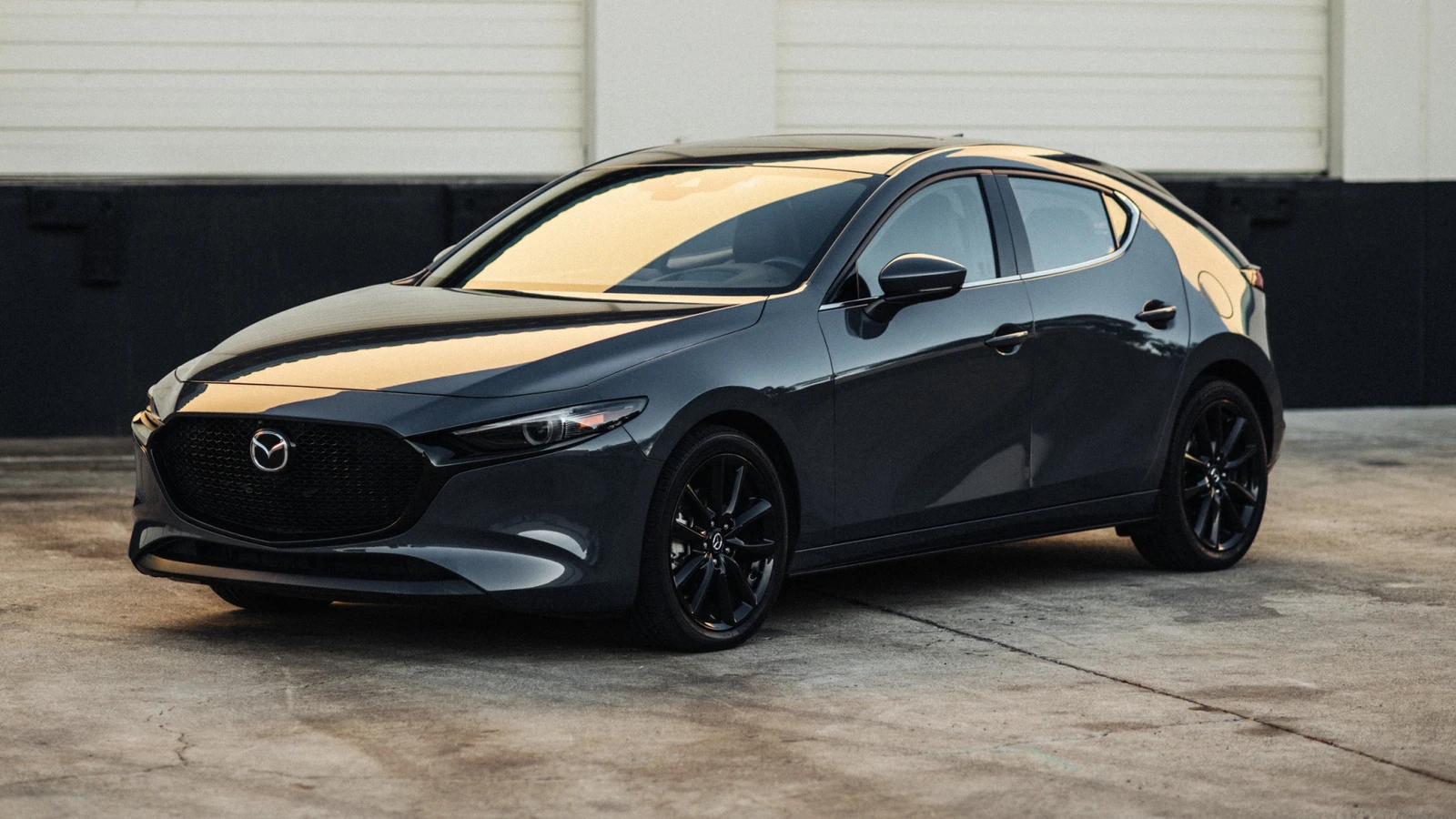
Mazda keeps a six-speed manual in the 2027 Mazda3, now on the Premium Plus hatch

The manual survives for another year but still comes only with front-wheel drive and the naturally aspirated 2.5-litre engine, never the turbo or AWD.

Image: Carscoops

Mazda will offer a six-speed manual in the 2027 Mazda3, moving the gearbox into the 2.5 S Premium Plus hatchback, which starts at $31,950 before a $1,315 destination charge. That is $300 more than the outgoing manual-equipped Premium, and buyers get extra cabin equipment for the money.

The manual remains a narrow choice. Buyers who want three pedals give up all-wheel drive and cannot have the turbocharged engine.

What the manual comes with

The stick shift pairs with Mazda's naturally aspirated 2.5-litre four-cylinder, which produces 186 hp (139 kW) and 186 lb-ft (252 Nm) of torque on regular gasoline. It is not a fast powertrain, but it suits most driving apart from high-speed highway overtakes.

The Premium Plus hatchback adds a 10.25-inch centre display with touchscreen functionality for Apple CarPlay and Android Auto, plus a heated steering wheel. A windshield-projected head-up display, adaptive headlights that swivel through corners, and signature LED lighting front and rear are also standard. The heated wheel and larger display are upgrades over the previous base manual Mazda3.

The catch is that Mazda still will not combine the manual with its two most desirable options. All-wheel drive and the turbo engine each bring their own benefits, and pairing either with the stick would bring the car close to the spirit of the old MazdaSpeed3.
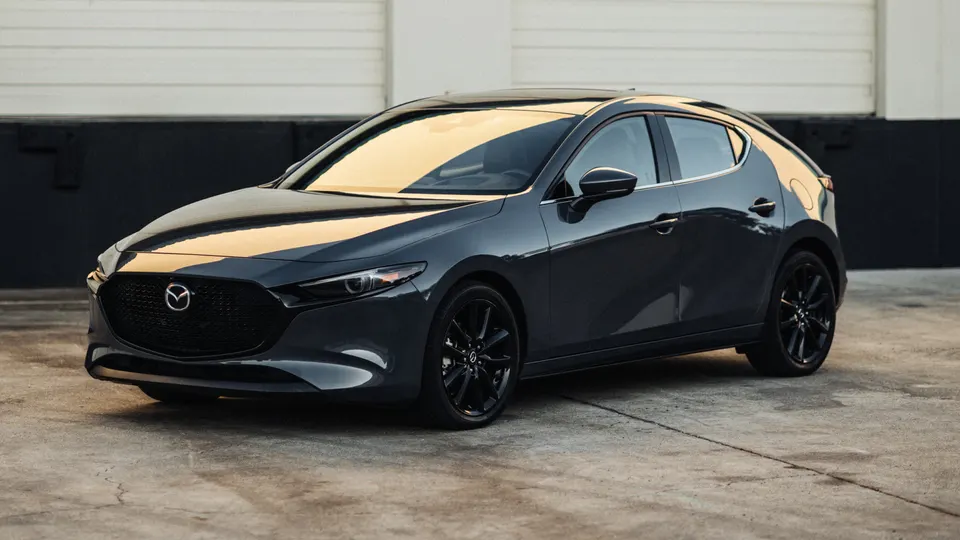
The 2027 Mazda3 hatch in Premium Plus trim, now offered with the six-speed manual
The 2027 Mazda3 hatch in Premium Plus trim, now offered with the six-speed manual, Image: Carscoops

Turbo and AWD models

Turbocharged models top the range at $37,040 for the sedan and $38,190 for the hatchback, before destination. On premium fuel they produce 250 hp (186 kW) and 320 lb-ft (434 Nm).

The Preferred hatchback adds an all-wheel drive option priced at $29,990, or $31,305 with destination charges included.

Trim changes and pricing across the range

The base 2.5 S is no longer available, making the Select Sport at $27,040 the new entry point, about $1,390 more than in 2026. Wireless Apple CarPlay and Android Auto now come standard on the Select Sport, while the Preferred adds wireless phone charging.

Front-drive Preferred hatchbacks now start at $28,040, which is $600 less than the outgoing version. Sedan buyers keep a base 2.5 S, now priced at $24,750, and can add a Premium AWD trim with leather upholstery and a 12-speaker Bose stereo.

Mazda has not announced Australian availability or pricing for the 2027 Mazda3, so the figures above apply to the market covered by its pricing and packaging announcement. The manual's survival matters because annual model year updates often quietly drop enthusiast features, and Mazda has done the opposite here, even if the stick stays confined to one front-drive, non-turbo hatchback.
Open this article ↗
New cars / TDCN ORIGINAL

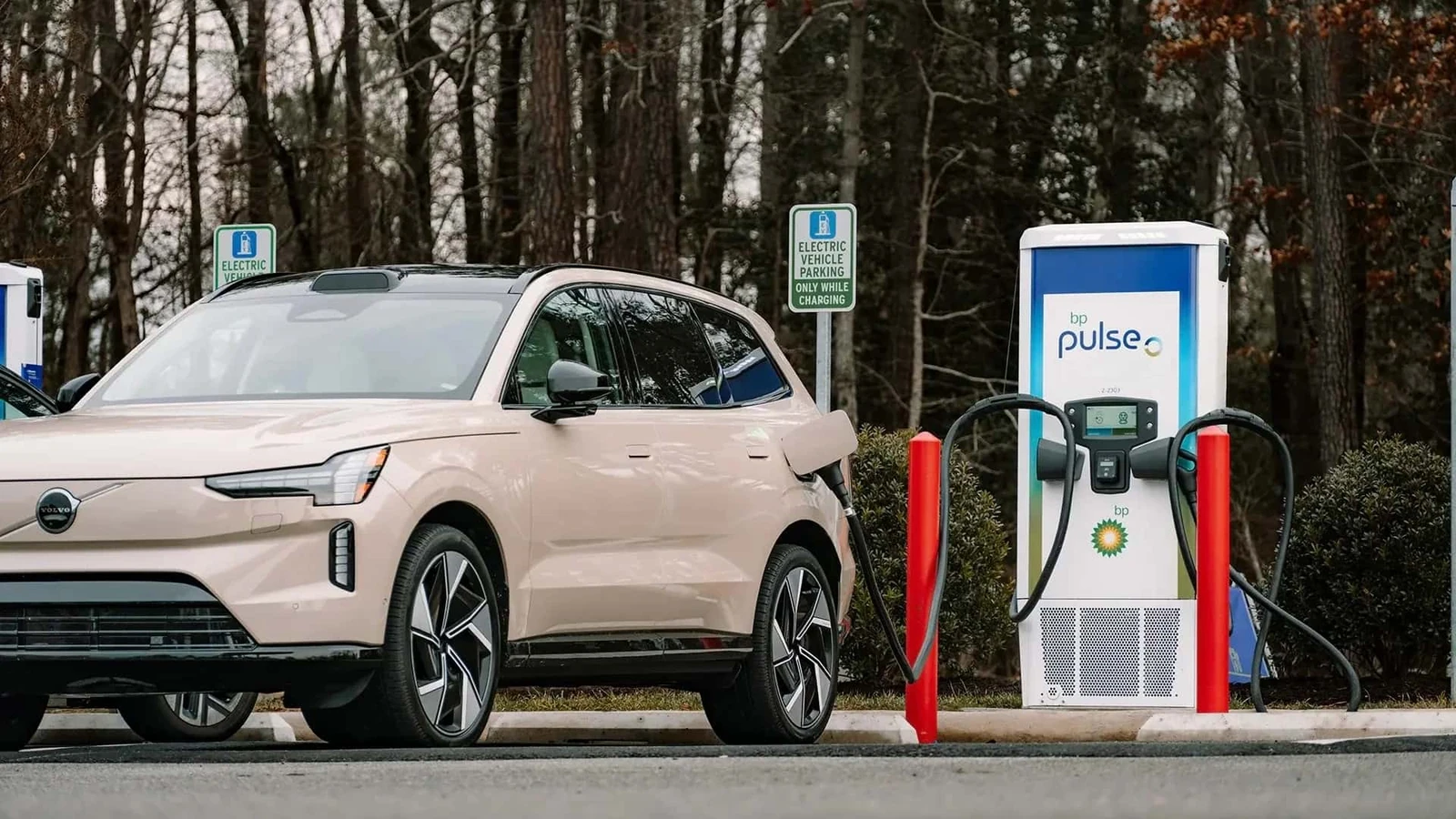
BP Pulse joins ChargeHub roaming network across the United States

Nearly 900 BP Pulse DC fast chargers can now be found and paid for through the ChargeHub app instead of BP's own.

BP Pulse has integrated its entire United States charging network into ChargeHub's roaming ecosystem, letting drivers find, access and pay for its fast chargers through a single app rather than BP's own. The network covers 874 DC fast chargers, according to InsideEVs.

ChargeHub describes its Passport Hub ecosystem as the largest roaming network in North America, and it spans dozens of operators. BP Pulse's Sujay Sharma, VP of EV Charging, said the partnership expands access to the network through trusted roaming partners.

What drivers can do through the app

ChargeHub's app shows real-time information on available ports and their connector types, and it covers more than 40 operators across the United States and Canada for finding and paying for sessions. A further 70-plus networks, among them Tesla, Ionna and Electrify America, can also be located through ChargeHub.

BP Pulse's hardware is mixed. Roughly a third of its 874 fast chargers carry a Tesla-style NACS connector, most stalls use CCS1, and some have CHAdeMO plugs. On-site credit card readers mean an app is not strictly required, though planning a stop is easier with one. Plug & Charge is supported only on Ford and BMW vehicles, and only the fastest stalls have it enabled.

Charger speeds, station sizes and pricing

The network uses three charger types: Tritium units up to 150 kW, ABB dispensers at 180 kW and Alpitronic stalls at 400 kW. Station size ranges from two stalls at the smallest sites to 48 at the largest, in Inglewood, California, according to DCFC Tracker. Pricing runs from $0.33 to $0.65 per kilowatt-hour.

The practical effect for drivers is fewer apps and accounts to juggle on a long trip. Roaming deals like this one matter most on routes where a single brand's footprint thins out, because the value is in finding and paying at a stall without first working out whose network it belongs to.

Why roaming deals are spreading

Sharma framed the tie-up as part of a broader push: "Charging networks working better together benefits the entire EV ecosystem and is an important step toward accelerating EV adoption".

The catch is that roaming solves discovery and payment, not availability. A driver still competes for the same 874 ports, and connector type and charging speed still vary from site to site, so the app shortens the paperwork rather than the queue.

Open this article ↗

Keep scrolling to read the next story.

Older articles →