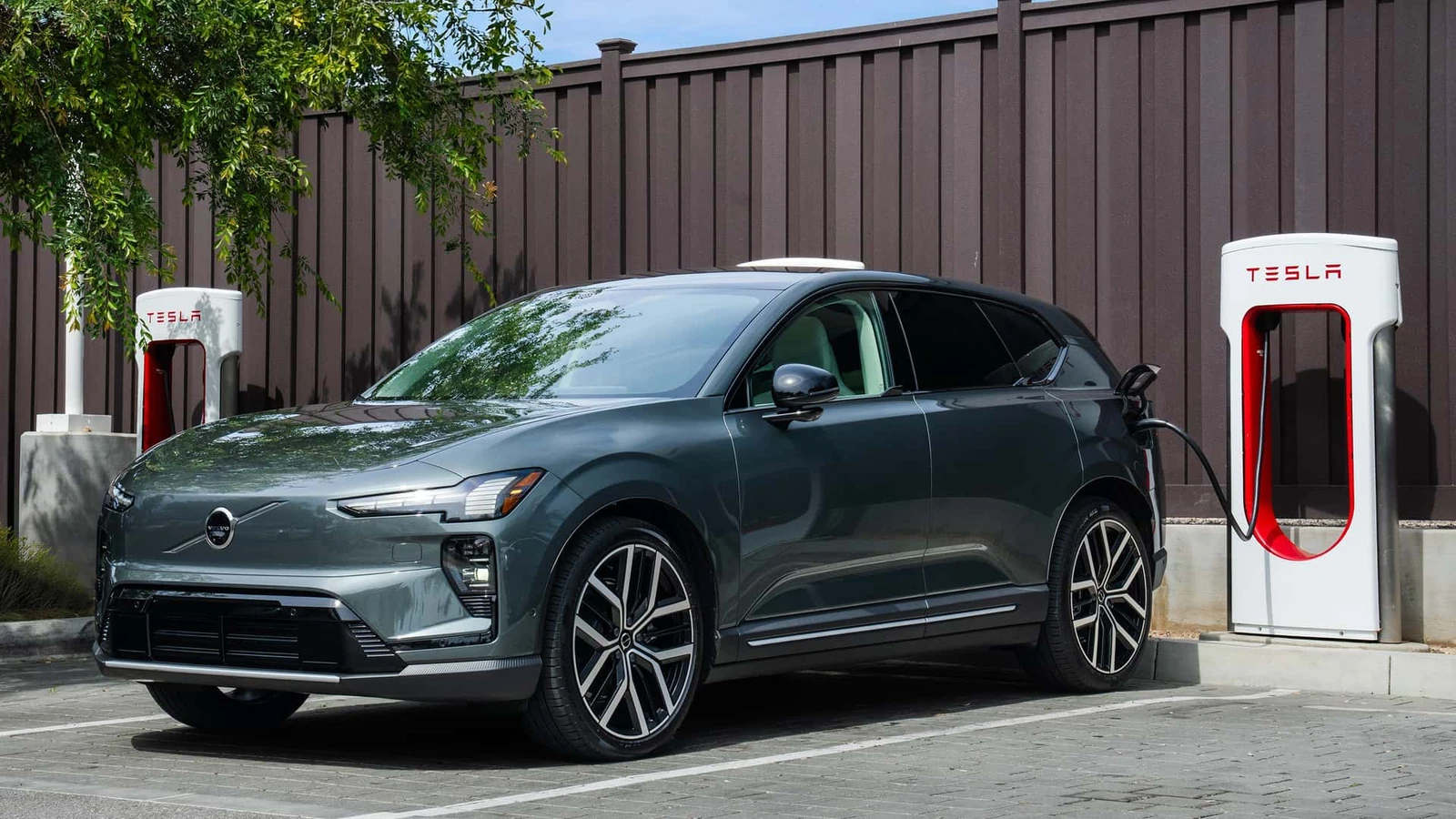
Volvo's EX60 electric SUV will reach US buyers later than originally planned, with Europe prioritised while the company works through manufacturing difficulties on the model. The delay comes as Volvo's leadership conceded on its third-quarter earnings call that the US has proven a difficult market in which to find profitability.
Chief commercial officer Erik Severinson told the call that consumer sentiment in the US is at a 50-year low, and CEO Hakan Samuelsson said Volvo should have anticipated how tariffs would affect its American business.
Tariffs catch Volvo out
Samuelsson said one of the company's oversights was failing to plan for tariffs, admitting Volvo "should have realized" they were a real possibility and that it would need to localize more production in the US to address them. He said the company is now working to correct those shortcomings.
The admission lands in the middle of a turbulent stretch for the brand in America, with shifting tariff policy and the departure of sister brand Polestar from the market cited as changes Volvo has struggled to keep pace with.
The stakes are plain in the numbers Volvo's executives put on the call. Severinson described profitability in the US as difficult to find, and the company is now trying to rebuild demand in one of the world's most important car markets. For buyers, that means the near-term Volvo lineup in America is likely to lean on locally built, multi-powertrain vehicles rather than the high-volume electric models sold elsewhere.
EX60 held back by manufacturing problems
The EX60 was long seen inside Volvo as the model that could reverse its US sales slump. The electric SUV is intended to compete with the BMW iX3 and Mercedes-Benz GLC Electric, but it has proven a manufacturing challenge.
With EV sales continuing to boom in Europe and other electrification hotspots, Americans hoping for an EX60 in their driveway will wait longer than originally anticipated while Europe is prioritised. Volvo has not announced a specific US launch date for the EX60.
That is a notable reversal for a model positioned as a volume seller in the US. Volvo has already pulled the EX30 and EX40 from the American market, removing the high-volume electric vehicles it had counted on, so the EX60's delay leaves the brand with a thinner EV offering in the country at exactly the moment it needs one.
South Carolina plant at a fifth of capacity
Volvo's South Carolina plant is running at just 20 percent capacity, building the EX90 and soon the XC60. A second new vehicle, designed around multiple powertrains, is planned for the site by the top of the decade.
Samuelsson framed that flexibility as a response to the pace of US electrification. "The U.S. is electrifying slower than the rest of the world. We need to have a new car that is also flexible in that respect, with all-electric, plug-in or hybrid," he said.
The logic is straightforward: a plant that can build combustion, plug-in hybrid and electric versions of the same vehicle hedges against demand swings and against tariff exposure that comes with importing finished cars. Volvo has not said which model will be built there beyond the multi-powertrain description.
A strategy built for a market that changed
Volvo's predicament mirrors that of several automakers that committed to all-electric lineups just as the US market cooled on them. Having gone all-in on electrification, Volvo is now recalibrating around localization and a broader powertrain mix to regain traction.
Whether that combination revives Volvo's US fortunes is the open question. What is settled is the sequence: Europe gets the EX60 first, the US waits, and the South Carolina plant carries the localization bet until a more flexible model arrives later in the decade.