Mercedes-Benz has sold its European EV fast-charging network to French operator Electra, ending its run as an owner-operator of chargers in the region. The disposal was disclosed in the automaker's third-quarter financial report, which valued the assets associated with the business at €99 million ($111 million).
The network comprised 374 fast-charging ports at 47 locations across Europe, all of which now belong to Electra. The sale was first reported by Electrive.
What Mercedes drivers get from the deal
Electra becomes a "Premium Partner" for Mercedes-Benz, second only to Ionity in that tier. Mercedes EV drivers can charge at discounted rates at more than 5,000 Electra chargers across 800 locations in several European countries.
The former Mercedes stalls were folded into Electra's network this past weekend; card payment terminals will be replaced soon and station branding switched to Electra's.
For drivers, the practical change is less about where the plugs are than who runs them. The hardware stays put, but the premium access Mercedes once built for itself now comes through a partner deal, which is a cheaper way for the brand to keep offering perks without owning the sites.
Why the company stepped back
Mercedes-Benz now relies exclusively on third-party operators for EV charging in Europe. Paul Tonini, Electra's General Manager for Germany, told Electrive that the market is consolidating around larger providers, leaving relatively small players like the former Mercedes-Benz Charging Network struggling to keep finances in check.
Scale cuts both ways here: a bigger network spreads costs and earns more, while a 374-port operation sits below the size where that maths works. Mercedes keeps the customer benefit and sheds the capital burden, while Electra absorbs the sites into a network it is already growing.
The 10,000-charger target is now a partnership question
The Mercedes-Benz Charging Network launched just three years ago with a goal of more than 10,000 fast chargers globally by the end of the decade. The sources do not say whether that global target survives the European sale, or whether it will now be met largely through partners rather than Mercedes-owned sites; that has not been announced.
What is clear is the hardware standard the network had reached. Mercedes used high-powered equipment from Alpitronic, with most sites carrying 400-kilowatt dispensers, and earlier this year the first 1,000-kilowatt-capable stalls were installed at charging parks in Europe and North America.
That matters because the chargers being handed over are not legacy kit. Electra is inheriting some of the fastest hardware in Europe, which makes the sale a transfer of capable infrastructure rather than a retreat from fast charging itself.
North America is unaffected
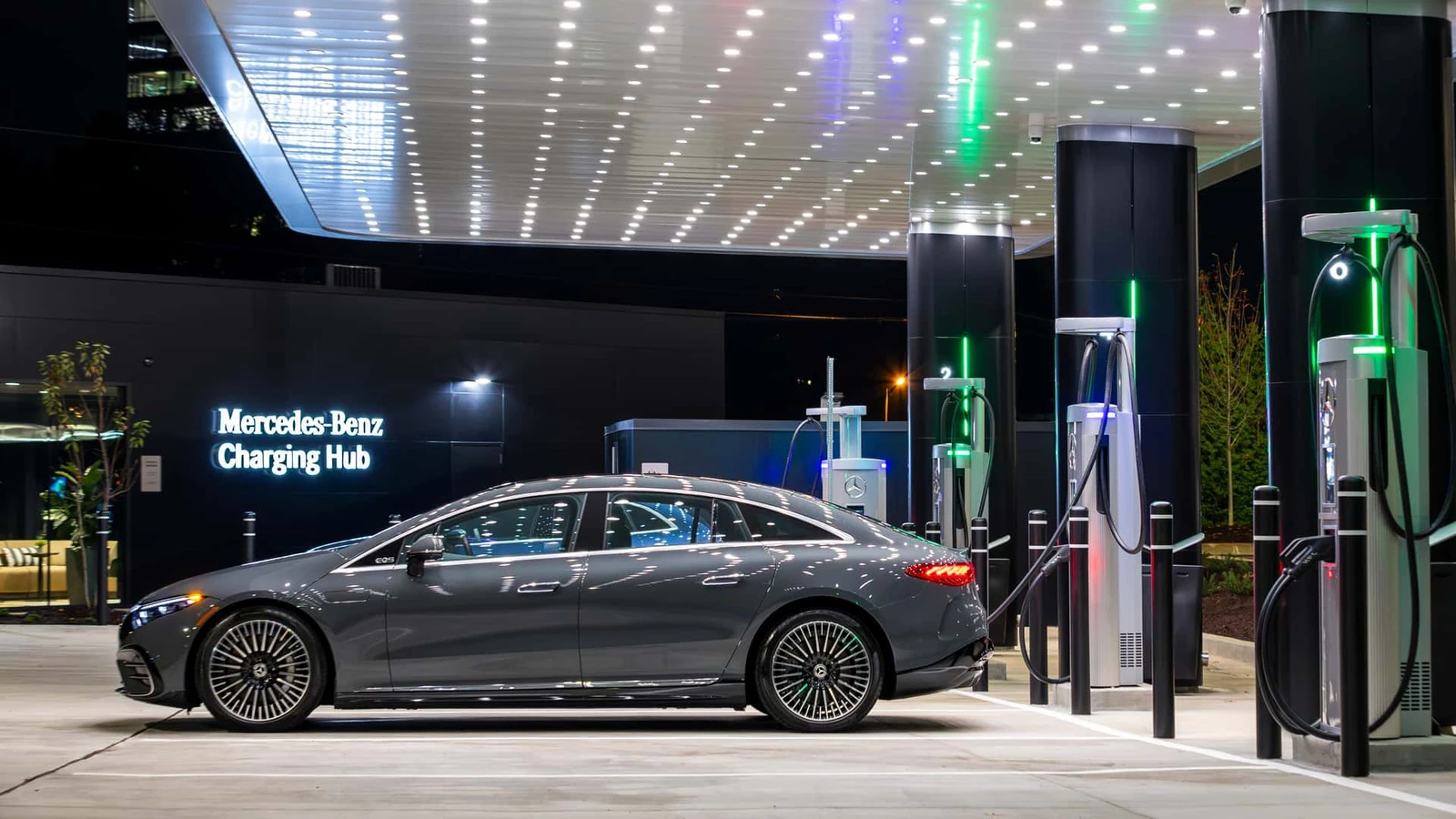
Mercedes-Benz's US fast-charging business is untouched by the European sale. Its High-Power Charging network in the United States has 748 charging ports at 80 locations, according to the Department of Energy's Alternative Fuels Data Center, with a further 62 ports at eight stations in Canada.
So the company is not leaving charging altogether. It is narrowing its role in one market, Europe, where Ionity and now Electra give it partner access, while keeping its own network running across the Atlantic.