INDEPENDENT AUTOMOTIVE NEWSGLOBAL PERSPECTIVE / AUSTRALIAN EDITION
TDCNTHE DAILY
CAR NEWS.

The road ahead.
Every day.

RSS ↗
Latest/Electric

329 original articles

Electric / TDCN ORIGINAL

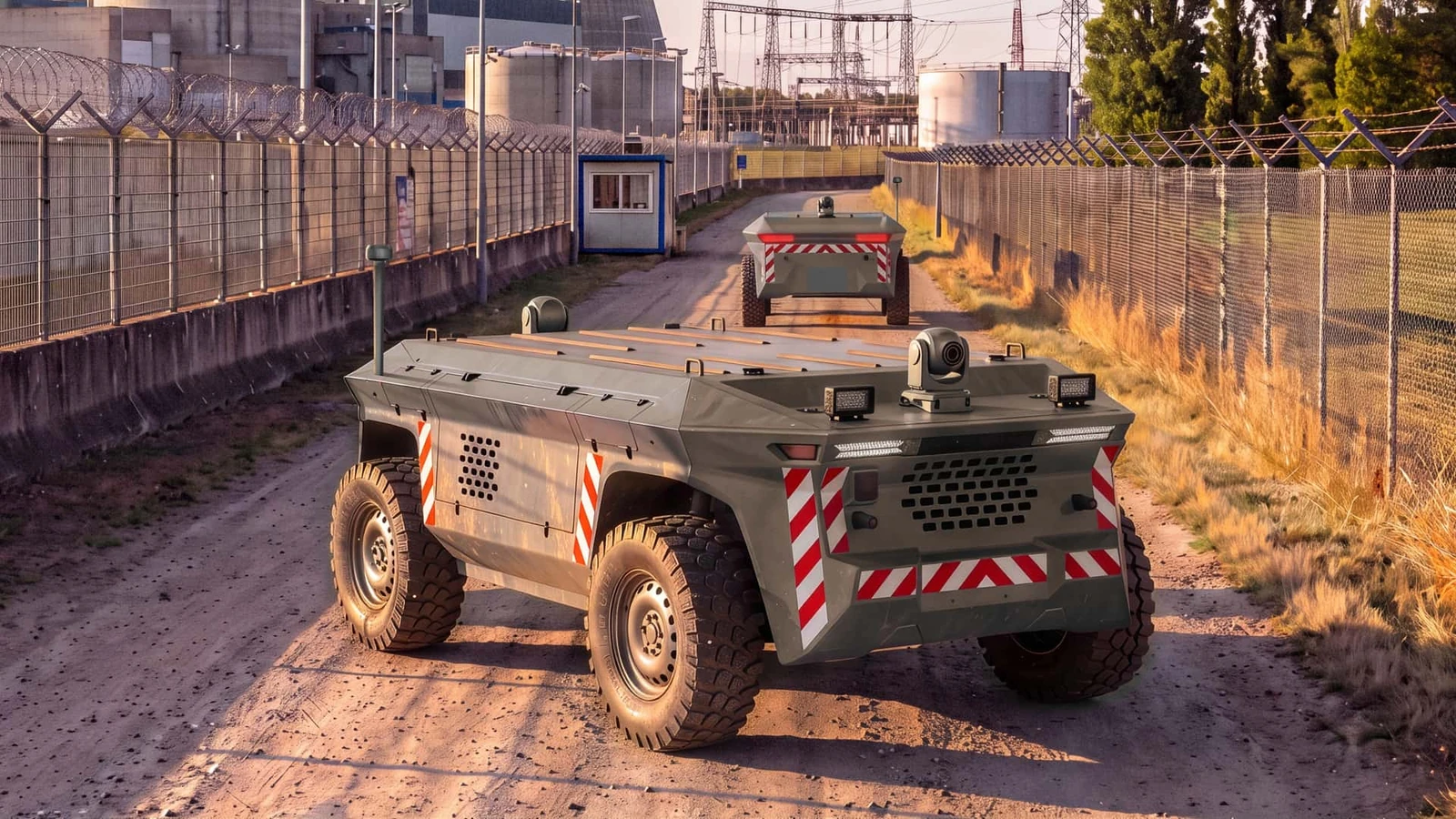
Renault reveals Forefront Concept, a remotely operated electric military vehicle

Built with defence firm John Cockerill, the cab-less dual-motor EV is heading into French army trials, with range, price and battery details still to be confirmed.

Renault Group has unveiled the Forefront Concept, an all-electric, all-wheel-drive modular vehicle developed for military operations and designed to be driven remotely or autonomously in high-risk, hard-to-reach areas. The French armed forces will put the concept through several exercises and trials in the coming weeks, after which Renault will refine it based on operational feedback.

What the Forefront Concept is and who built it

Renault Group built the vehicle, while defence company John Cockerill designed its remote-operation and autonomy functions, drawing on input from the French armed forces. The machine has no cab, and Renault says it uses proven automotive components to keep costs down and speed up potential production.

The concept is intended for both defence and civilian applications: it can be operated remotely by a human or sent into dangerous sites on its own using its autonomous driving capabilities. Renault says the vehicle was designed to be put into production quickly at competitive costs.

Powertrain, range and payload

The Forefront Concept is powered by two electric motors with all-wheel drive and four-wheel steering, and Renault says it can travel in complete silence across harsh terrain. The projected range is roughly 250 miles (400 kilometres) on a full charge, and an add-on range extender can extend the driving distance further.

Renault has not said how much energy the on-board battery or the range extender can store, and it has not published power or torque figures for the dual-motor setup. The vehicle is rated for a 2,200-pound (1-tonne) payload.

What the military wants it to do

With that payload, Renault positions the dual-motor machine for logistics support, anti-drone operations, fire support and evacuation. Sending a vehicle with no human behind a steering wheel into contested areas means fewer potential casualties, and the same silent, unmanned approach suits companies that need safe access to dangerous sites.

The Forefront Concept arrives as militaries increasingly hand the heavy lifting to remotely controlled machines. Ukrainian companies have produced thousands of remotely controlled robots in the fight against Russia, ranging from small mini-tanks to large drones able to airlift wounded soldiers. In the United States, the Army has awarded American Rheinmetall an 18-month contract to develop and deliver next-generation uncrewed ground vehicles, based on Harbinger's extended-range EV platform, which uses a petrol engine as a generator for an electric powertrain and offers more than 500 miles of range with a full tank and battery, plus payload capacity of up to 18,000 lbs.

That contrast is instructive: Renault's concept trades payload and range for silence and simplicity, while the Harbinger-based design carries far more but relies on a combustion generator. For buyers, the Forefront's real advantage is that it borrows existing automotive parts rather than requiring a clean-sheet military supply chain, which is what makes Renault's talk of fast, low-cost production plausible.

Price and availability

There is no price yet, and Renault has not announced a launch date. The company has said only that if there is enough interest, the boxy machine could become a reality sooner rather than later.

The immediate next step is the French army trials, which will generate the operational feedback Renault says it will use to refine the concept.
Open this article ↗
Performance / TDCN ORIGINAL

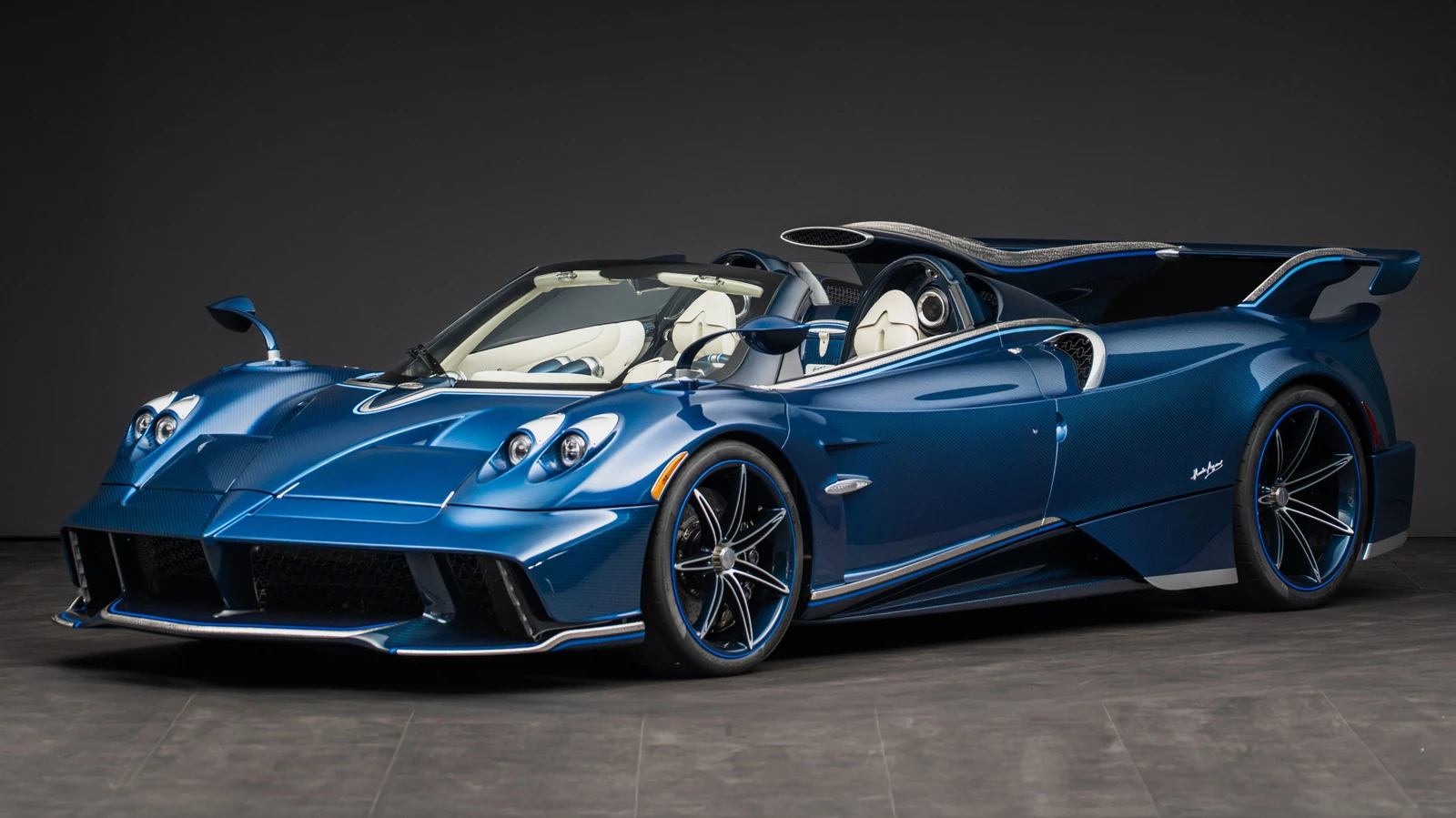
Pagani unveils Huayra 70 Anima, the final bespoke build of the series

The exposed blue carbon body with real diamond dust and platinum leaf is paired with an 851 hp twin-turbo V12 and a seven-speed manual.

Image: Carscoops

Pagani has revealed the Huayra 70 Anima, the third and final bespoke Huayra 70 build, at the Concours at Wynn in Las Vegas. It follows the Trionfo and Derecho models shown earlier in the year and arrives even as Pagani builds and delivers the Utopia.

The car was created through Pagani's Grandi Complicazioni personalisation programme, which lets customers specify highly customised one-off models. Pagani designer Lorenzo Kerkoc said the brand worked with the car's owner for more than a year, fulfilling the owner's childhood dream of creating a special car together with Horacio Pagani.

Exposed carbon, diamond dust and platinum leaf

The Anima's body is dominated by exposed carbon fibre panels covering the bumpers, doors, fenders, hood and engine cover. Pagani has built a reputation for coloured carbon fibre, and this example includes real diamond dust in the weave for a shimmering finish.

Hand-applied platinum leaf features on the front splitter, sections of the doors, the engine cover and the rear wing uprights. The bodywork is more outlandish than other Huayra models including the BC Roadster, with new bumpers, a distinctive rear diffuser, a unique rear wing and a roof scoop inspired by the Zonda Cinque. A six-pipe exhaust system with white ceramic coating and chassis components finished in Tricolore Blue and Argentina Light Blue complete the exterior.

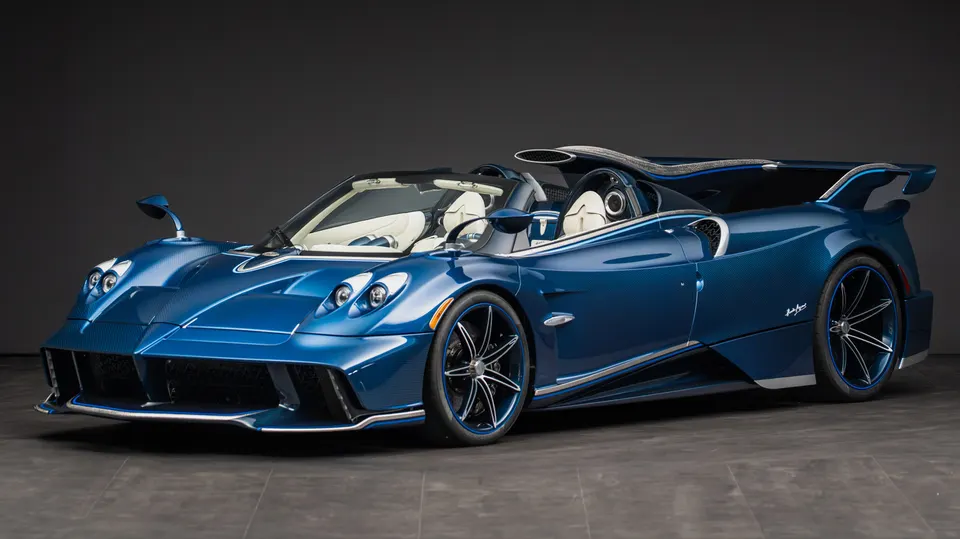
The Huayra 70 Anima's exposed carbon bodywork and platinum-leaf detailing catch the studio light.
The Huayra 70 Anima's exposed carbon bodywork and platinum-leaf detailing catch the studio light., Image: Carscoops

851 hp V12 and a seven-speed manual

Power comes from Pagani's familiar AMG-sourced twin-turbocharged 6.0-litre V12, upgraded here to 851 horsepower at 6,000 rpm and 811 pound-feet (1,100 Nm) of torque, with no electrical assistance. As in the other two Huayra 70 builds, the engine is paired with a seven-speed Xtrac manual transmission driving the rear wheels through an electromechanical self-locking differential.

The chassis uses double-wishbone front suspension with electronically adjustable, interconnected shock absorbers at all four corners. Carbon-ceramic discs and Brembo calipers handle braking, and the car rides on 20-inch front and 21-inch rear wheels with 265/30 and 355/25 Pirelli P Zero Trofeo R tyres.

The manual gearbox is the detail that separates the Huayra 70 series from most hypercars of its era, and it is the same choice Pagani has made across all three builds rather than a one-off flourish.

A cabin finished like a tourbillon

Inside, the seats carry Inky Blue carbon fibre accents and milk-coloured leather, while diamond dust has been added to the steering wheel and gear knob. Exposed aluminium parts appear throughout the cabin, consistent with other Huayras of the past decade.

Pagani has not announced a price for the Anima, and because it is a Grandi Complicazioni commission built to a single owner's specification, it is not a series-production model with a list price. The same applies to production volume: the sources do not state how many Huayra 70 Animas will be made, though as the third and final Huayra 70 it closes out the series.

Open this article ↗

Keep scrolling to read the next story.

Older articles →