INDEPENDENT AUTOMOTIVE NEWSGLOBAL PERSPECTIVE / AUSTRALIAN EDITION
TDCNTHE DAILY
CAR NEWS.

The road ahead.
Every day.

RSS ↗
Latest/Australia

343 original articles

Australia / TDCN ORIGINAL

Australian new-car sales rise 6.8 per cent as diesel edges out EVs in October

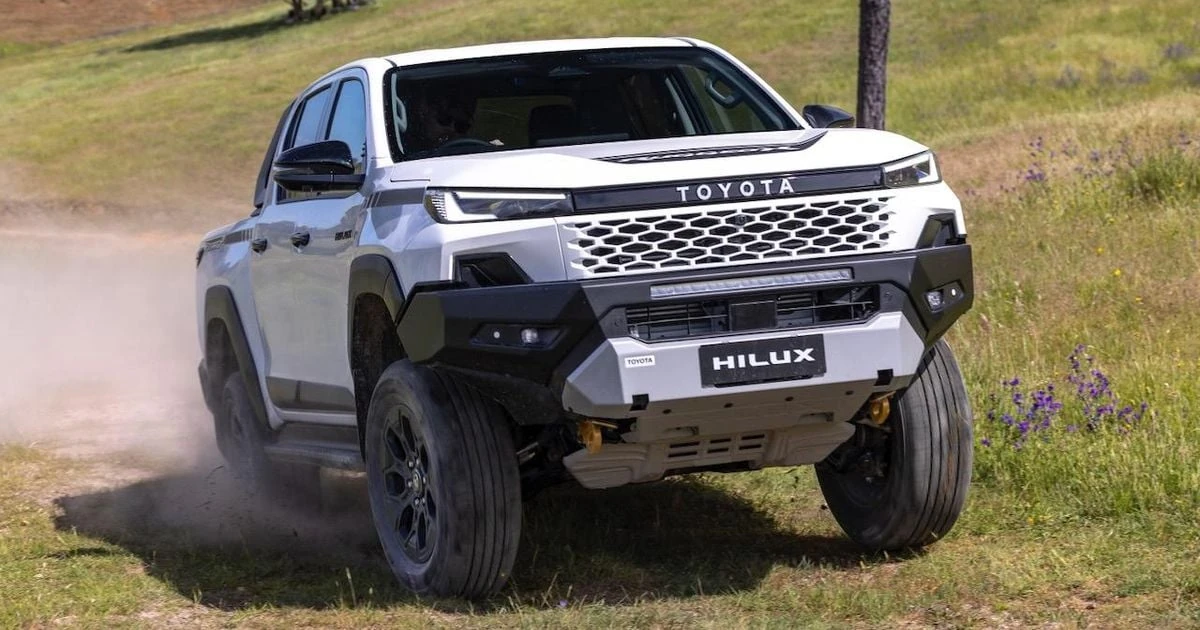
VFACTS data shows the Toyota HiLux topping the monthly charts and BYD holding second place among brands, with diesel and electric market share separated by less than a point.

Australian new-vehicle sales totalled 107,493 units in October 2026, up 6.8 per cent on the same month last year, with diesel-powered vehicles returning to the top of the powertrain rankings after two months of electric leadership.

The Toyota HiLux was the best-selling model for the month, its first time on top this year, ahead of the Ford Ranger, which had won September and three other months in 2026.

Diesel and EV share nearly level

Diesels accounted for 23.9 per cent of October sales and EVs 23.1 per cent, a gap of less than one percentage point, even though diesel sales fell 14.7 per cent year-on-year.

Across the first 10 months of 2026 the order is different: petrol leads with 27.5 per cent of the market, diesels are second at 24.3 per cent and EVs third at 19.3 per cent.

So EV sales are still growing in Australia, but not fast enough in October to stay ahead of diesels: the segment slipped from first to second place month-on-month, and its year-to-date share of 19.3 per cent sits well behind petrol and diesel. The sources do not give a year-on-year percentage change for EV sales in October, so the exact pace of that growth has not been disclosed.

HiLux takes the month, Ranger still leads the year

The HiLux, until recently the only ute on sale with both diesel and electric powertrains, moved ahead of the Ranger for the month. The Ford remains narrowly in front year-to-date, with 42,699 deliveries and a lead of just 129 units.

Ranger sales rose year-on-year in October but not by enough to hold first place.

BYD cements second place among brands

Toyota was the top brand again, with sales up 4.7 per cent year-on-year. BYD posted only its second month above 10,000 sales in Australia and has ranked second every month since April, with Ford, Kia and Mazda competing for third.

Ford took third in October, Kia was fourth and comfortably ahead of Hyundai both for the month and year-to-date (66,601 against 60,580), and Mazda was fifth. MG finished ahead of every other Chinese brand except BYD.

Mazda's new CX-6e electric SUV has only recently begun deliveries and is positioned against the Tesla Model Y, Australia's best-selling EV. That rivalry is the one to watch in the electric segment: a mainstream brand entering the country's strongest EV nameplate's territory is a more direct test of demand than the monthly diesel-versus-EV split.

A record year within reach

Year-to-date sales stand at 1,065,191 units, up 2.5 per cent on the first 10 months of 2025, a record year for the Australian market. With two months left, 2026 could set a new high.

The October figures combine VFACTS data seen by CarExpert with data supplied by the Electric Vehicle Council. Diesel's return to the top is a reminder that powertrain leadership in Australia can swing month to month on the strength of a single high-volume model, and that overall market growth is currently being driven by demand across all fuel types rather than by electrification alone.
Open this article ↗
Electric / TDCN ORIGINAL

Buick's Electra GS plug-in hybrid sedan surfaces in Chinese filings, and it is not for America

Chinese type-approval documents show the production car has shrunk dramatically from the Shanghai concept and swapped its electric powertrain for a plug-in hybrid.

Image: Carscoops

Buick's Chinese arm is preparing to launch the Electra GS, a plug-in hybrid sedan that has surfaced in Chinese Ministry of Industry and Information Technology (MIIT) filings ahead of its official debut. The production car differs substantially from the Electra GS concept General Motors showed at the 2025 Shanghai Auto Show, and it is not expected to reach the United States.

How the production car differs from the concept

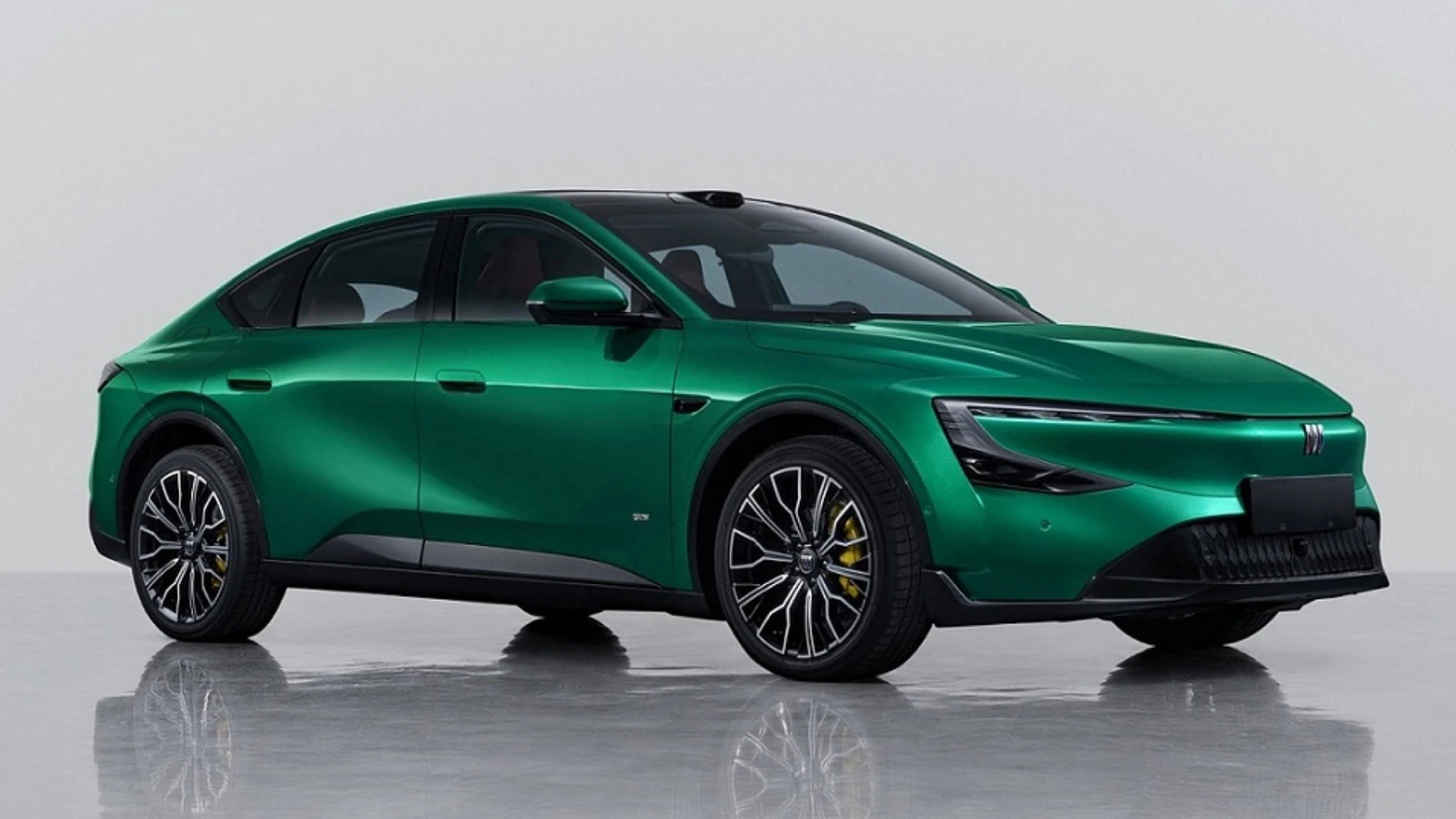
The filings show a car that has been reworked front to rear. The LED headlights have been inverted, the Buick badge has moved off the hood onto a front fascia with less body-colour plastic, and the rear now carries "Buick" lettering spelled out across the tail. The concept's pop-out door handles are gone, reportedly because China is moving to ban them, and the traditional sedan boot has been replaced by a hatch within a fastback profile.

The scale change is larger still. MIIT data lists the production GS at 4,980 mm long on a 2,865 mm wheelbase, against 5,300 mm and 3,200 mm for the concept, which puts the finished car in Toyota Crown territory rather than full-size luxury sedan territory.

The powertrain has changed just as fundamentally. GM confirmed the concept was a fully electric car on a dedicated EV platform with a flat floor; the production GS is a plug-in hybrid. Base cars pair a 97 hp (98 PS) naturally aspirated 1.5-litre four-cylinder with a 221 hp (224 PS) electric motor, while a more expensive variant uses a turbocharged version of the same engine making 154 hp (156 PS).

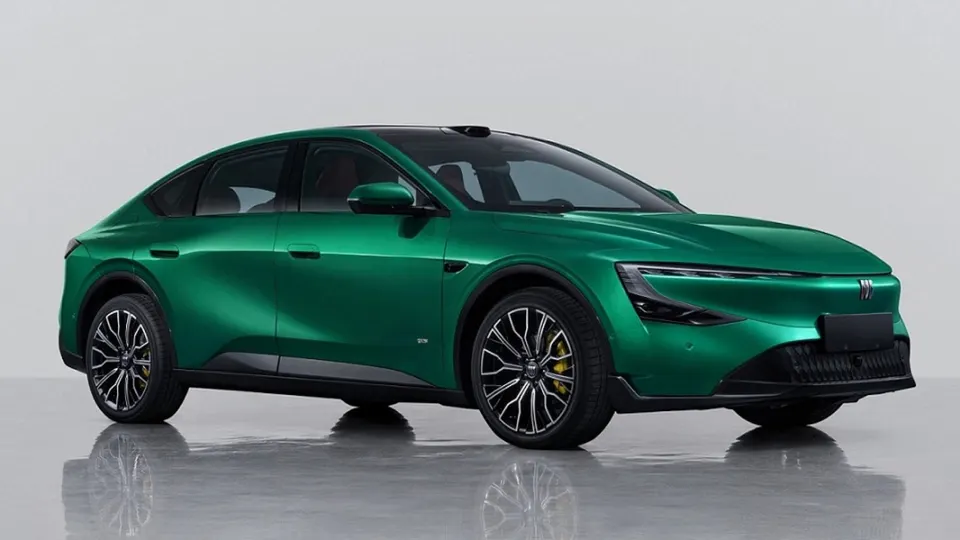
The production Electra GS as revealed in Chinese regulatory filings, wearing a vivid green finish and aggressive front fascia.
The production Electra GS as revealed in Chinese regulatory filings, wearing a vivid green finish and aggressive front fascia., Image: Carscoops

What Buick has not announced

The full Chinese debut is still to come, and Buick has not yet published the GS's interior, battery capacity, electric-only range, charging figures, on-sale date or pricing. The exterior studio images show a conventional steering wheel, so the concept's yoke is unlikely to carry over.

That matters because the plug-in hybrid numbers above are the only technical detail available so far. Buyers weighing the GS against other Chinese-market hybrids will not have a usable electric range figure until Buick releases one, and the range will need to be read on whatever Chinese test cycle Buick quotes rather than compared directly with WLTP or EPA figures.

Why the GS is unlikely to cross the Pacific

Buick has sold no sedan in the US since the Regal ended production in 2020, though it still offers several low-riding four-doors in China including the electrified Electra L7. The GS is the product of a joint venture between GM and SAIC, and US restrictions on Chinese software taking effect with the 2027 model year would complicate compliance even if production moved to North America to dodge tariffs.

GM does already import Chinese-built vehicles, including the Buick Envision, but Envision production is due to shift to Kansas in 2028. The GS would therefore need a similar relocation to make sense in the US, and none has been announced.

The wider context is GM's product planning. The automaker bet heavily on EVs arriving by the end of the decade and developed few hybrids beyond the Corvette E-Ray, now renamed Grand Sport X, while Toyota and Hyundai built both and are now seeing the benefit. A plug-in hybrid sedan is exactly the kind of vehicle GM's US range lacks, which is why the GS's Chinese-only status is frustrating rather than surprising.

Open this article ↗

Keep scrolling to read the next story.

Older articles →