INDEPENDENT AUTOMOTIVE NEWSGLOBAL PERSPECTIVE / AUSTRALIAN EDITION
TDCNTHE DAILY
CAR NEWS.

The road ahead.
Every day.

RSS ↗
Latest/Electric

247 original articles

Electric / TDCN ORIGINAL

Ford Fathom electric truck to use two aluminium castings in place of 146 parts

Ford has produced 5,000 unicastings for the $29,945 compact EV ahead of a spring debut, but range and battery details remain unannounced.

Image: Carscoops

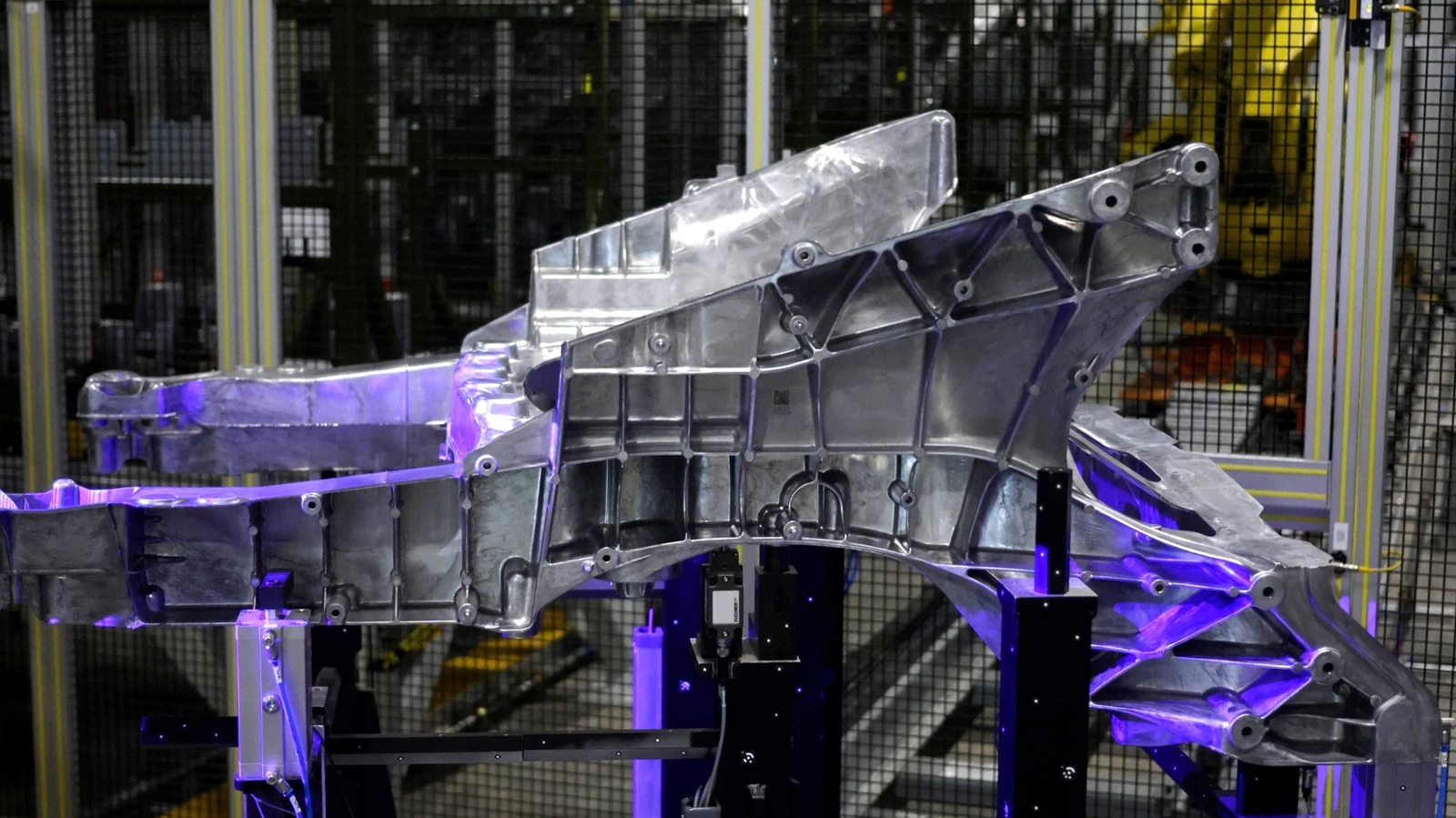
Ford will build its $29,945 Fathom electric compact truck using two large aluminium castings that replace 146 structural components, the company has detailed ahead of the model's debut next spring. The 2028 model year truck is the first Ford to use the process, which the automaker calls unicasting and which mirrors the gigacasting approach used by Tesla.

Ford says 5,000 castings, enough for 2,500 trucks, have already been produced at its Shelbyville Technical Center for the Fathom's official debut next spring. Production Fathoms will be assembled at Ford's Louisville Assembly Plant in Kentucky.

How the castings are made and checked

Each casting begins as an aluminium ingot, fed into a furnace by an elevator and melted at 1,300 degrees Fahrenheit (700 degrees Celsius) before entering a casting machine. Ford makes two per truck, one for the front and one for the rear.

Before shipping to Louisville, every casting undergoes a coordinate check in a climate-controlled room to confirm dimensions and hole locations match specification. An industrial X-ray system then inspects the interior for defects such as pores and voids, an optical scanner rechecks dimensions, and samples of the aluminium are tensile strength tested and chemically analysed. Ford does not release a batch to Louisville until every test is passed.
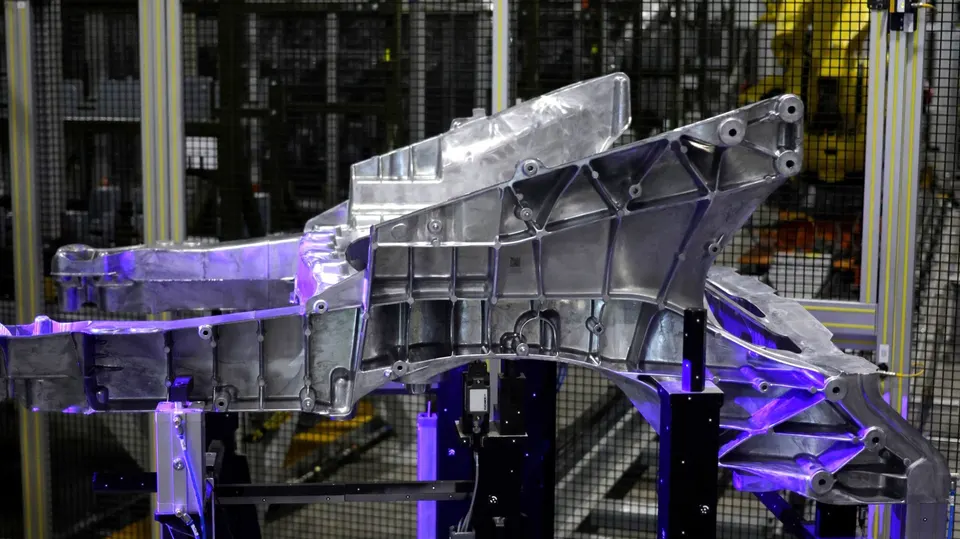
Ford's giant aluminium casting, one of two that replaces 146 separate parts
Ford's giant aluminium casting, one of two that replaces 146 separate parts, Image: Carscoops

A different assembly line

At Louisville, the Fathom will not move down a single production line in the manner Henry Ford introduced. Instead it will be assembled in three separate sub-sections and only united into a complete truck late in the build cycle, a step Ford says saves time.

The casting strategy is central to hitting the Fathom's $29,945 price. Fewer parts means fewer joins and faster builds, which is the same arithmetic that has driven Tesla's large castings. For buyers, the question is whether that saving shows up in the showroom price rather than only in Ford's cost base, and the sticker figure Ford has quoted suggests the company intends it to.

What Ford has confirmed, and what it has not

Ford has confirmed the Fathom will seat five and offer more passenger space than a Toyota RAV4. It will support bidirectional charging and accelerate from 0 to 60 mph (97 kph) in around 4.5 seconds.

Range, battery capacity and charging rates have not been announced. Ford has also yet to show the exterior design. Those figures will matter more than the casting process to most buyers, and they are the numbers that will decide whether the Fathom competes on anything beyond its price.
Open this article ↗
New cars / TDCN ORIGINAL

Toyota says its next hybrids will use 15% less fuel, with engines due in 2027

The new 1.5-litre four-cylinder is designed for hybrid and plug-in hybrid duty, and Toyota expects to sell the powertrains to other automakers too.

Image: Carscoops

Toyota has confirmed that its next generation of hybrids will consume 15% less fuel than today's equivalents, with the new engines expected to reach the market in 2027. The company disclosed the efficiency target while setting out a platform strategy that will put its future hybrids and electric cars on the same underpinnings.

At the centre of the claim is a 1.5-litre inline-four that Toyota has discussed since 2004 but has only now linked to a fuel economy figure. The engine was designed with electrification in mind and will be used in both conventional hybrids and plug-in hybrids.

The fuel saving is a manufacturer claim rather than an independently measured result, and Toyota has not published the test cycle behind the 15% figure. Buyers comparing it with rivals should treat it as a target until certified consumption numbers appear.

One platform for hybrids and EVs

Toyota's plan differs from the approach BMW takes, which is to build next generation EVs and hybrids on separate platforms. Toyota intends to use a common platform, as Mercedes and Stellantis already do, arguing that shared underpinnings deliver economies of scale and let factories switch powertrain mix as demand shifts.

The usual risk of sharing is that engineers compromise one powertrain to make another work. Toyota says neither the hybrid nor the battery-electric version of its next cars will be compromised: the gasoline-electric models will have the same interior space and even the same silhouette as their EV siblings. Lower-profile engine and hybrid packages allow lower hood heights and what Toyota calls more dynamic vehicle proportions, giving designers more freedom.

A single image released with the strategy shows three identical fastback sedans in silhouette. The EV carries its battery across the full front-to-rear floor, the plug-in hybrid uses the rear floor, and the hybrid has a small pack under the rear seat.

That layout is the practical payoff of the strategy. A hybrid that looks and packages like an EV removes the visual and space penalty buyers have historically accepted for choosing the cheaper powertrain, which matters most in markets where EV demand is stalling.

Toyota expects to sell the powertrains to rivals

Toyota's customers will not be the only ones to benefit. Toyota expects to earn $1.7 billion a year selling its next generation hybrid powertrains to other automakers, according to a report from Automotive News cited by Carscoops. The identity of those brands is unconfirmed, though Subaru and Mazda are possibilities: the two companies formed a powertrain alliance with Toyota in 2024.

Toyota has not announced which automakers have signed up, so the buyer list remains a leak-level detail rather than a confirmed order book. Nor has Toyota announced pricing for the new hybrids, so any cost comparison with today's models will have to wait for launch specifications.

Why hybrids still matter to Toyota

Toyota pioneered hybrid technology almost 30 years ago but was slow to embrace full electrification, and it still argues hybrids have an important role. The context supports that bet: EVs are booming in Europe but going backwards in the US, where fuel prices have become a political issue as Americans vote in this year's mid-term elections.

For drivers, the appeal of a 15% efficiency gain is straightforward, since it lowers running costs on the models most buyers can already afford. For Toyota, sharing platforms and selling powertrains to rivals spreads development costs across far more vehicles than its own badge could support.

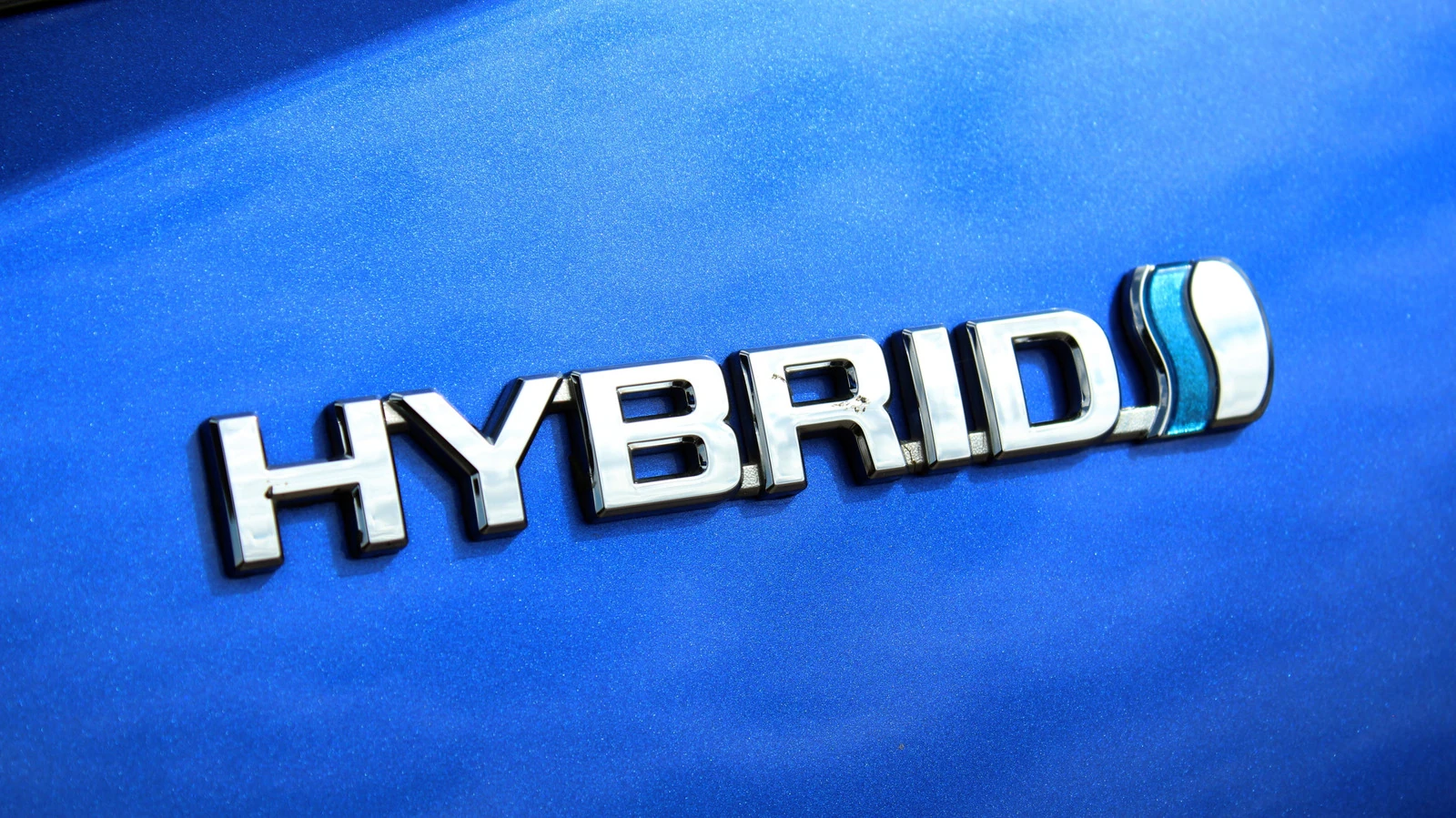
Toyota's hybrid badge has long signaled the brand's fuel-saving focus, now set to improve by 15% with 2027 engines.
Toyota's hybrid badge has long signaled the brand's fuel-saving focus, now set to improve by 15% with 2027 engines., Image: Carscoops
Open this article ↗

Keep scrolling to read the next story.

Older articles →