
INDEPENDENT AUTOMOTIVE NEWSGLOBAL PERSPECTIVE / AUSTRALIAN EDITION
TDCNTHE DAILY
CAR NEWS.

The road ahead.
Every day.

RSS ↗
Latest/Electric

242 original articles

Electric / TDCN ORIGINAL

UK government pledges £100m to cut public EV charging costs from 2027

The Treasury funding aims to bring slow public charger prices closer to home tariffs for two years, but how the money reaches drivers is still unclear.

The UK government will put £100m towards bringing public electric car charging prices closer to domestic energy rates, with funding set to begin in Spring 2027. The Treasury confirmed the two-year programme as part of the Autumn Budget, alongside a new taskforce to pilot ways for drivers to use their home tariff at local, lower-powered public chargers.

The money is targeted at slower AC units, which make up around a third of the UK charging network, and would exclude DC rapid chargers. The Treasury forecasts the support could save drivers around £150 a year, based on an electric car covering 8,000 miles at an average of 3.3 miles per kilowatt-hour.

How the funding will reach drivers

The government has not yet set out the mechanism for passing the £100m on to drivers. The Treasury has confirmed the sum and the two-year window from Spring 2027, but the detail of how it flows through to charger operators or motorists has not been announced.

What is clearer is where the money is aimed: slower AC units rather than DC rapid chargers, so the support is designed around the low-powered charging that dominates overnight and destination charging rather than motorway top-ups.

A taskforce and earlier steps for drivers without driveways

Alongside the funding, the Department for Transport will establish a taskforce to pilot solutions that let drivers use their domestic energy tariff at local, lower-powered public charging points.

Ministers have already moved on related barriers. Drivers without off-street parking can claim a grant of up to £500 towards installing a home charger, though conditions apply: they must install a solution to stop cross-pavement cables becoming a trip hazard, and the charger does not guarantee them use of the adjacent parking space. Last week the DfT also removed the need to apply for planning permission to install pavement-crossing gulleys, a change it says saves drivers up to £300.

Buses and local transport minister Simon Lightwood framed the policy around fairness: "If you don't have a driveway, you shouldn't be stung for charging your car - we're putting a stop to the so-called 'driveway divide'," he said, adding that EV sales are up 36% on last year and 200,000 drivers have used the Electric Car Grant.

What is still open

The policy as announced applies to the UK, where the Department for Transport and Treasury set the funding and the taskforce. The sources do not set out any extension to other markets.

For drivers, the practical effect depends on whether the £100m actually shows up in the price at the plug. Until the pass-through mechanism is confirmed, the £150 annual saving is a forecast rather than a published tariff change.
Open this article ↗
New cars / TDCN ORIGINAL

McLaren teases McL 820 name for its 809bhp 750S replacement

The Covent Garden stunt points to a new naming convention and a hybrid V8 flagship due next year, though pricing and an exact on-sale date are still unannounced.

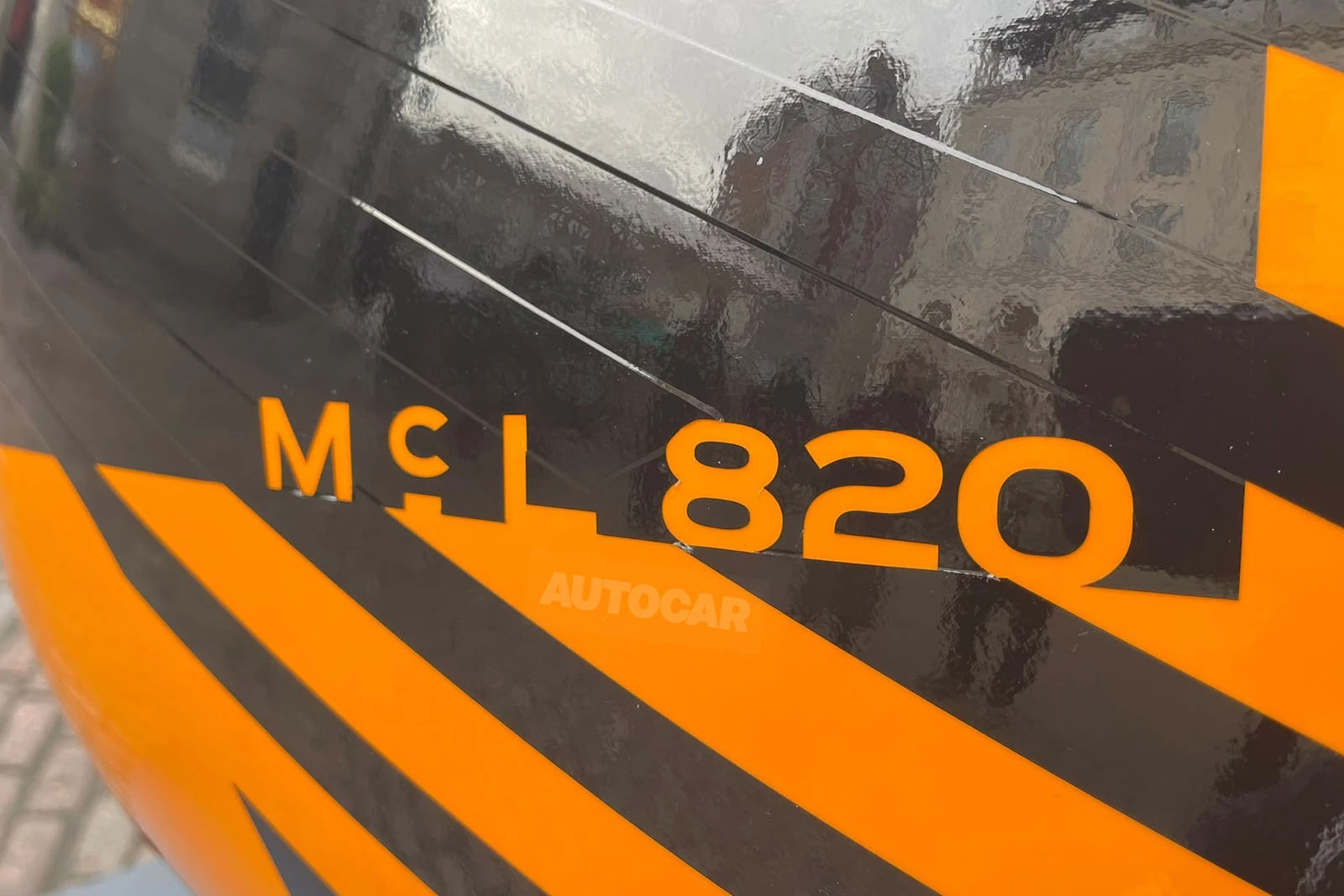
McLaren has signalled that the car replacing its 750S supercar will be called the McL 820, and that it will produce around 809bhp. The teaser came via a giant sculpture of the company's kiwi mascot, placed in London's Covent Garden on 29 October as part of a new marketing campaign.

The new supercar is due next year and would be McLaren's first series-production model since the brand was acquired by Abu Dhabi investment fund L'imad. It could also be the first mainstream model to adopt the 'McL' naming style introduced on the limited-run, manual-equipped McL 6GT.

A name hidden on a kiwi statue

McLaren concealed the McL 820 moniker on the sculpture rather than announcing it outright. The kiwi is a nod to founder Bruce McLaren, the New Zealand-born racer who used the flightless bird as the emblem of his racing team, which later gave rise to the road car business.

The stunt fits a wider push by McLaren to lean on its heritage. The company has adopted a new logo and typeface based on the signage of its original workshop, and the 'McL' initialism used on the 6GT now appears set to spread to the core range.

The naming hint lands as McLaren prepares for substantial expansion: it is building a second UK factory, will begin assembling its own engines in-house, and intends to broaden its line-up with new models.

Hybrid V8 power, in-house engines

The McL 820 is expected to use one of two new hybrid powertrains McLaren is developing and building itself for the first time. Those units are likely to be V8-based, with the power figure carried in the model name, as is standard McLaren practice.

The 820 in the name denotes 820PS, which converts to 809bhp. That would make it the most powerful series-production car Woking has built, with output in the same territory as the V12-engined Ferrari 12Cilindri and Aston Martin Vanquish, and as mid-engined rivals such as the Ferrari 296 and Lamborghini Temerario.

McLaren chief operating officer Michael Straughan has said the new engines are "obviously going to start with the current V8 products or the future generation of that". The emphasis on hybrid V8 power rather than full electrification keeps the focus on lightness and purity, in keeping with the 720S replacement's brief.

The 750S signs off after a decade

The McL 820 will take the place of the 750S, which retires next year after a decade on sale in various forms, starting with the 720S and including the run-out 788HS. McLaren has said it is taking final orders for the car.

The new model is due around the same time McLaren winds down production of its other two core models, the Artura V6 supercar and the more luxury-oriented GT. Replacements for those two have not been detailed.

Straughan has said McLaren will not take a production pause like the one Jaguar implemented. "A small company like McLaren can't afford that," he said, adding that new products will be phased in "as quickly as we possibly can" and that it's "not too far away".

Traditional supercars will form one of three pillars of the future McLaren range, alongside a front-engined SUV aimed at the Porsche Cayenne and continued limited-run Ultimate Series cars such as the W1.

McLaren has not announced an exact on-sale date or pricing for the McL 820. The sources confirm only that it is due next year, so buyers will learn the sticker price closer to the launch.

Open this article ↗

Keep scrolling to read the next story.

Older articles →